

In the complex ecosystem of modern digital communication, email authentication has transcended its status as a mere technical recommendation to become an indispensable cornerstone of cybersecurity, deliverability, and brand integrity. This intricate framework of digital security measures ensures the legitimacy and integrity of every message transmitted, a necessity amplified by the escalating sophistication of cyber threats and the proactive mandates from major mailbox providers. Understanding email authentication is no longer optional for any entity leveraging email for communication, marketing, or transactional purposes; it is a fundamental requirement for maintaining trust and ensuring reach in the digital realm.
The Foundational Imperative: Why Email Authentication Matters
Email, initially designed for simplicity and open communication in the nascent stages of the internet, lacked inherent security mechanisms. This foundational vulnerability became glaringly apparent with the proliferation of spam, phishing, and various forms of email-borne cybercrime. As the volume of digital correspondence exploded, so did the malicious attempts to exploit email’s trust-based architecture. Malicious actors began impersonating legitimate senders, distributing malware, and orchestrating sophisticated fraud schemes like Business Email Compromise (BEC), costing businesses billions annually. This escalating threat landscape necessitated a collaborative industry response, leading to the development and adoption of email authentication protocols.
Email authentication, in essence, provides a verifiable chain of custody for every email. It answers critical questions: Is the sender truly who they claim to be? Has the message been altered in transit? What should receiving servers do if these checks fail? These protocols act as digital passports and tamper-evident seals, allowing mailbox providers (MBPs) to distinguish legitimate emails from fraudulent ones, thereby protecting recipients and preserving the integrity of the sending domain. Without proper authentication, an organization’s emails are highly susceptible to being flagged as spam, rejected outright, or worse, their domain can be easily spoofed by malicious actors, leading to severe reputational damage and financial loss.
A Brief Chronology of Email Security Evolution
The journey towards robust email authentication began in earnest in the early 2000s, driven by the overwhelming tide of unsolicited commercial email (spam). Early attempts at combating spam often relied on blacklists and content filtering, which proved reactive and insufficient against rapidly evolving tactics. The need for proactive sender verification became clear:
- 2003-2004: Development of Sender Policy Framework (SPF) began, aiming to allow domain owners to publish a list of authorized sending IP addresses. This marked a significant shift towards domain-level sender verification.
- 2004-2007: DomainKeys Identified Mail (DKIM) emerged from efforts by Yahoo and Cisco. DKIM introduced cryptographic signatures to verify message integrity and sender identity, addressing limitations of SPF by ensuring the message content hadn’t been tampered with after leaving the sender’s server.
- 2012: The introduction of Domain-based Message Authentication, Reporting & Conformance (DMARC) represented a pivotal moment. DMARC provided a unified policy layer, instructing receiving servers on how to handle emails that fail SPF or DKIM checks and introducing a crucial “alignment” requirement. Crucially, it also provided senders with aggregate reports, offering unprecedented visibility into their email sending ecosystem and potential spoofing attempts.
- Mid-2010s: The Authenticated Received Chain (ARC) protocol was developed to address the specific problem of legitimate email forwarding, where intermediary servers might break SPF or DKIM signatures, leading to false authentication failures. ARC acts as a chain of trust, preserving the original authentication results.
- Late 2010s – Early 2020s: Brand Indicators for Message Identification (BIMI) emerged, focusing on brand visibility and trust. BIMI allows verified brands to display their logo next to their sender name in the inbox, provided they have robust DMARC enforcement in place. This move aimed to enhance visual trust signals for recipients.
- 2023-2024: Major mailbox providers like Google (Gmail), Yahoo, and Microsoft announced and began enforcing stringent new authentication requirements for bulk senders, making SPF, DKIM, and DMARC mandatory. These mandates signify a new era where email authentication is no longer merely a best practice but a prerequisite for deliverability.
The Five Pillars of Email Authentication
Today, five core technologies work in concert to safeguard email: SPF, DKIM, DMARC, ARC, and BIMI. Each plays a distinct yet complementary role in building a secure and trustworthy email environment.

1. Sender Policy Framework (SPF)
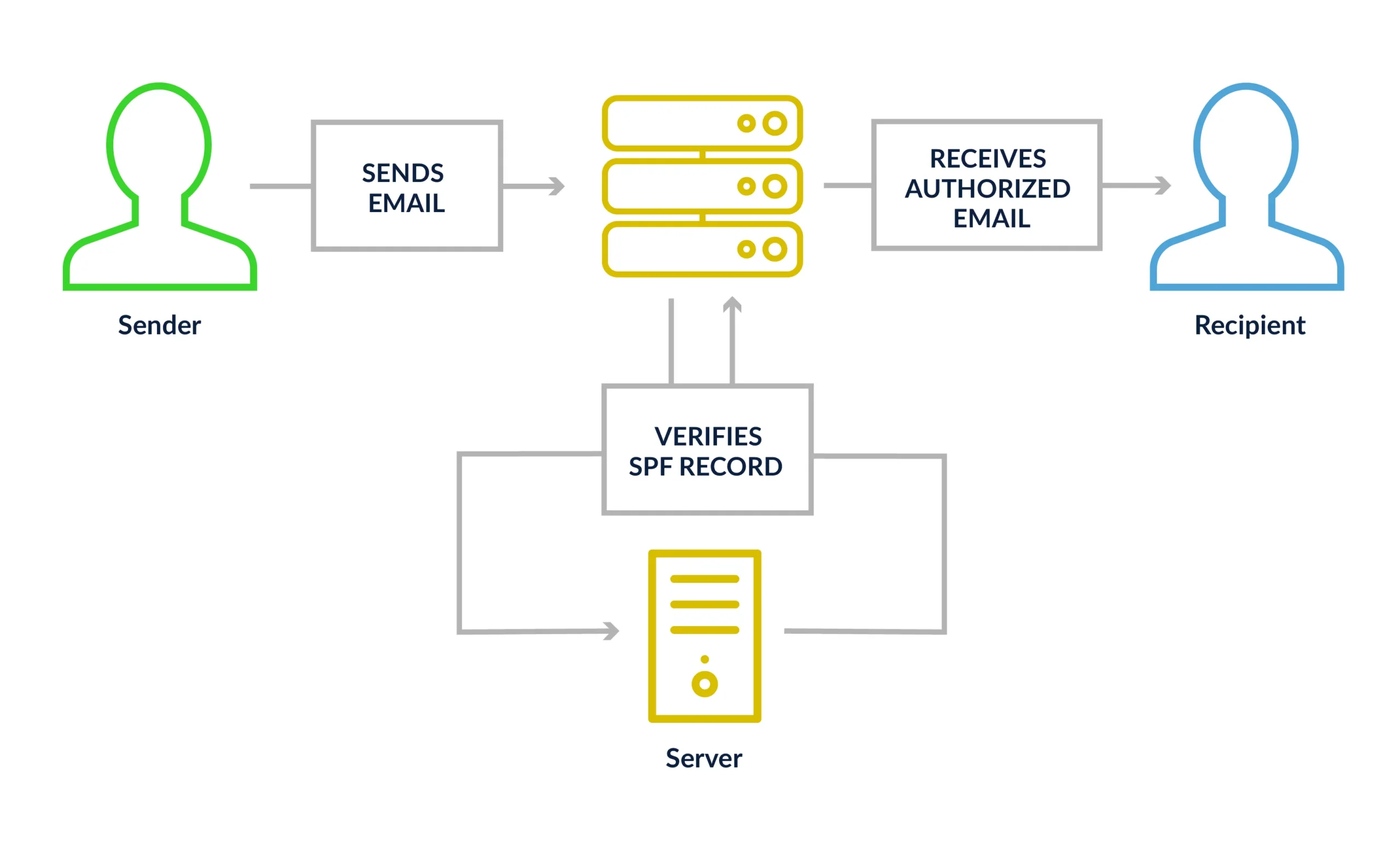
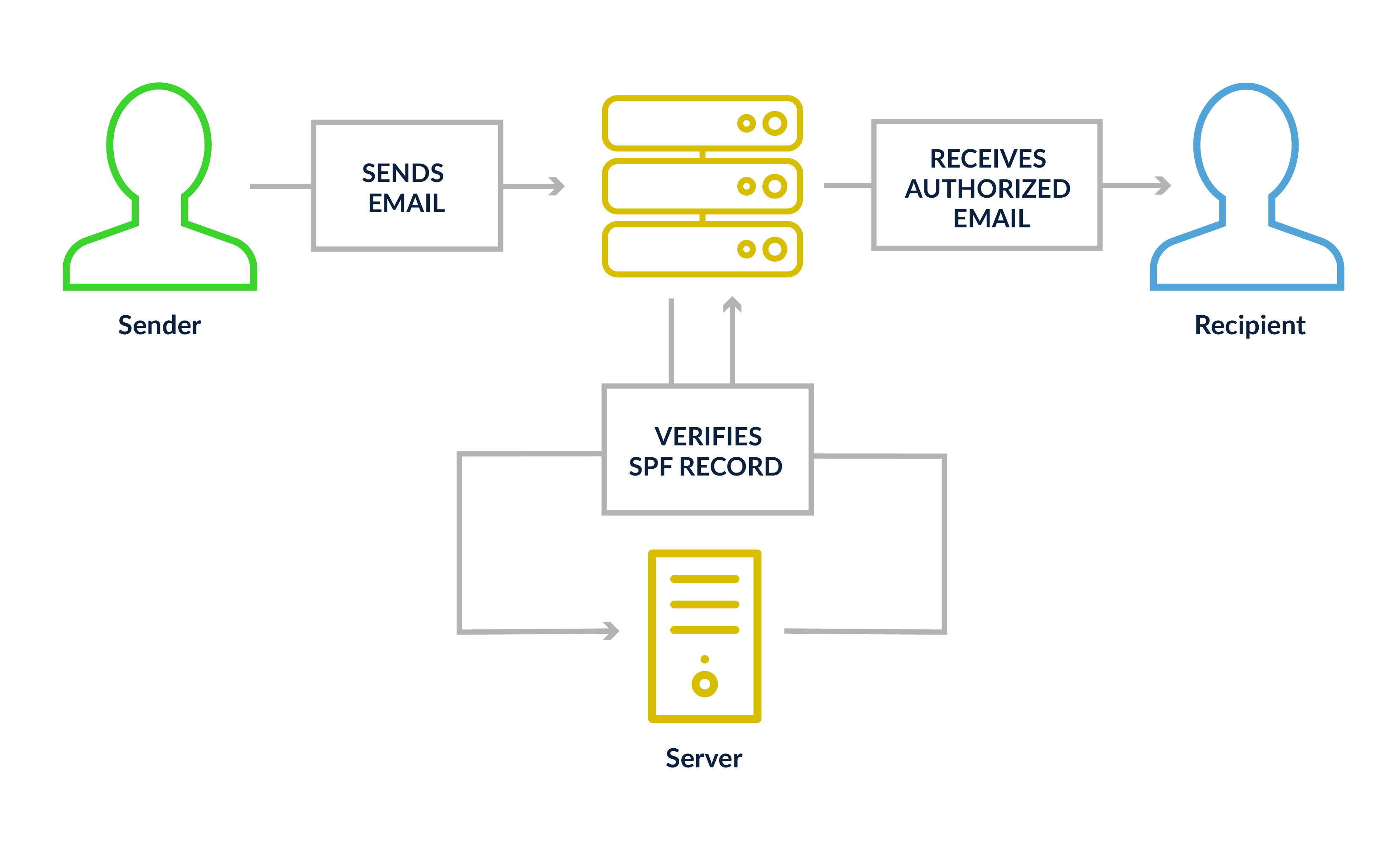
SPF functions like a digital guest list for your domain. It allows domain owners to publish a DNS TXT record specifying which IP addresses and mail servers are authorized to send email on their behalf. When a receiving mail server receives an email, it checks the SPF record of the sending domain. If the email originates from an IP address not listed in the SPF record, the receiving server knows something is amiss.
- How it Works: The SPF record is a DNS TXT record that begins with
v=spf1. It then lists various mechanisms to define authorized senders:a: Allows the IP address of the domain’s A record.mx: Allows the IP addresses of the domain’s MX records.ip4/ip6: Explicitly lists IPv4 or IPv6 addresses or ranges.include: Authorizes senders defined in another domain’s SPF record (commonly used for Email Service Providers, ESPs).exists: Allows any IP address that resolves to an A record.redirect: Points to another domain’s SPF record for policy definition.
- Qualifiers: SPF records also include qualifiers to dictate how receiving servers should treat emails from unauthorized sources:
+pass: Explicitly passes authentication (default if no qualifier is specified).?neutral: Treat as neither pass nor fail; often results in a soft fail.~softfail: The email may be legitimate, but the sender is not explicitly authorized. Often results in delivery to spam.-fail: Explicitly fails authentication; the email should be rejected. This is the strictest policy.
- Key Consideration: The 10-Lookup Limit: A critical aspect of SPF is the hard limit of 10 DNS lookups when processing an
includemechanism. Exceeding this limit results in a “permerror,” causing SPF to fail entirely. This often necessitates careful management of included third-party senders to avoid inadvertently breaking SPF. - Limitations: SPF primarily checks the “envelope sender” (the
Mail Fromaddress used during the SMTP transaction), not necessarily theFromheader address visible to the recipient. This makes it vulnerable to certain types of spoofing where the visibleFromaddress is faked while the envelope sender remains legitimate or is another spoofed domain.
2. DomainKeys Identified Mail (DKIM)
DKIM acts as a cryptographic seal of authenticity and integrity for an email message. It ensures that the email was sent by the claimed domain owner and that its content has not been tampered with during transit.
- How it Works:
- When an email is sent, the sending mail server (or ESP) generates a unique digital signature using a private key associated with the sending domain. This signature is embedded in the email header.
- The corresponding public key is published in the domain’s DNS records.
- When a receiving mail server receives the email, it retrieves the public key from the sender’s DNS based on information in the DKIM header (
d=for domain,s=for selector). - It then uses this public key to decrypt the signature and verify its integrity against the email’s content.
- Verification: If the signature matches, DKIM passes, confirming the sender’s authenticity and that the message content (including certain headers and the body) has not been altered since it was signed. If the signature doesn’t match, DKIM fails.
- Key Length: Modern security standards dictate a minimum DKIM key length of 2048 bits. Older 1024-bit keys are considered less secure and are increasingly being deprecated by MBPs, potentially leading to authentication failures. Senders should verify their ESPs are using current key lengths.
- Advantage: Unlike SPF, DKIM survives forwarding and changes to the envelope sender, as long as the signed parts of the message remain intact. It provides a more robust verification of message integrity.
3. Domain-based Message Authentication, Reporting & Conformance (DMARC)
DMARC is the policy layer that brings SPF and DKIM together, providing instructions to receiving mail servers on how to handle emails that fail authentication. Crucially, DMARC introduces the concept of “alignment.”
- Alignment: For DMARC to pass, the domain in the visible
Fromheader of the email must “align” (either strictly or loosely) with the domain used for SPF (envelope sender) or DKIM (signing domain). This directly addresses the spoofing vulnerability where the visibleFromaddress could be faked. - Policy Levels: DMARC allows domain owners to set policies that instruct receiving servers on what to do with non-compliant emails:
p=none: Monitor only. No action is taken on failing emails, but aggregate reports are sent. This is the recommended starting point for DMARC implementation.p=quarantine: Send failing emails to the recipient’s spam/junk folder. This is a strong deterrent against spoofing.p=reject: Block failing emails entirely. They will not reach the recipient’s inbox or spam folder. This offers the highest level of protection against malicious impersonation.
- Reporting: A significant benefit of DMARC is its reporting feature. Domain owners can specify email addresses in their DMARC record (
ruafor aggregate reports,ruffor forensic reports) to receive daily reports from MBPs. These reports provide invaluable insights into:- Which emails passed or failed SPF/DKIM/DMARC.
- The IP addresses from which emails claiming to be from your domain were sent.
- Whether alignment was achieved.
- Identification of potential spoofing attempts or misconfigurations.
- Implementation Strategy: DMARC is typically implemented incrementally, starting with
p=noneto gather data and identify legitimate sending sources, then gradually moving top=quarantineand eventuallyp=rejectonce confidence in authentication coverage is established.
4. Authenticated Received Chain (ARC)
ARC addresses a specific challenge in email authentication related to message forwarding and intermediary services. When an email is processed by a mailing list, a security gateway, or a forwarding service, it may be modified in ways that break its original DKIM signature or cause SPF to fail (due to the forwarding server’s IP not being in the original SPF record). This can lead to legitimate emails being incorrectly flagged as unauthenticated.
- How it Works: ARC creates a “chain of custody” for an email. Each intermediary server that modifies and forwards the message adds an ARC header to the email. This header contains a cryptographic seal of the authentication results it saw before modifying and forwarding the message. It also includes an ARC signature (AS), which signs the previous ARC headers and the current message state.
- Preserving Authenticity: When the final receiving server gets the email, it can examine the ARC chain. Even if the immediate SPF or DKIM checks fail due to forwarding, the receiving server can look back through the ARC headers to see that the message was legitimately authenticated at an earlier point in its journey. This allows legitimate forwarded emails to bypass DMARC failures that would otherwise occur.
- Sender Configuration: Unlike SPF, DKIM, and DMARC, ARC is not something a sender directly configures. It is implemented by mail servers and intermediary services that choose to participate in the ARC framework. Its importance lies in maintaining the integrity of email authentication across complex email routes.
5. Brand Indicators for Message Identification (BIMI)
BIMI is the newest standard among the five, focusing on enhancing visual trust and brand recognition in the recipient’s inbox. It allows brands to display their official logo next to the sender’s name in supporting email clients.
- How it Works:
- Prerequisites: BIMI requires robust email authentication: SPF, DKIM, and, critically, a DMARC policy set to enforcement (
p=quarantineorp=reject). Ap=noneDMARC policy is insufficient for BIMI. - DNS Record: The brand publishes a BIMI DNS TXT record that points to the URL of its logo, which must be in a specific SVG (Scalable Vector Graphics) format.
- Verification: Mailbox providers check the BIMI record and, if DMARC is enforced and the logo is properly configured, display the logo in the inbox.
- Prerequisites: BIMI requires robust email authentication: SPF, DKIM, and, critically, a DMARC policy set to enforcement (
- Certificates: VMC vs. CMC:
- Verified Mark Certificate (VMC): This is the original and most secure option. It requires the brand’s logo to be a registered trademark. VMCs are issued by authorized Certificate Authorities (e.g., DigiCert, Entrust) and provide the highest level of trust. With a VMC, brands can display their logo and often receive a “blue checkmark” of verification in email clients like Gmail, signifying an even higher degree of authenticity.
- Common Mark Certificate (CMC): Introduced more recently, CMCs offer a more accessible pathway to BIMI. They do not require a registered trademark but instead require proof that the logo has been publicly displayed and associated with the brand for at least 12 months. Google began accepting CMCs in 2024. CMC holders can display their logo in Gmail, but the coveted blue checkmark remains exclusive to VMC holders.
- Benefits: BIMI provides a powerful visual trust signal, helping recipients quickly identify legitimate emails from trusted brands, thereby increasing open rates, engagement, and reducing the likelihood of users falling victim to phishing attacks.
Mailbox Provider Authentication Mandates: A New Era of Enforcement
The landscape of email deliverability underwent a seismic shift in late 2023 and early 2024 with major announcements from Google (Gmail), Yahoo, and Microsoft. These leading mailbox providers, collectively handling the vast majority of global email traffic, declared that proper email authentication is no longer merely a best practice but a mandatory requirement for all senders, particularly those sending bulk email (defined as sending 5,000 or more messages to Gmail or Yahoo addresses in a single day).
These new mandates, which began progressive enforcement in April 2024, cement the reality that unauthenticated email will simply not reach the inbox. Non-compliant senders are facing increasing rates of temporary rejections, with the threat of permanent rejections looming for those who fail to adapt by late 2025. The core requirements now expected of all senders include:
- Implement SPF and DKIM: All sending domains must have valid SPF and DKIM records configured correctly.
- Maintain a DMARC Policy: A DMARC record must be published for the sending domain, even if initially set to
p=none(monitor only). The goal is to evolve towardsp=quarantineorp=rejectfor enhanced security. - Ensure Valid Forward and Reverse DNS Records: The IP address used for sending email must have valid DNS records that correctly map the IP to a domain and vice-versa.
- Use TLS for Transmitting Email: All email connections must be encrypted using Transport Layer Security (TLS) to protect message confidentiality during transit.
- Maintain Low Spam Complaint Rates: Senders must keep their spam complaint rates below a very low threshold (typically 0.1%). High complaint rates signal unwanted email and will lead to reduced deliverability.
- Provide Easy One-Click Unsubscribe: For bulk senders, an easily discoverable one-click unsubscribe mechanism (RFC 8058) must be implemented in the email header, alongside a visible unsubscribe link in the message body. This ensures recipients can opt out gracefully, reducing the likelihood of them marking emails as spam.
These mandates reflect a concerted effort by MBPs to clean up the email ecosystem, enhance user security, and improve the overall quality of the inbox experience. For legitimate senders, adherence to these requirements is paramount to ensure their messages reach their intended audience.
Broader Impact and Implications
The comprehensive adoption and enforcement of email authentication standards carry profound implications across various facets of digital communication:
- Enhanced Deliverability: The most direct impact is on email deliverability. MBPs prioritize authenticated emails, directing them to the inbox, while unauthenticated messages are increasingly routed to spam folders or rejected outright. For marketers, this means higher inbox placement rates, better campaign performance, and improved return on investment (ROI).
- Robust Cybersecurity: Email authentication is a formidable defense against phishing, spoofing, and Business Email Compromise (BEC). By verifying sender identity and message integrity, it significantly reduces the success rate of these fraudulent activities, protecting both organizations and individual recipients from financial loss and data breaches. Industry reports consistently show a dramatic reduction in successful phishing attacks for organizations that have fully enforced DMARC policies.
- Strengthened Brand Reputation and Trust: For brands, proper authentication is crucial for maintaining reputation. When a brand’s domain is spoofed, it erodes customer trust and can lead to significant reputational damage. By implementing robust authentication, brands signal their commitment to security, fostering greater trust with their audience. BIMI further amplifies this by providing a visible trust signal directly in the inbox.
- Improved User Experience: For end-users, these authentication measures translate into a cleaner, safer inbox. Fewer spam and phishing emails mean less time wasted sifting through junk and a reduced risk of falling victim to scams. The visual cues provided by BIMI also make it easier for users to quickly identify legitimate communications.
- Alignment with Regulatory Standards: While not always directly mandated by data protection laws (like GDPR or CCPA), robust email authentication contributes significantly to an organization’s overall data security posture, which is a key requirement under such regulations. It helps ensure the integrity and confidentiality of communication, indirectly supporting compliance efforts.
- Operational Efficiency: For email teams, DMARC’s reporting capabilities provide invaluable data for monitoring email sending practices, identifying unauthorized senders, and troubleshooting deliverability issues. This proactive insight can save significant time and resources compared to reactive problem-solving.
Challenges and the Path Forward
While the benefits are clear, implementing and maintaining comprehensive email authentication can present challenges, especially for organizations with complex sending infrastructures, multiple third-party senders (e.g., marketing platforms, CRM systems, transactional email services), or legacy systems. The technical nuances of SPF’s 10-lookup limit, DKIM key management, and DMARC policy alignment require careful planning and execution.
However, the industry is increasingly providing support. Email Service Providers (ESPs) and specialized email deliverability platforms offer tools and guidance to simplify the configuration and monitoring processes. Solutions like Litmus, as noted by industry experts, provide infrastructure checks to ensure all authentication acronyms are in order, helping organizations navigate the complexities.
Conclusion
Email authentication is no longer a technical nicety but a fundamental requirement for operating effectively and securely in the digital age. The recent mandates from leading mailbox providers underscore this reality, transforming authentication into a prerequisite for inbox placement. By meticulously configuring SPF, DKIM, and DMARC, embracing ARC for complex routing, and leveraging BIMI for enhanced brand visibility, organizations can build a resilient email program that safeguards against cyber threats, ensures deliverability, and cultivates unwavering trust with their audience. It is an ongoing commitment to security and integrity, forming the indispensable foundation upon which all successful digital communication strategies must now be built.








