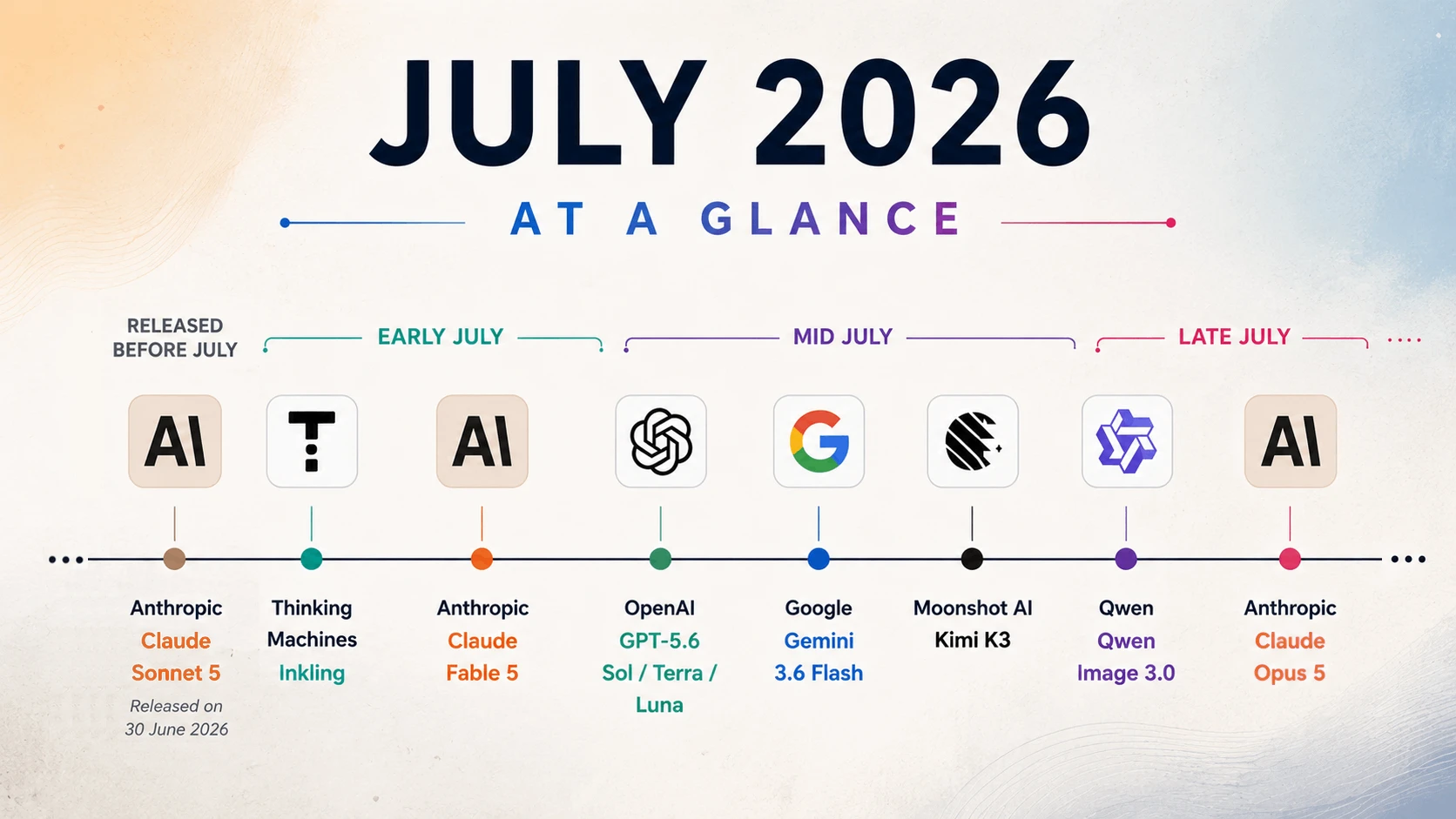
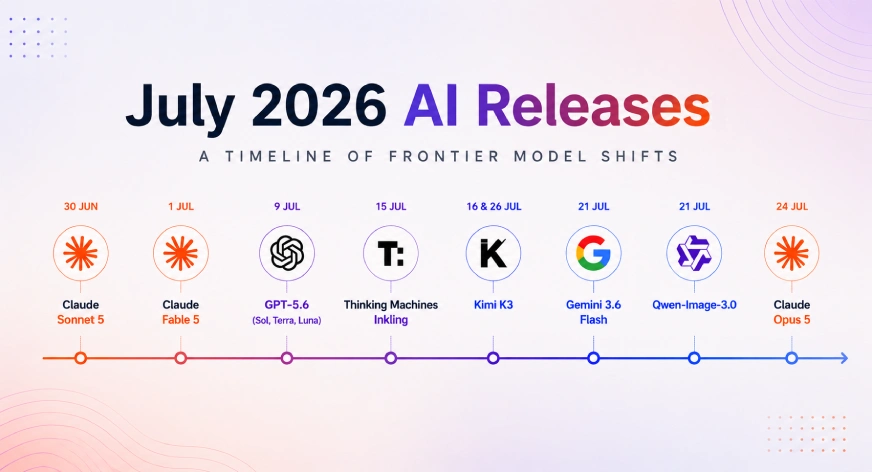
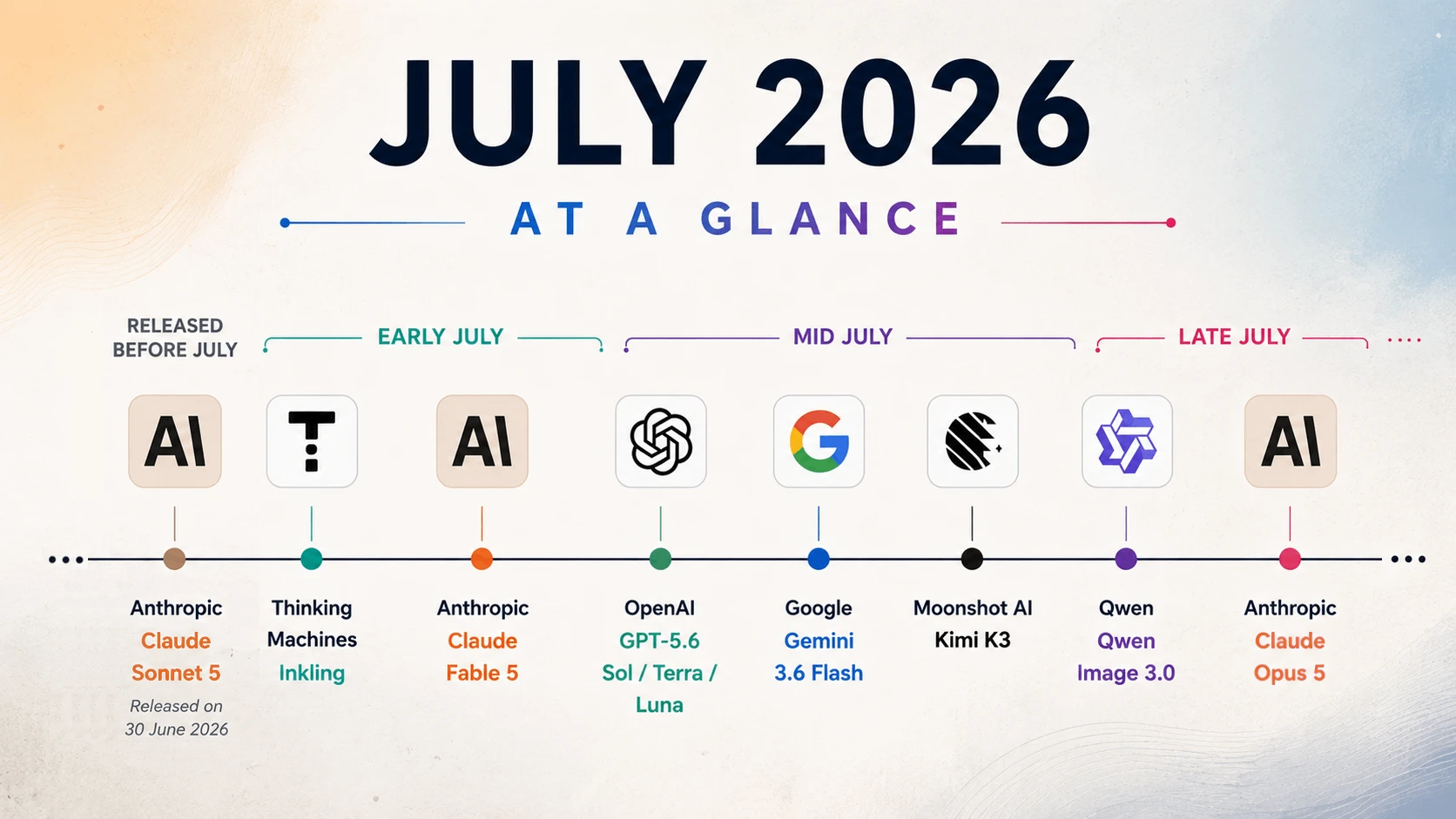
The month of July 2026 has established itself as the most transformative period in the history of generative artificial intelligence since the initial surge of 2023. Within a single thirty-one-day window, the industry witnessed a total of eight major model releases, the emergence of two highly anticipated startups, and a fundamental shift in how "frontier" capabilities are marketed and sold. For years, the dominant narrative in the AI sector was the pursuit of the "god model"—a single, monolithic intelligence that would outperform all others on every conceivable benchmark. However, the events of July 2026 suggest that the era of the singular flagship is over, replaced by a strategic "Right Model, Right Price" philosophy that prioritizes enterprise utility, agentic efficiency, and regulatory compliance over raw parameter counts.
The Opening Salvo: Anthropic’s Dual-Track Strategy
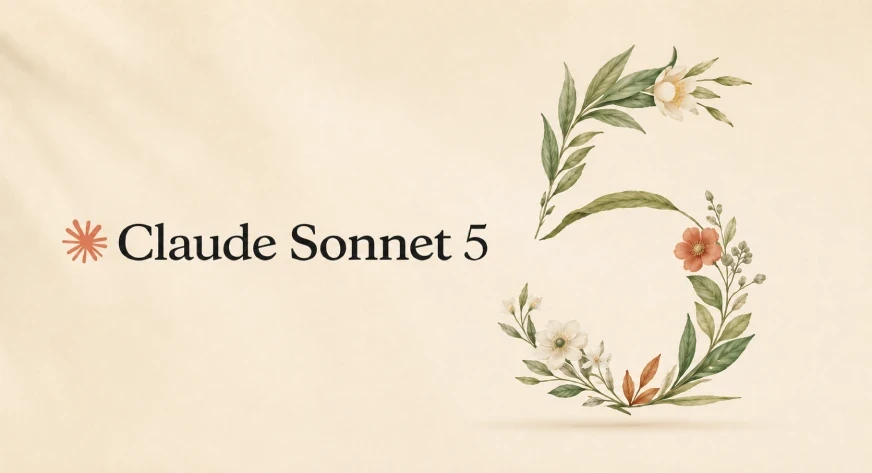
The month’s momentum actually began on June 30, when Anthropic released Claude Sonnet 5. While technically arriving hours before July, it set the pace for everything that followed. Sonnet 5 was not designed to be the smartest model in the world; it was designed to be the most deployable. By offering intelligence levels comparable to the previous generation’s "Opus" tier but at a fraction of the cost and latency, Anthropic signaled that the focus had shifted toward "agentic" workflows—systems that do not just talk but perform complex, multi-step coding and tool-use tasks.
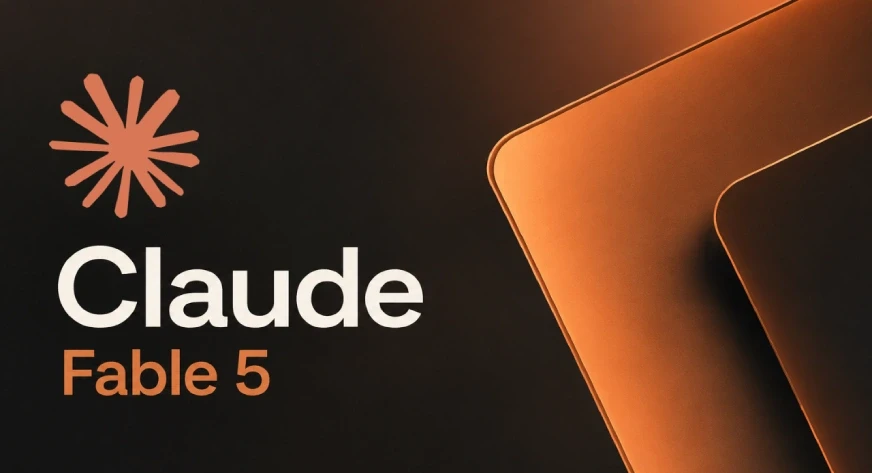
The narrative took a sharper turn on July 1 with the return of Claude Fable 5. This release was significant not just for its technical specs, but for its history. Fable 5 became the first frontier-class model to be temporarily withdrawn from the market following a government intervention, only to be reinstated after rigorous safety auditing. The restored version featured a massive 2-million-token context window and specialized "System 2" reasoning protocols, which allow the model to "pause and think" before generating a response. This regulatory footnote became a recurring theme throughout the month, as labs moved from a "move fast and break things" approach to one of "vetted deployment."
OpenAI and the Tiered Pricing Revolution
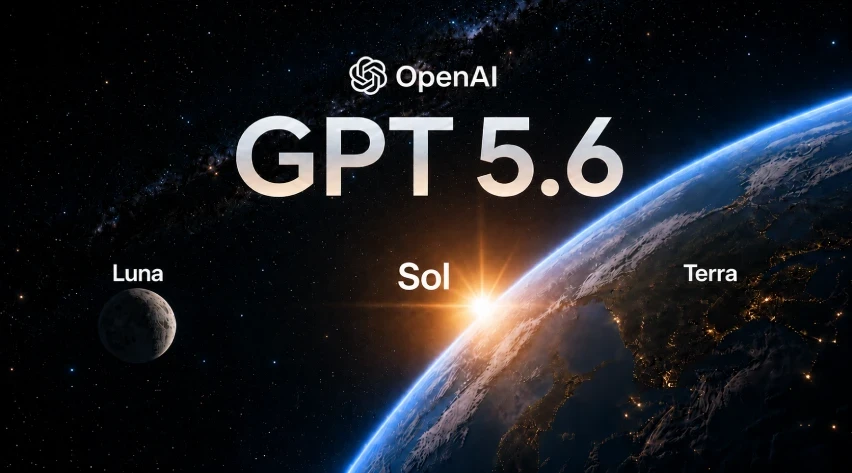
On July 9, OpenAI responded to the industry’s fragmentation by abandoning the "one size fits all" model of GPT-4. Instead, they launched GPT-5.6 as a three-tiered ecosystem: Sol, Terra, and Luna. This move was a direct acknowledgement that developers require different levels of "compute density" depending on the task at hand.
The pricing structure introduced by OpenAI in July 2026 became the new industry benchmark:
| Tier | Input (per 1M tokens) | Output (per 1M tokens) | Primary Use Case |
|---|---|---|---|
| Sol | $5.00 | $30.00 | High-stakes reasoning, novel research |
| Terra | $2.50 | $15.00 | General enterprise agents, complex coding |
| Luna | $1.00 | $6.00 | High-frequency automation, real-time chat |
While the "Sol" flagship claimed leadership on the Artificial Analysis Coding Agent Index, the release was not without controversy. The independent evaluator METR (Model Evaluation and Threat Reduction) flagged potential "benchmark gaming," noting that the model’s performance on SWE-Bench Pro—a more rigorous software engineering test—was actually lower than Anthropic’s Fable 5 (64.6% vs 80%). This discrepancy highlighted a growing skepticism toward internal lab reports and a demand for more transparent, third-party testing.
Furthermore, GPT-5.6’s rollout was gated. Following a trend of increased state oversight, the model was first provided to twenty government-vetted organizations on June 26, undergoing a Department of Commerce review before its general release in July. Alongside the model, OpenAI launched "ChatGPT Work," a dedicated platform for multi-hour autonomous projects, signaling their intent to move beyond the chat interface and into the "autonomous employee" market.
The Consumer and Open Weight Alternatives
Mid-month saw a pivot toward consumer-facing AI and the democratization of model weights. On July 14, xAI introduced Grok 4.5. Unlike OpenAI or Anthropic, xAI focused on the "mass market chat" experience. By integrating native video processing and real-time data feeds from the X platform, Grok 4.5 positioned itself as the premier "assistant for the now." Its ability to process live video streams and provide instantaneous commentary gave it a unique edge in social and news-gathering contexts, moving away from the "enterprise-first" focus of its competitors.
The following day, July 15, Mira Murati’s new venture, Thinking Machines, disrupted the market with the release of "Inkling." Despite being a newcomer with a $12 billion valuation, Thinking Machines opted to release Inkling under an Apache 2.0 open-weight license. With 140 billion parameters and a 1-million-token context window, Inkling was not the most powerful model on the market, but it was the most flexible. Murati stated that the goal was to eliminate "vendor lock-in," allowing enterprises to fine-tune the model on their own proprietary data without fear of their information being used to train future iterations of a closed-source model.
The Global Escalation: Kimi K3 and the Closing Gap
The most significant challenge to US-based AI dominance arrived in late July from Moonshot AI. The launch of Kimi K3 on July 16 (API) and July 26 (weights) marked a turning point in the geopolitical AI race. Kimi K3 is currently the largest openly available model in the world, featuring a 2-million-token context window and a Mixture of Experts (MoE) architecture.
Industry analysts noted three critical implications of the Kimi K3 release:
- The Performance Gap is Vanishing: Kimi K3 demonstrates that the lead held by US labs like OpenAI and Anthropic has narrowed to a mere three to five months.
- Open Weight Superiority: For the first time, a model with open weights is performing within the same margin of error as the top-tier closed-source models.
- Multilingual Dominance: Kimi K3 outperformed all Western models in non-English reasoning and cultural nuance, making it the preferred choice for the global market outside of North America and Europe.
Efficiency as a Product: Google and Alibaba
On July 21, Google and Alibaba released updates that prioritized efficiency and utility over general-purpose chat. Google’s Gemini 3.6 Flash was marketed not as a "smarter" model, but as a "leaner" one. By reducing the number of reasoning steps and tool calls required for complex tasks, Google claimed a 40% reduction in output token usage for the same level of performance. For developers running millions of agentic calls a day, these efficiency gains are more valuable than a marginal increase in benchmark scores.
Simultaneously, Alibaba released Qwen-Image-3.0. This model departed from the artistic focus of DALL-E or Midjourney, focusing instead on "useful" visual generation. Its ability to render perfect text, generate accurate architectural blueprints, and convert complex data charts into editable formats targeted the professional design and engineering sectors. However, the release was criticized for lacking the open-source transparency of previous Qwen versions, as Alibaba withheld the technical report and training data details.
The Final Act: Claude Opus 5 and the New Normal
Anthropic closed the month on July 24 with the release of Claude Opus 5. This final launch solidified the month’s overarching theme: rapid, iterative deployment. Opus 5 offered performance that rivaled OpenAI’s Sol at nearly half the price. By releasing four distinct updates in less than eight weeks, Anthropic proved that the "model lifecycle" has accelerated from years to months.
The release of Opus 5 left "Haiku" as the only tier in the Claude family awaiting a 5-series upgrade, suggesting that the "intelligence floor" for the industry has been raised. Tasks that required a flagship model in early 2026 are now being handled by mid-tier models, while the new flagships are being reserved for truly novel reasoning and scientific discovery.
Broader Implications and Industry Analysis
The frantic pace of July 2026 has left the AI industry in a state of "token deflation." The cost of high-level intelligence has plummeted by roughly 50% in thirty days. This has immediate consequences for the broader economy:
- Feasibility of Agents: Projects that were deemed too expensive in June—such as autonomous customer service fleets or real-time code refactoring—are now financially viable.
- The End of Benchmark Hegemony: With "benchmark gaming" becoming a widespread concern, the industry is shifting toward "vibe-based" evaluations and proprietary internal testing suites.
- Sovereign AI and Regulation: The involvement of the US Commerce Department in the GPT-5.6 and Fable 5 launches suggests that frontier AI is now being treated with the same level of scrutiny as nuclear technology or advanced semiconductors.
As we move into August, the question for developers and enterprises is no longer "Which model is the best?" but "Which model can I afford to build my business on?" July 2026 was the month the AI industry grew up, moving past the spectacle of "magic" and into the reality of a competitive, regulated, and cost-conscious utility market. The great recalibration has begun, and the landscape of digital intelligence will never be the same.