The rapid integration of Artificial Intelligence into social media content creation has ignited a crucial debate within the B2B marketing landscape: what is the enduring role of human imagination and creativity in shaping social content? This question is at the forefront of many B2B marketers’ minds as they navigate an increasingly automated digital sphere. To gain clarity, insights were sought from leading B2B social media marketers representing prominent brands. Their collective responses illuminate a strategic imperative for B2B brands aiming for meaningful differentiation, especially in an era where access to sophisticated AI tools is becoming ubiquitous. As AI-driven workflows enable the generation of virtually limitless social media content, the challenge for brands lies in discovering how to truly stand out. This article explores that very question, examining the evolving partnership between human ingenuity and artificial intelligence in the realm of B2B social media.
The Accelerating Landscape of AI in B2B Marketing
The adoption of Artificial Intelligence within B2B marketing is no longer a nascent trend; it is an accelerating reality. Data from TopRank Marketing’s "2025 B2B Influencer Marketing Report" indicates that 57% of B2B marketers are already leveraging AI for content creation and research. Further research from the Content Marketing Institute reinforces this trend, with 53% of B2B marketers utilizing AI for the generation of creative assets, including images and video. This widespread adoption suggests a fundamental shift in content production methodologies, driven by the promise of increased efficiency and scalability.
However, this surge in AI utilization is simultaneously contributing to a widening trust gap. While marketers are enthusiastically employing AI tools to boost content output, a significant portion of their audience remains skeptical. New research from Gartner reveals a dichotomy: nearly half of B2B buyers use generative AI tools for vendor and product research, yet more than half report receiving misleading information from these tools. Consequently, a substantial 69% of buyers still rely on sales representatives to validate information obtained through AI. This suggests that while AI can enhance the volume and speed of content creation, it is not inherently closing the trust deficit. Instead, credible, original, and human-inspired content that fosters genuine trust is emerging as the critical factor for moving the needle in buyer engagement.

This widening chasm between content quantity and perceived quality underscores the indispensable value of human creativity, particularly on social media platforms where capturing attention is a constant battle and trust has become the ultimate differentiator. To understand how human creativity maintains its relevance in this AI-augmented environment, insights from twelve distinguished social media marketing professionals from leading organizations such as Adobe, HP Enterprise, Slack, and Cision were gathered.
AI Amplifies, Humans Originate: A Collaborative Synergy
A consistent theme emerging from the expert feedback is the concept of a divided creative labor, where AI serves as a powerful amplifier for human-generated ideas, rather than a replacement. AI excels at scaling, accelerating, and broadening the reach of a creative vision. However, the genesis of that vision—the core idea itself—remains firmly within the human domain.

Jared Carneson, Head of Social Media at Adobe, eloquently articulates this symbiotic relationship: "Every breakthrough piece of social content starts with something AI cannot originate: a genuine point of view. AI expands what a creative vision can become, faster, at greater scale, across more surfaces, but imagination is still the source material. The human and AI partnership works because human creativity is not being replaced. It is being amplified." Carneson points to Adobe Firefly: The Unfinished Film as a prime example of this amplification leading to award-winning creative output, showcasing how AI can be a tool to realize ambitious human concepts.
Desirée Porcaro, Senior Director of Social Media at UKG, emphasizes the unique strengths of human marketers: "AI is accelerating content creation and helping us explore ideas, iterate faster, and bring concepts to life more efficiently than ever before. But human imagination is still what gives social content meaning, emotional resonance, and relevance. The subtle details that shape how content is received, cultural context, sentiment shifts, tone, timing, empathy, and instinct, are things humans are uniquely sensitive to. AI can help us move faster, but it’s people who understand the world around us deeply enough to create content that truly connects, builds trust, and inspires action." This highlights that while AI can optimize processes, it lacks the nuanced understanding of human experience that drives genuine connection.

Emily Vonakis, Social Media Manager at RTX, posits that human imagination and creativity are becoming increasingly vital for modern B2B marketers. "I believe human imagination and creativity are becoming even more important in social media marketing. The most impactful social strategies come from understanding people, identifying meaningful narratives, asking better questions, and creating experiences that resonate in a genuine way. The future belongs to marketers who can leverage AI as a tool while still leading with strategic thinking, originality, empathy, and imagination," she states. This perspective frames human creativity not just as a complementary skill, but as the foundational element for strategic success in the evolving B2B social media landscape.
Emotional Connection and Cultural Intelligence: The Human Edge
A second significant theme that emerged centers on the uniquely human capabilities that AI has yet to fully replicate: emotional intelligence, cultural fluency, and the profound ability to craft social media content that resonates with specific audiences in precise moments.

Renee D. Edwards, Director of Global Social Media and Digital Communications at Hewlett Packard Enterprise, underscores the power of human-inspired emotional connection. "Human imagination, creativity, and connection remain the differentiating forces in social media marketing. In an increasingly AI-driven landscape, creativity and storytelling that sparks the imagination is what ensures brands stand out and capture the hearts, minds, and attention of audiences," she explains. This emphasizes that while AI can generate content, it is human-driven narratives that evoke genuine emotion and capture sustained attention.
Mageida Sopon, Social Media Manager at Insperity, views community building as a key indicator of human value. "AI can’t replicate human imagination and creativity. It is people who build community, generate bold ideas that become trends, and discover new ways of connecting that technology, for all its capabilities, has yet to reach," Sopon asserts. This points to the organic, community-driven nature of social media, which is intrinsically linked to human interaction and shared experiences.

Katelyn Brower, Director of Social Media, Public Relations, and Events at First Advantage, offers a cautionary note regarding the over-reliance on AI for creative authority. "Balancing where AI comes into play is critical because you cannot lose sight of the creator in you. It is easy to spot when a social strategy is fully reliant on AI, and when teams do this, true engagement gets sacrificed, losing sight of what a successful social media strategy should be," Brower warns. This highlights the potential for AI-dependency to dilute brand authenticity and ultimately undermine engagement metrics.
Editorial Judgment and Creative Instinct: The Intangibles of Success
Beyond emotion and empathy, several top social media marketing executives pointed to the critical, yet difficult-to-systematize, element of editorial judgment and creative instinct. This encompasses the intuitive understanding of when to take a creative risk, the opportune moment to leverage a trending meme, or when a message requires an element of genuine surprise.
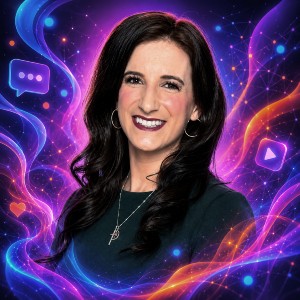
Sabrina Barekzai, Director of Social Media Strategy at Slack, contrasts data-driven insights with human discernment. "AI can’t replace editorial judgment or discernment. So much of social media marketing is creative and editorial-led. Yes, we focus on data and insights, but sometimes you just need to post the trending meme because you just know it will perform well. AI can’t replicate that intuitive feeling. Discernment is part of what makes us human. It’s more important than ever for marketers to test and learn based on their own editorial judgment and not rely on AI just yet," Barekzai states. This emphasizes the value of human intuition in navigating the fast-paced and often unpredictable nature of social media trends.
Amanda Gebhard, Associate Director of Enterprise Social Media at Boston Scientific, observes that even AI companies recognize the limitations of purely AI-generated content. "I actually think human-led creativity is more important than ever for social content. AI pulls from existing material, and most AI-generated content still reads pretty generic and flat. Creativity requires imagination and some level of risk-taking, and the best social content reflects back on its audience through subtle, implicit signals that LLMs aren’t very good at picking up yet. Creative storytelling driven by real people is becoming a strategic differentiator. Even the AI companies recognize this, since many are hiring people or agencies to do this work," Gebhard notes. This points to a market demand for authentic, human-crafted narratives that go beyond the capabilities of current AI models.
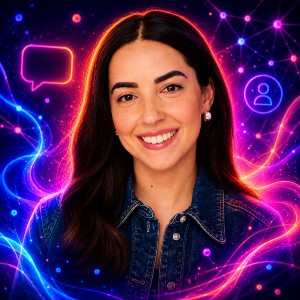
Kirt Zimmer, Senior Manager of Social Media Marketing at Marvell Technology, advocates for embracing human quirks to stand out. "When a message lands with an audience, it’s usually because of an intellectual or emotional connection that is almost never born from generic content. AI is great for strategic direction, organizing complex thoughts, or even a first draft, but its default setting is pretty boring. Inject your quirky, cheeky, or intriguing perspectives if you hope to stand out in a sea of blandness. In other words, be human," Zimmer advises. This highlights that authentic human expression, including its imperfections and eccentricities, is what truly captures attention.
The Rise of "Human Media" in an AI-Dominated World
A third compelling perspective suggests that the proliferation of AI-generated content is, paradoxically, increasing the demand for human-generated content.

Marc Meyer, Head of Social Media at Revvity, proposes a new term: "human media." He argues, "Ironically, I think AI is accelerating the desire for more human-based interactions. I’m willing to coin a new term: ‘human media.’ This revolt is in direct response to the notion that AI generated content is filling a creative void. It is in the sense of quality and speed, but not originality. Not in what makes some designs iconic and memorable. The rise in AI seems to be having a positive impact on H2H communications, or at least it’s increasing the desire for more human-to-human interactions. We can see and smell AI in terms of content creation and discovery, and most of us don’t like the taste." This concept suggests a consumer backlash against the perceived inauthenticity of AI-generated content, leading to a preference for genuine human interaction and expression.
Meghan Meeker, Director of Social Media at Cision, echoes this sentiment, advocating for the "weird" in human-generated content as a means of differentiation. "As marketers, we know our audiences are growing weary of AI slop. Before AI, they were growing tired of clickbait, obvious advertisements, and being sold to every time they scrolled. Authenticity is becoming more and more important as AI usage in marketing increases. People are craving authenticity, vulnerability, humanity, and transparency in the content they consume. So while AI can and should be a tool in every marketer’s toolbox, human imagination and creativity is paramount right now. Make the weird stuff. It might just get your brand noticed in a sea of sameness," Meeker advises. This encourages brands to embrace unconventional and authentic approaches to break through the clutter.

Lisa Marcyes, Global Head of Social Media at Cohesity, demonstrates how human-led ideation remains central even with extensive AI integration into workflows. "The ideas that actually stop people mid-scroll still come from humans. We created a drone show over Las Vegas that looked so real people thought it actually happened. We put a fainting goat in a ransomware video because sometimes a little chaos lands a serious message better than another corporate explainer ever could. AI didn’t come up with either of those. A creative team that deeply understands its audience did. Over the years I’ve found the content people actually remember makes them feel something. It surprises them. Makes them laugh. Makes them uncomfortable. Makes them feel seen. We still need humans for that," Marcyes asserts. This highlights that while AI can assist in execution, the groundbreaking ideas that evoke strong emotions and memorability originate from human insight and a deep understanding of audience psychology.
Creativity as the Ultimate Competitive Edge in B2B Social Media
The data unequivocally supports the notion that AI is a powerful force multiplier for B2B marketers. Those who disregard its potential risk forfeiting significant productivity gains. However, in an environment where AI can churn out content at an industrial scale, originality has become the scarcest and most valuable resource in B2B social media.

The distinction between B2B social media content that captures attention and content that merely populates a feed hinges on a fundamentally human question: Does it resonate? Does it surprise? Does it reflect something genuine about the audience? According to the "State of B2B Thought Leadership in 2026 Report," 78% of B2B marketers acknowledge that interactive and experiential content significantly boosts repeat engagement, yet only one-third consistently integrate these elements into their campaigns. This presents a substantial opportunity for brands willing to prioritize imagination and leverage AI for accelerated execution.
In the framework of "Best Answer Marketing," the system of trust is built upon precisely this kind of originality. Credible voices, authentic storytelling, and content that actively earns engagement—rather than passively filling a queue—are the cornerstones of brand signals that hold weight across all channels, including the AI-powered platforms now shaping how buyers discover and evaluate expertise.

The marketers poised to lead in this evolving landscape are those who view AI not as a replacement for creativity, but as a potent accelerator. The insights from these twelve leading B2B brands clearly delineate the boundary between AI’s capabilities and the unique contributions of humans. It is within this demarcation that true brand differentiation resides, solidifying human creativity as the paramount competitive edge in the future of B2B social media.
For organizations seeking to elevate their B2B marketing creativity and harness the power of human ingenuity in an AI-augmented world, a strategic focus on authenticity, emotional connection, and original storytelling will be paramount. By embracing AI as a tool to amplify these core human strengths, brands can forge deeper connections with their audiences and achieve lasting differentiation.