

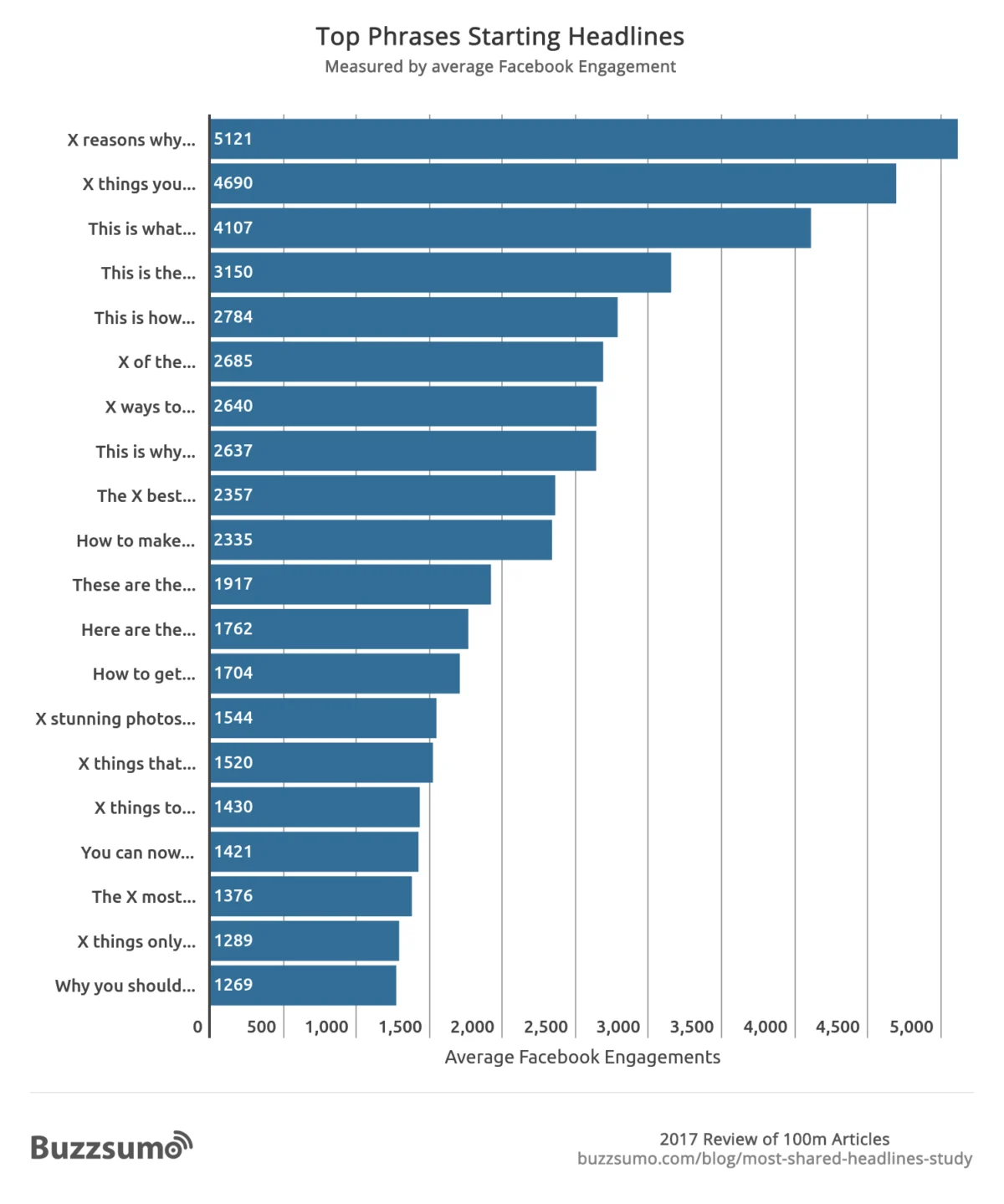
In an increasingly saturated digital landscape where content competes for fleeting attention, the art and science of headline writing have undergone a significant transformation. A landmark study by BuzzSumo, building upon its pioneering 2017 research, analyzed a colossal 100 million headlines shared across Facebook and Twitter between 2019 and 2020. This extensive analysis, published in March 2021, reveals a stark evolution in audience preferences and algorithmic influences, providing crucial insights for content creators and publishers striving for maximum engagement.
A Chronology of Shifting Dynamics: From 2017 to 2020
The foundational 2017 study, spearheaded by BuzzSumo co-founder Steve Rayson, offered the first comprehensive look into the anatomy of highly shared headlines. At that time, Facebook engagement was heavily swayed by overtly emotional language and curiosity-driven phrases. Headlines containing trigrams like "will make you," "melt your heart," or "are freaking out" consistently topped the charts. Content formats such as quizzes (e.g., "can we guess," "only X in") and tribal narratives ("X things only [group] will understand") also proved exceptionally popular, tapping into readers’ desires for self-identification and communal belonging. The optimal headline length identified in 2017 was approximately 15 words and 95 characters, indicating a preference for more descriptive titles. The number ’10’ emerged as a "magic number" for listicles, followed closely by ‘5’, ’15’, and ‘7’.
However, the digital ecosystem is anything but static. Several critical developments reshaped the landscape between 2017 and 2020. Facebook, in particular, initiated significant algorithmic adjustments designed to combat clickbait and promote higher-quality content. In May 2017, the platform announced it would demote headlines that exaggerated story details with sensational language. This was followed by a pivotal update on January 19, 2018, where Facebook declared its intention to prioritize news content from "trustworthy sources." Further refinement occurred on June 30, 2020, focusing on boosting original and authoritative news reporting. Concurrently, the sheer volume of online content surged by an astounding 64% since 2016, leading to what experts term "content overload." These factors collectively pressured content creators to adapt their headline strategies, moving away from past tactics that, while once effective, were increasingly being penalized or ignored by a more discerning audience.
The 2020 Landscape: Precision, Instruction, and Nuance
The latest BuzzSumo research reveals a dramatic departure from the 2017 findings, underscoring a maturation in both social media algorithms and audience preferences.
Optimal Headline Length and Specificity:
Contrary to the longer formats that thrived in 2017, the 2019-2020 analysis indicates a distinct shift towards conciseness. The ideal headline length for top-performing content on Facebook and Twitter is now 11 words and 65 characters. This represents a reduction of approximately four words and 30 characters since the previous study. This change reflects the audience’s growing demand for "speed to insight" – a quick, clear understanding of an article’s value proposition before clicking. Outdated studies advocating for snappy six-word headlines are definitively debunked; modern headlines need to be specific and detailed enough to draw readers in, yet efficient in their delivery.
The Power of Numbers Reaffirmed:
While headline length has contracted, the efficacy of numbers remains largely consistent. The number ’10’ continues its reign as the "magic number" for driving engagement. Beyond ’10’, single-digit numbers from three to ten consistently generate the most social media shares on both Facebook and Twitter. Interestingly, larger double-digit numbers like ’15’ and ’20’, which previously performed well, have seen a decline in favor. This suggests that audiences are less inclined to engage with lengthy lists, preferring more digestible, concise numerical presentations. The research found no strong preference for odd or even numbers within the top 20, indicating that the specific digit itself (within the optimal range) is less critical than the mere presence of a number.
The Decline of Overt Emotion and the Rise of Instructional Content:
One of the most striking findings is the near disappearance of explicitly emotional or sensational headlines on Facebook. Phrases like "will make you laugh" or "melt your heart," once highly effective, are now rarely seen in top-performing content. The once-dominant trigram "will make you" saw its average shares plummet from 8,691 in 2017 to a mere 143 in 2020 for its top headline. This sharp decline directly correlates with Facebook’s efforts to demote clickbait.
In their place, two categories of headlines have surged:
- Instructional Headlines: These commanding phrases, often using modal verbs like "you need to," "you should," or "you must," proved exceptionally successful on Facebook. Trigrams such as "you need to" (ranked #6), "need to know" (ranked #7), and "everything you need" were prevalent. Experts like Ross Simmonds and Brian Dean highlight that this shift reflects a human desire not to miss out on crucial information and a preference for content that offers clear, actionable takeaways. Amanda Milligan notes that such language inherently demonstrates authority, signaling that the source is providing essential, expert-backed guidance.
- Hyperbolic Phrases: While overt emotionalism waned, a subtler form of exaggeration, or hyperbole, continues to resonate. Phrases like "one of the most" or "of the best" perform well when referencing genuinely exceptional content. This suggests that audiences still appreciate content that highlights outstanding quality, but demand that the headline’s promise be met by the article’s substance.
The Fading of Quizzes and Tribal Content:
Headlines featuring quizzes (e.g., "can we guess your real age?") and tribal identifiers (e.g., "X things only moms of twins understand") have also largely vanished from the top-performing lists. These formats, once social media darlings, are now perceived as relics of a past internet era, often associated with low-quality, engagement-bait content that algorithms actively suppress.
Platform-Specific Nuances and Growing Homogeneity:
While there are increasing overlaps, distinct preferences persist across platforms:
- Facebook Engagement: The top-performing trigrams on Facebook include "of the year" (often tied to rankings or awards), "in X years" (signaling newness, often as part of "for the first time in X years"), and phrases indicating surprise or curiosity. Starting phrases frequently include numbers (listicles), instructional cues, and guidance-oriented language ("how to"). Ending phrases are often time-centric, particularly those related to "2020" or "2021," reflecting a heightened interest in current events and the impact of the pandemic.
- Twitter Engagement: Twitter audiences exhibit a strong appetite for analytical and research-backed content. The trigram "future of" is highly effective, as are starting words like "study" and "report." Ending phrases on Twitter emphasize immediacy and reactivity, with "2020" being exceptionally dominant, signifying a platform where current affairs and timely insights thrive. Curiosity and story-based headlines also find significant traction.
Intriguingly, the study notes a growing homogeneity in headline phrases across platforms. In 2017, only one phrase overlapped between the top 20 on Facebook and Twitter; by 2020, this number had risen to eight, representing a jump from 2.5% to 20% similarity. This suggests that certain universal appeal structures can work across networks, although platform-specific optimization remains crucial.
Engagement Discrepancy and Publisher Shifts:
A notable finding is the widening gap in average shares. The most engaging Facebook trigram in 2020 garnered 590 times more average shares than the top Twitter phrase. While Facebook saw a 3x increase in average shares for its top phrase, Twitter experienced a nearly 4x decrease in average shares for its most popular phrases, despite its monthly active users remaining relatively stable. This could indicate a greater diversification of content on Twitter, diluting average shares for common phrases, or a fundamental shift in how Twitter users engage with and share content.
The publisher landscape also underwent a radical transformation, particularly on Facebook. The platform’s commitment to "trustworthy news" resulted in major news organizations like CNN.com, Dailymail.co.uk, NBCNews.com, Washingtonpost.com, CBSNews.com, and Time.com dominating the top-shared headlines. This shift reinforces the importance of authority and credibility in content distribution, especially on platforms that actively curate news feeds.
Expert Reflections and Strategic Implications
Leading marketing experts broadly affirmed the study’s findings, offering valuable insights into their implications. Heidi Cohen, Chief Marketing Officer at Actionable Marketing Guide, emphasized that the report reflects significant changes in customer behavior due to the pandemic, advocating for marketers to focus on "core marketing basics" and continuous audience research. Rand Fishkin, founder of SparkToro, highlighted the study’s role in "myth-busting" outdated notions about social media content, particularly the shift away from pure clickbait and overly emotional triggers.
Ross Simmonds, founder of Foundation, pointed out the fascinating adoption of instructional copy ("you need to," "you should") by mainstream publishers, tying it to the human desire to stay informed and avoid missing out. Brian Dean of Backlinko underscored the "huge shift" on Facebook from BuzzFeed-style clickbait to instructional content, emphasizing that "today’s Facebook users need to know that the content is going to teach them something new." Amanda Milligan, Marketing Director at Fractl, further elaborated that instructional language signals authority and expertise, fostering trust and a desire to learn from credible sources.
For content creators and publishers, the collective wisdom from this research points to several critical strategies:
- Prioritize Value and Specificity: Headlines must clearly articulate the value proposition, whether it’s an actionable takeaway, a new insight, or a definitive ranking. Be specific and detailed enough to entice, but concise enough for quick consumption.
- Embrace Instructional and Hyperbolic Language (Carefully): For Facebook, instructional phrases (e.g., "you need to know," "how to") and carefully crafted hyperbole (e.g., "one of the most") can drive engagement by promising essential knowledge or exceptional content.
- Leverage Numbers Strategically: Stick to the "magic number 10" and single-digit listicles. These formats effectively segment information and promise digestible content.
- Tailor to Platform Strengths: While some headline phrases are cross-platform, optimize for each network. Twitter audiences, for instance, prefer research-backed content and real-time updates, whereas Facebook responds well to instructional content and narratives of newness or significance (e.g., "of the year").
- Focus on Immediacy and Relevance: Time-centric headlines, particularly those related to current events or recent years, resonate strongly.
- Build Authority and Trust: In an era where platforms prioritize trustworthy sources, content from reputable publishers and experts naturally gains more traction. Headlines that reflect this authority will perform better.
- Test and Adapt Continuously: The digital landscape is ever-changing. Regular analysis of headline performance using tools like BuzzSumo’s Content Analyzer is essential for staying ahead of algorithmic shifts and evolving audience preferences.
Methodology in Brief
The 2019-2020 BuzzSumo study analyzed 100 million article headlines to identify the most engaging three-word phrases (trigrams) and their characteristics. To prevent results from being skewed by individual viral posts or dominant publishers, the analysis excluded topic-specific trigrams (e.g., "Game of Thrones") and included only one headline trigram example per domain. Additionally, the three most shared examples of each trigram were removed to mitigate the impact of outliers. This robust methodology, inspired by Steve Rayson’s original work and executed by BuzzSumo’s Co-Founder and CTO Henley Wing Chiu, ensures that the findings are based on reliable and broadly applicable trends.
In conclusion, the era of simplistic clickbait is largely over. Successful headline writing in the current digital climate demands a nuanced understanding of audience psychology, algorithmic behavior, and platform-specific dynamics. By focusing on clarity, value, instruction, and strategic framing, content creators can effectively navigate the complexities of social media and ensure their stories reach their intended audiences.








