rifanmuazin
The realm of Search Engine Optimization (SEO) is undergoing a profound transformation in 2026, marked by expansion rather than fundamental alteration. While traditional search engines like Google and Bing retain their importance, the discipline now encompasses AI-driven discovery, the burgeoning influence of social media platforms, and the interactive interfaces of chatbots. The foundational principles of clarity, structured content, authoritative sourcing, and relevance remain paramount, yet their application has diversified across an ever-multiplying array of digital touchpoints. A recent survey conducted by Yoast, gathering insights from 59 SEO professionals, illuminates how the industry is navigating these significant shifts.
The survey pool was diverse, ranging from practitioners with less than a year of experience to seasoned veterans boasting over a decade in the field. Their responses collectively paint a picture of an industry actively seeking equilibrium amidst rapid technological advancements. While a select few demonstrate a proactive approach, positioning themselves ahead of the curve, the majority are still in the process of adapting their strategies and understanding the full scope of the new digital environment. The most effective SEOs are not merely reacting to the pervasive rise of artificial intelligence; they are strategically leveraging it to reinforce and amplify existing best practices: robust technical foundations, the creation of exceptionally high-quality content, and the establishment of genuine online authority. Conversely, some within the community are engaged in internal debates over the very nomenclature of the profession, questioning whether "SEO" adequately captures its broadened scope. Yoast’s analysis delves into these critical discussions, offering its perspective on the enduring definition and future trajectory of SEO in this dynamic era. For a comprehensive understanding, including deeper insights from Yoast’s principal SEOs, Carolyn Shelby and Alex Moss, a full PDF report is available for download.
The Digital Transformation: Contextual Background
The landscape of information discovery has irrevocably changed. The period leading up to 2026 has witnessed an unprecedented acceleration in the development and deployment of Artificial Intelligence, particularly Large Language Models (LLMs). These sophisticated AI systems, exemplified by conversational agents and generative AI features embedded within search engines (such as Google’s Search Generative Experience, or SGE), have begun to reshape user interaction with information. No longer are users solely reliant on a list of "ten blue links"; AI-powered overviews, direct answers, and personalized summaries are becoming increasingly common.
Simultaneously, social media platforms, traditionally seen as channels for connection and entertainment, have evolved into significant search and discovery engines. Younger demographics, in particular, frequently turn to platforms like TikTok, Instagram, and YouTube not just for product recommendations but also for tutorials, news, and even B2B insights. This fragmentation of search behavior necessitates a holistic approach to visibility, moving beyond the confines of traditional web search. The SEO professional of today, and certainly of 2026, must therefore possess a broader understanding of how information is consumed and discovered across this diverse ecosystem.
1. SEO: Not Dying, But Decisively Evolving
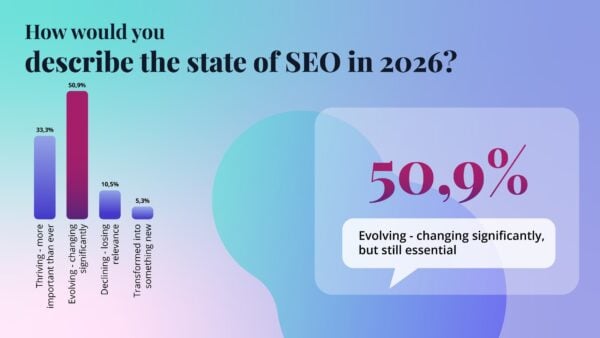
The survey revealed a clear consensus: SEO is far from obsolescence. A significant 51% of respondents characterized SEO as "evolving," while another 33% confidently stated it was "thriving." Only a marginal 10% held the pessimistic view that the discipline was "declining." This nuanced divide in perception appears to correlate with experience. Veterans with over a decade in the field were more likely to view SEO as thriving, suggesting a deeper understanding of its cyclical nature and constant adaptation. Newcomers, perhaps more sensitive to immediate shifts, leaned towards the "evolving" perspective.
Alex Moss, Principal SEO at Yoast, succinctly captures this sentiment: "SEO has always adapted to changes in the SERP, and now it’s adapting again. The traditional SERP is gone, but SEO isn’t." Carolyn Shelby, also a Principal SEO at Yoast, elaborates, emphasizing that the evolution is not due to a breakdown of fundamentals: "SEO is evolving, but not because its fundamentals are breaking. The interfaces between users and information are changing. Search is no longer confined to ten blue links, but the need for structured, relevant, trustworthy content hasn’t diminished."
The Yoast perspective firmly aligns with the majority: SEO is enduring, albeit in an expanded form. While traditional search engines from Google and Bing continue to be primary drivers of web traffic, the emergence of AI-driven discovery, powered by LLM assistants, profoundly influences user perception and information access. The optimal strategy for SEO professionals in 2026 is not to choose between these paradigms but to master both, ensuring visibility and authority across all relevant discovery channels. This dual mastery is crucial for navigating an environment where a user’s initial interaction with information may occur through an AI summary rather than a direct website click. Broader industry reports indicate a growing percentage of "zero-click searches" where users find answers directly within the search results or AI summaries, highlighting the necessity for brands to secure representation in these new answer formats.
2. The Enduring Name: Search Engine Optimization
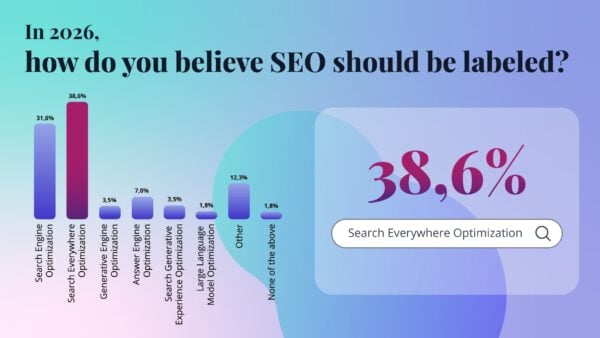
Despite the broadening scope, the debate around rebranding SEO remains contentious. The survey indicated strong support for a new label, with 39% advocating for "Search Everywhere Optimization," surpassing the 32% who preferred to retain "Search Engine Optimization." Even among experienced professionals, 41% favored the broader "Search Everywhere Optimization." However, this preference for a descriptive new term does not necessarily warrant an immediate rebrand.
Both Alex Moss and Carolyn Shelby argue against a name change. Moss states, "The term ‘SEO’ will stay. The role will widen to include AI and other disciplines, but the name doesn’t need to change." Shelby concurs, noting, "The term ‘SEO’ still holds shared meaning, credibility, and market recognition. There’s no strong evidence that rebranding the discipline itself is necessary or beneficial. Responses favoring ‘Search Everywhere Optimization’ reflect where SEO outcomes now surface, not a fundamentally different practice." She further emphasizes that "Rebranding risks fragmenting understanding. ‘SEO’ is already well-established outside the industry."
Yoast’s stance is that the term "SEO" remains functional and recognized. While acknowledging the significant changes, particularly with AI overviews, chatbots, and diverse social media platforms, the core activities of SEO remain constant. Professionals must still prioritize technical website foundations, ensure high-quality content, actively engage in brand building, and cultivate online authority. "Search Everywhere Optimization" aptly describes the reach of modern SEO, but it doesn’t alter the essence of the practice. The challenge lies not in renaming the field, but in effectively communicating how the established principles of SEO apply to and optimize for AI and social platforms.
3. Good SEO is Inherently LLM Optimization
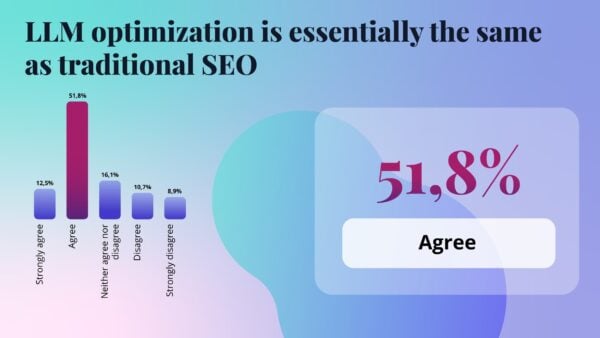
A compelling finding from the survey highlights the intrinsic connection between traditional SEO and optimization for Large Language Models. A robust 64% of respondents agreed that "LLM optimization is essentially the same as traditional SEO." Interestingly, 59% admitted they "aren’t even actively optimizing for LLMs." This apparent contradiction could be interpreted as either complacency or, more accurately, an acknowledgment that existing best practices naturally cater to AI systems.
A small contingent (9%) strongly disagreed, arguing that LLMs prioritize synthesis over traditional rankings, thus requiring a distinct focus on structured data and brand mentions. While not entirely wrong, this perspective doesn’t contradict the broader sentiment. LLMs, in essence, are advanced information consumers. They reward the same fundamental SEO principles—clarity, relevance, and authority—but with increased stringency. They seek well-organized, factual, and trustworthy content to generate their summaries and answers.
Alex Moss reinforces this view: "If you’re undertaking good SEO, you’re already optimizing well for LLMs. The tactics don’t change—just the audience." Carolyn Shelby adds, "The same practices that make content discoverable and trustworthy for search engines also make it usable for LLMs. The confusion arises when people treat LLMs as a completely separate system. In reality, LLM visibility rewards clarity, relevance, and authority—all long-standing SEO principles."
Therefore, LLM optimization is not a distinct discipline but rather an advanced application of existing SEO strategies tailored for AI. The core principles of clarity, structure, and authority are amplified. The key difference is that AI systems are far less forgiving of mediocre or poorly structured content, effectively raising the bar for overall quality and precision. This shift implies that content must be not only human-readable but also machine-understandable to achieve optimal visibility in AI-driven responses.
4. Rankings Still Matter, But Their Role Has Evolved
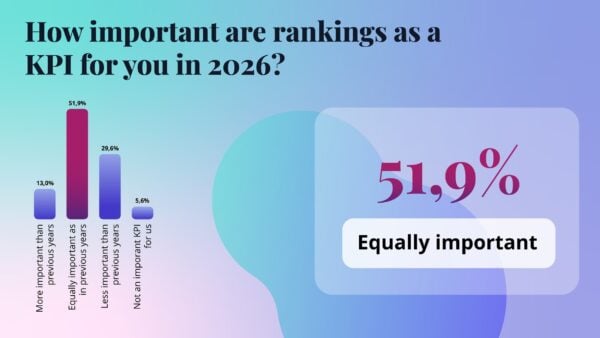
The traditional metric of search engine rankings continues to hold sway, yet its significance has undergone a sensible re-evaluation. The survey found that 52% of SEOs believe "rankings are equally important" as before, while 30% consider them "less important." This nuanced shift reflects the emergence of AI overviews and other zero-click search results, where achieving top visibility does not automatically equate to direct website traffic.
For AI systems, however, traditional rankings still serve as a powerful authority signal. Content that ranks highly in conventional search results is often deemed more credible and authoritative by LLMs when synthesizing information for user queries. Alex Moss explains, "Traditional rankings are still important because agents still search the web to ingest information. If you aren’t visible there, it’s less likely an agent will identify and select you into their responses." Carolyn Shelby adds a critical distinction: "Rankings still matter, but they are no longer the end goal. They are a proxy for visibility, not a guarantee of impact. Focus on presence."
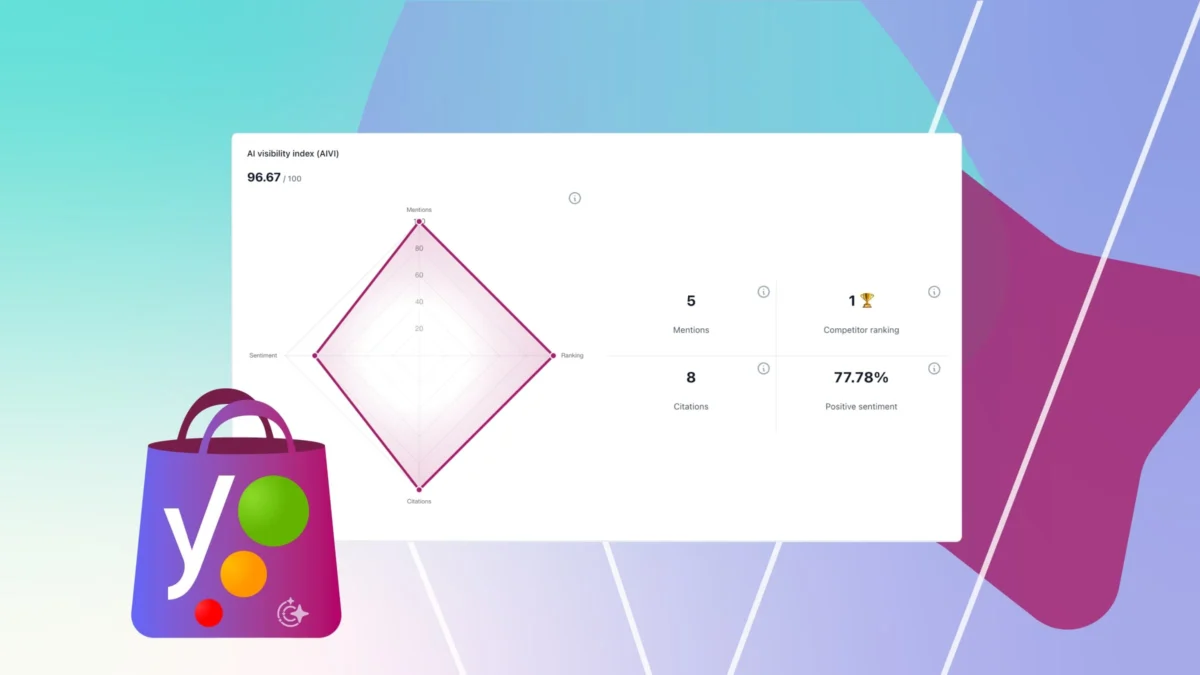
Yoast’s perspective advises a move away from an exclusive obsession with securing the number one ranking. Instead, SEO professionals should broaden their focus to tracking overall visibility and presence across the digital ecosystem. This includes monitoring whether content is cited in AI-driven answers, mentioned in industry discussions, or featured in prominent knowledge panels. In 2026, AI visibility and citations are emerging as the new, more comprehensive indicators of authority and relevance, complementing, and in some cases surpassing, traditional keyword rankings. Market data from leading analytics firms suggests that a substantial portion of search queries now result in zero clicks to a website, reinforcing the need to adapt KPI tracking beyond mere organic traffic.
5. Organic Traffic: Still King, But Facing New Challenges
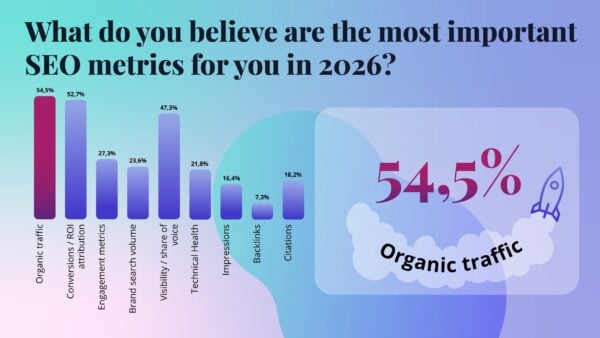
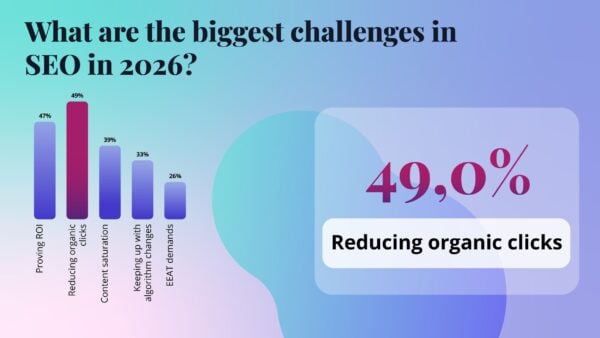
A significant paradox of 2026 SEO is evident in the data regarding organic traffic. A majority of respondents (55%) still identify "organic traffic" as their primary metric. Yet, almost half (49%) simultaneously cite "reducing organic clicks" as their biggest challenge. This highlights a fundamental tension: organic traffic remains highly valued, but its quantity is undeniably under pressure from the evolving search landscape.
This situation implies a shift in the quality and intent behind organic clicks. While the sheer volume of traffic might decrease due to AI summaries providing answers directly, the clicks that do occur are likely to come from users with higher intent, seeking deeper engagement, verification, or specific actions (e.g., purchases, sign-ups) that AI overviews cannot fully satisfy.
Carolyn Shelby articulates this transformation: "As AI reduces the need for some visits, success looks like being represented correctly rather than merely visited. Visibility in AI overviews doesn’t always drive clicks, but it builds legitimacy. Being included signals that you’re a credible source, even when users don’t click."
Yoast’s advice is clear: SEOs must adapt their understanding of "success." While organic traffic remains important, its interpretation must evolve. Focus should shift to metrics that reflect engagement, conversion, and brand legitimacy, even in the absence of a direct click. This includes analyzing referral traffic from AI answers, brand mentions, and the quality of leads generated, rather than solely the volume of raw organic visits. Businesses should prioritize high-value content that encourages further exploration, even after an initial AI interaction.
6. Content Saturation: The Looming Threat
The proliferation of AI-generated content presents a significant challenge for SEO professionals. Nearly 40% (39%) of respondents identified "competing with AI-generated content" as their top challenge, far outweighing concerns about a "talent gap" (4%). The issue isn’t merely the existence of poor AI content, which is easily dismissed. The more formidable threat lies in the ability of AI to produce "good enough" content at an unprecedented scale, potentially flooding the internet with noise and making it exceptionally difficult for genuinely valuable content to penetrate.
Alex Moss stresses the human element: "AI-generated content is artificial. Humans connect with stories, not regurgitated lists." Carolyn Shelby reinforces the idea that AI raises the bar for quality: "AI doesn’t change what good content is, but just raises the bar. Mediocrity doesn’t just rank lower; it disappears."
Yoast’s perspective is that content strategies must pivot towards distinctiveness and deep expertise. To cut through the noise, content must offer unique perspectives, demonstrate original research, provide genuine human insights, and foster authentic connection. Generic, fact-based content that AI can easily replicate will struggle for visibility. The emphasis must be on E-E-A-T (Experience, Expertise, Authoritativeness, Trustworthiness) as defined by Google, ensuring content is not only accurate but also deeply informed and trustworthy. This requires investing in subject matter experts, original data collection, and compelling storytelling that AI cannot yet fully replicate.
7. Overlooking a Fast-Growing Search Channel: Social Platforms
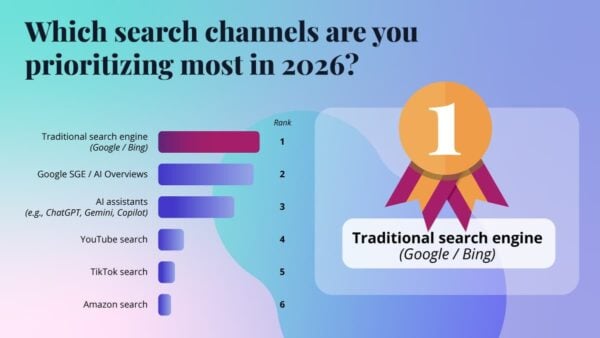
While traditional search engines (Google/Bing) predictably remain the top priority for SEOs, the survey revealed a potential blind spot: TikTok search ranked only fifth, falling below Amazon. This oversight is critical given the rapid ascent of social media as a primary discovery channel, especially among younger demographics. These platforms are not merely for entertainment; they serve as robust search engines for recommendations, tutorials, lifestyle advice, and even professional insights.
Alex Moss highlights the indirect SEO benefits of social presence: "Social platforms influence how LLMs perceive freshness and authority. Ignoring them means missing out on signals that AI systems value." Carolyn Shelby adds, "You don’t need to rank on TikTok, but you do need to be discoverable there. LLMs scrape social platforms for real-world signals."
The Yoast Perspective underscores that modern SEO must integrate social platforms like TikTok into its strategy. While direct "ranking" on these platforms might not be the primary goal, discoverability is paramount. LLMs are increasingly scraping social media for fresh, trending, and authoritative content, viewing it as a real-world indicator of relevance and popularity. A strong presence on a relevant video channel, for instance, can significantly boost a brand’s overall authority and likelihood of being cited in AI responses. Therefore, diversifying content creation to include short-form video, engaging social posts, and community interaction is becoming an integral part of a comprehensive SEO strategy. Industry data shows a consistent year-over-year increase in social media platforms being used for product and information discovery, particularly among Gen Z and Millennials.
Broader Impact and Strategic Implications for SEO in 2026
The collective insights from the Yoast survey and expert commentary paint a clear picture of SEO in 2026: it is a more complex, multi-faceted discipline than ever before. The core principles of creating valuable, accessible, and authoritative content remain foundational, but the channels through which this content must be optimized and the metrics by which its success is measured have expanded dramatically.
For businesses and content creators, the implications are significant:
- Holistic Digital Strategy: SEO can no longer operate in a silo. It must be deeply integrated with content marketing, social media marketing, brand building, and overall digital PR efforts. A blended mindset, as Carolyn Shelby suggests, is essential, ensuring SEO aligns with broader business goals.
- Quality Over Quantity (Especially for Content): The rise of AI demands an unparalleled commitment to content quality, originality, and depth. Generic or rehashed content will simply disappear in a sea of AI-generated noise. Investment in expert content creators and unique insights will yield disproportionate returns.
- Adaptation of KPIs: The traditional focus on keyword rankings and raw organic traffic must evolve to include metrics like AI citations, brand mentions, visibility in AI overviews, and the quality/intent of clicks. Success is increasingly about being accurately represented and deemed authoritative across diverse platforms.
- Embrace Multi-Channel Discovery: Ignoring social search or other emerging discovery platforms is a strategic error. A comprehensive SEO strategy must consider how content is found and consumed across all relevant digital touchpoints, recognizing that AI itself learns from these diverse sources.
- Technical SEO Remains Critical: The underlying technical health of a website—its speed, mobile-friendliness, structured data implementation, and crawlability—becomes even more crucial. AI systems, like traditional search engines, rely on a well-structured web to efficiently ingest and process information.
In conclusion, the SEO professional of 2026 is, as Alex Moss suggests, "100% all three: marketers, brand builders, and SEO specialists." The role has undeniably widened, intertwining deeply with brand and marketing objectives. While the name "Search Engine Optimization" may persist due to its established recognition, its practical application now extends far beyond traditional search engines, encompassing a vast and intricate network of AI systems, social platforms, and conversational interfaces. The future of SEO is not about abandoning the past, but about strategically expanding its reach and refining its principles to thrive in an increasingly intelligent and interconnected digital world.
For those seeking to delve deeper into these transformative trends and gain a competitive edge, the full Yoast Perspective PDF report offers detailed analysis and actionable insights.