
 rifanmuazin
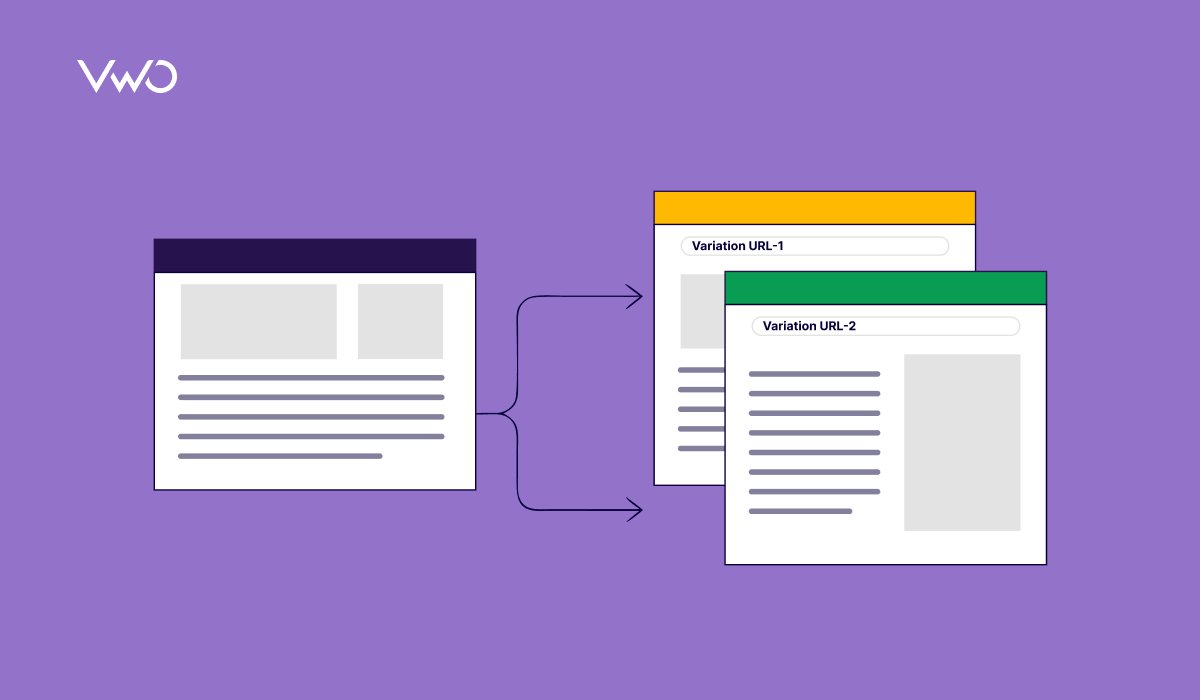
As digital ecosystems become increasingly complex, the limitations of traditional A/B testing have prompted a strategic shift toward split URL testing, a method now considered essential for high-stakes web architecture overhauls and complete brand redesigns. While standard A/B testing relies on JavaScript to modify specific elements on a single page, split URL testing—often referred to as redirect testing—distributes traffic between two or more distinct URLs. This approach allows organizations to test entirely different page structures, backend logic, and server-side configurations without the performance lag or “flicker” effect often associated with client-side modifications.
In the 2026 digital marketplace, the ability to validate major structural changes before a full-scale rollout is no longer a luxury but a prerequisite for maintaining competitive conversion rates. This guide provides an exhaustive analysis of the leading split URL testing platforms, their technical capabilities, and the strategic considerations for selecting the optimal tool for enterprise growth.
The Strategic Shift to Split URL Testing
The evolution of web development frameworks has necessitated a parallel evolution in experimentation. In the early 2020s, simple UI tweaks were often sufficient to drive incremental gains. However, by 2026, the rise of headless CMS architectures and sophisticated server-side rendering has made split URL testing the preferred method for several critical scenarios.
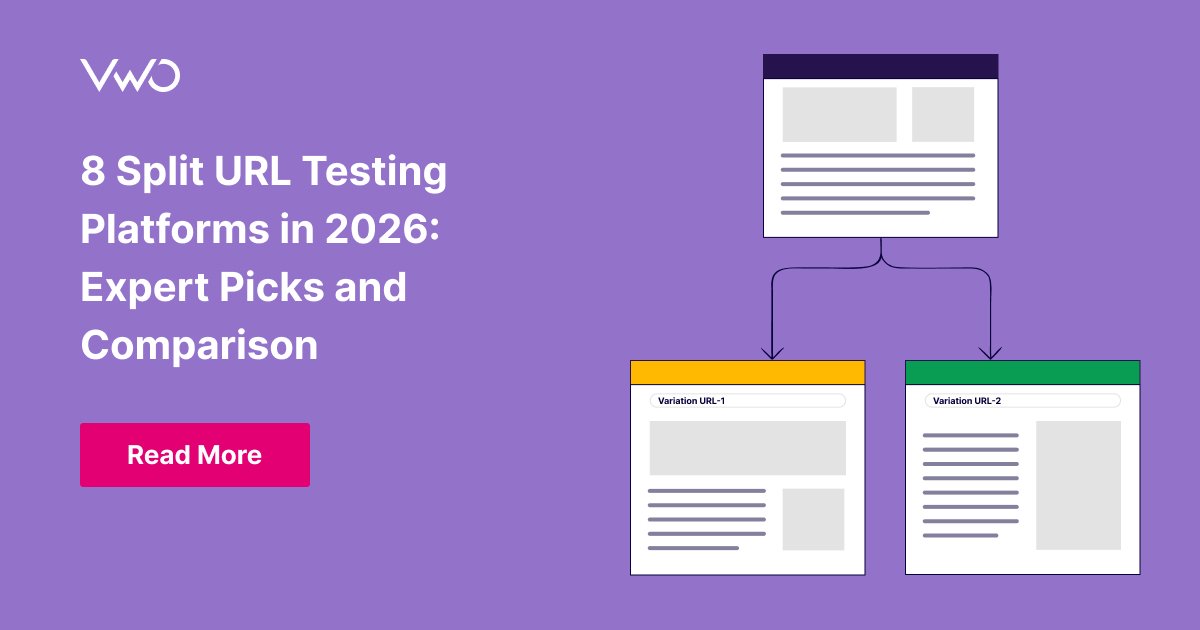
Digital teams typically deploy split URL testing when executing a complete website redesign, where the layout, navigation, and content hierarchy are fundamentally different from the original. It is also the standard for testing complex checkout flows, where multiple steps must be validated as a cohesive unit rather than isolated variables. Furthermore, as companies migrate from legacy stacks to modern frameworks like Next.js or Nuxt, split URL testing allows for a controlled comparison of performance metrics and user engagement between the old and new technical environments.
Comprehensive Comparison of Top Platforms in 2026
The following table summarizes the primary features and pricing structures of the industry’s leading platforms, reflecting the current market landscape where AI integration and server-side flexibility are the dominant trends.
| Tool Name | Core Specialization | Key Features | Pricing Model |
|---|---|---|---|
| VWO | All-in-one Experimentation | Split URL testing, heatmaps, AI Copilot, multi-device campaigns | Custom (Based on tracked users) |
| Webtrends Optimize | Enterprise Performance | Flicker-free delivery, behavioral targeting, WYSIWYG editor | 30-day trial; Custom pricing |
| Convert Experiences | Privacy & Performance | Full-stack testing, AI Wizard, Bayesian/Frequentist engines | Starts at $299/month (Annual) |
| Optimizely | Scalable Personalization | AI-powered variations, multi-arm bandit, automatic allocation | Custom (Available on request) |
| Kameleoon | Real-time Optimization | CUPED testing, contextual bandit algorithms, no-code editor | Starts at $495/month |
| Omniconvert | eCommerce Growth | Advanced segmentation, stacked tests, Adobe Analytics sync | Free tier; Paid from $245/month |
| Optimonk | Conversion Pop-ups/Messaging | AI suggestions, multi-campaign tests, flicker-free delivery | Free tier; Paid from $19/month |
| ABsmartly | Data Ownership & Velocity | Group Sequential Testing (GST), API-first, zero lag | Event-based (Approx. €60K/year) |
Detailed Analysis of Industry Leaders
VWO (Visual Website Optimizer)
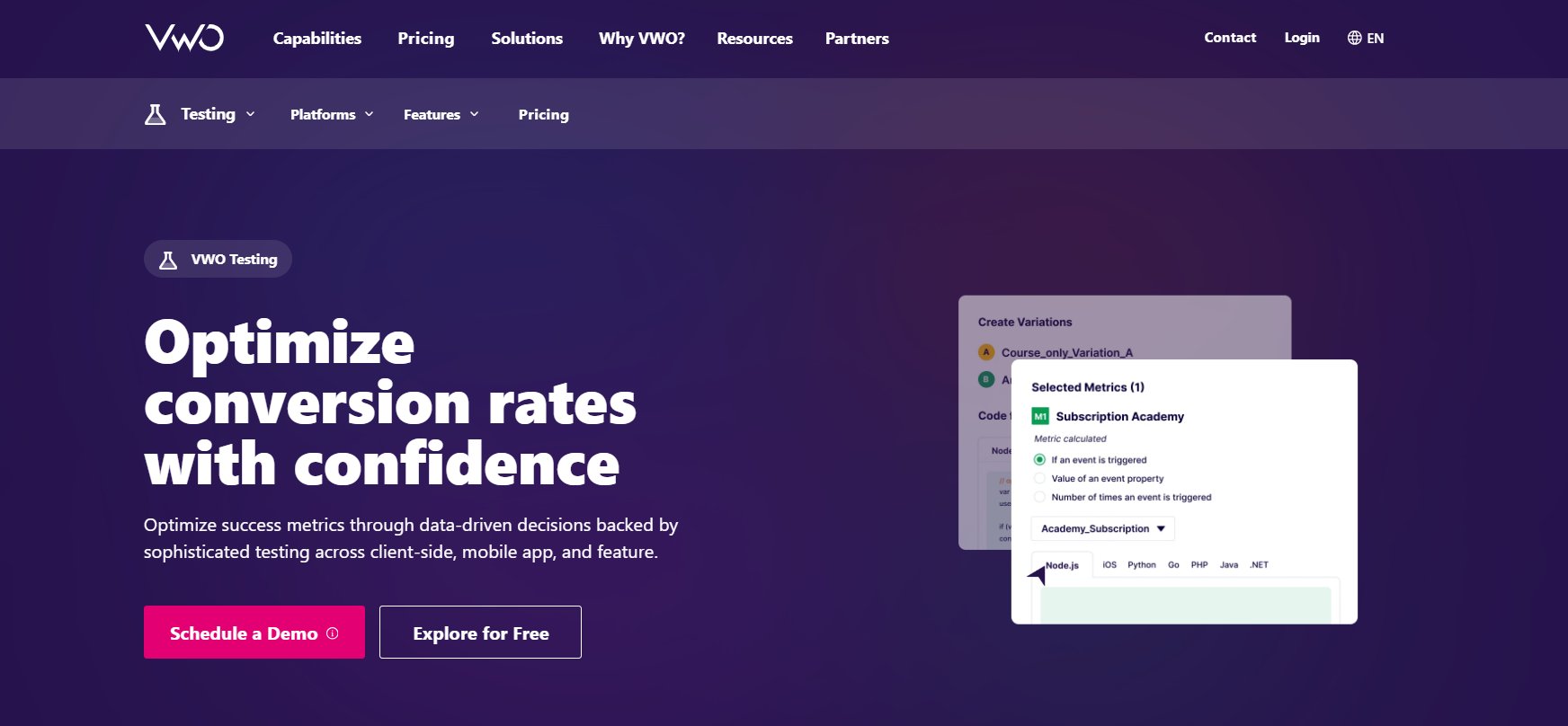
VWO has maintained its position as a market leader by integrating qualitative and quantitative data into a single interface. Its split URL testing capabilities are particularly robust, allowing teams to route traffic across separate URLs to validate backend updates and full redesigns. A notable feature in 2026 is the AI Copilot, which assists teams in generating test variations and predicting user responses.
Industry experts recommend VWO’s best practice of routing all variations through a uniform redirect path. By setting the control’s traffic to 0% and treating it as a variation, every user undergoes the same redirect process, ensuring that latency does not bias the results—a critical factor in maintaining statistical integrity.
Optimizely
Recognized for its enterprise-grade scalability, Optimizely focuses on minimizing engineering dependency. Its 2026 platform heavily utilizes machine learning to automate traffic allocation toward winning variations in real-time. For organizations running hundreds of concurrent experiments, Optimizely’s multi-arm bandit algorithms ensure that revenue loss is minimized during the testing phase by favoring the higher-performing URL as data accumulates.
Convert Experiences
For privacy-conscious organizations, Convert Experiences has become the go-to solution. It offers a flicker-free environment that is essential for maintaining a seamless user experience. The platform’s support for both Bayesian and Frequentist statistical engines provides data scientists with the flexibility to analyze results according to their preferred methodology. Its recent integration of an AI Wizard has significantly reduced the time required to set up complex audience segments.
The Technical Imperatives: Performance and Data Integrity
In the high-speed environment of 2026, the technical execution of a split URL test can significantly impact the validity of the data. One of the primary concerns for developers is the “flicker” effect—a brief flash of the original page before the redirect occurs. Modern platforms have solved this through edge-side redirects and lightweight SDKs that execute at the server level before the page reaches the browser.
Supporting data suggests that even a 100-millisecond delay in page load can result in a 7% reduction in conversions. Therefore, top-tier platforms like ABsmartly and Kameleoon emphasize “zero lag” delivery. ABsmartly’s use of Group Sequential Testing (GST) allows for faster decision-making by enabling teams to stop experiments as soon as statistical significance is reached, rather than waiting for a predetermined sample size.
Key Features to Evaluate in 2026
When selecting a split URL testing partner, organizations must look beyond basic redirect capabilities and evaluate how the tool fits into a broader growth strategy.
Revenue Visibility and Funnel Analysis
A platform must provide more than just click-through rates. It should offer revenue-linked metrics that demonstrate how a new landing page or checkout flow impacts the bottom line. Integrated KPI dashboards allow stakeholders to view the financial implications of an experiment at a glance.
Multi-Environment Support
As businesses expand across web, mobile apps, and IoT devices, the testing platform must support experimentation across the entire stack. Server-side testing capabilities are essential for validating backend logic, such as pricing algorithms or product recommendation engines, which cannot be tested through simple UI redirects.
Behavioral Insights
Understanding why a variation performed better is as important as knowing that it did. Platforms that integrate heatmaps, session recordings, and user surveys provide the qualitative context necessary to iterate on successful tests. Dom Light, a prominent figure in digital experimentation, notes that the most successful businesses are those that use testing tools to gain a comprehensive view of customer interactions across the entire funnel, rather than viewing experiments in isolation.

Chronology of Testing Evolution
The journey to the sophisticated platforms of 2026 has been marked by several key milestones:
- 2010–2015: The rise of basic client-side A/B testing tools focused on simple HTML/CSS changes.
- 2016–2020: The introduction of server-side testing and the move toward personalization.
- 2021–2024: The integration of AI for automated variation generation and the focus on privacy compliance (GDPR/CCPA).
- 2025–2026: The emergence of “Edge Experimentation,” where tests are executed at the CDN level to ensure near-zero latency and perfect synchronization across global audiences.
Broader Impact and Market Implications
The widespread adoption of split URL testing is reshaping how product teams operate. The “move fast and break things” mantra of previous decades has been replaced by a “validate before you build” philosophy. This shift reduces the sunk cost of failed redesigns and ensures that engineering resources are only spent on features proven to drive value.
Furthermore, the integration of experimentation data with Customer Data Platforms (CDPs) and Business Intelligence (BI) tools has turned testing into a core business intelligence function. In 2026, the data generated from a split URL test is often used not just to optimize a website, but to inform product development, marketing strategy, and even inventory management.
As the market continues to mature, the barrier to entry for sophisticated experimentation continues to lower. Free tiers from providers like Omniconvert and Optimonk allow startups to begin testing with minimal investment, while enterprise solutions provide the rigorous security and scalability required by global corporations. The result is a more data-driven internet where user experience is continuously refined based on empirical evidence rather than subjective design choices.








