


A recurring question echoes in boardrooms and client meetings each month: "What is the current role and purpose of SEO, and why should we continue investing in an agency for it?" This isn’t a sign of doubt, but rather a necessary interrogation from senior leaders seeking clarity in a rapidly shifting digital marketing environment. These are precisely the kinds of questions that drive innovation and require astute, data-backed answers. The challenge lies not in the questions themselves, but in the tendency to offer vague responses or to oversimplify complex issues for executive audiences. As an SEO professional with a decade of experience dedicated to continuous improvement, I aim to provide direct, data-informed answers to these critical inquiries.
The Shifting Sands of Search: Is SEO Truly "Dead"?
The assertion that "SEO is dead" is a persistent myth, often perpetuated by a misunderstanding of its evolution. The truth is, the SEO practices prevalent five years ago are indeed obsolete, but the core discipline remains vital, albeit transformed. Data from the top 40,000 websites in the U.S. indicates a modest decline of approximately 2.5% in organic traffic from Google in 2025 compared to the previous year. This is not a collapse, but a nuanced shift. Certain sectors, particularly publishers heavily reliant on informational queries, have experienced more significant drops, largely due to the emergence of AI Overviews directly answering user questions.
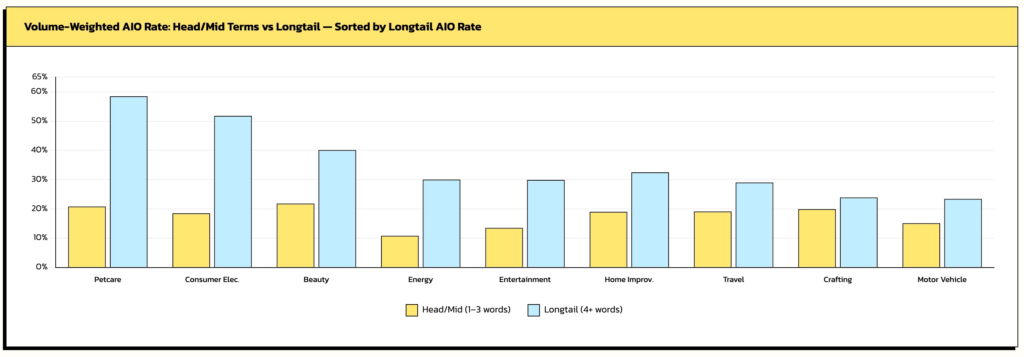
However, this decline in some areas is counterbalanced by a significant increase in overall Google searches. Crucially, the nature of these searches is evolving, with a notable rise in longer-tail, conversational queries. This trend is a direct consequence of user adaptation to AI-powered search interfaces and Google’s own promotion of AI modes, such as Gemini. This increasing complexity in search behavior exacerbates the "zero-click" challenge. As more users engage with AI-driven answers, traffic to websites can decrease.
Despite these shifts, the fundamental importance of SEO is arguably greater than ever. The more pertinent question for businesses is not "Is SEO dead?" but rather, "Is our current SEO strategy effective for our specific business objectives?" Organic search continues to be a primary driver of website traffic across most industries, often yielding a superior return on investment over time compared to paid media. When integrated holistically into a broader search strategy, it offers unparalleled cost-efficiency. The channel itself is not broken; rather, certain outdated approaches are no longer sufficient.
The definition of "visibility" in search has undergone a profound transformation. While ranking number one for a query now answered by an AI Overview may have diminished value, becoming a cited source within that AI answer can be significantly more impactful. Research indicates that brands cited in AI-generated answers experience a 35% increase in organic clicks and a staggering 91% rise in paid clicks compared to those not featured. This signifies a new battleground, and early adopters who recognize this shift are already gaining a competitive edge.
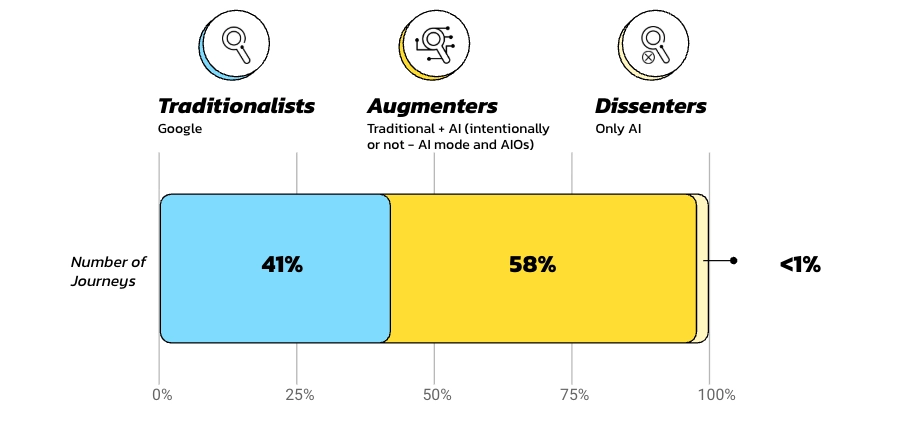
A critical strategic consideration for businesses is to understand the extent to which their customer base is migrating to AI search platforms and how this migration compensates for any potential loss of traditional organic traffic. Predicting these trends over a 12-24 month horizon is essential for future-proofing marketing efforts. Current data suggests a significant exposure to AI in search, with an estimated 60% of searchers encountering AI results, a figure projected to rise to 80% within a year. This growing prevalence underscores the necessity of adapting SEO strategies to encompass AI-driven search environments.

Embracing the New Frontier: AEO and GEO
The emergence of new terminology like AEO (Answer Engine Optimization) and GEO (Generative Engine Optimization) reflects the evolving nature of search. While these terms signify a focus on optimizing for AI-generated answers, they do not necessitate entirely new teams or strategies. Analysis of new business briefs over the past three years reveals a dramatic increase in AI search as a core requirement, with nearly all SEO RFPs now including it. Existing clients are actively engaged in developing and testing AI search strategies.
AEO and GEO refer to the practice of optimizing content to appear within AI-generated responses across platforms like Google AI Overviews, ChatGPT, and Perplexity. A recent survey of over 250 enterprise CMOs and digital leaders found that 94% planned to increase investment in AEO/GEO in 2026, with those already investing reporting measurable business impact. Notably, visitors arriving from LLM-generated responses have been observed to convert at approximately twice the rate of standard organic visitors, albeit in fewer sessions, indicating a disproportionately high-quality audience.
The good news for traditional SEO professionals is that much of the foundational work in SEO continues to benefit AI visibility. Strong authority, well-structured data, and in-depth content remain crucial, as AI Overviews often draw from top-ranking pages. Furthermore, traditional Google Search Engine Results Pages (SERPs) remain a primary research destination for consumers. The key is to avoid treating SEO and GEO as entirely separate workstreams with distinct budgets.
However, the divergence between traditional SEO and AI-driven search optimization is accelerating. Data indicates that the overlap between AI Overviews and Google’s top 10 results has halved in just one year, from 76% to 38%. Platforms like Gemini and Perplexity demonstrate even lower overlap with Google’s rankings, suggesting they are developing independent models for what constitutes a valuable answer. This divergence means that strategies effective for Google rankings may not be equally effective for LLM citations. Businesses positioning themselves for the future are those building the capability to understand and test both, recognizing that a single strategy will not suffice indefinitely.
The Content Conundrum: AI as a Tool, Not a Replacement
The rapid advancement of generative AI has fueled a growing question: "Can we simply use AI to create all our content now?" While technically possible to generate vast amounts of AI-written content, this approach is fraught with peril, not because AI itself is penalized, but due to the inherent nature of unedited AI output. Google’s official stance is clear: AI-generated content is not penalized solely based on its origin. Instead, the penalty applies to content that is shallow, generic, mass-produced, and lacks value. Unsupervised AI content often falls into this category.
The true bottleneck is not the generation of copy, but the substance and originality of the content. Readers are discerning; they can often detect generic, forgettable content that offers no proprietary insights or unique perspectives. While AI can handle the production, it cannot replicate human expertise, original research, or genuine brand voice without significant human oversight.
Experiments conducted by organizations like Brainlabs have demonstrated the efficacy of AI-assisted content creation when human expertise is layered on top. By using AI to handle production for content that originates from real client conversations and pain points, and with channel experts reviewing and shaping the output, significant gains in AI Share of Voice and Mention Rate were achieved. This approach highlights the critical distinction: AI as a production tool, humans as the strategic architects of substance.

The challenge mirrors that of generative AI in ad creative. While AI can produce infinite variations of creative at low cost, the real difficulty lies in selection – knowing which creative to test and why. Similarly, AI in content production removes the barrier of creation but does not dictate what is worth saying. The most effective use of AI in content is as a rapid first drafter, requiring substantial human expertise, data, insight, and opinion to imbue it with value. While testing unconventional methods, such as generating all copy with AI, can offer insights, it carries significant risks.
Unlocking SEO’s ROI: Rethinking Measurement and Value
The inability to clearly see the return on investment (ROI) from SEO often stems from fundamental misinterpretations of how its value is measured. Unlike paid search, where a direct link can be drawn from click to conversion, SEO’s impact is more complex, characterized by longer lag times, multi-touch customer journeys, and indirect benefits such as increased brand search volume and reduced branded keyword CPCs. Standard attribution models frequently fail to capture this nuanced value.
In an environment where CMOs often face budget constraints and pressure for immediate justification, SEO is sometimes wrongly expected to mirror the instant results of paid search. However, SEO is an asset-building discipline that compounds over time, unlike paid media, where visibility ceases the moment spend stops. A well-established SEO foundation provides a slowly depreciating asset, whereas reduced SEO investment leads to the erosion of existing assets.
The issue can also be a reporting challenge rather than a performance deficit. Reporting solely on rankings and traffic fails to connect with financial teams focused on revenue and pipeline. A more effective approach involves reporting that links organic performance to tangible business outcomes, such as assisted revenue, cost per acquisition compared to paid channels, and the proportion of qualified pipeline that interacted with organic search.
The rise of AI search further complicates measurement. The collapsing funnel, where discovery, consideration, and conversion can occur within seconds on a single AI platform, raises significant questions about attribution. The lack of access to detailed journey data within these "AI dark funnels" necessitates a shift in measurement approaches. Just as SEO has historically relied on correlation analysis and incrementality testing due to incomplete keyword data from Google, the AI era demands new methods. Tracking prompts becomes crucial, and innovative techniques like holdout tests with AI crawlers may be required to connect impressions with on-site actions.
The Long Game: Understanding SEO’s Time Horizon
The question, "Why does SEO take so long?" often arises from viewing SEO as a short-term tactic rather than a long-term asset-building strategy. The six-to-twelve-month timeline for significant revenue improvements in competitive sectors can be frustrating, especially when compared to the immediate visibility of paid campaigns. However, the duration of SEO investment is directly correlated with its sustained value. A piece of content that earns links and ranks well can drive traffic for years, a stark contrast to the continuous daily spend required for paid search.
The "slowness" of SEO is precisely what underpins its superior long-term return. It’s about building something durable, not acquiring something temporary. Moreover, not all aspects of SEO are slow. Technical fixes can yield near-instantaneous results, and quick wins on existing content can deliver improvements within weeks. A well-prioritized SEO program balances these rapid wins with longer-term strategic investments, building credibility and momentum.
The perception of SEO being "slow" often stems from a lack of early investment or an inadequately prioritized roadmap. It’s not a criticism, but a common reality. The solution is not to abandon SEO, but to initiate or re-evaluate efforts with realistic expectations regarding the timeline for full impact.
Diagnosing Traffic Declines: AI Overviews and Strategic Repositioning
When organic traffic declines, it’s natural to question if SEO is at fault. While internal SEO missteps can be a cause, the most prevalent reason currently is the proliferation of Google’s AI Overviews. These AI-generated summaries, appearing on approximately 30% of queries in 2025, have significantly reduced click-through rates, with some studies indicating drops between 35% and 61%. This effect is amplified by an increase in longer-tail searches that are more likely to trigger AI Overviews.
Understanding the cause of traffic decline is critical, as it dictates the appropriate response. A drop due to a technical issue or penalty requires traditional SEO intervention. However, if traffic is reduced because Google is now directly answering queries, the solution lies in strategic repositioning. This involves creating content designed to be cited within AI answers, rather than solely optimizing for click-through rates.
Before concluding that SEO is failing, it’s prudent to examine conversion rates. Often, the traffic displaced by AI Overviews was low-intent informational traffic. If revenue from organic search has not declined proportionally to traffic, it suggests the channel may be delivering less volume but a similar level of value. Furthermore, integrating AI search traffic and conversions into the analysis can reveal a less alarming overall picture.
The Synergy of SEO and Paid Search
While increasingly rare, the question of why invest in SEO when paid search offers instant results still surfaces. The fundamental answer is that these channels are not substitutes; they serve distinct purposes. Paid search provides visibility only when paid for, disappearing the moment budgets are exhausted or costs escalate. SEO, conversely, focuses on building a sustainable asset – content that ranks, attracts links, and earns trust over time, offering a different investment-to-return timeline and permanence.
Gartner’s 2025 CMO Spend Survey indicates that paid search typically accounts for a larger portion of digital marketing budgets (around 14%) compared to SEO (around 8%). However, sophisticated organizations recognize the complementary nature of these channels. Paid search excels at capturing high-intent demand quickly and with precision. Organic search is superior for building brand authority, engaging users earlier in their decision journeys, and creating returns that are not dependent on continuous spend.
The instinct to cut SEO investment during budget constraints is understandable but often counterproductive. Reducing SEO efforts not only halts progress but begins to erode existing assets, leading to declining rankings, increased competition, and accumulating technical debt. Rebuilding from such a position requires starting over, not simply resuming where efforts ceased. The principle of compounding growth applies in reverse as well.
The justification for investing in both channels lies in long-term strategic advantage. In three years, brands that have consistently invested in building their own owned assets through SEO will be in a far stronger position than those who relied solely on rented visibility from platforms with unpredictable pricing.
What Truly Drives SEO Success in the Modern Era
The persistent questions surrounding SEO’s role and efficacy, particularly in the wake of AI’s integration into search, highlight its inherent complexity. It’s easy to misjudge SEO as either a short-term tactic or a background function requiring minimal active management. Neither approach yields optimal results.
Organizations achieving the greatest success in SEO today share common traits:
- Business Outcome Alignment: They connect SEO performance to tangible business objectives, moving beyond vanity metrics like traffic volume.
- Quality Over Quantity: Content investment is strategically shifted towards genuine quality and depth, rather than sheer volume.
- AI-Native Integration: They are actively building for AI visibility alongside traditional rankings, viewing these as complementary, not competing, priorities.
- Consistent Investment: They maintain sustained investment, understanding that SEO builds durable assets, even when short-term results are difficult to interpret.
These principles are not esoteric secrets, but their execution can be challenging, especially within large organizations where SEO responsibilities are distributed across content, development, and marketing teams.
The fact that these questions are being asked is a positive sign, indicating a serious consideration of the SEO function. The next crucial step is ensuring that the answers received are honest, specific, and strategy-driven, rather than mere dashboard updates. The future of organic search is being redefined, and proactive, informed adaptation is key to navigating this evolving landscape. The upcoming exploration into "The New Organic: What SEO looks like when AI answers first" will delve deeper into these critical strategic shifts.









