

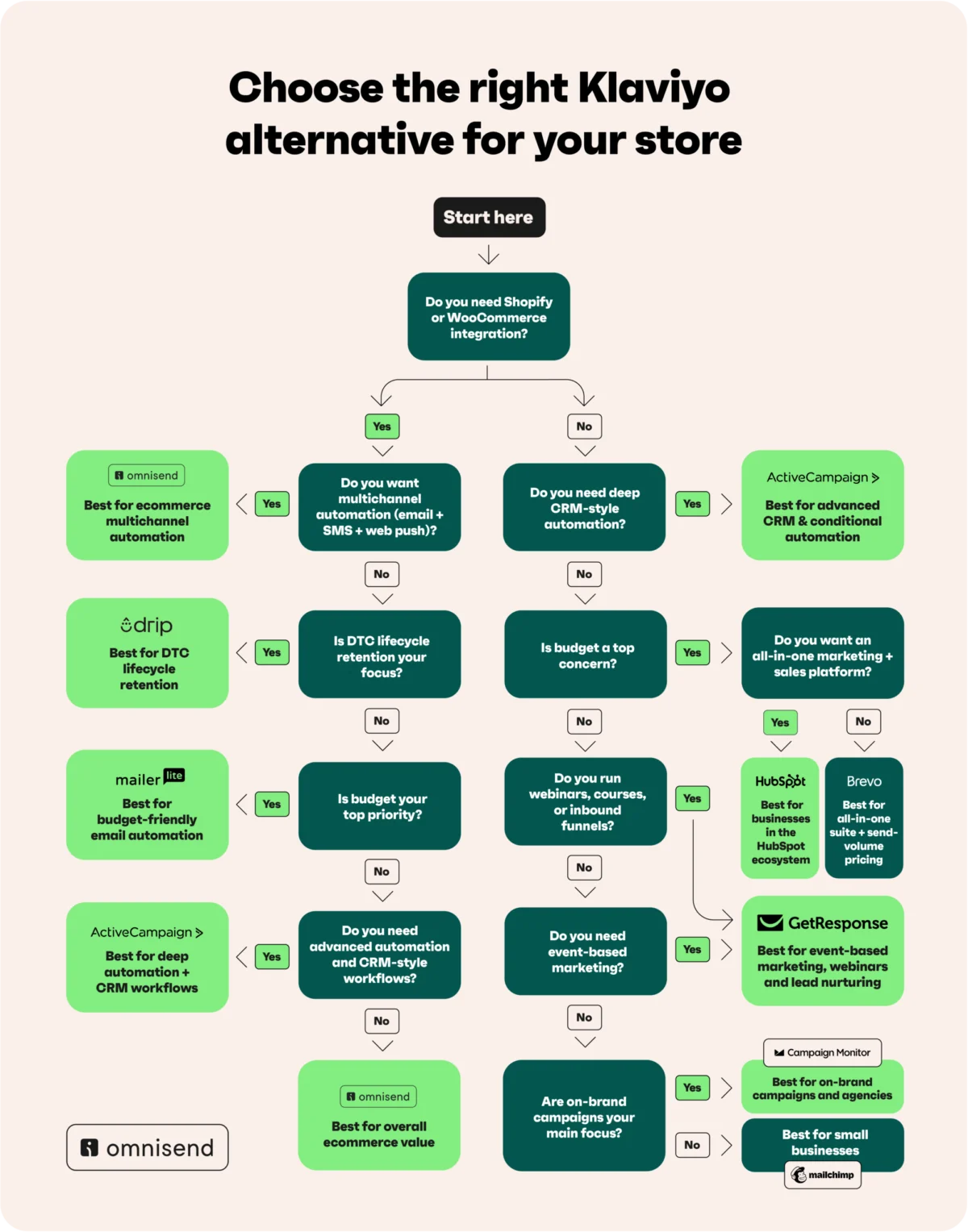
E-commerce businesses are increasingly scrutinizing their marketing technology stacks, leading to a significant shift away from established platforms like Klaviyo in search of more cost-effective, feature-aligned, and user-friendly alternatives. This comprehensive analysis identifies Omnisend as the leading overall value proposition for e-commerce, Drip for specialized subscription-based brands, Brevo for flexible pay-per-email pricing, and ActiveCampaign for those demanding advanced automation and CRM integration. Other strong contenders catering to specific needs include MailerLite, Campaign Monitor, HubSpot, Privy, GetResponse, and Mailchimp. This report delves into the functionalities, pricing structures, and user experiences of ten prominent platforms, offering a clear roadmap for businesses navigating this competitive landscape.
The Shifting Tides: Why E-commerce Brands Are Rethinking Klaviyo
Klaviyo has long been a dominant force in e-commerce marketing automation, renowned for its deep data analytics, sophisticated segmentation capabilities, and robust automation flows tailored for online retailers. However, a significant undercurrent of dissatisfaction has emerged, primarily centered around escalating costs and perceived limitations in customer support. Recent policy changes, notably the shift in February 2025, mandating that plans must match or exceed active profile counts, have further exacerbated these concerns. This change directly impacts businesses with large, potentially uncleaned or inactive contact lists, compelling them to pay for profiles that may not be actively generating revenue, thereby inflating marketing expenditure without a proportional increase in value.

A detailed analysis of over 300 Klaviyo user reviews across prominent platforms like G2, Trustpilot, and Capterra reveals a consistent pattern of pain points. Pricing emerged as the single largest concern, cited in approximately 39% of all reviews (118 out of 300). Users frequently expressed frustration not with the base price tiers themselves, but with the methodology of calculating costs based on active profiles, which penalizes inefficient list management. This sentiment is echoed in online forums, with anecdotal reports from platforms like Reddit’s r/ecommerce community detailing instances of perceived overcharging and the subsequent decision to migrate to alternatives offering better value. For example, one user highlighted a $50 monthly saving and added SMS capabilities by switching to Omnisend.
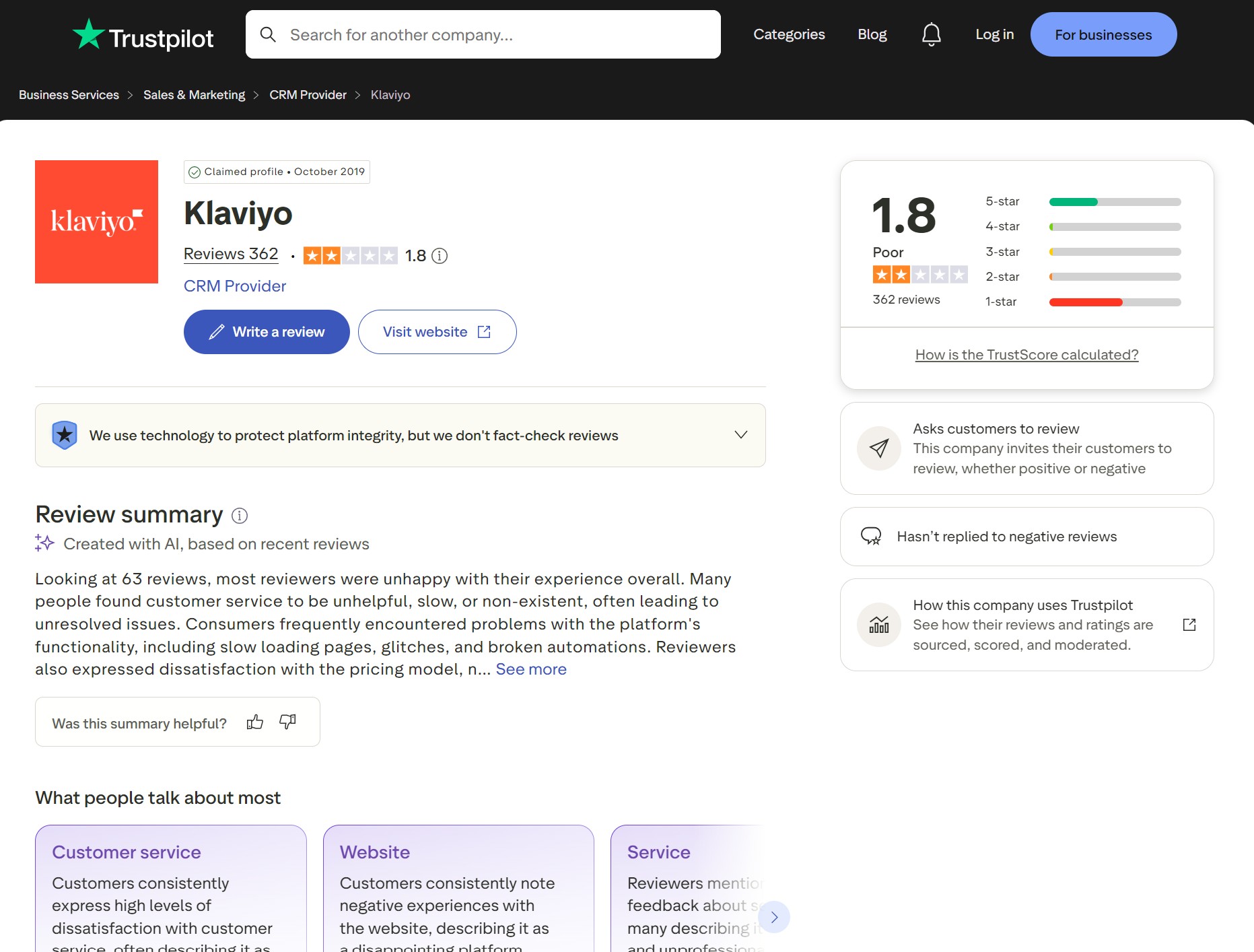
Beyond pricing, customer support ranked as the second most common complaint, appearing in 58 reviews (~19%), indicating a need for more responsive and helpful assistance. Reporting and attribution challenges were mentioned in 38 reviews (~13%), suggesting that while Klaviyo offers deep analytics, some users struggle with its clarity or customization. Integration issues (36 mentions, ~12%) and billing/account trust concerns (34 mentions, ~11%) further underscore the operational friction experienced by a notable segment of its user base. Less frequently cited but still present were a steep learning curve (30 mentions, ~10%) and technical bugs (22 mentions, ~7%). These combined factors have contributed to Klaviyo’s notably low Trustpilot rating of 1.8/5, which lags significantly behind many of its competitors, signaling widespread user dissatisfaction.
Understanding Klaviyo’s Niche and When to Retain the Platform
Despite the growing exodus, it is crucial to acknowledge that Klaviyo retains a powerful value proposition for certain segments of the e-commerce market. Businesses that heavily leverage its predictive analytics, rely on peer benchmarks for strategic insights, or have developed intricate custom integrations via its API might find the cost and effort of migration prohibitive. For these data-rich, enterprise-level operations with highly complex customer journeys and dedicated teams proficient in Klaviyo’s advanced features, the platform’s unique capabilities may still outweigh its cost. Moreover, issues such as an unclean list or neglected automation flows are universal challenges that will persist regardless of the platform, emphasizing the importance of internal process optimization alongside tool selection.

A Comparative Overview: Top Klaviyo Alternatives by Business Need
The market for e-commerce marketing automation is vibrant, with a diverse array of platforms offering specialized strengths. This review leverages hands-on testing, comparing each tool across pricing, e-commerce features, automation capabilities, support quality, ease of use, and ideal use cases.
| Tool | Best for | Free plan? | Starting price (500 contacts) | Migration difficulty |
|---|---|---|---|---|
| Omnisend | Multichannel e-commerce brands of all sizes looking for enterprise features without the learning curve | Yes | $16/month | Very low (1/5) |
| Drip | Subscription businesses that want simpler visual workflows | No | $39/month (2,500 contacts) | Moderate (3/5) |
| Brevo | Budget-conscious marketers who prefer send-based pricing over contact-based | Yes | $9/month | Low (2/5) |
| ActiveCampaign | Deep e-commerce automation with advanced CRM functionality | No | $19/month (1,000 contacts) | Low (2/5) |
| MailerLite | Beginners, creators, and micro-brands needing large send limits | Yes | $12/month | Moderate (3/5) |
| Campaign Monitor | On-brand campaigns and basic automations, with strong agency and team features | No | $13/month | Moderate (3/5) |
| HubSpot | Businesses already in the HubSpot sales and marketing ecosystem | Yes | $20/month per seat (1,000 contacts) | Moderate to high (4/5) |
| Privy | Small Shopify stores focused on lead capture and list-building | No | $30/month (1,500 contacts) | Moderate (3/5) |
| GetResponse | Webinars, lead nurturing, and content monetization | Yes (limited) | $19/month (1,000 contacts) | Low (2/5) |
| Mailchimp | Small businesses and stores with basic customer journeys | Yes | $13/month | Low (2/5) |
| Klaviyo (for reference) | Data-rich e-commerce stores with complex customer journeys | Yes | $20/month (500 contacts) | N/A |
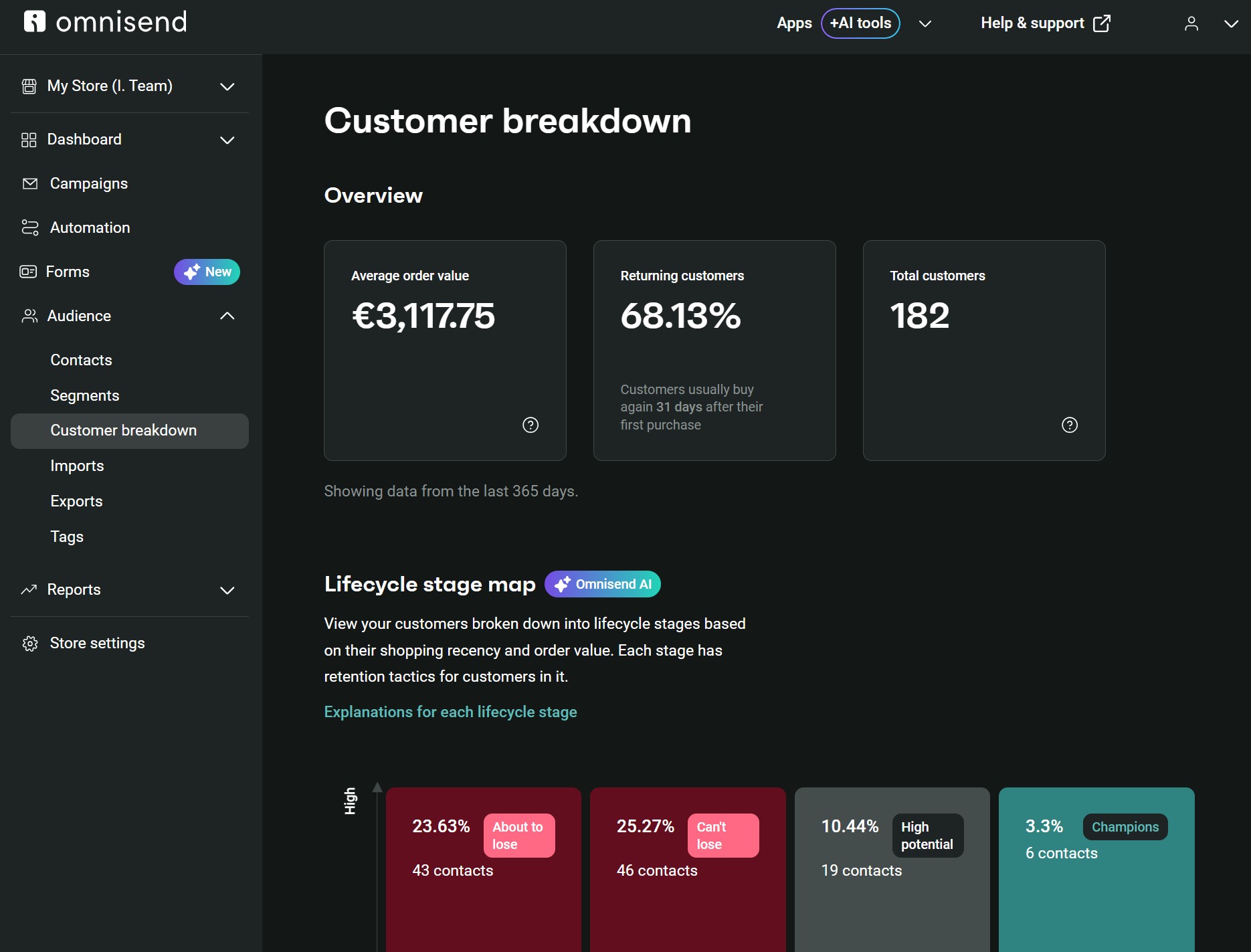
1. Omnisend: The All-Round E-commerce Contender
Omnisend emerges as the most direct and compelling Klaviyo alternative for the majority of e-commerce brands, particularly those operating on Shopify, WooCommerce, and BigCommerce. It offers a robust suite of advanced retention marketing tools—encompassing email, SMS, and web push notifications—within a single, user-friendly platform. This multichannel approach is crucial for modern e-commerce strategies, allowing brands to engage customers across preferred communication channels. Omnisend boasts an impressive 79:1 ROI across all channels in 2025, as reported by its e-commerce customers, highlighting its effectiveness.
Key Features: Pre-built e-commerce automation workflows (e.g., abandoned cart, welcome series, post-purchase), advanced segmentation based on purchase behavior and customer lifecycle stages, drag-and-drop email builder, pop-ups, signup forms, landing pages, and comprehensive reporting tailored for e-commerce. Its integration with major e-commerce platforms is seamless, facilitating rapid data synchronization and activation.
Pricing Advantage: Omnisend consistently undercuts Klaviyo on pricing. For instance, at 1,000 contacts, Klaviyo costs $30 while Omnisend’s Standard plan is $20. At 25,000 contacts, Klaviyo charges $400 compared to Omnisend’s $282. This represents a potential saving of up to 35% at comparable contact tiers, a significant factor for cost-conscious businesses. Omnisend also offers a free plan with access to core email marketing features.
Migration Support: A critical differentiator is Omnisend’s complementary migration service for customers with 250+ contacts. This service promises to transfer contacts, recreate up to four workflows, five forms, and five segments within five business days, significantly reducing the friction often associated with platform switching.
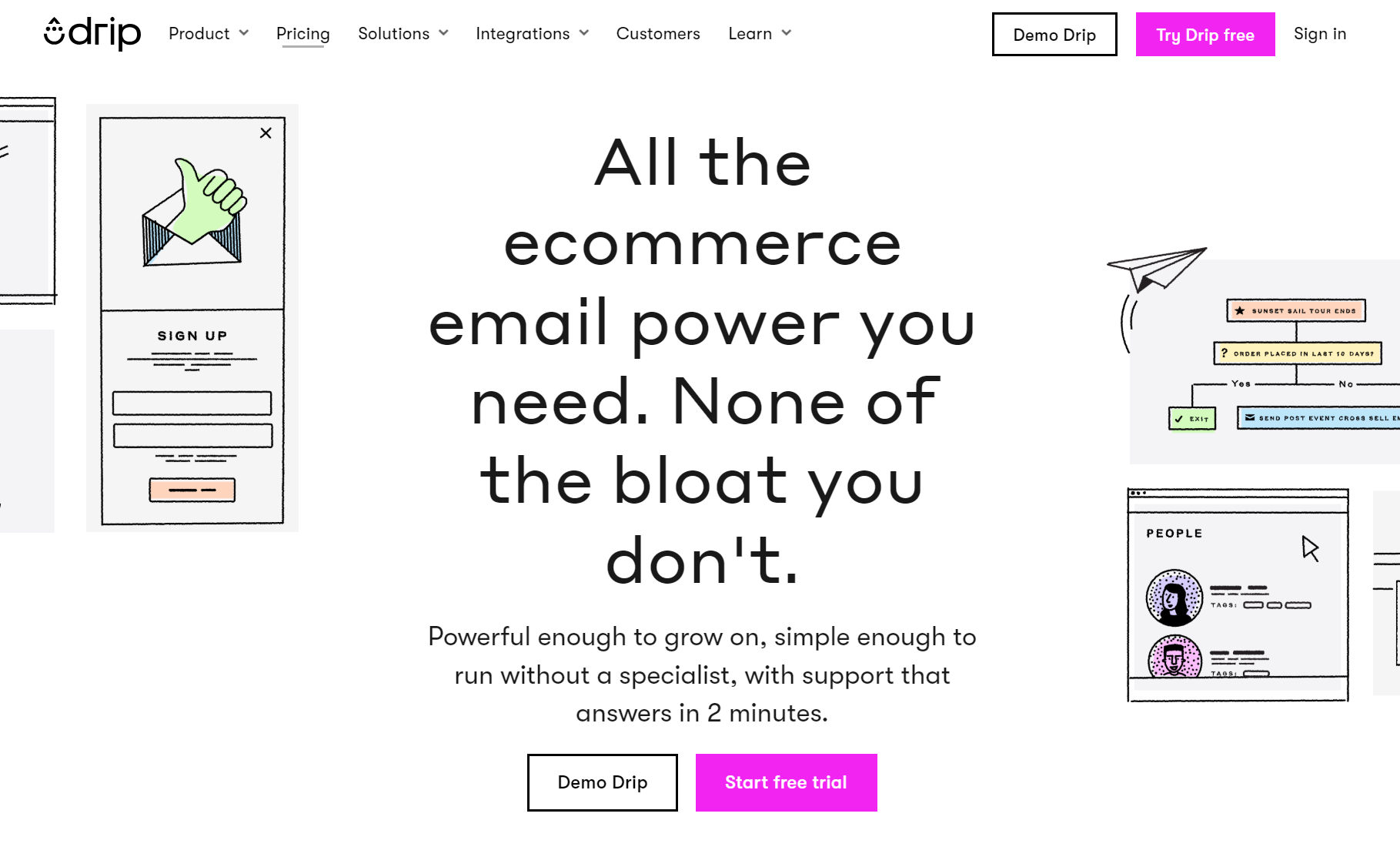
2. Drip: Tailored for Subscription Models
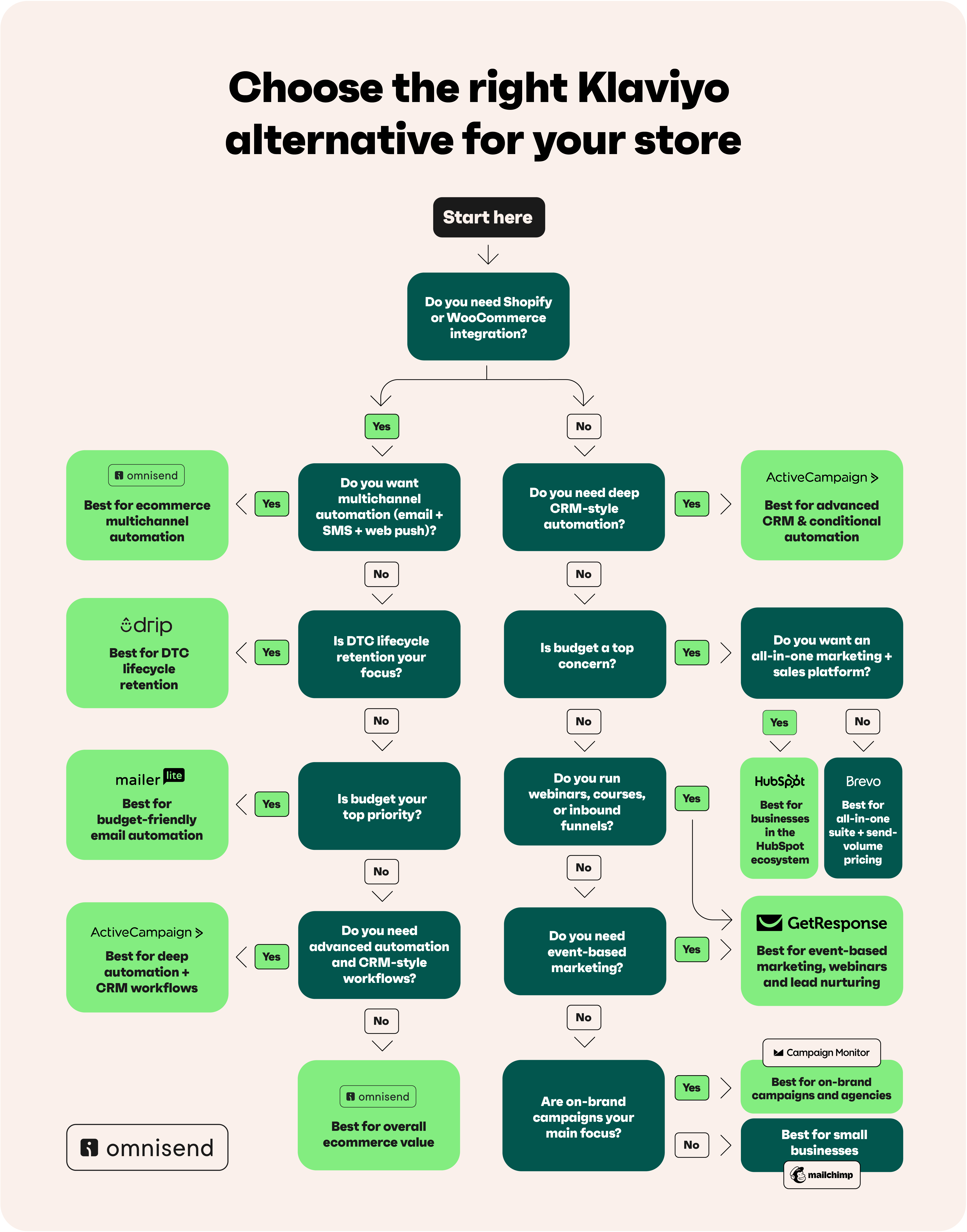
Drip stands out as a strong Klaviyo alternative for subscription-based businesses and direct-to-consumer (DTC) wellness brands. It provides powerful visual workflows and granular segmentation that closely mirror Klaviyo’s capabilities but within a simpler, more accessible interface. Drip’s focus on customer behavior allows for highly personalized flows, enabling brands to adapt their communication strategies dynamically.
Key Features: Visual workflow builder, advanced segmentation, email and SMS marketing, A/B testing, and integrations with popular e-commerce platforms. It particularly shines in automating customer journeys relevant to recurring revenue models, such as subscription renewals, win-back campaigns, and personalized product recommendations.
Pricing: Starting at $39/month for 2,500 contacts, Drip offers a more affordable entry point than Klaviyo for businesses at that contact volume, saving approximately $21/month.
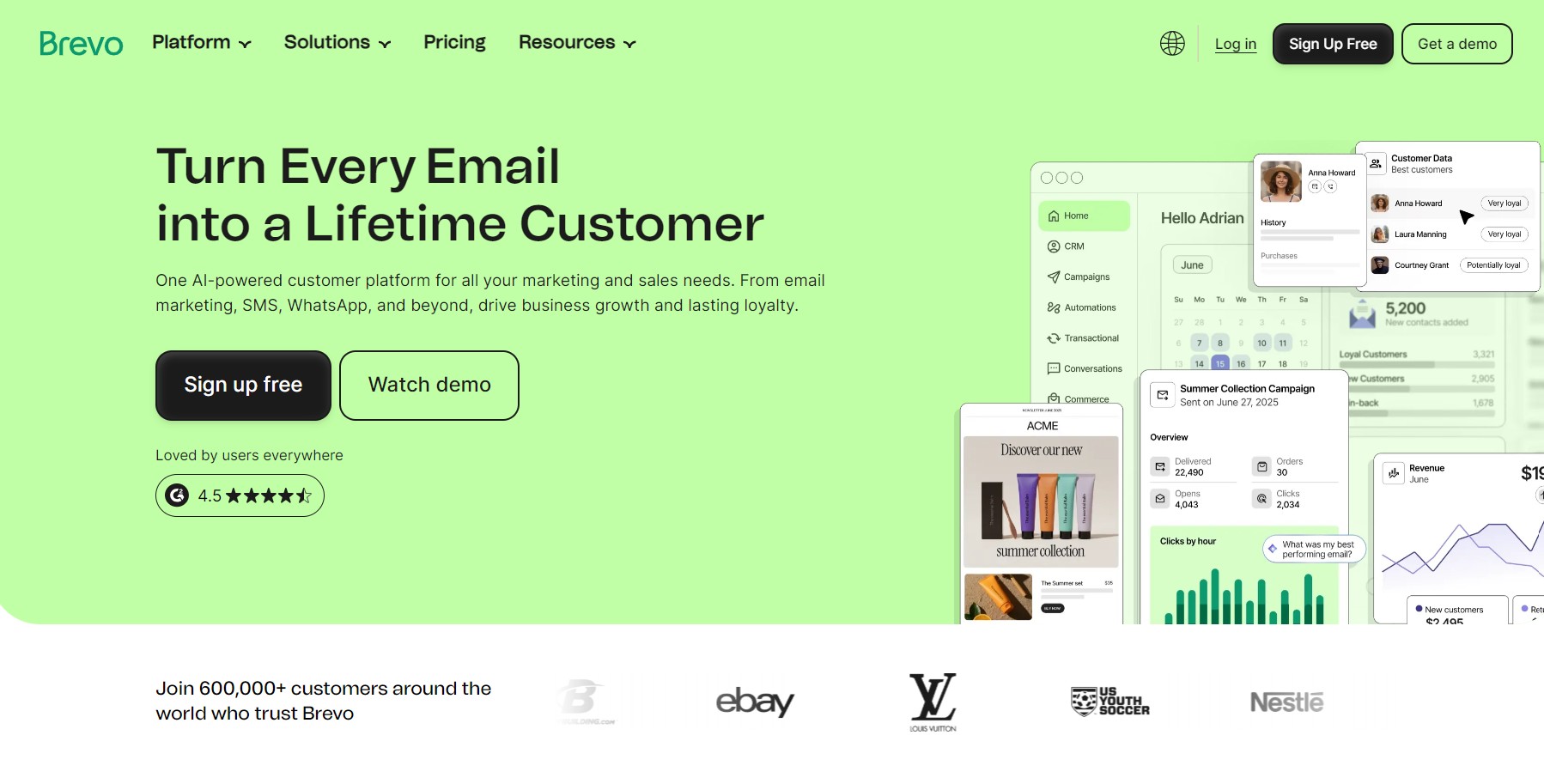
3. Brevo (formerly Sendinblue): Value-Driven and Multichannel
Brevo presents a compelling option for budget-conscious marketers, especially those who prefer send-based pricing over contact-based models. This is particularly advantageous for businesses with large, less frequently engaged lists or those with fluctuating sending volumes. Brevo expands beyond email and SMS to include WhatsApp and transactional messaging, alongside a basic CRM, making it a broader marketing suite.
Key Features: Email, SMS, WhatsApp, transactional emails, marketing automation, landing page builder, and a basic CRM. Its flexible pricing model is its strongest appeal.
Pricing: Brevo’s pricing starts at $9/month for 500 contacts, offering a highly accessible entry point. Its send-based model means costs scale with usage rather than static contact counts.
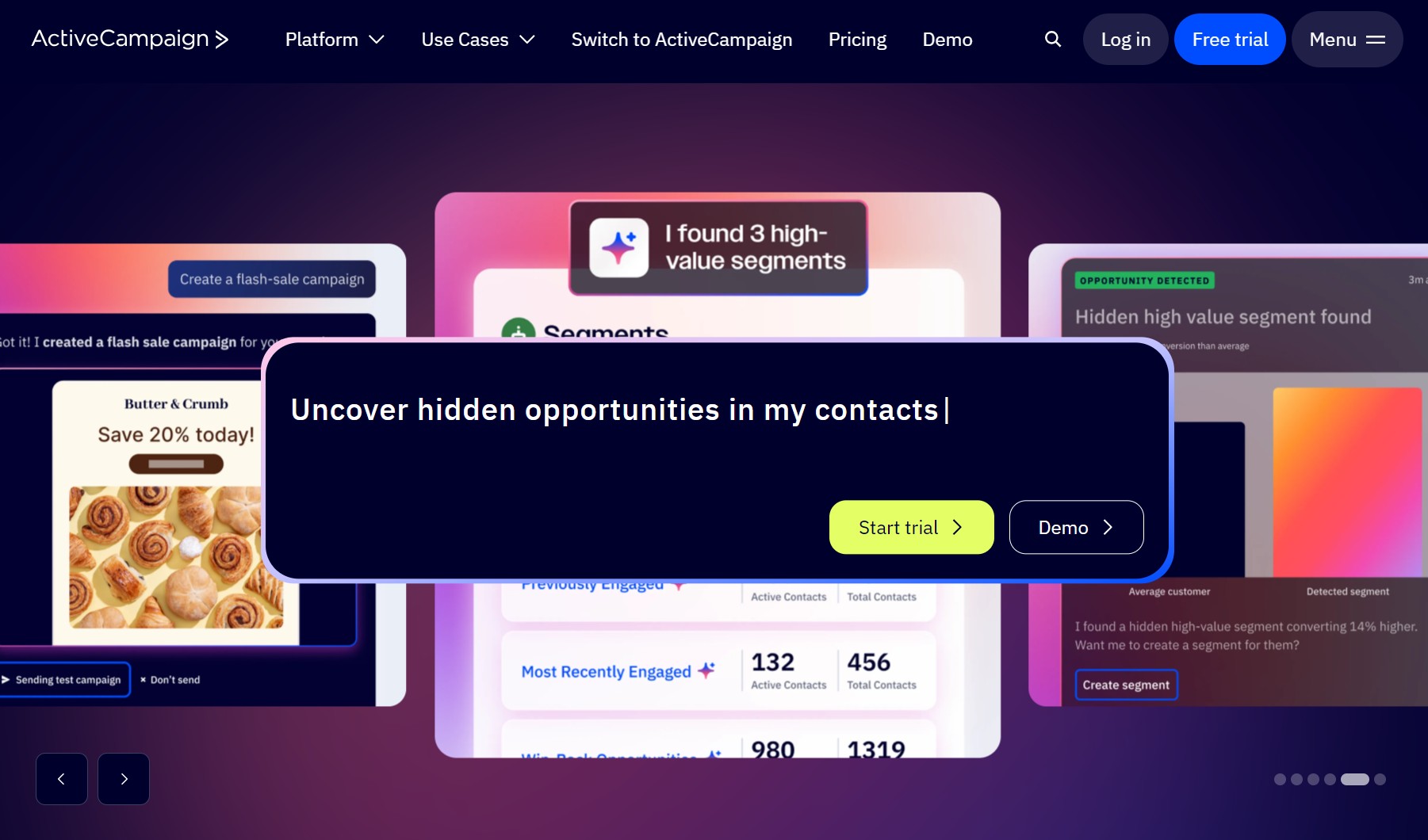
4. ActiveCampaign: Automation and CRM Powerhouse
For businesses requiring deep e-commerce automation combined with advanced CRM functionality, ActiveCampaign is a formidable alternative. It offers comparable visibility over customer lifecycles to Klaviyo but integrates robust sales automation and pipeline management tools, making it ideal for SMBs and marketing agencies that need a unified view of customer interactions across sales and marketing.
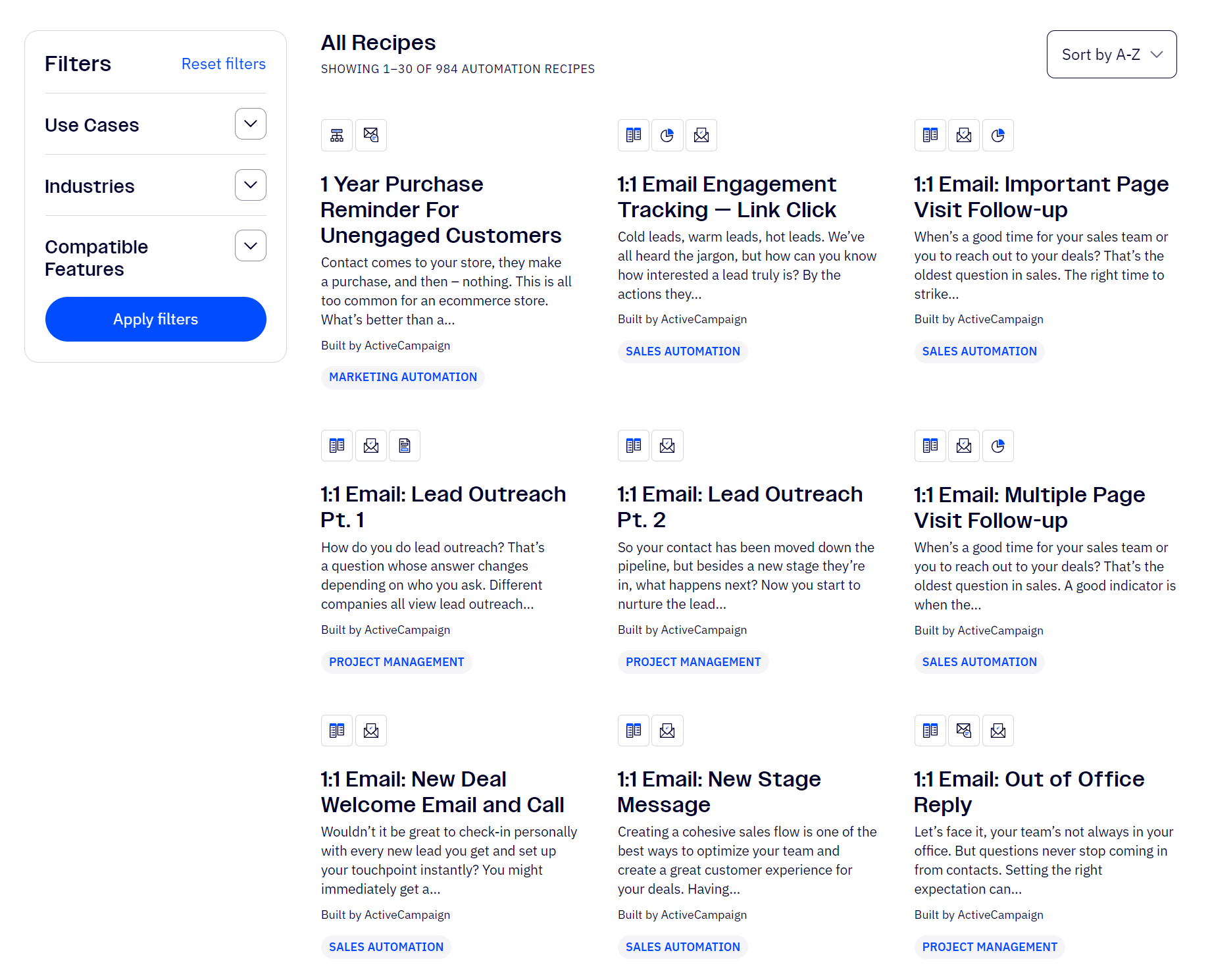
Key Features: Over 950 automation recipes, advanced segmentation, email and SMS marketing, a built-in CRM, sales automation, and lead scoring. Its AI-powered features assist in uncovering hidden opportunities within contact data.
Pricing: Starting at $19/month for 1,000 contacts, ActiveCampaign’s pricing can be competitive with Klaviyo at scale, especially given its additional CRM capabilities.
5. MailerLite: Simplicity for Beginners and Micro-Brands

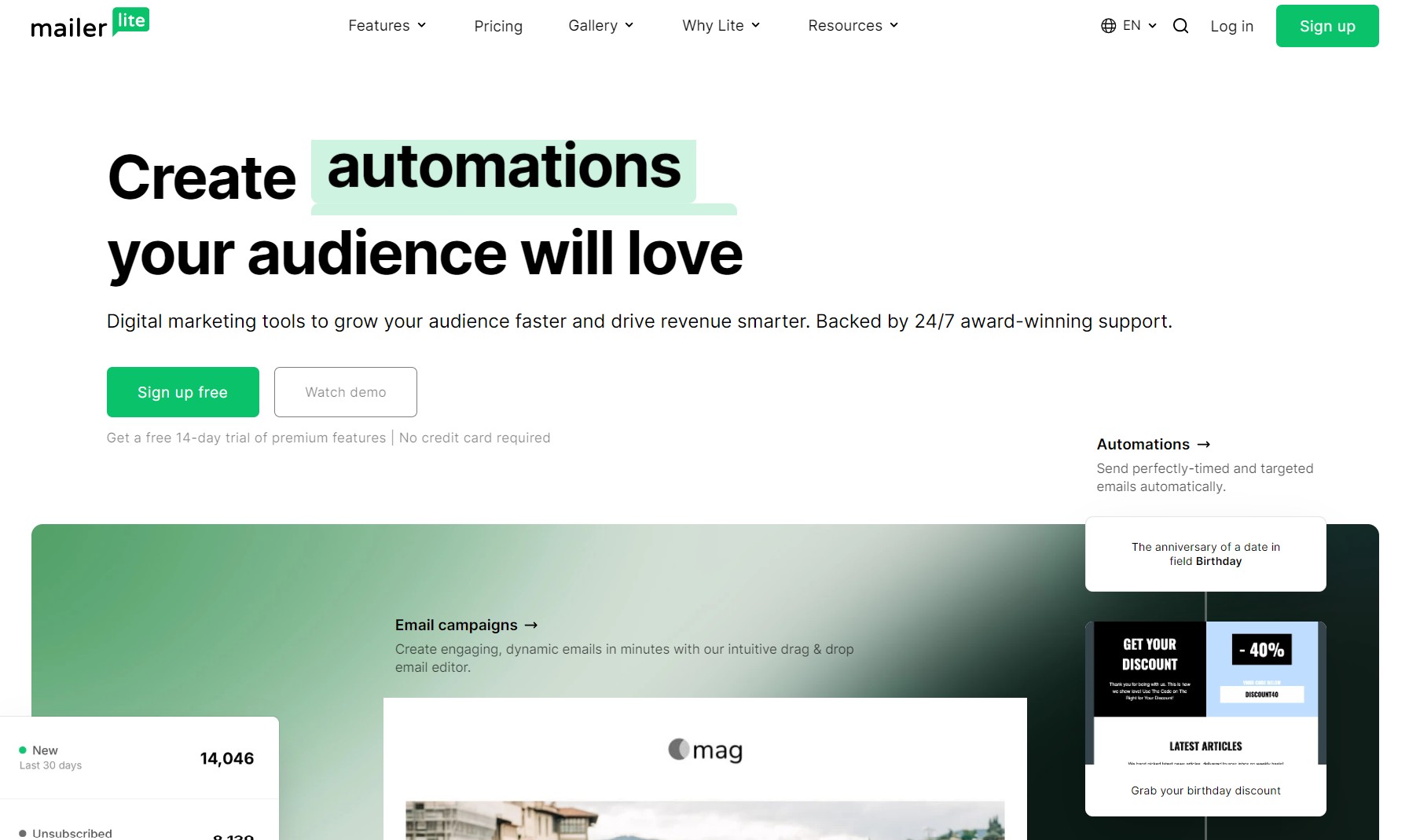
MailerLite offers a stark contrast to Klaviyo’s complexity, prioritizing ease of use and generous send limits. It is an excellent choice for beginners, content creators, micro-businesses, and startups seeking straightforward email marketing and basic automation without the need for intricate data analysis.
Key Features: Drag-and-drop email builder, pre-built automations and templates, landing page builder, website builder, pop-ups, and forms. Its emphasis is on quick setup and intuitive design.
Pricing: A free plan for up to 1,000 contacts and 12,000 emails per month, with paid plans starting at $12/month for 500 contacts, making it highly affordable.
6. Campaign Monitor: Design-Centric Campaigns for Agencies
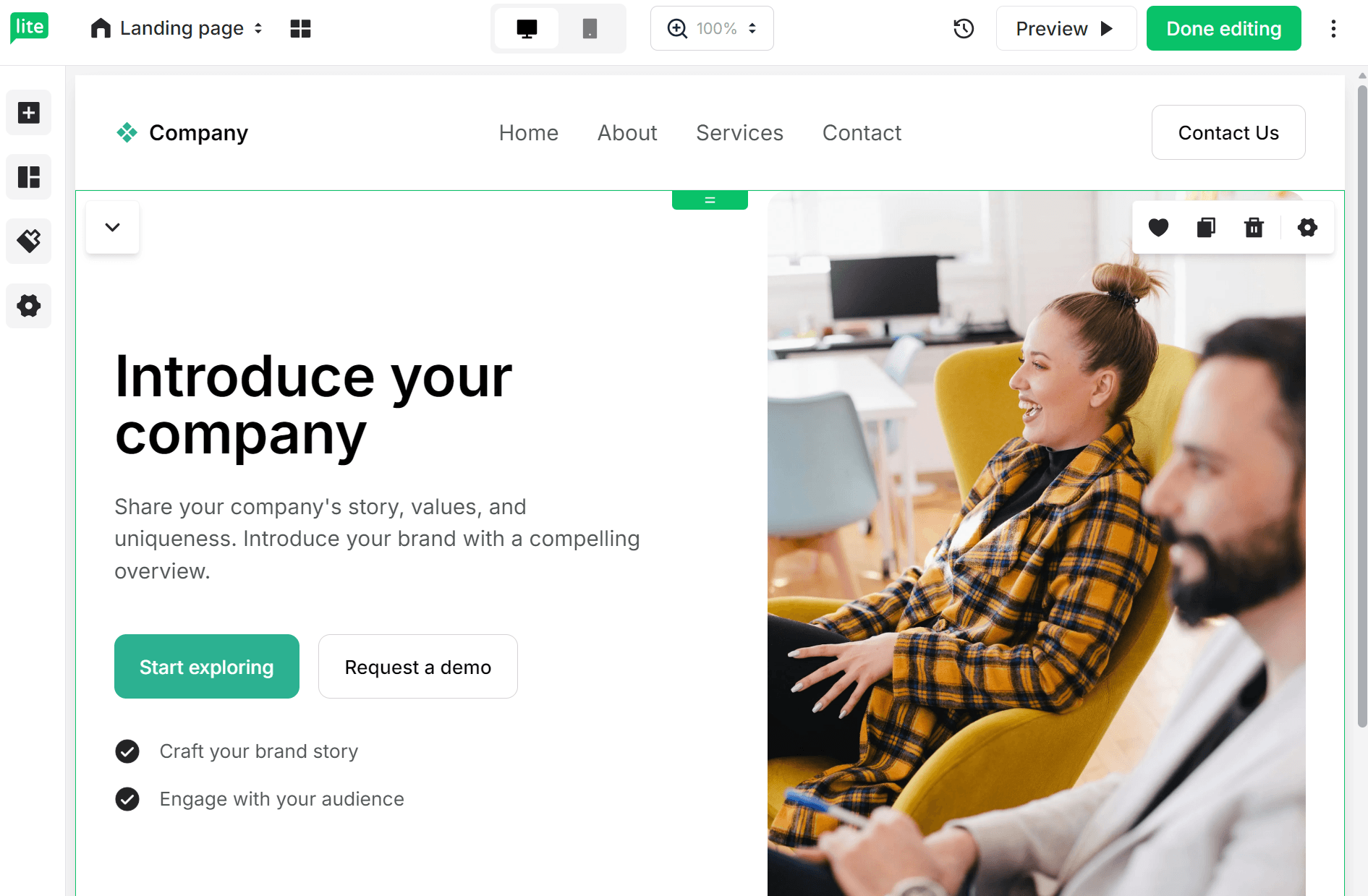
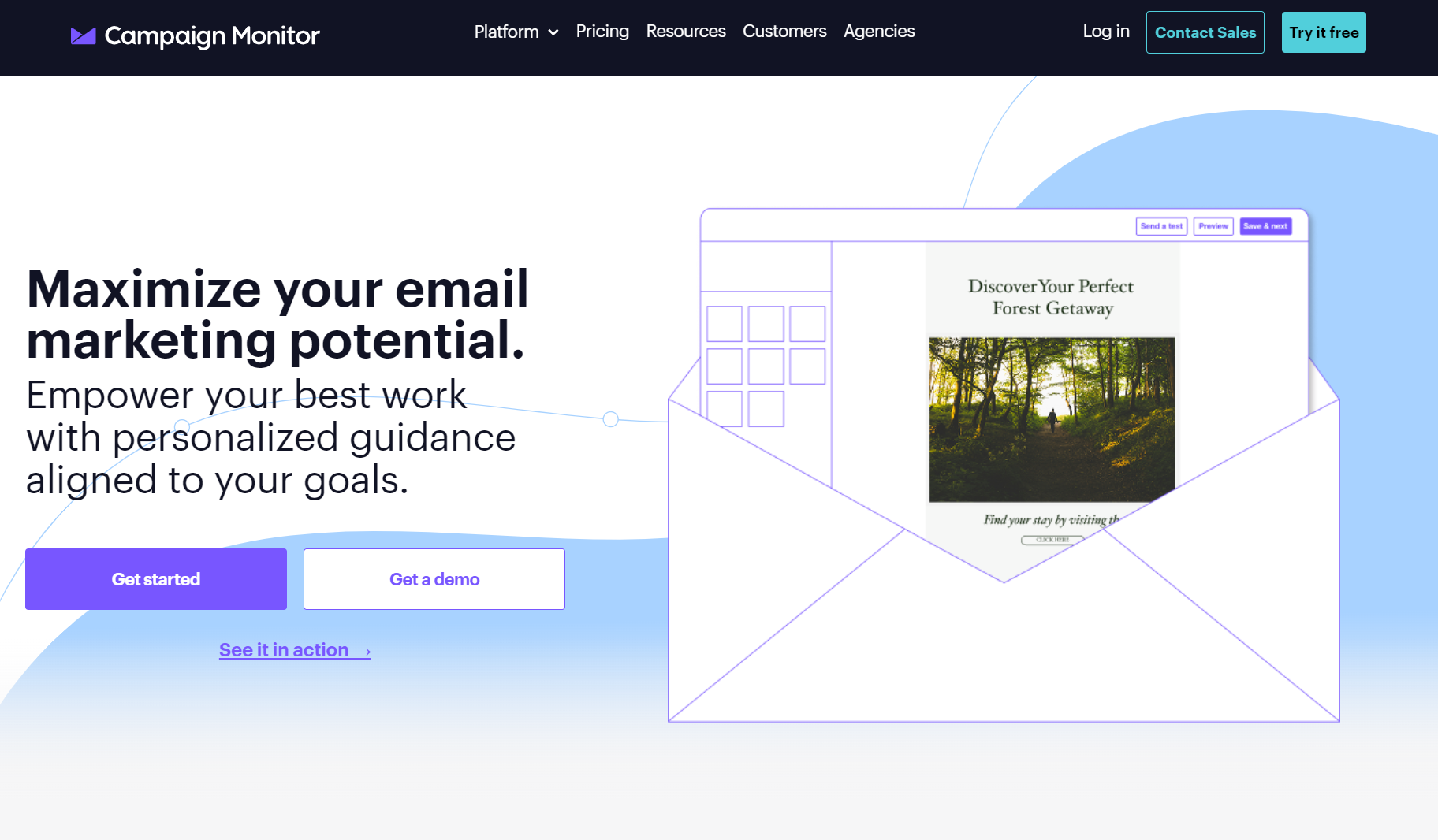
Campaign Monitor appeals to design-led marketers and agencies, prioritizing on-brand email campaigns and basic automations. While it lacks Klaviyo’s deep e-commerce data and behavioral triggers, its strengths lie in beautiful email design, robust team features, and white-label options.
Key Features: Award-winning email builder, customizable templates, basic automation journeys, segmentation, and advanced analytics for campaigns. Unlimited email sends are available in its Essentials plan.
Pricing: No free plan, but paid plans start at $13/month for 500 contacts, offering unlimited email sends on its Essentials plan.
7. HubSpot: The Integrated CRM Ecosystem
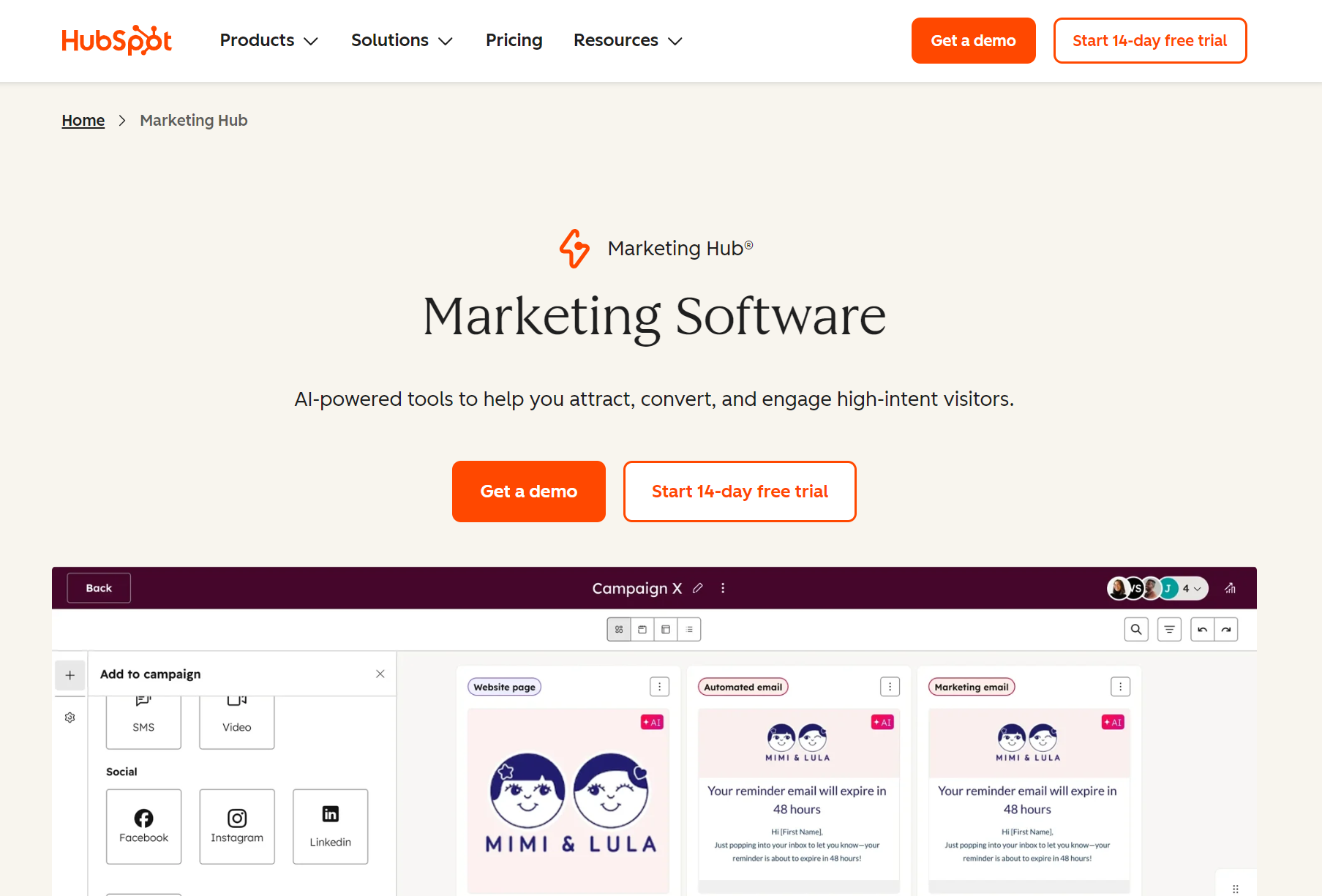
HubSpot, a CRM-first platform, offers email, SMS, and inbound marketing capabilities that seamlessly integrate with its broader sales, service, and content management hubs. It is particularly well-suited for businesses already embedded in the HubSpot ecosystem or those seeking a comprehensive solution for managing all aspects of their customer journey.
Key Features: Integrated CRM, email marketing, marketing automation, landing page builder, forms, live chat, and robust reporting across sales and marketing. Its strength is in unifying business funnels.
Pricing: HubSpot has a comprehensive free plan, but its advanced automation and reporting features are typically found in its more expensive Professional and Enterprise tiers, starting at $20/month per seat for 1,000 contacts.
8. Privy: Focused on Small Shopify Stores
Privy is a specialized solution primarily catering to small Shopify stores. Its strength lies in lead capture and list-building tools, combined with essential email and SMS automation for predictable customer journeys. Its native Shopify app is highly rated (4.5/5), indicating strong integration and performance within that ecosystem.
Key Features: Pop-ups, banners, spin-to-win wheels for lead capture, email and SMS marketing, abandoned cart automation, and basic segmentation.
Pricing: No free plan, but starts at $30/month for 1,500 contacts, making it a cost-effective option for smaller Shopify businesses compared to Klaviyo.
9. GetResponse: Webinars, Courses, and Content Monetization
GetResponse offers a broader marketing toolkit that extends beyond traditional e-commerce automation to include features for content creators, such as webinars and online courses. While its e-commerce and data features may not be as advanced as Klaviyo’s, it provides an adequate alternative for businesses looking for retention-focused automation combined with content monetization options.
Key Features: Email marketing, marketing automation, landing page builder, webinars, online courses, sales funnels, and revenue attribution for automated messages.
Pricing: Offers a limited free plan and paid plans starting at $19/month for 1,000 contacts, offering competitive pricing for its feature set.
10. Mailchimp: The Entry-Level Standard
Mailchimp remains a popular Klaviyo alternative due to its widespread familiarity, ease of use, and lower entry price point. It excels at basic email campaigns and straightforward automation, making it ideal for small businesses, startups, or service-based enterprises that don’t require complex customer journeys or deep data analytics.
Key Features: Drag-and-drop email builder, basic automation flows, pop-ups, signup forms, subject-line helper, contact profiles, and built-in surveys. It offers a short learning curve for general email marketing.
Pricing: Mailchimp provides a free plan for up to 500 contacts and 1,000 sends per month, with paid plans starting at $13/month for 500 contacts.
Broader Implications and The Future of E-commerce Marketing Tech
The shift away from Klaviyo by a notable segment of e-commerce brands signals a broader industry trend. Businesses are becoming increasingly sophisticated in their evaluation of marketing technology, moving beyond raw feature lists to consider total cost of ownership, ease of use, quality of support, and the actual utility of complex features for their specific business model. The pressure on platforms to offer transparent and predictable pricing models will intensify, especially as businesses grow and their contact lists expand.
This competitive landscape also highlights the importance of specialization. While Klaviyo caters to the high-end, data-intensive e-commerce segment, the rise of platforms like Omnisend demonstrates a demand for comprehensive yet accessible solutions that offer enterprise-grade features without the associated complexity or premium pricing. The ability to seamlessly integrate with core e-commerce platforms like Shopify, WooCommerce, and BigCommerce, coupled with strong multichannel capabilities (email, SMS, push notifications), is becoming a baseline expectation.
The market is also seeing diversification, with tools like Brevo and GetResponse integrating broader marketing and content monetization features. This suggests that businesses are seeking platforms that can consolidate multiple marketing functions, reducing the need for a fragmented tech stack and simplifying operations. The future of e-commerce marketing technology will likely be characterized by continued innovation in AI-powered personalization, increasingly intuitive user interfaces, and a strong emphasis on delivering measurable ROI through a balanced blend of features, pricing, and support.
Conclusion: Choosing the Right Fit in 2026
For the vast majority of e-commerce stores, particularly those on Shopify and WooCommerce, Omnisend stands out as the most compelling Klaviyo alternative. It combines robust multichannel marketing capabilities, advanced automation, and detailed reporting with an easier learning curve and significantly more attractive pricing. Its proactive migration service further lowers the barrier to switching, making it an ideal choice for brands seeking enterprise-level features without Klaviyo’s premium cost or complexity.
However, the "best" alternative ultimately depends on a brand’s unique needs, budget, and strategic priorities. Subscription businesses might lean towards Drip, while budget-conscious marketers may find Brevo’s send-based pricing appealing. Those requiring advanced CRM integration might opt for ActiveCampaign or HubSpot. Small Shopify stores focused on list-building could benefit from Privy, and content creators might find GetResponse’s webinar and course features invaluable. For businesses needing simplicity and a short learning curve, MailerLite or Mailchimp remain solid choices.
The decision to migrate from a powerful platform like Klaviyo should not be taken lightly. As MarTech consultant Jordie van Rijn advises, businesses should first analyze the workflows that generate revenue, assessing whether a new platform can quickly build, integrate data for, and allow independent team management of welcome series, abandoned cart flows, post-purchase emails, and win-back campaigns. This data-driven approach ensures that any transition genuinely enhances marketing effectiveness and profitability.
Ultimately, the competitive landscape of 2026 offers e-commerce brands a wealth of powerful and specialized marketing automation tools, empowering them to select a platform that precisely aligns with their operational realities and growth ambitions.
Frequently Asked Questions About Klaviyo Alternatives
- What’s cheaper than Klaviyo? Omnisend, MailerLite, Brevo, and Mailchimp are generally cheaper than Klaviyo. Omnisend offers comparable e-commerce features with better value across all tiers, while MailerLite and Brevo suit budgets focused on pure sending limits.
- Can I migrate from Klaviyo to another platform without losing my data? Yes, you can migrate by using an import tool that connects to Klaviyo or by exporting your contact data and re-importing it into your new platform. However, assets like workflows and forms typically need to be rebuilt using the new platform’s editor.
- Which Klaviyo alternative is best for Shopify? Omnisend is widely considered the best Klaviyo alternative for Shopify, boasting a 4.8/5 rating on the Shopify App Store and offering deep e-commerce features. Brevo and Mailchimp also have high ratings but may not match Omnisend’s e-commerce depth.
- Does Klaviyo have deliverability problems? Generally, no. A small percentage of users report deliverability issues, but the primary complaints about Klaviyo revolve around costs, the learning curve, and customer support, rather than email deliverability.
- What is the biggest Klaviyo competitor for e-commerce? Omnisend is Klaviyo’s biggest competitor for e-commerce, offering similar depth in flows, segments, and reports for most customer journeys. Other strong competitors include Drip for basic flows and ActiveCampaign for advanced CRM features.
- Are there any free Klaviyo alternatives? Yes. Omnisend, Brevo, MailerLite, Mailchimp, HubSpot, and GetResponse all offer free plans. It’s essential to compare their contact quotas, send limits, and features to find the best fit.
- How to migrate from Klaviyo to Omnisend? Omnisend provides a free Kickstart service for customers with 250+ contacts, which includes workflow recreation, segment builds, form setup, contact migration, and email templates within five business days. Alternatively, you can use the self-serve Klaviyo Data Import Tool by providing your Private API key in Klaviyo to move contacts, data, and most segments.








