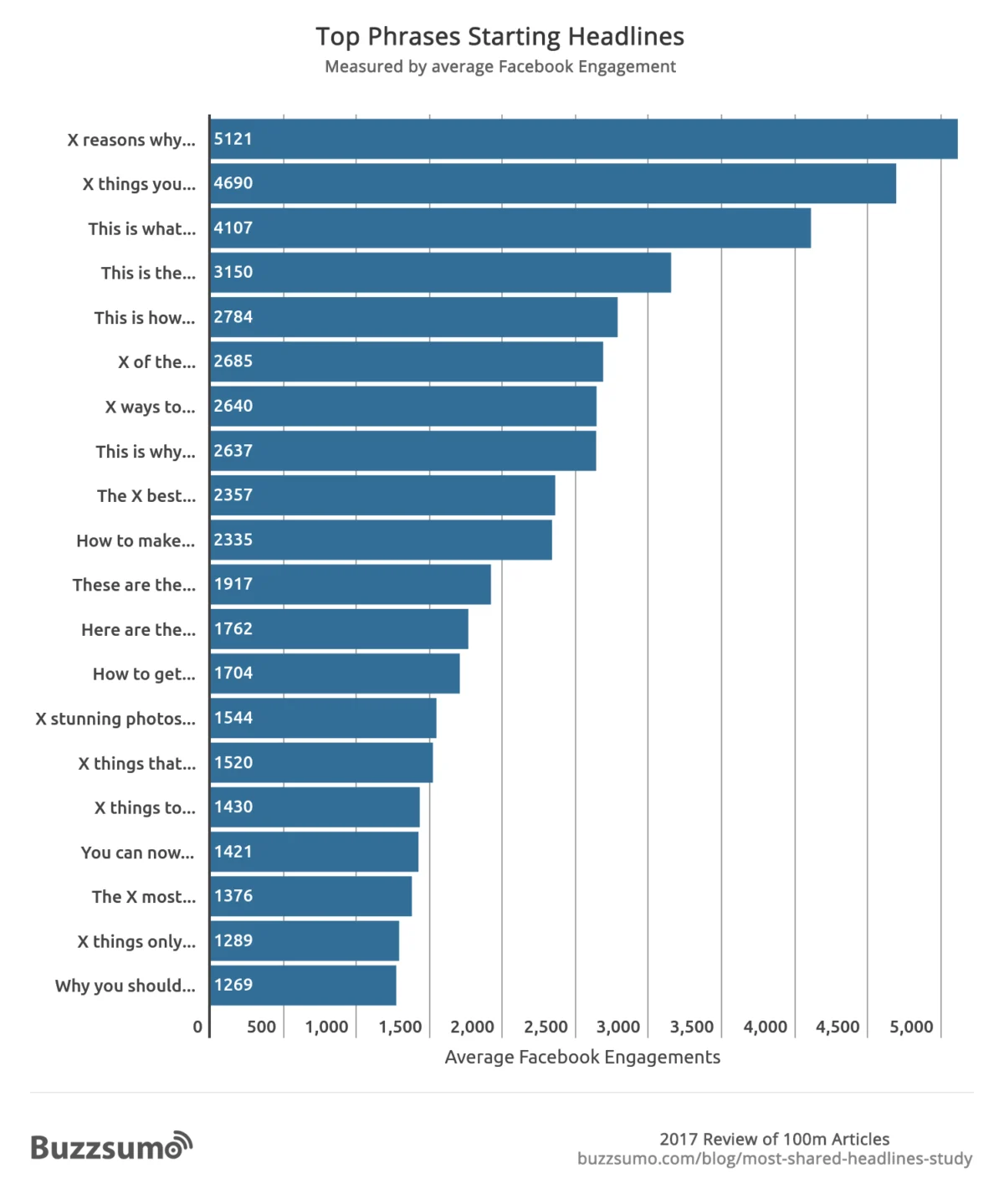
A comprehensive analysis of 100 million article headlines by BuzzSumo reveals a dramatic shift in what captures audience attention on social media platforms like Facebook and Twitter between 2017 and 2020. The study, building upon earlier research from 2017, highlights a move away from sensational and emotionally charged language towards more instructional, specific, and information-driven titles, reflecting the increasing maturity of social media algorithms and evolving audience preferences in a landscape saturated with content.
Background: The Critical Role of Headlines in the Digital Age
In the fast-paced digital environment, a headline is far more than just a title; it serves as the crucial gateway to content, acting as a subject line, a tweet, a search result snippet, and a video title. Its primary objective is to entice, inform, and persuade an audience to engage further. However, crafting an effective headline has become increasingly complex due to several factors: sophisticated algorithms dictating content visibility, intense competition for attention, and an audience with exceptionally high standards for relevance and value.
Recognizing this challenge, BuzzSumo undertook a massive research initiative, analyzing 100 million headlines from its extensive index. This updated study, contrasting with its 2017 predecessor co-founded by Steve Rayson, aimed to identify current trends in headline performance and provide actionable insights for publishers and content creators. The research also incorporated perspectives from leading marketing experts to provide a holistic understanding of the findings.
Key Findings from the 2019-2020 Analysis
The updated study yielded several critical insights into what makes headlines perform well on Facebook and Twitter:
Ideal Headline Length: Contrary to older advice advocating for extremely short headlines, the research found that the optimal length for a highly shared headline in 2019-2020 was 11 words and 65 characters. This suggests that headlines need to be sufficiently specific and detailed to convey value without being overly verbose, providing enough information to draw readers in.
The Power of Numbers: The number 10 emerged as the “magic number” for driving engagement in headlines. Beyond this, single-digit numbers from three to ten consistently generated the most social media engagement. While there was no strong preference for odd or even numbers, articles featuring smaller, digestible lists proved more appealing than those with larger numbers, indicating a preference for quick insights.
Headline Phrases Driving Facebook Engagement:
Analyzing three-word phrases (trigrams), the study found “of the year” to be the top performer on Facebook, often associated with rankings and awards (e.g., “Person of the Year“). Phrases denoting “newness,” such as “in X years” (frequently part of “for the first time in X years”), also ranked highly, building intrigue around rare events.
The study categorized the top 60 Facebook trigrams into eight main themes:
- Ranking: Focused on awards and public votes.
- Example: “Joe Biden and Kamala Harris: TIME’s Person of the Year 2020″ (cnn.com, 418K shares)
- Newness: Centered on unique or rare events.
- Example: “For the first time in history, U.S. billionaires paid a lower tax rate than the working class” (washingtonpost.com, 1.2M shares)
- Hyperbole: Exaggerated statements using superlatives.
- Example: “Why Your Older Sister Is One of the Most Important People in Your Life” (brightside.me, 2.1M shares)
- Instructional: Commanding statements implying obligation or urgency.
- Example: “Everything you need to know about washing your hands to protect against coronavirus (COVID-19)” (unicef.org, 2.2M shares)
- Surprise: Statements designed to shock or challenge perceptions.
- Example: “There Are At Least 36 Intelligent Alien Civilizations In Our Galaxy, Say Scientists” (forbes.com, 990K shares)
- Curiosity: Hinting at revelations, explanations, or analyses.
- Example: “Museum Asks People To Recreate Paintings With Stuff They Can Find at Home, Here Are The Results” (sadanduseless.com, 3.1M shares)
- Guidance: “How to” or tutorial-based headlines.
- Example: “How to make cookie cereal, the hottest new food trend” (insider.com, 941K shares)
- Story: Focused on narratives about a person or topic.
- Example: “Inside the Story of How H-E-B Planned for the Pandemic” (texasmonthly.com, 357k shares)
Notably, “instructional” and “hyperbole” categories emerged as particularly successful, with phrases like “you need to” and “one of the most” resonating strongly. Instructional headlines leverage the “fear of missing out” (FOMO) and promise concise, critical information.
Headline Phrases Driving Twitter Engagement:
Twitter audiences showed a strong interest in forward-looking and analytical content. The phrase “future of” proved most engaging, often appearing at the beginning of headlines. Words like “study” and “report” also performed well, indicating that Twitter is a prime platform for sharing research-backed content. Immediacy and reactivity were also key, with a significant number of top-performing headlines ending with current dates like “2020.”
The Evolution of Headlines: 2017 vs. 2019-2020
The most striking finding of the updated study is the radical transformation of effective headlines.
Decline of Emotional and Clickbait Content: The 2017 study found that explicitly emotional phrases like “will make you” (e.g., “This Will Make You Cry Tears of Joy”) and “melt your heart” drove immense engagement on Facebook. Similarly, quiz-based headlines (“Can We Guess Your Age?”) and “tribal” content (“X Things Only Teachers Will Understand”) were highly successful. By 2019-2020, these overtly emotional, sensational, and identity-focused headlines were largely absent from the top-performing lists. For instance, the phrase “will make you” saw its average shares plummet from 1.7 million in 2017 to just 143,000 in the updated analysis. The closest contemporary equivalent to emotional appeal is through “exaggerated phrases” that reference exceptional content, like “one of the most beautiful.”
Algorithmic Maturity and Content Refinement: This dramatic shift is primarily attributed to algorithmic developments on social media platforms. Facebook, in particular, began actively demoting “clickbait” content in May 2017. Further updates on January 19, 2018, prioritized news from “trustworthy sources,” and an update on June 30, 2020, boosted “original and authoritative news reporting.” These changes have fundamentally reshaped the content landscape, rewarding credible, informative, and less manipulative headlines.
Shorter, Snappier Headlines: The ideal headline length has condensed significantly. In 2017, the optimal formula was 15 words and 95 characters. By 2019-2020, this had shrunk to 11 words and 65 characters – a reduction of approximately four words and 30 characters. This trend reflects a broader phenomenon of “content overload,” with online content increasing by 64% since 2016. Audiences now demand information quickly and concisely.
Increased Homogenization Across Platforms: In 2017, Facebook and Twitter shared only one common phrase among their top 20 headlines. By 2019-2020, this similarity jumped to eight phrases, or 20%. This suggests that while platforms still have distinct preferences, some headline themes and language are becoming universally effective, allowing for more overlap in content distribution strategies.
Diverging Engagement Levels: Despite the increased similarity in headline phrases, engagement patterns diverged significantly. The most engaging Facebook trigram in 2019-2020 (“of the year”) garnered 26,702 average shares – approximately three times the average shares of Facebook’s top phrase in 2017 (“will make you”). Conversely, Twitter saw a nearly four-fold decrease in average shares for its most popular phrases between 2017 and 2020. This decline in Twitter shares occurred even as its monthly active users remained largely stable, indicating a shift in how content is consumed and shared on the platform, possibly due to a greater variety of content diluting average shares for common phrases.
Shifting Publisher Landscape: The study also observed a radical change in the top publishers driving engagement. On Facebook, established news organizations like CNN, Daily Mail, NBC News, Washington Post, CBS News, and Time replaced earlier, more entertainment-focused domains, directly reflecting Facebook’s algorithmic preference for authoritative news sources. This shift underscores the importance of credibility in today’s social media content strategy.
B2B Headline Insights (2017 Context)
A separate 2017 analysis focusing on B2B content shared on LinkedIn revealed distinct patterns from consumer-oriented content. B2B headlines performed best with phrases such as “the future of,” “how to,” and “X ways to.” The optimal length for B2B headlines was significantly shorter than for B2C content, emphasizing directness and utility. This highlights the crucial need for content creators to tailor headlines to specific platforms and audience demographics.
Expert Reactions and Implications for Content Strategy
Industry-leading marketing experts widely praised the BuzzSumo study for its deep, data-driven insights.
Heidi Cohen, Chief Marketing Officer at Actionable Marketing Guide, noted that the report reflects key customer behavior changes due to the pandemic, emphasizing a greater need for practical information, a desire for concise content, and a preference for trustworthy sources. She advises marketers to focus on core marketing basics and continually adapt to evolving customer needs.
Rand Fishkin, Founder of SparkToro, highlighted the study’s value beyond just headline writing, stating it helps contrast past and present effective strategies. He pointed out that while clickbait and emotional triggers were once dominant, the research now illuminates the nuance of what truly works.
Ross Simmonds, Founder of Foundation, observed the fascinating adoption of “click-friendly” headlines by mainstream media. He emphasized the powerful insight of incorporating instructional language like “you need to” and “you should,” linking it to human psychology and the desire not to miss out on important information.
Brian Dean, Founder of Backlinko, underscored the significant shift on Facebook, where instructional headlines now outperform the “BuzzFeed-style clickbait” of yesteryear. This indicates that Facebook users now seek content that promises to teach them something new.
Amanda Milligan, Marketing Director at Fractl, found the rise of instructional headlines “fascinating,” attributing it to a growing desire to learn from experts. She suggested that such language inherently demonstrates authority, encouraging brands to leverage their expertise in headline crafting.
Ann Handley of MarketingProfs cautioned against merely “copy-pasting” phrases but urged content creators to understand the underlying principles: making a clear promise, fostering curiosity, offering utility, and connecting with readers on a human level.
Andy Crestodina emphasized the “cost-benefit calculation” readers make: “Is this thing worth two seconds of my time?” He advised headlines to maximize the perceived benefit of the click by being specific, creating curiosity, offering a clear benefit, and managing expectations.
Michael Brenner stressed that headlines matter immensely, advocating for nearly as much time spent on the headline as on the article itself. He reiterated that curiosity drives shares and encouraged telling stories even within short headlines to convey emotion and connect with readers.
Larry Kim expressed frustration at content creators undermining great articles with weak headlines. He urged marketers to embrace catchy, data-backed phrases, recognizing that click-through rates are crucial for algorithmic visibility in organic search and social news feeds.
Conclusion: Adapting to the Modern Headline Landscape
The BuzzSumo research offers invaluable guidance for anyone crafting headlines in today’s dynamic digital ecosystem. It is clear that the era of overt sensationalism and generic clickbait is waning, replaced by a demand for credibility, utility, and clear communication.
Key takeaways for writing better headlines include:
- Be Specific and Detailed: Aim for around 11 words and 65 characters to provide enough context and intrigue.
- Embrace Instruction and Utility: Phrases that tell readers “what you need to know” or “how to” perform exceptionally well, appealing to a desire for practical knowledge and a fear of missing out.
- Use Numbers Strategically: Employ listicles, especially with the number 10 or single digits, to signal digestible information.
- Leverage Hyperbole Judiciously: While overt emotion is out, subtle exaggeration to highlight exceptional content can still be effective.
- Cultivate Curiosity (Especially on Twitter): Headlines that tease explanations, analyses, or future developments resonate strongly.
- Prioritize Trust and Authority: Aligning with credible publishers and offering valuable, research-backed content is increasingly rewarded by algorithms.
- Tailor to Platform: While some phrases cross over, understanding the distinct preferences of Facebook (instruction, hyperbole) and Twitter (curiosity, research, immediacy) is vital.
- Test and Refine: The digital landscape is constantly evolving; continuous testing of headline variations is crucial for optimizing engagement.
Ultimately, the study reinforces that successful headlines are not merely a trick of words but a reflection of evolving audience psychology, algorithmic intelligence, and the overarching need for relevant, valuable, and trustworthy content in an increasingly noisy world.