
 rifanmuazin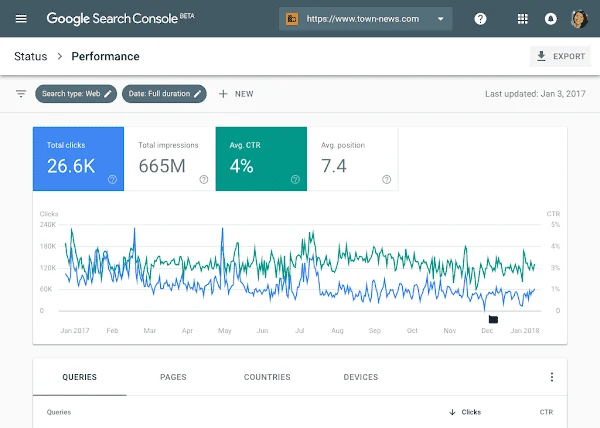
The methodology of website analysis has undergone a fundamental paradigm shift as the digital ecosystem moves toward a search environment dominated by generative artificial intelligence. For over a decade, digital marketers and webmasters focused almost exclusively on a standard set of metrics: organic traffic, keyword rankings, page load speeds, and conversion rates. However, by 2026, these traditional key performance indicators (KPIs) no longer provide a complete picture of a brand’s digital health. In the modern era, a consumer’s journey often begins inside a ChatGPT interface, continues through a comparison in Perplexity, and concludes with a brand summary provided by a Google AI Overview—often before the user ever clicks a link to an external website.
This shift necessitates a more holistic approach to website analysis. To remain competitive, businesses must now evaluate their digital presence through the lenses of discoverability, machine readability, credibility, and conversion friction. This comprehensive guide examines the five critical pillars of modern website analysis and provides a roadmap for optimizing performance in an AI-centric world.
The AI Disruption and the Search Volume Decline
The transition from traditional search engines to "answer engines" has fundamentally altered user behavior. According to research from Gartner, traditional search engine volume is projected to drop by 25% by 2026. This decline is attributed to the rapid adoption of AI chatbots and virtual agents that provide direct answers, reducing the need for users to browse through pages of search results. Furthermore, data from the Pew Research Center indicates a significant impact on click-through rates (CTR). When an AI summary appears in Google results, users click on a traditional link in only 8% of visits, compared to a 15% click-through rate when no AI summary is present.
For businesses, this means that visibility is no longer just about being "number one on Google." It is about being the primary source of data for the Large Language Models (LLMs) that generate these summaries. Website analysis must now answer two vital questions: Is the brand visible in traditional search rankings, and is the brand being cited as a trusted authority by AI agents?
Pillar 1: Search and AI Visibility Analysis
To analyze visibility in 2026, practitioners must combine traditional tools with manual AI testing. The process begins with Google Search Console (GSC). Analysts should examine the Performance report, comparing three-month intervals to identify trends in impressions and CTR. Particular attention must be paid to the "Indexing" report to ensure that priority pages are not only crawled but successfully indexed. Issues such as "Crawled – currently not indexed" often signal that Google perceives the content as low-value or redundant, which also makes it unlikely to be used in AI Overviews.
Beyond GSC, a modern audit requires "Answer Engine Optimization" (AEO) testing. This involves querying AI tools like ChatGPT, Claude, Perplexity, and Gemini with specific buyer questions. For instance, a company selling Conversion Rate Optimization (CRO) software should not merely track its ranking for the term "CRO tool." Instead, they must analyze how AI platforms respond to queries like, "What is the best CRO tool for a mid-market e-commerce site?" or "Compare the pricing and features of FigPii vs. its competitors." If the brand is absent from these AI-generated comparisons, the website analysis must identify gaps in machine-readable data and authoritative citations.
Pillar 2: Website Performance and Technical Health
Technical health remains a prerequisite for visibility, but the benchmarks have tightened. Google’s Core Web Vitals—specifically Largest Contentful Paint (LCP), Interaction to Next Paint (INP), and Cumulative Layout Shift (CLS)—are now critical signals for both user experience and search priority.
A technical audit in 2026 must prioritize mobile-first indexing and "machine readability." This includes the implementation of Schema.org markup, which helps AI crawlers understand the context of content, such as product prices, reviews, and author credentials. A site that loads in under two seconds and provides structured data is significantly more likely to be featured in an AI summary than a slow, unstructured competitor.
Pillar 3: User Behavior and Conversion Rate Optimization
Conversion Rate Optimization (CRO) has evolved from simple A/B testing into a 360-degree evaluation of the customer journey. Website analysis in this category is divided into quantitative and qualitative data.
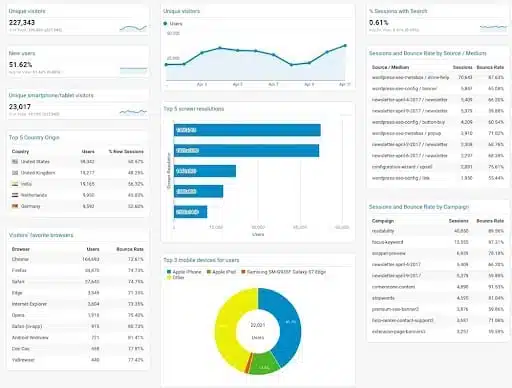
Quantitative data, sourced from platforms like Google Analytics 4 (GA4) or Similarweb, provides numerical insights into session duration, bounce rates, and exit pages. However, quantitative data only identifies where a problem exists; qualitative data explains why. Tools such as FigPii allow analysts to view heatmaps and session recordings, revealing exactly where users experience friction. For example, a scroll map might reveal that 70% of visitors drop off before reaching a critical call-to-action (CTA), suggesting that the page’s messaging or layout needs a radical redesign.
Messaging analysis is a subset of CRO that ensures a site’s copy resonates with the target audience. In a landscape where users are bombarded with AI-generated content, authentic, human-centric messaging becomes a competitive advantage. Analysts must ensure that the "scent" of the information remains consistent from the initial search query through to the final checkout page.
Pillar 4: Content Quality and Trust Signals (E-E-A-T)
In the AI era, Google and other search engines have placed an unprecedented emphasis on E-E-A-T: Experience, Expertise, Authoritativeness, and Trustworthiness. Website analysis must include a rigorous audit of content quality.
Analysts should evaluate whether the content provides original information or merely regurgitates existing data—a trait that AI can now detect and penalize. Trust signals are equally vital; this includes clear author biographies, links to reputable sources, updated privacy policies, and visible customer testimonials. If an AI agent cannot verify the credibility of a website, it will not recommend that site to a user. Therefore, content analysis must focus on "information gain"—providing unique insights that an AI cannot easily synthesize from other sources.
Pillar 5: Usability and Functional Assessment

Usability analysis focuses on the interface and how intuitively a visitor can navigate the site. This is often conducted through a functionality assessment and an expert review, also known as a heuristic analysis.
A functionality assessment asks three basic questions: Are the functions discoverable? Are they easy to use? Are the links and buttons working? If a user cannot find the search bar or if a checkout button fails on mobile devices, the site’s effectiveness drops to zero regardless of its traffic.
For a deeper dive, analysts apply Jakob Nielsen’s 10 Usability Heuristics, which remain the gold standard for interface design:
- Visibility of system status: Keeping users informed about what is going on.
- Match between system and the real world: Using words and concepts familiar to the user.
- User control and freedom: Providing a clear "emergency exit" for mistaken actions.
- Consistency and standards: Ensuring the same words and actions mean the same thing throughout the site.
- Error prevention: Designing to prevent problems before they occur.
- Recognition rather than recall: Minimizing the user’s memory load.
- Flexibility and efficiency of use: Catering to both novice and expert users.
- Aesthetic and minimalist design: Removing irrelevant information.
- Help users recognize, diagnose, and recover from errors: Using plain language for error messages.
- Help and documentation: Providing easy-to-search information if a user gets stuck.
A Strategic Roadmap for Website Analysis
To conduct a successful analysis, organizations should follow a structured chronology:
- Define Objectives: Identify specific pain points, such as a drop in rankings or high cart abandonment.
- Select Tools: Deploy a stack including SEO tools (Ahrefs, Semrush), CRO tools (FigPii, Hotjar), and Usability tools (UX Check).
- Create a Roadmap: Establish benchmarks based on industry standards and map the ideal customer journey.
- Data Collection: Gather quantitative and qualitative insights over a set period (usually 30 to 90 days).
- Address Vulnerabilities: Implement changes based on data, such as improving page speed or rewriting thin content.
- Continuous Monitoring: Establish website analysis as a recurring habit rather than a one-time project.
The Role of Competitive Analysis
A recurring debate in the industry centers on whether to focus inward or on the competition. In 2026, competitive analysis is essential because AI models rank brands relative to one another. By analyzing a competitor’s organic traffic, analysts can discover "content gaps"—topics the competitor covers that the brand does not. Similarly, studying a competitor’s Pay-Per-Click (PPC) strategy through tools like iSpionage can reveal which keywords are currently driving the most profitable conversions in the sector.
Broader Impact and Implications
The shift toward AI-integrated website analysis marks the end of the "vanity metric" era. In the past, high traffic volumes were often mistaken for success. In 2026, the focus has shifted toward the quality of interactions and the brand’s footprint within the AI ecosystem.
The implications are clear: websites that fail to optimize for machine readability and human trust will find themselves invisible in the AI-driven search results of the future. Conversely, those that prioritize a seamless user experience, technical excellence, and authoritative content will thrive. As AI continues to mediate the relationship between brands and consumers, the website remains the ultimate source of truth—but only if it is analyzed and optimized for the complexities of the modern digital age. Consistent, goal-oriented analysis is no longer an optional task for the marketing department; it is a fundamental requirement for business survival.








