

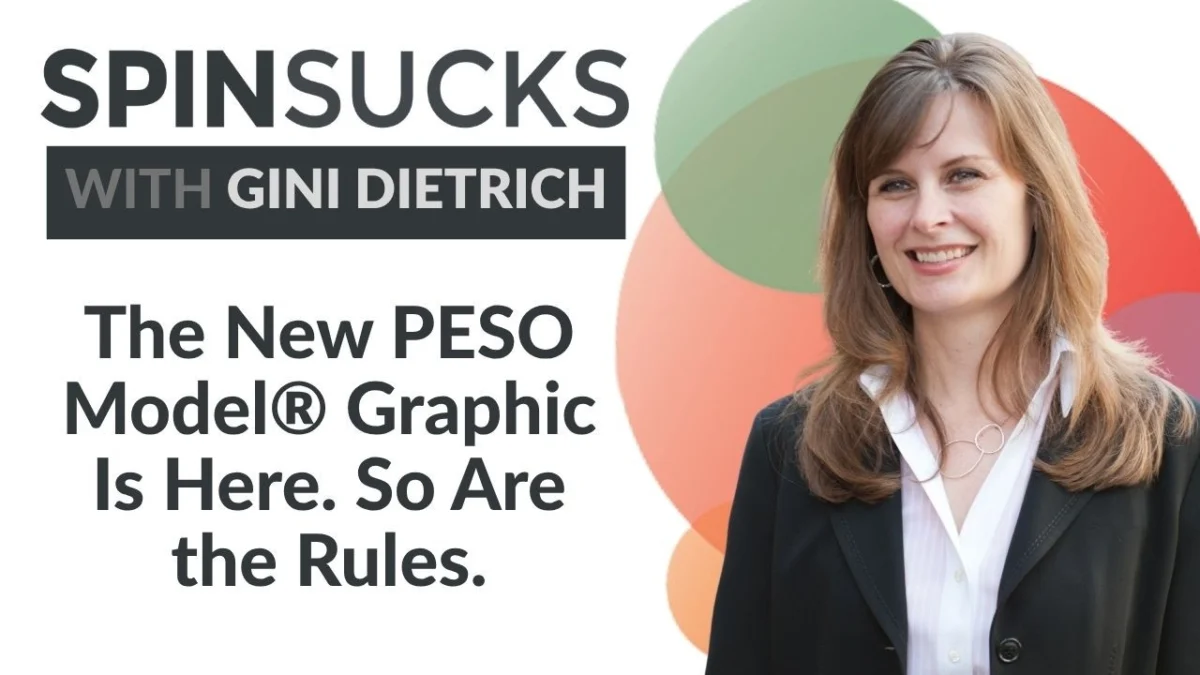
The communications and marketing landscape has undergone a significant transformation with the unveiling of the updated PESO Model®, a framework that has served as the industry standard for integrated media strategy for over a decade. This latest iteration, released by Spin Sucks, marks a definitive shift from a tactical and strategic overview to an outcome-based operating system. The refresh is designed to address the complexities of a modern digital environment increasingly dominated by artificial intelligence, fragmented audience attention, and the urgent need for measurable business results. By reorganizing the model around four primary pillars—Authority, Credibility, Discovery, and Growth—the framework aims to provide a more rigorous roadmap for professionals navigating the intersection of public relations, marketing, and digital advertising.
The Historical Trajectory of the PESO Model
The PESO Model®—an acronym for Paid, Earned, Shared, and Owned media—was first introduced approximately 12 years ago by Gini Dietrich. At its inception, the model was primarily a categorization tool intended to help communicators understand that their work extended beyond traditional media relations. The early versions of the graphic were heavily tactical, listing specific platforms and activities such as news releases, blog posts, and even now-defunct social networks like Google+ and Vine. This era of the model reflected a period where “being digital” was the primary goal for many organizations.
As the industry matured, the model evolved into a strategic framework. Approximately two years ago, the graphic was updated to emphasize the integration between the four media types, moving away from platform-specific lists to focus on how different disciplines reinforce one another. However, as the 2024-2026 business cycle approached, it became clear that strategy alone was no longer the primary concern for executive boards and C-suite leaders. In a data-driven economy, the focus has shifted toward specific outcomes: pipeline generation, brand valuation, and visibility within AI-driven search engines. The latest refresh is a direct response to these demands, transitioning the PESO Model® from a conceptual diagram into a functional operating system.
Structural Analysis of the Outcome-Based Framework
The new iteration of the PESO Model® is built upon the premise that each media type must produce a specific, measurable result. The framework is no longer just a way to organize work; it is a way to measure the efficacy of that work based on its ultimate output.
The Four Primary Pillars
- Owned Media (Authority): This remains the foundation of the model. Owned media—content created and controlled by the organization, such as websites and white papers—is now explicitly tied to the outcome of Authority. In an era of misinformation and AI-generated content, establishing a “source of truth” is critical for brand longevity.
- Earned Media (Credibility): Traditional media relations and third-party endorsements are categorized under Credibility. The outcome here is not just a “clip” or a mention, but the validation that comes from objective third parties, which remains a powerful driver of consumer trust.
- Shared Media (Discovery): Social media and community engagement are focused on Discovery. As traditional search engines evolve into “answer engines,” the ability for a brand to be found through social signals and community sharing is vital for maintaining a presence in the customer journey.
- Paid Media (Growth): Paid advertising and sponsored content are tied directly to Growth. This pillar focuses on the scalability of a message and its ability to drive predictable increases in reach, leads, and revenue.
The Compound Outcomes of Integration
The true power of the updated model lies in its “overlaps”—the areas where two or more media types intersect. These intersections produce compound outcomes that are more resilient than any single tactic.
- Lead Generation (Paid + Owned): By combining controlled messaging with paid distribution, organizations can create a predictable funnel for acquiring new business.
- Search (Earned + Owned): The combination of high-quality owned content and third-party backlinks from earned media remains the most effective way to dominate search engine results pages (SERPs).
- Trust (Earned + Shared): When third-party media mentions are amplified by community sharing, the resulting trust becomes a significant competitive advantage.
- Social PR (Paid + Shared): Using paid budgets to boost the reach of shared community content allows for more targeted brand storytelling.
- Incentivized Engagement (Shared + Owned): Driving community members from social platforms to owned properties through specific incentives creates a loyal, addressable audience.
- Brand Amplification (Paid + Earned): Leveraging paid media to promote earned media successes (such as a major feature story) maximizes the ROI of traditional PR efforts.
The center of the model, where all four circles overlap, is defined as the “Operating System.” This represents the state where all integrations run simultaneously, creating a compounding effect that increases the valuation and market share of the organization.
New Standards for Intellectual Property and Licensing
Accompanying the graphic refresh is a significant change in how the PESO Model® intellectual property (IP) is managed. For over a decade, the model has been widely adopted, often without formal attribution. While the creators previously allowed for informal usage, the rise of commercial exploitation by third parties has necessitated a more formal legal structure.
The new guidelines draw a sharp line between non-commercial and commercial use. Non-commercial use—which includes internal team training, classroom instruction, academic citations, and journalistic references—remains free, provided that proper attribution is given to Spin Sucks and the registered trademark is used. However, users are now required to download the graphic through an official portal to ensure they are using the most current version and to maintain a record of compliance.
Commercial use now strictly requires a license. This category includes paid courses, books, software products, commercial training programs, and speaking engagements where the model is taught for a fee. This move is intended to prevent “dilution” of the model, where various entities teach conflicting versions of the framework, ultimately confusing the market and diminishing the effectiveness of the methodology. For many professionals, the “cleanest path” to commercial usage is through the PESO Model Certification®, a program credentialed through a partnership with the Newhouse School of Public Communications at Syracuse University.
The Role of AI and the Information Environment
A primary driver for this update is the rapid advancement of Artificial Intelligence. As AI-driven search engines like Perplexity, ChatGPT, and Google’s Search Generative Experience (SGE) become the primary way consumers seek information, the “discovery” and “authority” aspects of the PESO Model® have become more critical. AI models rely on authoritative, frequently cited, and credible information to generate answers. An integrated PESO strategy ensures that a brand’s narrative is consistent across all platforms, making it more likely to be selected as a “trusted source” by AI algorithms.
Industry analysts suggest that the “dilution” of marketing frameworks is a growing risk in an AI-heavy environment. If multiple versions of a framework exist, AI may struggle to provide accurate guidance to users. By centralizing the model and enforcing stricter attribution standards, Spin Sucks aims to ensure that the “official” version of the PESO Model® remains the dominant data point for both human professionals and machine learning models.
Industry Implications and Future Outlook
The shift toward an outcome-based model reflects a broader trend in the professional services sector. Clients and stakeholders are increasingly skeptical of “vanity metrics” such as impressions or likes. They are instead demanding proof of how communications activities contribute to the bottom line. By aligning the PESO Model® with outcomes like “Authority” and “Growth,” the framework provides a language that resonates with CFOs and CEOs.
Furthermore, the formalization of licensing for the PESO Model® signals a maturing of the PR and marketing industry regarding intellectual property. Just as software companies and specialized consultants protect their proprietary methodologies, the communications field is beginning to recognize the value of its theoretical frameworks.
This announcement is the first in a series of planned updates regarding the “PESO Operating System.” Future segments are expected to address the “Telephone Game” effect of AI on content quality and the specific technical integrations required to run the model in a high-growth environment. As the industry moves toward 2026, the PESO Model® appears positioned to remain a cornerstone of professional practice, provided that its practitioners adhere to the new standards of integration and attribution. The message from the framework’s creators is clear: the model is no longer just a graphic to be viewed, but a system to be operated.









