Raul Delapena Setiawan
The discipline of digital experimentation is undergoing a fundamental transformation as practitioners shift their focus from tactical website adjustments to comprehensive business strategy. At the forefront of this shift is Christin Müller, a Senior Consultant at Up Reply, whose recent insights into the "Testing Mind Map" series reveal a professional landscape where data-driven evidence frequently challenges human conviction and where artificial intelligence (AI) is redefining the value of human judgment. As the digital economy becomes increasingly saturated, the role of Conversion Rate Optimization (CRO) has expanded beyond simple A/B testing into a sophisticated framework for understanding user behavior across complex, multi-touchpoint journeys.
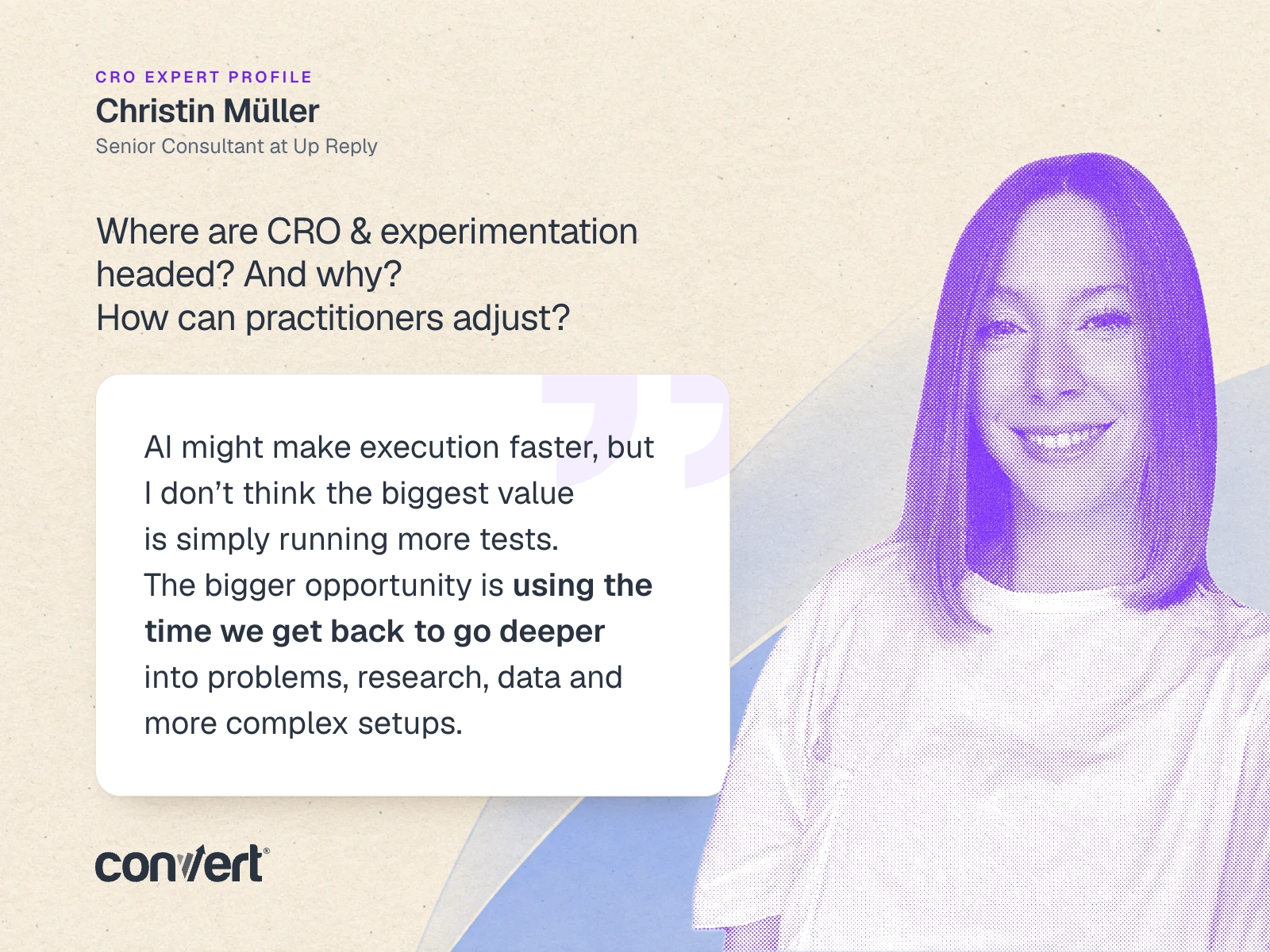
Müller, who specializes in experimentation, personalization, and conversion optimization, posits that the industry is entering a "new era" facilitated by the commoditization of execution through AI. This transition allows experts to move past the repetitive tasks of test deployment and into the deeper realms of research, problem-solving, and cross-functional knowledge management. Her perspective reflects a broader industry trend where the success of an optimization program is measured not just by "winning" tests, but by the depth of the insights gained from every experiment, including those that fail to produce a significant lift.

The Professional Trajectory of a CRO Specialist
The career path of Christin Müller serves as a microcosm for the professionalization of the optimization field. Originally entering the world of digital analytics through academic study, Müller’s first encounter with the discipline occurred during a Web Analytics course where she focused on Google Optimize. At the time, Google Optimize was the primary entry point for many practitioners, offering a low-barrier-to-entry tool for A/B testing that integrated seamlessly with the broader Google Marketing Platform.
Following her graduation, Müller transitioned into a dedicated CRO role, discovering that experimentation had matured into a distinct and vital business discipline. This realization highlights the evolution of the field from a secondary task performed by web developers or general marketers into a specialized profession requiring a unique blend of data science, psychology, creative strategy, and business acumen. Now a Senior Consultant at Up Reply—a firm known for its focus on digital transformation and optimization—Müller manages complex programs that integrate personalization and experimentation into the core of business decision-making.
Chronology of the Optimization Tooling Landscape
To understand the current state of experimentation, it is necessary to examine the technological timeline that has shaped the industry. For much of the 2010s, the focus was on democratization and accessibility. Tools like Google Optimize, Optimizely, and VWO allowed companies to begin testing without extensive backend infrastructure.

- 2010–2018: The Democratization Phase. Experimentation became accessible to mid-market and small-business tiers. The focus was largely on "low-hanging fruit," such as button colors, headline changes, and layout adjustments.
- 2019–2022: The Maturity and Integration Phase. Organizations began to realize that isolated tests provided limited value. The focus shifted toward "full-stack" experimentation, moving tests from the client-side (browser) to the server-side to ensure better performance and security.
- 2023–Present: The AI and Sunset Phase. The sunsetting of Google Optimize in September 2023 marked a significant turning point, forcing organizations to migrate to more robust, often more expensive, third-party platforms. Simultaneously, the explosion of Generative AI began to automate the creation of test variants and the analysis of qualitative data.
Müller’s current work at Up Reply occurs within this third phase, where the challenge is no longer "how to test," but "how to test intelligently" in an environment where AI can generate thousands of permutations in seconds.
The Role of Artificial Intelligence in Modern Workflows
The integration of AI into experimentation is often misunderstood as a total replacement of the human optimizer. However, Müller describes AI as a "door opener" and a "buddy" rather than a replacement. In her current workflow, AI is utilized to bridge the gap between technical execution and stakeholder communication. One of the primary hurdles in enterprise-level CRO is ensuring that data-heavy insights are translated into a language that stakeholders—from product managers to C-suite executives—can understand and act upon.
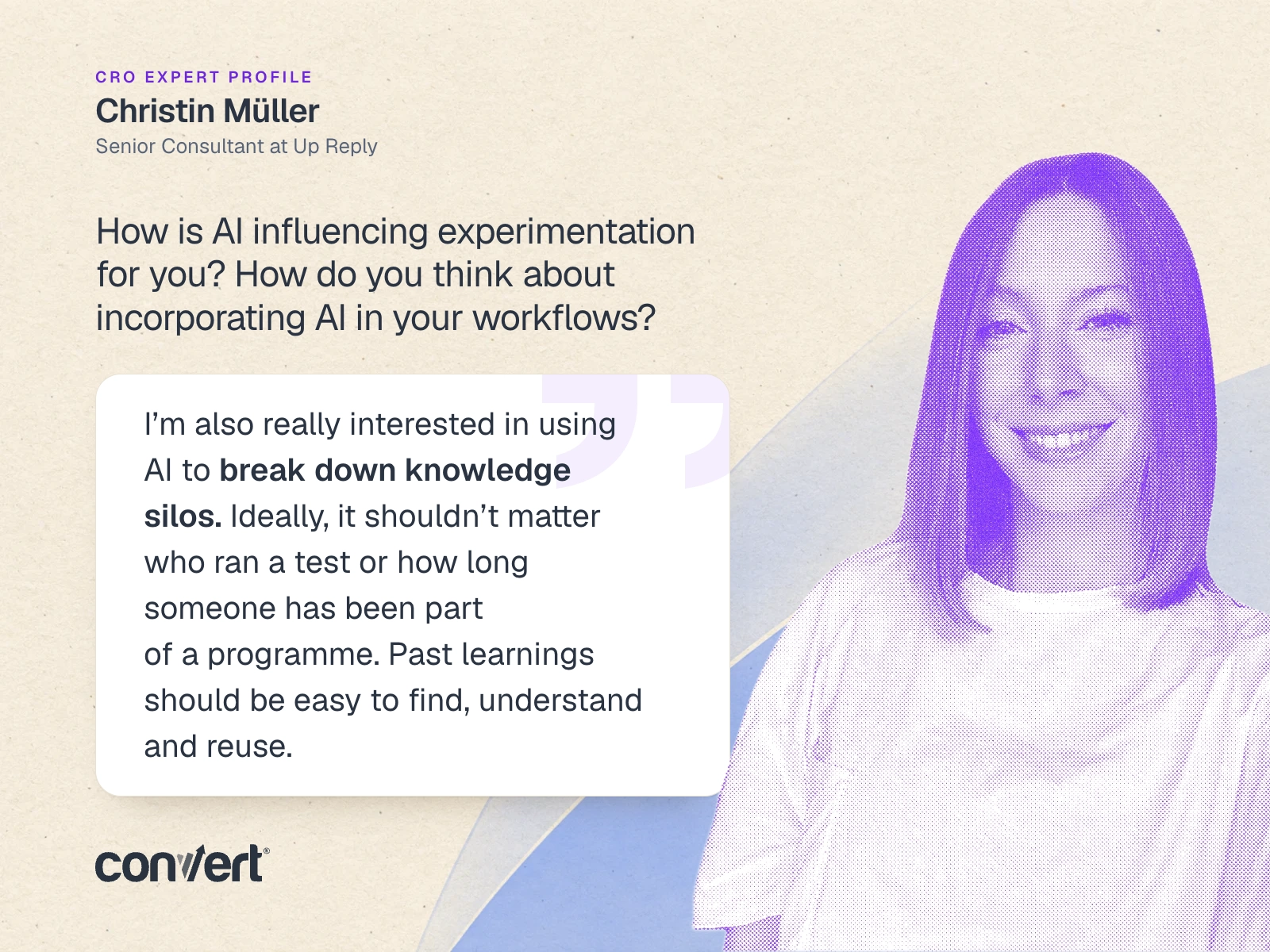
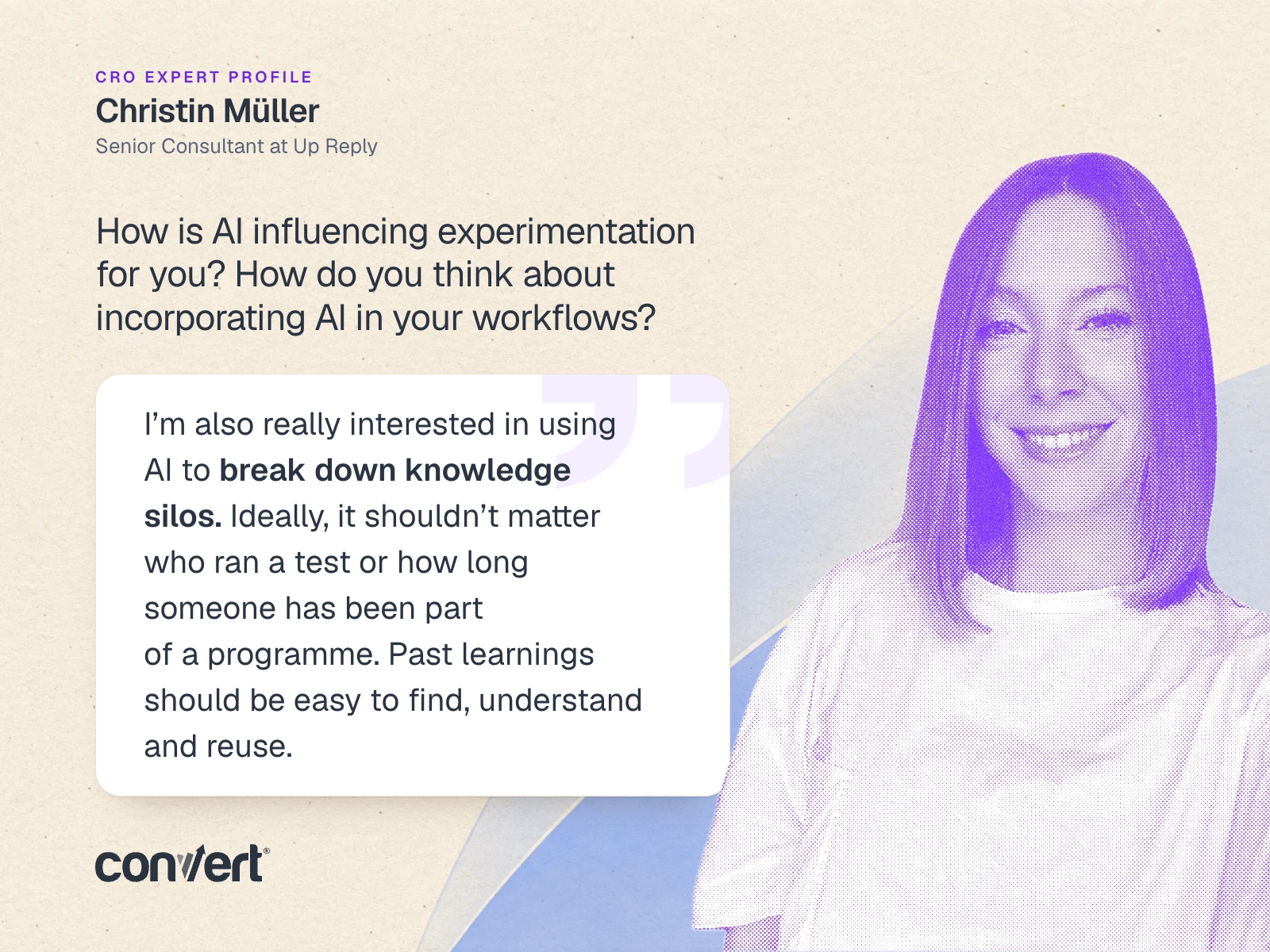
Beyond communication, Müller identifies a critical use case for AI in breaking down "knowledge silos." In large organizations, experimentation data is often fragmented across different teams, departments, or even time periods. When a team member leaves or a new program begins, past learnings are frequently lost, leading to "re-testing" the same hypotheses. Müller is actively involved in building "CRO hubs"—centralized repositories where AI links insights, hypotheses, and experiment designs across various programs. This allows for a connected workflow where the collective intelligence of the organization is preserved and easily accessible.
Supporting Data: The Economic Impact of Optimization
The shift toward a more scientific approach to experimentation is backed by significant economic data. According to industry reports, companies that adopt a "test-and-learn" culture see a 15% to 25% higher return on their marketing spend compared to those that rely on traditional "big-bang" product launches. Furthermore, the global Conversion Rate Optimization software market, valued at approximately $770 million in 2022, is projected to reach over $1.9 billion by 2030, representing a compound annual growth rate (CAGR) of 12%.
The integration of AI is expected to accelerate this growth. Data from Gartner suggests that by 2025, organizations that use AI to enhance their experimentation frameworks will see a 20% increase in the success rate of their digital initiatives. Müller’s focus on using AI to "save time" aligns with these statistics; by automating the repetitive tasks of data cleaning and variant generation, practitioners can dedicate more resources to high-value activities like ethnographic research and complex persona development.
The Psychology of Failure and the Value of Negative Results
A central theme in Müller’s philosophy is the rejection of the "winner-take-all" mentality. In the early days of CRO, the success of a specialist was often judged solely by the "lift" or revenue increase generated by their tests. Müller argues that some of the most valuable experiments are those where the result challenges existing assumptions or shows no significant impact.
When an organization is convinced that a specific solution will work, only to have the data prove otherwise, it forces a re-evaluation of the underlying problem. This prevents companies from investing millions into full-scale production of features that do not actually address user needs. Müller emphasizes that analyzing what doesn’t work is as crucial as celebrating winners. This rigorous approach to evidence ensures that business decisions are grounded in reality rather than internal bias or "HiPPO" (Highest Paid Person’s Opinion) influence.
Broadening the Scope: Full-Journey and Cross-Touchpoint Analysis
As the discipline matures, it is moving away from optimizing individual pages (like a checkout page or a landing page) toward "full-journey" experimentation. Müller expresses a particular interest in how different user groups behave across multiple touchpoints. This involves tracking a user from their initial interaction with an ad or social media post through to their behavior on the website, their interaction with customer support, and their eventual retention or churn.
This holistic view allows for a more nuanced application of personalization. Instead of showing a different banner based on a single click, practitioners can develop sophisticated communication strategies that evolve as the user moves through the funnel. This level of complexity requires a move away from simple A/B testing and toward multivariate testing and sophisticated segmentation, often powered by machine learning algorithms that can identify patterns in large datasets that a human analyst might miss.
Industry Implications and the Future of the Practitioner
The insights provided by Müller suggest that the future of CRO is inextricably linked to the broader digital transformation of the enterprise. As AI handles the "execution" of tests, the human practitioner’s role will shift toward:
- Strategic Judgment: Deciding which problems are worth solving and which hypotheses align with long-term business goals.
- Ethical Oversight: Ensuring that optimization and personalization do not cross into manipulative "dark patterns" that erode consumer trust.
- Interdisciplinary Collaboration: Acting as a bridge between data scientists, UX designers, and business leaders to ensure a unified approach to the customer experience.
- Quality Management: Maintaining the integrity of the experimentation process and ensuring that AI-generated outputs are scrutinized for accuracy and relevance.
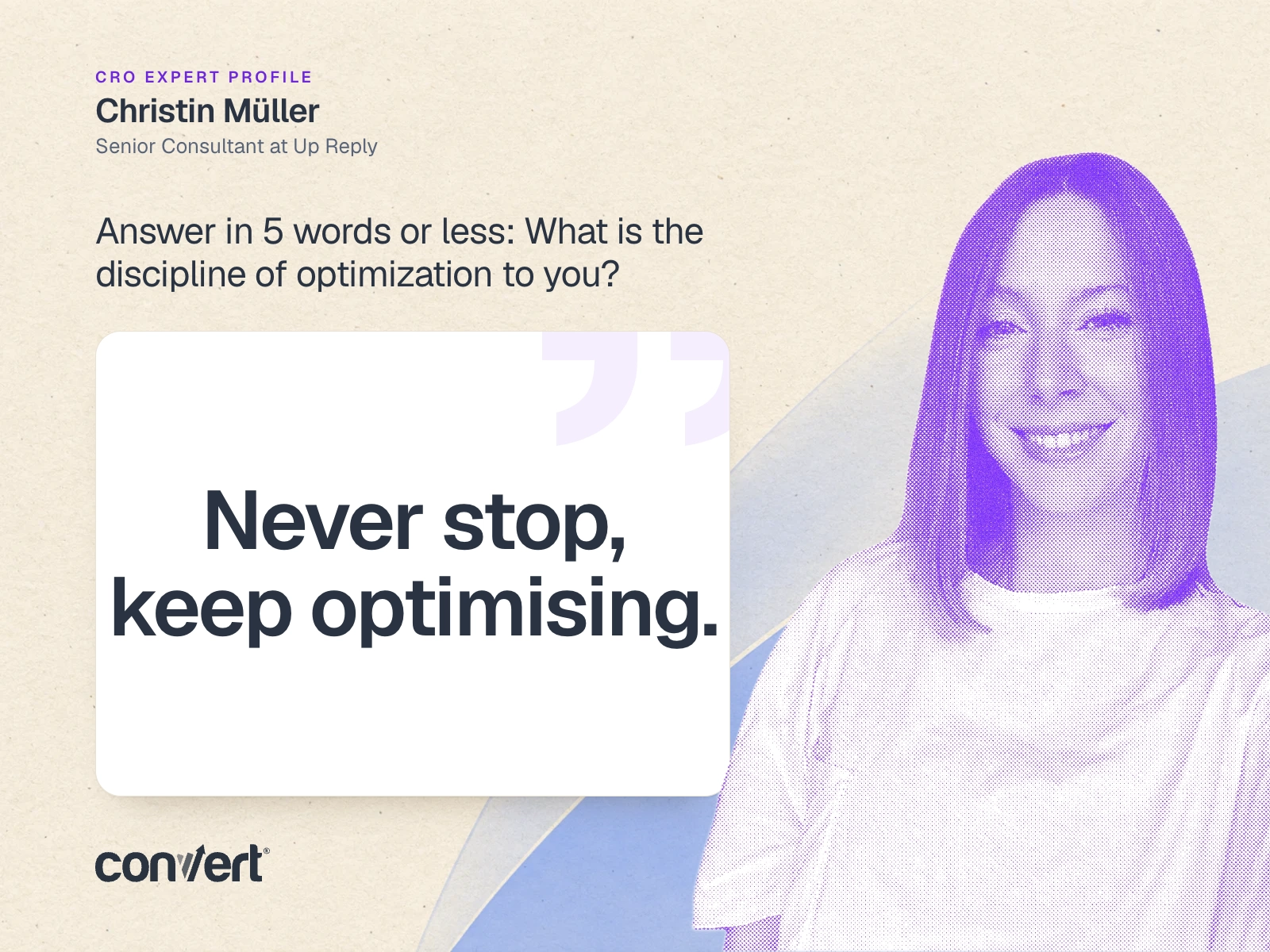
Müller’s mantra, "Never stop, keep optimising," reflects the iterative nature of this work. In a digital environment where consumer preferences and technological capabilities are in a state of constant flux, the organizations that survive will be those that treat experimentation not as a one-time project, but as a core, ongoing business function.
Official Responses and Strategic Outlook
While individual companies rarely disclose the specific results of their internal experimentation playbooks, the strategic shift described by Müller is echoed by major technology providers. Companies like Convert, Optimizely, and AB Tasty have increasingly focused their product roadmaps on AI integration and "experimentation management" features that cater to the needs of consultants like Müller. These platforms are evolving into "operating systems" for experimentation, providing the infrastructure for the CRO hubs Müller envisions.

The broader impact of this shift is a more efficient digital economy. By replacing guesswork with evidence, companies can reduce waste, improve user satisfaction, and drive sustainable growth. As Christin Müller and her colleagues at Up Reply continue to refine these methodologies, the "Testing Mind Map" will likely become the standard blueprint for how modern businesses navigate the complexities of the digital marketplace. The era of "guessing" is being replaced by an era of "knowing," fueled by the synergy of human curiosity and machine intelligence.

 Reynand Wu
 rifanmuazin