The landscape of digital marketing has undergone a radical transformation over the last two decades, evolving from a field dominated by creative intuition to one grounded in rigorous data analysis. At the heart of this transition lies A/B testing, a methodology that serves as the primary vehicle for applying scientific principles to the user experience. By utilizing randomized controlled trials—a gold standard in fields such as physics, medicine, and genetics—digital practitioners aim to establish causal relationships between specific website changes and user behavior. However, a growing body of evidence suggests that the common practices within the A/B testing industry are lagging significantly behind modern statistical science, often relying on methods that have been considered obsolete or incomplete for over half a century.
The discrepancy between the perceived scientific rigor of A/B testing and its actual application in the field has led to a crisis of reliability in conversion rate optimization (CRO). Industry experts have identified three primary systemic issues that plague current experimentation workflows: the misuse of statistical significance tests, a widespread lack of consideration for statistical power, and the inherent inefficiency of classical statistical models when applied to the fast-paced environment of digital commerce. To address these challenges, a new framework known as the AGILE statistical approach has emerged, drawing inspiration from the stringent protocols used in clinical medical trials to provide a more robust and flexible methodology for the digital age.
The Crisis of Misapplied Statistical Significance
In the current digital ecosystem, "statistical significance" is often treated as a binary indicator of success, yet its fundamental constraints are frequently ignored by practitioners. The most prevalent tool in the A/B testing arsenal is the Student’s T-test, a classical method designed for single-point evaluations. A critical, yet often overlooked, requirement of this test is the pre-determination of a fixed sample size. For a significance test to remain valid, the experimenter must decide in advance how many users will be observed and perform only one analysis at the conclusion of that period.
The reality of business operations, however, often conflicts with this mathematical necessity. In a corporate environment, stakeholders are naturally inclined to monitor results in real-time. This leads to the phenomenon known as "data peeking" or data-driven optional stopping. When a test variant shows early signs of success or failure, there is immense pressure to terminate the experiment early to either capture revenue or mitigate losses.
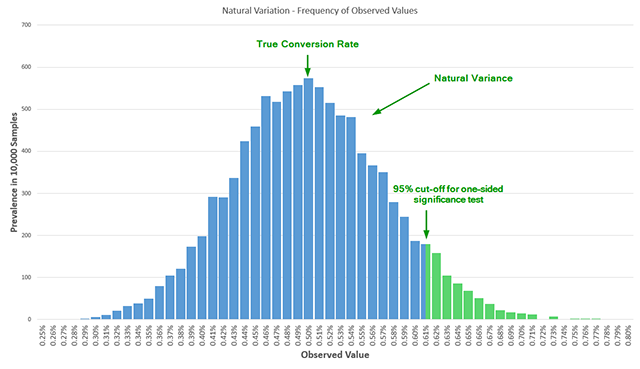
Statistical research dating back to 1969 has demonstrated that such peeking dramatically inflates the probability of false positives. For example, if a practitioner peeks at the data just twice before the scheduled conclusion, the actual error rate is more than double the reported nominal error. If they peek ten times, the actual error probability becomes five times larger than the reported 5% threshold. This leads to a "Garbage In, Garbage Out" scenario where businesses implement changes based on illusory findings, ultimately harming their long-term conversion rates.
The Overlooked Pillar of Statistical Power
While significance focuses on avoiding false positives (Type I errors), statistical power is concerned with avoiding false negatives (Type II errors). Statistical power, or "test sensitivity," represents the probability that an experiment will detect a true lift of a certain magnitude if it actually exists. Despite its importance, power is rarely discussed in mainstream CRO literature. A comprehensive review of seven influential A/B testing books published between 2008 and 2014 revealed that only one mentioned statistical power in a proper context, and even then, the coverage was superficial.
Running under-powered tests is a significant drain on organizational resources. When a test lacks sufficient sensitivity, a variant that is truly superior may fail to reach significance, leading the team to abandon a potentially lucrative improvement. This "false negative" is often misinterpreted as a "true negative," creating a strategic blind spot where future iterations in that direction are erroneously barred.
The relationship between power and sample size is direct: higher sensitivity requires more data. Many free online calculators default to a power level of 50%, which is essentially no better than a coin toss. For a test to be reliable, practitioners must balance four interconnected variables: the historical baseline conversion rate, the desired significance threshold (usually 95%), the required power (typically 80% to 90%), and the Minimum Detectable Effect (MDE). Without a sophisticated understanding of these parameters, the efficiency of the entire testing program is compromised.
Chronology of Methodology and the Need for Efficiency
The history of statistical experimentation shows a clear divergence between general science and high-stakes fields like biostatistics. While classical fixed-sample tests served agriculture and physics well in the early 20th century, the medical field recognized early on that these methods were too rigid for trials involving human lives and massive financial investments.
In the 1960s and 70s, medical researchers began developing sequential analysis and interim monitoring protocols. These allowed for trials to be stopped early if a drug was found to be either exceptionally effective or dangerously harmful, all while maintaining strict mathematical control over error rates. The digital marketing industry is currently facing a similar crossroads. The "wait and see" approach of classical statistics is increasingly viewed as an expensive luxury in a competitive market where every day of testing represents an opportunity cost.
If an experiment is planned for 88,000 users to detect a 10% lift, but the actual lift is 15%, a classical test would require the practitioner to continue running the experiment long after the result has become obvious, just to satisfy the requirements of the fixed-sample model. Conversely, if a variant is performing 20% worse than the control, the business is forced to lose money for the duration of the test. This inherent inefficiency has paved the way for the adoption of the AGILE method.
The AGILE Statistical Approach: A Modern Solution
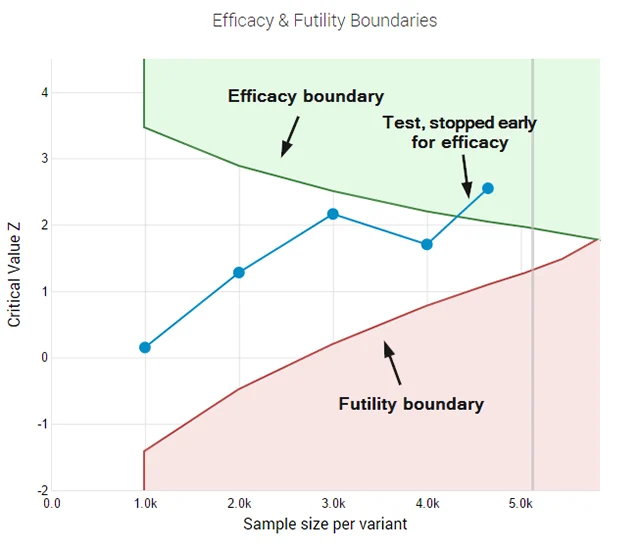
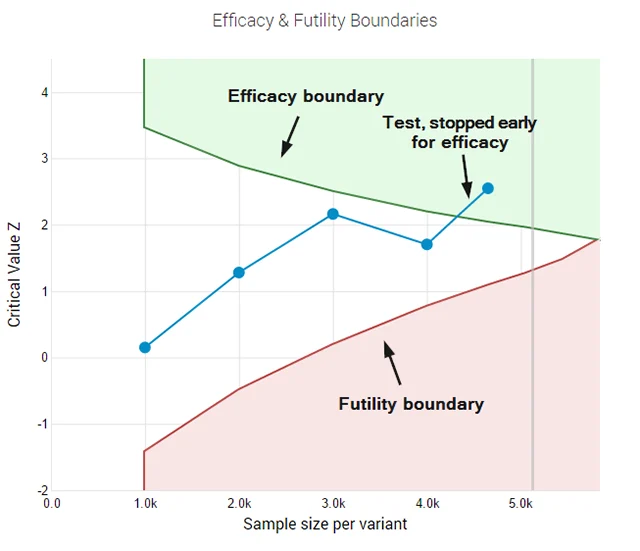
The AGILE statistical method represents a synthesis of clinical trial protocols adapted for the specific needs of conversion rate optimization. The framework addresses the "peeking" problem by utilizing error-spending functions. These functions allow for multiple interim analyses throughout the lifecycle of a test. Instead of spending the "alpha" (the probability of a false positive) all at once at the end of the test, the AGILE method distributes it across the various peeking points, ensuring that the cumulative error rate remains within the desired 5% threshold.
One of the most significant advantages of the AGILE framework is the introduction of the "futility stopping rule." This allows practitioners to "fail fast" with statistical confidence. If the data suggests that a variant has a negligible chance of becoming a winner, the test can be terminated early for futility. This prevents the waste of traffic on losing ideas and allows the team to pivot to more promising hypotheses.
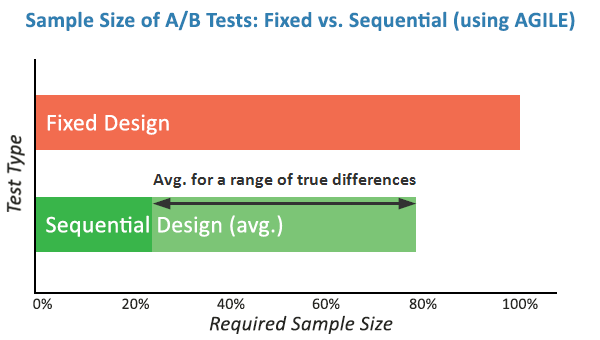
Simulations and white-paper validations of the AGILE method indicate efficiency gains ranging from 20% to 80% compared to classical models. While some tests may occasionally require a larger maximum sample size than a fixed-sample test, the average time-to-decision is significantly lower. This speed is achieved without sacrificing the integrity of the results, providing the flexibility that modern marketing teams demand.
Broader Impact and Industry Implications
The transition toward more sophisticated statistical frameworks like AGILE has profound implications for the digital economy. As businesses become increasingly reliant on algorithmic decision-making and automated personalization, the quality of the data feeding these systems becomes paramount. By reducing illusory results, organizations can build a more accurate knowledge base of user preferences, leading to more effective product development and marketing strategies.
Furthermore, the adoption of these methods reflects a maturing of the CRO industry. It signals a move away from "hacks" and "best practices" toward a culture of genuine experimentation. For stakeholders, this means a more predictable return on investment for testing programs. Instead of reporting "wins" that fail to materialize in the bottom-line revenue—a common symptom of false positives—teams using AGILE can provide more reliable forecasts of the impact of their changes.
The implementation of the AGILE method does, however, require a higher level of statistical literacy among practitioners or the use of more advanced experimentation platforms that can handle the underlying complexity of error-spending functions. As the industry continues to evolve, it is expected that these rigorous standards will become the baseline requirement for any organization seeking to maintain a competitive edge through digital experimentation. The alignment of statistical theory with the practical realities of the business world is not merely a technical upgrade; it is a necessary evolution for the credibility and effectiveness of the field of digital marketing.