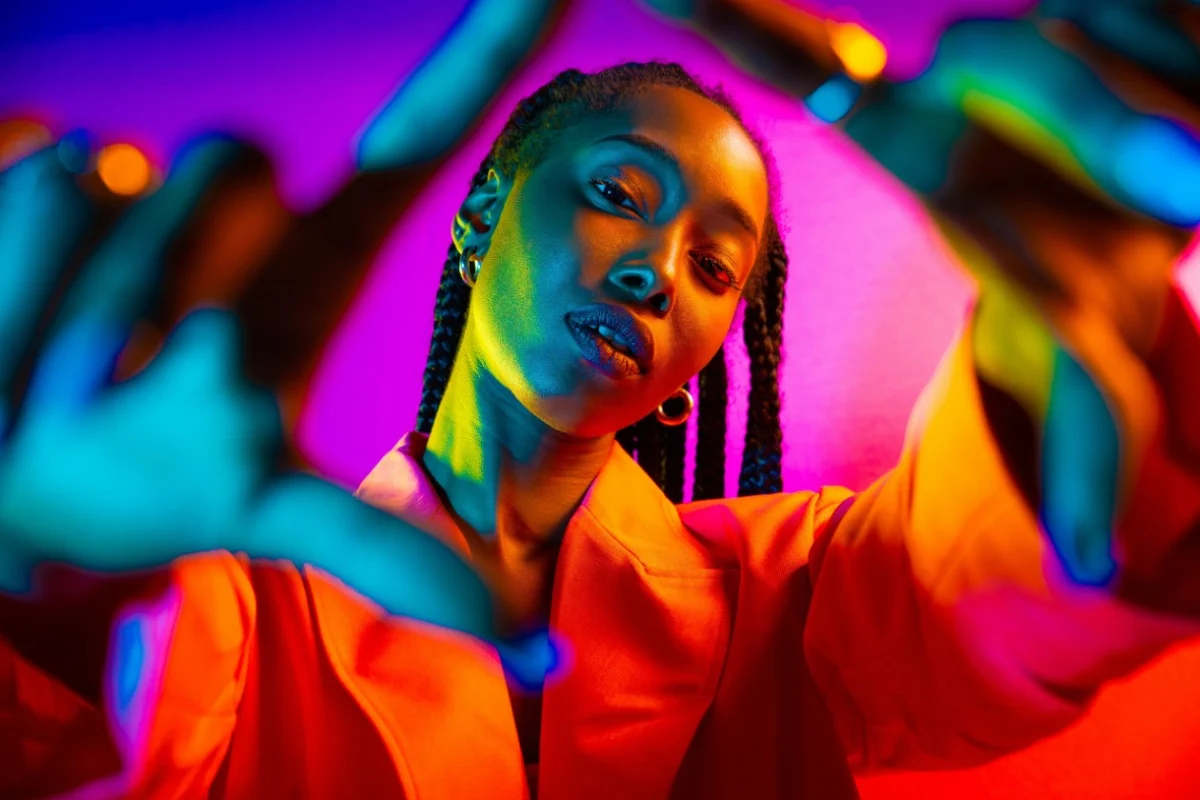
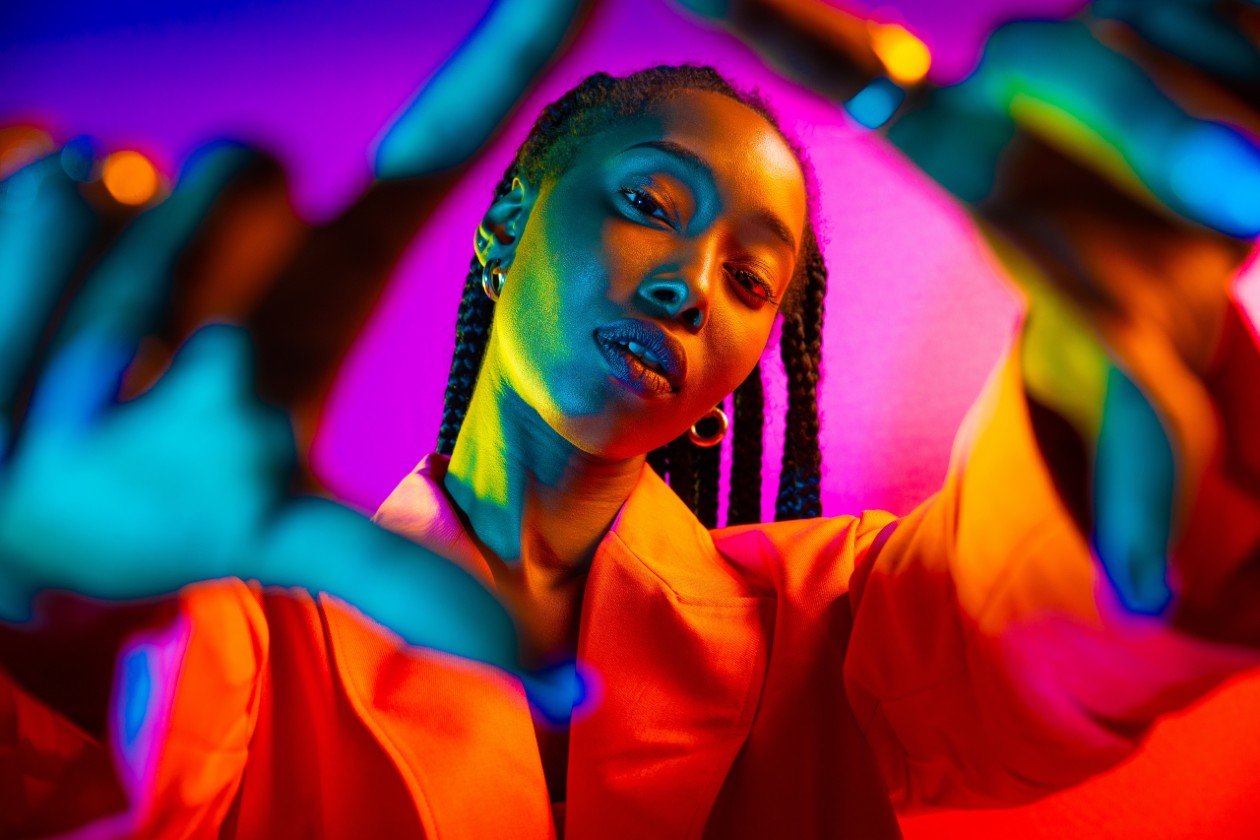
The accelerating integration of artificial intelligence into B2B social media content creation has ignited a critical debate among marketers and creatives: what is the future role of human imagination and ingenuity in this evolving digital sphere? As AI tools become more accessible and sophisticated, the question of how brands can differentiate themselves in increasingly saturated online environments becomes paramount. To explore this dynamic, insights were gathered from leading B2B social media marketers representing prominent brands, revealing a consensus that human creativity remains the essential differentiator, particularly as AI streamlines the creation of vast quantities of content.
The current landscape of B2B marketing is undeniably shaped by the rapid adoption of AI. According to TopRank Marketing’s 2025 B2B Influencer Marketing Report, a significant 57% of B2B marketers are already leveraging AI for content creation and research. Further data from the Content Marketing Institute corroborates this trend, with 53% of marketers utilizing AI for generating creative assets like images and videos. This widespread adoption, however, has coincided with a growing trust deficit among B2B buyers. While nearly half of buyers use generative AI tools for vendor and product research, a concerning statistic from Gartner indicates that over half have received misleading information from these tools. Consequently, a substantial 69% of buyers still rely on sales representatives to validate AI-generated findings. This suggests that while AI offers unprecedented efficiency and scale in content production, it is not inherently building the trust required for meaningful buyer engagement. The race to produce volume is, therefore, leading many brands toward a "race to the middle," where generic, AI-generated content fails to capture attention or foster credibility.
The widening gap between content quantity and quality is precisely where human creativity asserts its irreplaceable value, especially on social media platforms where capturing attention and building trust are increasingly challenging endeavors. To understand this imperative, the perspectives of twelve seasoned social media marketing professionals from esteemed organizations such as Adobe, HP Enterprise, Slack, and Cision were solicited. Their insights underscore a fundamental division of creative labor, where AI serves as a powerful amplifier of human-driven ideas, rather than a replacement for them.

AI Amplifies, Humans Originate: The Core of Creative Collaboration
A recurring theme emerging from discussions with B2B marketing leaders is the synergistic relationship between human ingenuity and AI capabilities. AI excels at scaling, accelerating, and broadening the reach of an established creative vision. However, the genesis of that vision—the spark of originality—remains a distinctly human domain.
Jared Carneson, Head of Social Media at Adobe, articulated this balance effectively. He posited, "Every breakthrough piece of social content starts with something AI cannot originate: a genuine point of view. AI expands what a creative vision can become, faster, at greater scale, across more surfaces, but imagination is still the source material. The human and AI partnership works because human creativity is not being replaced. It is being amplified." Carneson cited Adobe Firefly: The Unfinished Film as an exemplar of this amplified creativity achieving award-winning results, demonstrating how AI can elevate human artistic direction into impactful campaigns.

Desirée Porcaro, Senior Director of Social Media at UKG, emphasized the unique human capacity for injecting meaning and emotional resonance into content. "AI is accelerating content creation and helping us explore ideas, iterate faster, and bring concepts to life more efficiently than ever before. But human imagination is still what gives social content meaning, emotional resonance, and relevance," Porcaro stated. She highlighted the subtle yet crucial human aptitudes for understanding cultural context, sentiment shifts, tone, timing, empathy, and instinct. "AI can help us move faster, but it’s people who understand the world around us deeply enough to create content that truly connects, builds trust, and inspires action," she added.
Emily Vonakis, Social Media Manager at RTX, identified human imagination and creativity as the defining skill sets for contemporary B2B marketers. "I believe human imagination and creativity are becoming even more important in social media marketing," Vonakis asserted. "The most impactful social strategies come from understanding people, identifying meaningful narratives, asking better questions, and creating experiences that resonate in a genuine way. The future belongs to marketers who can leverage AI as a tool while still leading with strategic thinking, originality, empathy, and imagination."

The Uniquely Human Domain: Emotional Connection and Cultural Intelligence
Beyond the mechanics of idea generation, a significant theme that emerged centers on the irreplaceable human faculties of emotional intelligence and cultural fluency. These are the elements that enable social media content to forge genuine connections with specific audiences within particular cultural moments—a nuance that AI, in its current form, struggles to replicate.
Renee D. Edwards, Director of Global Social Media and Digital Communications at Hewlett Packard Enterprise, underscored the power of human-inspired emotional connection. "Human imagination, creativity, and connection remain the differentiating forces in social media marketing," Edwards explained. "In an increasingly AI-driven landscape, creativity and storytelling that sparks the imagination is what ensures brands stand out and capture the hearts, minds, and attention of audiences."

Mageida Sopon, Social Media Manager at Insperity, pointed to community building as a key area where human interaction proves superior. "AI can’t replicate human imagination and creativity," Sopon stated. "It is people who build community, generate bold ideas that become trends, and discover new ways of connecting that technology, for all its capabilities, has yet to reach."
Katelyn Brower, Director of Social Media, Public Relations, and Events at First Advantage, cautioned against relinquishing too much creative authority to AI, emphasizing the potential loss of authentic engagement. "Balancing where AI comes into play is critical because you cannot lose sight of the creator in you," Brower advised. "It is easy to spot when a social strategy is fully reliant on AI, and when teams do this, true engagement gets sacrificed, losing sight of what a successful social media strategy should be."

Editorial Judgment and Creative Instinct: The Nuances of Human Decision-Making
Further insights from top social media executives highlighted the importance of editorial judgment and creative instinct—qualities that are inherently difficult to systematize or automate. This includes the intuitive ability to assess the viability of a creative risk, recognize the opportune moment for a timely meme, or craft a message that is genuinely unexpected.
Sabrina Barekzai, Director of Social Media Strategy at Slack, contrasted data-driven insights with human discernment. "AI can’t replace editorial judgment or discernment," Barekzai asserted. "So much of social media marketing is creative and editorial-led. Yes, we focus on data and insights, but sometimes you just need to post the trending meme because you just know it will perform well. AI can’t replicate that intuitive feeling. Discernment is part of what makes us human. It’s more important than ever for marketers to test and learn based on their own editorial judgment and not rely on AI just yet."
Amanda Gebhard, Associate Director of Enterprise Social Media at Boston Scientific, noted that even AI developers are acknowledging this gap. "I actually think human-led creativity is more important than ever for social content," Gebhard remarked. "AI pulls from existing material, and most AI-generated content still reads pretty generic and flat. Creativity requires imagination and some level of risk-taking, and the best social content reflects back on its audience through subtle, implicit signals that LLMs aren’t very good at picking up yet. Creative storytelling driven by real people is becoming a strategic differentiator. Even the AI companies recognize this, since many are hiring people or agencies to do this work."
Kirt Zimmer, Senior Manager of Social Media Marketing at Marvell Technology, advocated for the value of human idiosyncrasy. "When a message lands with an audience, it’s usually because of an intellectual or emotional connection that is almost never born from generic content," Zimmer explained. "AI is great for strategic direction, organizing complex thoughts, or even a first draft, but its default setting is pretty boring. Inject your quirky, cheeky, or intriguing perspectives if you hope to stand out in a sea of blandness. In other words, be human."
The Rise of "Human Media": A Counter-Movement to AI Saturation
A compelling third thread of discussion posits that the very proliferation of AI-generated content is paradoxically increasing the demand for human-generated content. This perspective suggests that as the digital landscape becomes saturated with predictable, AI-produced material, authentic, human-created content will stand out more prominently.
Marc Meyer, Head of Social Media at Revvity, has coined a term for this emerging phenomenon: "human media." He believes that AI is inadvertently fostering a greater desire for human-based interactions. "Ironically, I think AI is accelerating the desire for more human based interactions," Meyer stated. "I’m willing to coin a new term: ‘human media.’ This revolt is in direct response to the notion that AI generated content is filling a creative void. It is in the sense of quality and speed, but not originality. Not in what makes some designs iconic and memorable. The rise in AI seems to be having a positive impact on H2H communications, or at least it’s increasing the desire for more human-to-human interactions. We can see and smell AI in terms of content creation and discovery, and most of us don’t like the taste."

Meghan Meeker, Director of Social Media at Cision, echoed this sentiment, advocating for the value of the "weird" in human-generated content. "As marketers, we know our audiences are growing weary of AI slop," Meeker observed. "Before AI, they were growing tired of clickbait, obvious advertisements, and being sold to every time they scrolled. Authenticity is becoming more and more important as AI usage in marketing increases. People are craving authenticity, vulnerability, humanity, and transparency in the content they consume. So while AI can and should be a tool in every marketer’s toolbox, human imagination and creativity is paramount right now. Make the weird stuff. It might just get your brand noticed in a sea of sameness."
Lisa Marcyes, Global Head of Social Media at Cohesity, provided concrete evidence of this trend, illustrating how human creativity remains the driving force behind memorable content, even within an AI-integrated workflow. "The ideas that actually stop people mid-scroll still come from humans," Marcyes asserted. She cited examples like a drone show over Las Vegas that appeared so real it was mistaken for an actual event, and the inclusion of a fainting goat in a ransomware video to make a serious message more impactful. "AI didn’t come up with either of those," Marcyes emphasized. "A creative team that deeply understands its audience did. Over the years I’ve found the content people actually remember makes them feel something. It surprises them. Makes them laugh. Makes them uncomfortable. Makes them feel seen. We still need humans for that."

The Competitive Edge: Creativity in an AI-Dominated B2B Social Media Arena
The data and the expert opinions converge on a critical conclusion: AI is a powerful force multiplier for B2B marketers, enhancing productivity and efficiency. However, in an era where AI can produce content at an industrial scale, originality emerges as the most valuable and scarce resource in B2B social media.
The distinction between social media content that captures attention and that which merely populates a feed hinges on a fundamental human question: Does this content resonate? Does it surprise? Does it reflect something authentic about the audience? While 78% of B2B marketers recognize the importance of interactive and experiential content for repeat engagement, according to the State of B2B Thought Leadership in 2026 Report by TopRank Marketing, only a third regularly incorporate these elements. This presents a significant opportunity for brands willing to prioritize imagination and leverage AI as an execution accelerator.

In the framework of Best Answer Marketing, the trust system is built upon this very originality. Credible voices, authentic storytelling, and content that earns engagement—rather than simply filling a queue—cultivate the brand signals that are crucial across all channels, including within the AI-powered platforms that now shape buyer discovery and expertise evaluation.
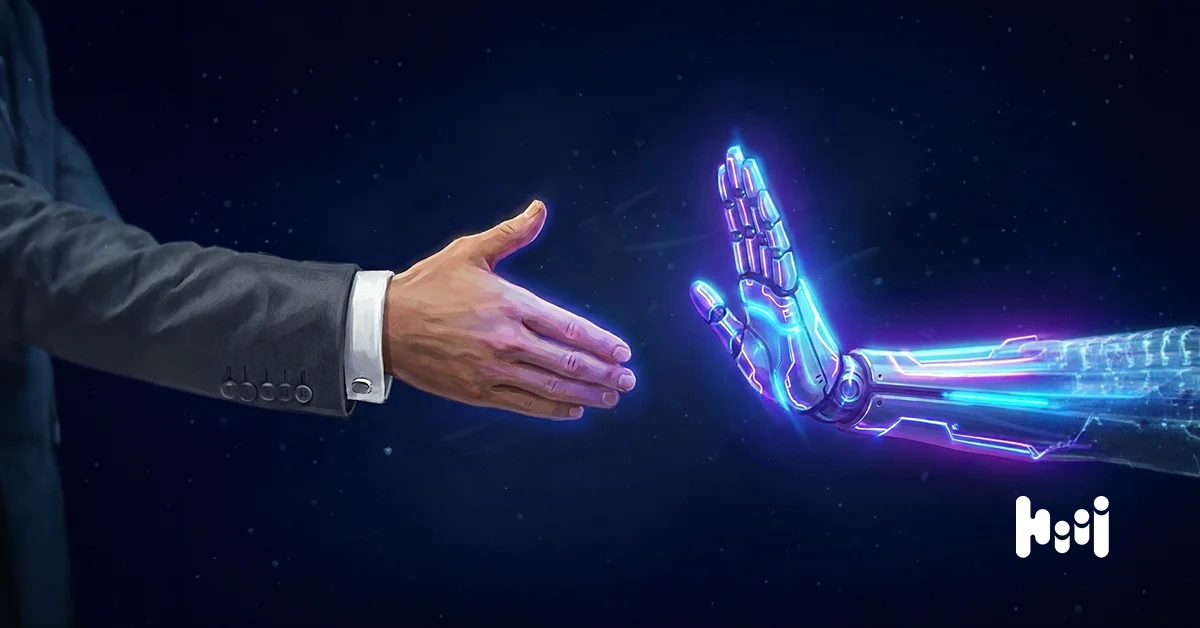
The marketers poised to lead in this evolving environment will be those who view AI not as a replacement for creativity, but as a sophisticated accelerator. The collective insights from these twelve leading B2B social media professionals powerfully demonstrate that the boundary between AI capabilities and human contributions remains distinct, and it is within this demarcation that true brand differentiation lies. As the digital landscape continues to evolve, the human element—with its capacity for genuine imagination, emotional depth, and nuanced understanding—will increasingly become the definitive competitive edge in B2B social media marketing.

 Asep Darmawan