rifanmuazin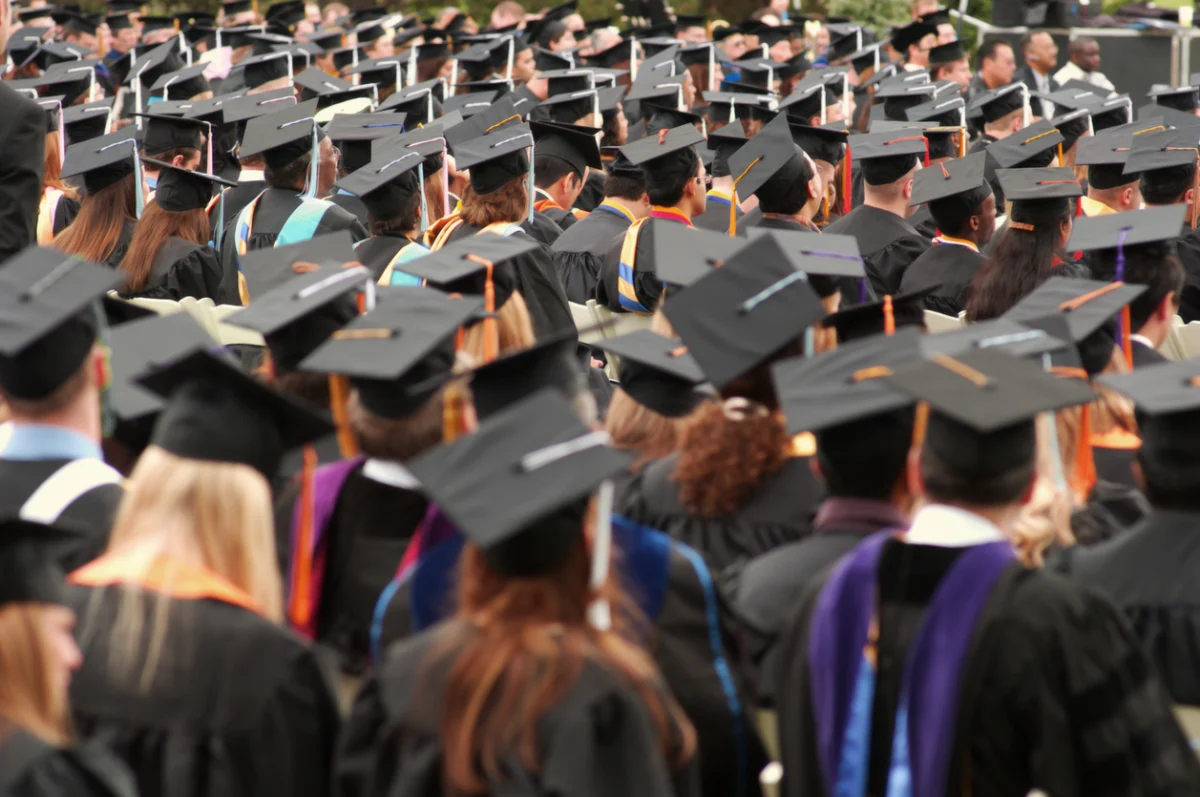
The traditional commencement ceremony, long regarded as a sanctuary for optimistic platitudes and celebratory reflection, has recently transformed into a front line for one of the most contentious debates of the modern era: the role of artificial intelligence in society. In a series of high-profile incidents across the United States, graduating students have moved beyond passive listening to vocal protest, specifically targeting speakers who champion AI as an unalloyed good. These events, occurring at major institutions like the University of Central Florida and the University of Arizona, suggest a significant shift in how the next generation of the workforce perceives the rapid integration of automated technologies.
The phenomenon first drew national attention during a commencement ceremony at the University of Central Florida (UCF). Gloria Caulfield, a prominent real estate executive and community leader, took the podium to deliver what was expected to be an inspiring address to the graduating class. However, the atmosphere shifted when Caulfield characterized the rise of artificial intelligence as the “next industrial revolution.” The comparison, intended to highlight the scale of opportunity, was met with a chorus of boos from the sea of robed graduates. Reports from the event indicated that Caulfield appeared visibly caught off guard by the visceral reaction, momentarily pausing as the audience’s dissatisfaction filled the arena.
This was not an isolated occurrence. Shortly thereafter, the University of Arizona hosted Eric Schmidt, the former CEO of Google and a pivotal figure in the global tech landscape, as its commencement speaker. Schmidt’s address followed a similar trajectory but encountered an even more sustained level of opposition. Drawing on his decades of experience at the helm of one of the world’s largest data companies, Schmidt compared the current AI boom to the advent of the personal computer—a milestone that fundamentally reshaped human productivity.
Unlike Caulfield, Schmidt appeared more prepared for the friction. As the boos intensified, he addressed the crowd directly. “I know what many of you are feeling about that. I can hear you,” Schmidt remarked, acknowledging the vocal dissent. He attempted to empathize with the graduates, noting that there is a pervasive fear among their generation that “the future has already been written, that the machines are coming, that the jobs are evaporating, that the climate is breaking, that politics is fractured, and that you are inheriting a mess that you did not create.” Despite his attempt to frame AI as a tool that the graduates themselves must shape for the better, the audience remained unconvinced, continuing to boo as he transitioned into a plea for maintaining a diversity of perspectives and supporting immigration.
A Chronology of Growing Resentment
The timeline of these protests suggests a rapidly accelerating skepticism toward the “tech-optimism” that has dominated corporate and academic circles for the last decade. Throughout 2023 and early 2024, the public discourse surrounding AI was largely dominated by the novelty of Large Language Models (LLMs) and the perceived inevitability of their adoption. However, as the “Class of 2024” and “Class of 2025” prepared to enter the labor market, the narrative shifted from technological wonder to economic existentialism.
The UCF incident served as an early warning sign that the “industrial revolution” framing—often used by economists to describe long-term growth—is viewed by many young adults as a euphemism for mass displacement. By the time Eric Schmidt spoke at the University of Arizona, the sentiment had hardened. The transition from surprise at UCF to a sustained, confrontational stance at Arizona indicates that the student body is increasingly unified in its wariness of the tech industry’s promises.
Analyzing the Paradox of the AI Native
To understand why these students are booing, it is necessary to look at the data regarding their actual relationship with the technology. According to a 2025 survey conducted by Inside Higher Ed, approximately 85% of college students reported using AI tools in some capacity during their academic careers. This high adoption rate contradicts the idea that these students are “Luddites” or technologically illiterate. On the contrary, this is a cohort of “AI natives” who are intimately familiar with the capabilities—and the limitations—of the software.
The paradox lies in the fact that widespread usage does not equate to enthusiastic endorsement. While students use AI for research, coding, and administrative tasks, they are simultaneously aware that the same tools could render their hard-earned degrees less valuable in a competitive job market. The boos at commencement ceremonies are not a rejection of the technology itself, but rather a rejection of the corporate and institutional narrative that ignores the risks associated with it.
Economic and Ethical Drivers of Dissent
The anxiety expressed by graduates is grounded in significant economic data. A report by Goldman Sachs famously estimated that AI could eventually replace the equivalent of 300 million full-time jobs globally. For a graduating senior who has invested four years of time and tens of thousands of dollars in tuition, the prospect of entering a market where entry-level roles are being automated is a source of profound stress.
Beyond the economic impact, there are three primary pillars of concern driving this backlash:
- Environmental Impact: The massive energy and water requirements of data centers used to train AI models are increasingly at odds with the climate priorities of the younger generation. As Schmidt noted in his speech, there is a feeling that students are “inheriting a mess,” and the perceived environmental cost of AI adds to that burden.
- Ethical and Creative Integrity: Many graduates, particularly those in the arts, humanities, and legal fields, view AI as a system built on the unauthorized use of human creativity. The ongoing legal battles over copyright and the “hallucination” issues of AI models have led to a trust deficit.
- The Devaluation of Human Effort: When commencement speakers frame AI as the primary driver of future success, it can feel like a dismissal of the students’ own efforts and human intelligence. The “booing” is a reclamation of the human element in a ceremony designed to honor human achievement.
Official Responses and the PR Challenge
The reactions from university administrations and the speakers themselves have been varied. While some institutions have doubled down on their commitment to AI integration, others are beginning to realize that their communication strategies are failing. The “pro-AI” rhetoric that works in a Silicon Valley boardroom or at a tech conference is proving to be tone-deaf when delivered to a general audience facing an uncertain future.
Strategic communicators are now warning that the “AI-powered” label is losing its luster. In the corporate sector, companies that once rushed to include AI in every press release are finding that consumers and prospective employees are demanding more nuance. The boos at the University of Arizona suggest that transparency and empathy are now more important than technological bravado. Eric Schmidt’s attempt to pivot his speech toward the “perspective of the immigrant” and “diversity of perspectives” was an effort to regain the audience’s favor by appealing to shared values, yet the fact that the boos continued indicates that the AI grievance is currently too large to be overshadowed by other topics.
Broader Implications for the Future of Work and Education
The vocal rejection of AI at commencement ceremonies serves as a “canary in the coal mine” for the broader societal reckoning with automation. It signals that the era of “passive adoption” is over, replaced by an era of “critical engagement.”
For universities, this means that the curriculum can no longer simply teach students how to use AI; it must also teach them how to navigate the ethical, legal, and social implications of a world where AI is ubiquitous. There is a growing demand for “human-centric” education that emphasizes the skills machines cannot easily replicate: critical empathy, complex ethics, and original synthesis.
For the corporate world, these incidents highlight a looming recruitment crisis. If the brightest young minds are skeptical of AI’s role in society, companies that prioritize automation over human capital may find it difficult to attract top talent. The “boos” are a signal that the next generation of workers will hold their employers to a higher standard regarding the ethical deployment of technology.
In conclusion, the disruptions at the University of Central Florida and the University of Arizona are more than just moments of youthful rowdiness. They are a manifestation of a deep-seated digital disconnect. While the technology is here to stay, the terms of its integration into our lives are still being negotiated. If leaders in tech and academia continue to ignore the legitimate fears of the people they serve, the sound of dissent at graduation ceremonies may only be the beginning of a much larger movement toward technological accountability. As companies and institutions look toward the next phase of AI adoption, they would be well-served to listen to the boos and address the skepticism of those who are destined to live in the future they are building.