admin
admin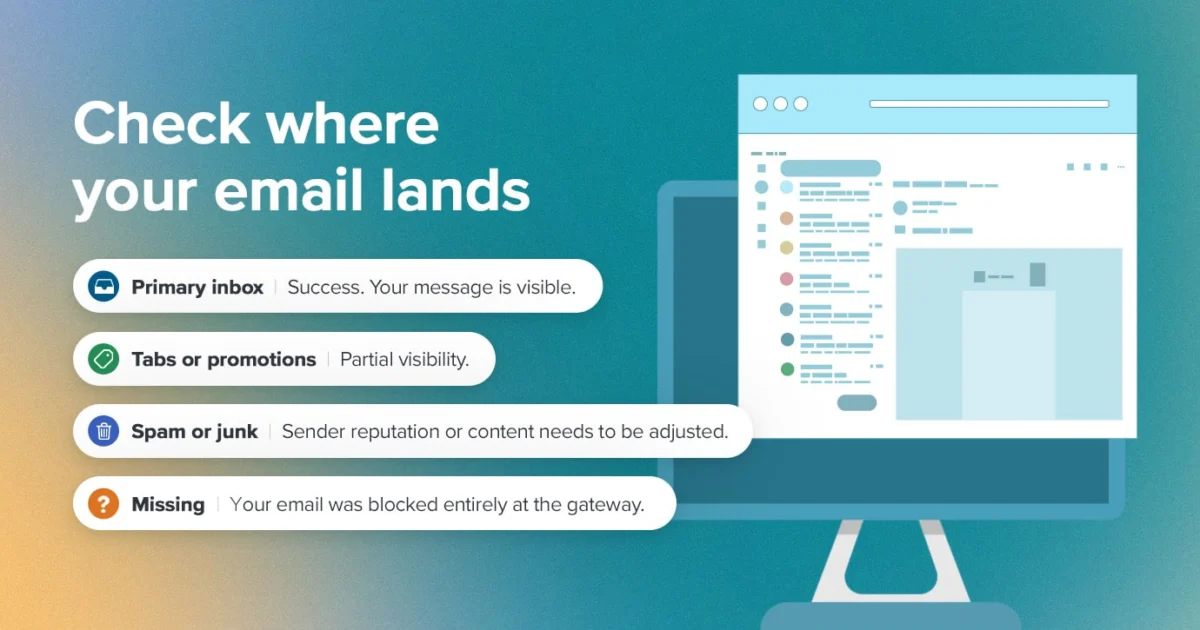
The prevailing notion that a high email delivery rate signifies the success of marketing campaigns is a pervasive and misleading myth within the digital landscape. While it’s reassuring to see that emails aren’t bouncing, implying they’ve reached their intended recipients, this metric alone paints an incomplete picture. This common misconception often leads marketers to prematurely celebrate a statistic that only reveals half the story, obscuring the true effectiveness of their outreach efforts. The actual triumph in email marketing lies not merely in reaching a mailbox provider’s server, but in securing a coveted spot within the subscriber’s primary inbox, where the message can be seen, engaged with, and ultimately, acted upon. Therefore, a profound understanding and diligent measurement of inbox placement are absolutely essential for accurately gauging the reach, influence, and return on investment of any email marketing initiative.
Understanding the Nuance: Delivery Rate vs. Inbox Placement Rate
To truly grasp the dynamics of email success, it is crucial to differentiate between two fundamental metrics: delivery rate and inbox placement rate (IPR). The delivery rate refers to the percentage of emails that are successfully accepted by the recipient’s mailbox provider. When an email fails to be delivered, it is categorized as a "bounce." Bounces come in two primary forms: a hard bounce, indicating a permanent failure such as a non-existent email address, and a soft bounce, which denotes a temporary issue like a full inbox or a server problem. A consistently high delivery rate is undoubtedly a positive indicator, suggesting a relatively healthy and well-maintained email list free from widespread invalid addresses.
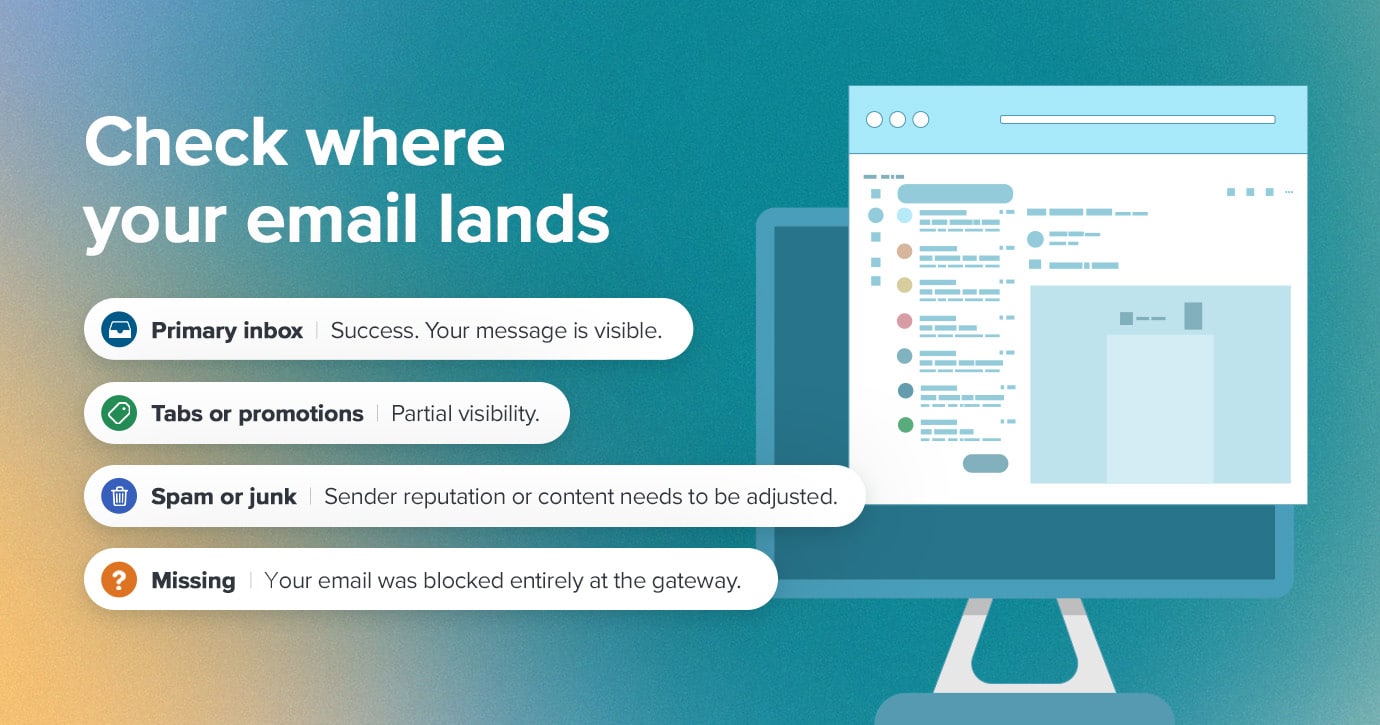
However, the inbox placement rate (IPR) delves significantly deeper. It measures whether an email, once accepted by the mailbox provider, successfully navigates the complex array of spam filters and lands in the recipient’s primary inbox—or, at least, in a folder where it stands a reasonable chance of being seen, such as a "Promotions" tab. This placement is not arbitrary; it is heavily influenced by a confluence of critical factors, including the sender’s reputation, the quality and relevance of the email content, and, crucially, the recipient’s historical engagement with the sender. Mailbox providers, such as Gmail, Outlook, and Yahoo, employ sophisticated algorithms that continuously analyze these elements to determine the trustworthiness of a sender and the relevance of their messages to individual users.
The core distinction is clear: a high delivery rate confirms that your email reached the server’s gate, but the inbox placement rate confirms it made it through the gate, past the security checks, and onto the recipient’s digital doorstep. This distinction is not merely semantic; it has direct and profound implications for marketing success. Emails that consistently land in the primary inbox are exponentially more likely to be opened, clicked, and acted upon, directly translating into higher engagement rates, improved conversion metrics, and ultimately, greater revenue. Measuring IPR therefore becomes an indispensable practice for any marketer aiming to maximize the impact of their email campaigns.
The Evolution of Email Deliverability: A Brief History
The landscape of email deliverability has undergone a dramatic transformation since the internet’s early days. In the nascent stages of email, filtering was rudimentary, and most messages reached their intended inboxes with minimal hindrance. However, with the explosive growth of the internet and the rise of unsolicited commercial email, or "spam," the need for robust filtering mechanisms became paramount.
- Early 2000s: The widespread proliferation of spam led to the development of basic content filters, keyword analysis, and rudimentary blacklist systems. Mailbox providers began to invest heavily in technologies to protect their users.
- Mid-2000s: The Dawn of Authentication: Recognizing the need to verify sender identity, industry standards like SPF (Sender Policy Framework) and DKIM (DomainKeys Identified Mail) emerged. These protocols allowed receiving servers to check if an email legitimately originated from the domain it claimed to be from.
- Late 2000s – Early 2010s: Reputation and Engagement Emerge: As spammers became more sophisticated, filters evolved beyond simple authentication and content analysis. Sender reputation, built on factors like IP address history, complaint rates, and bounce rates, became a significant factor. Google’s introduction of "tabs" (Primary, Social, Promotions) in Gmail further highlighted the shift towards user experience and engagement-based filtering.
- Mid-2010s – Present: AI, Machine Learning, and User Behavior: Modern email deliverability is heavily influenced by artificial intelligence and machine learning. Mailbox providers continuously refine algorithms that analyze vast datasets of user behavior—opens, clicks, replies, deletions, marks as spam—to determine what constitutes a "wanted" email. This era also saw the rise of DMARC (Domain-based Message Authentication, Reporting & Conformance), which builds upon SPF and DKIM to provide a policy framework for domains.
- 2024 Mandates: A significant recent development occurred in early 2024 when major mailbox providers, specifically Google and Yahoo, announced stringent new requirements for bulk senders. These mandates make proper email authentication (SPF, DKIM, DMARC) not just a best practice, but a mandatory prerequisite for emails to reliably reach the inbox, signaling a new era of heightened scrutiny and accountability for email marketers.
This chronology underscores an ongoing "arms race" between email marketers striving for inbox presence and mailbox providers striving to protect users from unwanted mail. Staying ahead requires continuous adaptation and adherence to evolving best practices.
The Economic Imperative: Visibility Equals Revenue
The direct correlation between email visibility and revenue cannot be overstated. Emails that consistently bypass spam filters and land directly in the primary inbox are exponentially more likely to be opened, clicked, and converted into sales, sign-ups, or whatever the campaign’s ultimate goal might be. Research consistently highlights email marketing as one of the most effective digital channels, often boasting a remarkable return on investment (ROI). For instance, various industry reports often cite email marketing generating an average ROI of $36-$42 for every dollar spent. However, this impressive potential is entirely contingent on emails actually reaching the intended audience’s inbox.
Without effective inbox placement, even the most compelling offers, meticulously crafted content, or timely updates become invisible. This renders marketing efforts and associated budgets ineffective, akin to shouting into a void. Consider the financial implications: if 20% of a carefully targeted email campaign lands in the spam folder, that represents a 20% loss in potential engagement, conversions, and ultimately, revenue. For businesses sending millions of emails annually, this translates into substantial lost opportunities and wasted resources. Mastering inbox placement is not merely a technicality; it is a strategic business imperative that directly impacts a company’s bottom line, enabling them to pivot strategies and optimize for maximum revenue generation.
Why Email Service Providers (ESPs) Prioritize Engagement
The gatekeepers of the inbox—ESPs and Internet Service Providers (ISPs) like Gmail, Outlook, and Yahoo—are fundamentally driven by the user experience. Their primary goal is to protect their users from unwanted emails (spam, phishing, malware) and deliver relevant, valued content. To achieve this, they continuously refine complex algorithms that rank and filter incoming emails based heavily on user behavior.
Messages that are consistently opened, read, clicked, replied to, and marked as "not spam" send strong positive signals to these providers. Such interactions indicate that the sender’s content is relevant and valued by the subscriber, thereby improving the sender’s reputation. Conversely, emails that are frequently ignored, deleted without being opened, or, most damagingly, marked as spam, signal to ESPs that the content is unwanted or irrelevant. These negative interactions significantly degrade a sender’s reputation over time, increasing the likelihood of future emails being shunted to spam folders, even for active subscribers.
Industry experts continually emphasize that "engagement is the new deliverability." This means that simply having clean email authentication is no longer enough; demonstrating consistent, positive subscriber engagement is paramount. It creates a continuous feedback loop: strong engagement fosters a positive sender reputation, which in turn leads to better inbox placement, further encouraging engagement. This virtuous cycle is critical for sustaining a healthy, high-performing email program.
Measuring Your Inbox Placement: Beyond the "Delivered" Metric
Reliance solely on an ESP’s "Delivered" metric is a critical blind spot for marketers. This metric only confirms acceptance by the server, not successful inbox placement. To truly understand what your customers see, a specialized testing strategy is indispensable.
- Deploy a Seed List Test: This is the industry-standard method for assessing deliverability. It involves sending your actual email campaign content to a "seed list"—a carefully curated collection of test email addresses distributed across all major mailbox providers (e.g., Gmail, Yahoo, Outlook, AOL) and various domains. The key is to send the exact same email, at the same time, as you would to your actual subscribers, ensuring an authentic representation of how your campaign performs.
- Analyze Folder Placement: After sending the seed list test, diagnostic tools are used to check where the email lands within each of these test mailboxes. Did it achieve the coveted primary inbox? Was it routed to the "Promotions" tab (often seen by users but less prominent than primary)? Or, critically, did it end up in the spam/junk folder? Because these are controlled test inboxes, marketers gain an unbiased, objective view of the email’s true destination.
- Calculate Your Inbox Placement Rate (IPR): This granular data from the seed list test allows for a precise calculation of your IPR—the percentage of emails that successfully reach the primary inbox or a visible tab. This metric, far more than the delivery rate, should serve as the "true north" for evaluating campaign performance and the overall health of your email program. For example, if 80 out of 100 seed addresses received the email in the primary inbox, your IPR would be 80%. Regularly tracking IPR provides actionable insights, allowing teams to proactively identify and address deliverability issues.
Strategies to Improve Your Inbox Placement
Improving inbox placement is an ongoing process that requires a multi-faceted approach, focusing on technical foundations, content relevance, and recipient engagement.
-
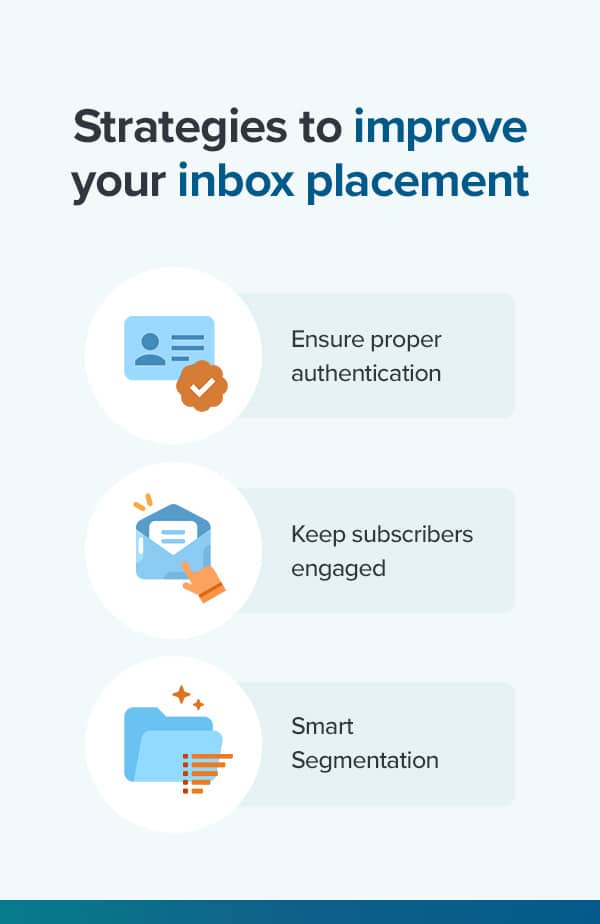
Ensure Proper Authentication: Authentication serves as a digital ID card, proving your legitimacy to mailbox providers. Without it, you are an anonymous sender, highly susceptible to immediate flagging as suspicious.
- SPF (Sender Policy Framework): Specifies which mail servers are authorized to send email on behalf of your domain.
- DKIM (DomainKeys Identified Mail): Provides a digital signature that verifies the email’s authenticity and ensures it hasn’t been tampered with in transit.
- DMARC (Domain-based Message Authentication, Reporting & Conformance): Builds on SPF and DKIM, allowing senders to specify how receiving servers should handle emails that fail authentication checks and provides reporting capabilities.
As of 2024, Google and Yahoo explicitly require these three authentication steps for bulk senders (those sending over 5,000 emails per day). Failure to implement them correctly will result in emails being systematically rejected or shunted to spam, severely disrupting marketing efforts and potentially damaging brand reputation. Implementing these protocols is the foundational step in building trust and ensuring reliable delivery.
-
Keep Subscribers Engaged and Maintain List Hygiene: Subscriber engagement is a powerful signal to mailbox providers. Dormant subscribers—those who haven’t opened emails in a year or more—can be detrimental. These inactive addresses are often converted into "spam traps" by providers. Hitting a spam trap indicates poor list management and significantly harms sender reputation, leading to emails being flagged as spam even for active subscribers.
- Re-engagement Campaigns: Periodically run campaigns targeting inactive subscribers with messages like "Do you still want to hear from us?" or special offers. If they don’t respond, it’s best practice to remove them from your active list.
- Regular List Cleaning: Proactively identify and remove inactive subscribers, hard bounces, and known spam trap addresses.
- Email Verification Tools: Implement these tools at the point of signup to prevent invalid, misspelled, or disposable email addresses from entering your database. This protects your sender reputation from the outset, reducing future bounce rates and ensuring your messages reach engaged recipients.
-
Smart Segmentation and Personalization: In today’s crowded inbox, a generic "one-size-fits-all" approach is ineffective. Personalization and relevance are paramount.
- Audience Segmentation: Divide your subscriber list into smaller, more homogeneous groups based on demographics, past purchase behavior, engagement history, interests, or lifecycle stage.
- Tailored Content: Send specific content that genuinely reflects the interests and behaviors of each segment. For example, instead of blasting a product update to 50,000 subscribers, send it only to the 10,000 active users who utilize that specific feature.
- Increased Engagement: A targeted approach dramatically increases the likelihood of users opening, clicking, and positively interacting with your messages. These positive engagement signals are precisely what mailbox providers look for, boosting your sender reputation and improving inbox placement across the board. The more relevant your content, the higher the engagement, and consequently, the better your inbox placement.
Advanced Strategies for Scaling Inbox Placement
For organizations with high sending volumes or a global footprint, achieving pristine inbox placement requires more sophisticated, enterprise-level strategies. These approaches solidify sender reputation, adapt to dynamic filtering rules, and ultimately elevate brand visibility.
-
Sender Certification: Certification programs are essentially "whitelists" for vetted senders. They involve a rigorous testing process to confirm adherence to best practices, allowing certified senders to receive preferential treatment from participating mailbox providers.
- Benefits: Certified senders often experience higher inbox rates, faster email delivery, and a significant reduction in false positives (legitimate emails mistakenly marked as spam).
- Competitive Advantage: Certification distinguishes a sender as reputable, providing a crucial advantage in a crowded inbox. Data suggests that certified senders can achieve millions more emails delivered to the inbox annually compared to their non-certified counterparts, underscoring the tangible benefits of such a program.
-
Brand Indicators for Message Identification (BIMI): BIMI is a modern email standard that allows a brand’s verified logo to appear next to its subject line in the inbox. This visual confirmation provides an immediate layer of authenticity and trust to recipients, which is increasingly vital in an era plagued by email fraud and phishing attempts.
- Enhanced Trust: BIMI helps subscribers quickly identify legitimate brand emails, instilling confidence and making it more likely that the email will be opened rather than ignored or marked as spam.
- Increased Visibility: A distinctive brand logo can significantly help an email stand out in a cluttered inbox, drawing user attention and encouraging interaction.
- Technical Requirements: To implement BIMI, a sender must have DMARC enforced at a "quarantine" or "reject" policy level, along with a Verified Mark Certificate (VMC). This stringent requirement highlights BIMI’s role as a strong trust signal, ensuring only brands with robust email authentication policies can leverage it.
-
Real-time Feedback Loops (FBLs): FBLs are invaluable tools offered by major mailbox providers, such as Google Postmaster Tools and Microsoft SNDS (Smart Network Data Services). They provide critical insights into how subscribers perceive your emails, specifically when they actively mark your messages as spam.
- Actionable Insights: When a user marks an email as spam, the FBL notifies the sender, often identifying the specific email address that lodged the complaint. This allows marketers to pinpoint problematic segments or content and, crucially, to immediately remove the complaining user from future mailing lists.
- Proactive Reputation Management: High complaint rates are a significant red flag for mailbox providers. By leveraging FBLs to proactively manage and reduce these rates, senders can maintain a healthy sender reputation, ensuring better deliverability for the rest of their recipients. It’s a vital component of a comprehensive list hygiene and content strategy.
Ensuring Your Emails Reach the Inbox: The Strategic Imperative
The time has come for marketers to decisively shift their focus from the superficial metric of delivery rate to the truly impactful measure of inbox placement. Understanding precisely where your emails land is the fundamental difference between broadcasting messages into an abyss and genuinely connecting with your audience. Embracing sophisticated analytics and specialized tools that offer deep insights into email marketing performance, such as those provided by industry leaders in deliverability solutions, empowers businesses to pinpoint the exact factors affecting their sender reputation. With this data-driven confidence, email strategies can be refined, and campaign impact can be dramatically boosted.
Whether an organization is a nascent startup or an established enterprise, tailored solutions exist to transform email programs, delivering the enhanced visibility and measurable results that modern businesses demand. By taking decisive control of their email program’s true reach and committing to strategies that drive meaningful engagement, companies can unlock the full potential of email as a powerful, revenue-generating marketing channel. The future of successful email marketing is inextricably linked to the mastery of inbox placement.