The landscape of artificial intelligence has undergone a fundamental transformation as of 2026, shifting from a total reliance on massive, cloud-hosted proprietary models toward a hybrid ecosystem where local execution is not only possible but preferred for professional workflows. While the early 2020s were defined by subscription-based access to "black box" models, the current era is defined by configurability, data sovereignty, and the rise of high-performance consumer hardware. At the center of this revolution is the Mac mini, which has evolved into the definitive "AI workstation for the masses" thanks to the continued maturation of Apple Silicon and its unified memory architecture.
The emergence of locally hosted models represents a significant pivot for developers, researchers, and privacy-conscious enterprises. By running Large Language Models (LLMs) on-device, users eliminate the latency associated with cloud API calls, remove recurring subscription costs, and, most importantly, ensure that sensitive data never leaves their local environment. With the release of the M5 and M6 series chips, the Mac mini now provides the necessary Neural Engine throughput and memory bandwidth to handle models that previously required enterprise-grade GPU clusters.
The Evolution of Local AI: A Brief Chronology
The journey to local AI dominance began in earnest in 2023 with the release of Meta’s original Llama weights, which proved that smaller, optimized models could rival the performance of much larger counterparts. By 2024, the "small language model" (SLM) movement gained momentum, and Apple’s introduction of the MLX framework provided the software bridge needed to optimize these models for the Mac’s hardware.
By 2025, the industry saw the rise of "Mixture-of-Experts" (MoE) architectures, which allowed models to possess vast knowledge bases while only activating a fraction of their parameters during any single inference task. This technological breakthrough was the catalyst for the 2026 landscape, where 20B to 70B parameter models can now run comfortably on a desktop computer the size of a lunchbox. Today, the choice of a local model is no longer dictated solely by "raw power" but by the specific requirements of the task at hand—whether it be repository-level coding, multimodal reasoning, or agentic automation.
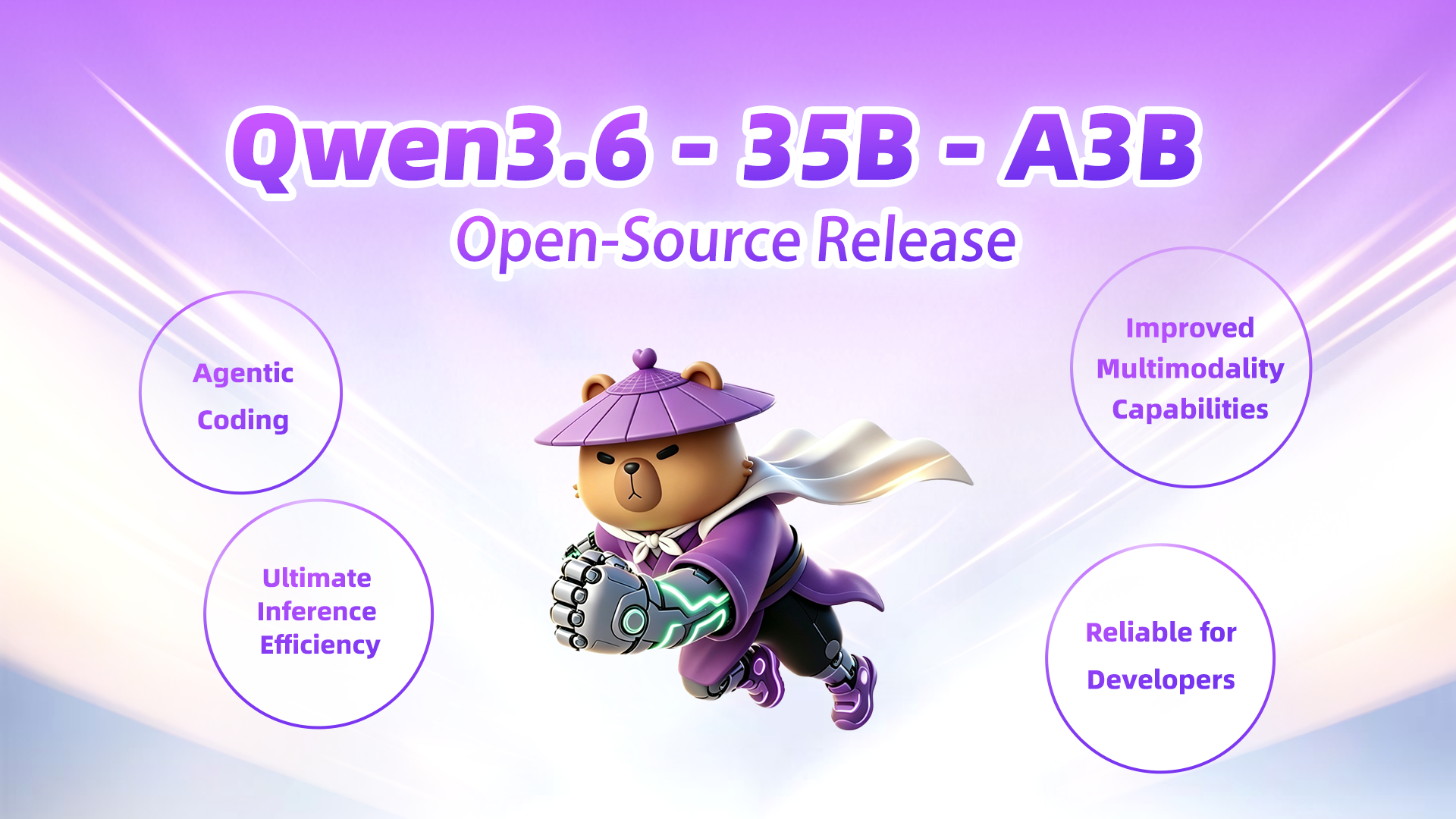
1. Qwen 3.6 35B: The Benchmark for Agentic Reasoning
Alibaba’s Qwen series has consistently pushed the boundaries of what open-weight models can achieve, and the 3.6 iteration of the 35B model stands as the premier choice for overall local performance in 2026. The 35B variant is specifically engineered to balance high-capacity reasoning with the memory constraints of modern consumer hardware.
Requiring approximately 23GB of memory when running via Ollama, the Qwen 3.6 35B model is optimized for "agentic coding" and "repository-level reasoning." Unlike earlier models that treated code as simple text completion, Qwen 3.6 understands the hierarchical structure of modern software projects. It features a 256K context window, allowing it to ingest entire codebases or long technical documents without losing coherence. For Mac mini users with 32GB or more of unified memory, this model provides a near-GPT-4o level of performance without the privacy risks of a cloud connection.
Technical Specifications:
- Active Parameters: 35 Billion
- Memory Footprint: ~23GB (Quantized)
- Context Window: 256,000 tokens
- Primary Use Case: Software engineering, complex logic, and document analysis.
2. Gemma 4 26B A4B: Efficiency Through Mixture-of-Experts
Google’s Gemma 4 26B A4B represents the pinnacle of efficient model design. Utilizing an advanced Mixture-of-Experts (MoE) architecture, the model contains 25.2 billion total parameters but only activates approximately 3.8 billion parameters for each token generated. This "A4B" (Active 4 Billion) approach allows the model to maintain the broad world knowledge of a 26B model while operating with the speed and low computational overhead of a much smaller variant.
For the Mac mini user, this means faster tokens-per-second (TPS) and less thermal throttling during long sessions. The Gemma 4 series is particularly lauded for its multimodal capabilities, handling image and text inputs with high precision. It is an ideal choice for building local assistants that need to "see" screenshots or analyze visual data while maintaining a small enough footprint to run on a 24GB Mac mini alongside other professional applications.
Technical Specifications:
- Total Parameters: 25.2 Billion
- Active Parameters: 3.8 Billion
- Memory Footprint: ~18GB
- Primary Use Case: Multimodal tasks, fast local assistants, and creative writing.
3. GPT-OSS 20B: OpenAI’s Pivot to Open Weights
Perhaps the most surprising development of the last year was OpenAI’s entry into the open-weight market with the GPT-OSS series. Designed specifically for deployment on user-controlled infrastructure, the GPT-OSS 20B model has become a favorite for the 16GB Mac mini tier.
With a memory requirement of roughly 14GB to 16GB, it is the most capable model available for base-model Mac mini configurations. It is distributed under the Apache 2.0 license, reflecting a broader industry trend toward transparency. The model excels in "tool use"—the ability to call local scripts, interact with the file system, and manage workflows—making it the backbone of many local autonomous agent setups.
Technical Specifications:
- Parameters: 20 Billion
- Memory Footprint: ~14GB
- Context Window: 128,000 tokens
- Primary Use Case: Tool-use, autonomous agents, and general reasoning.
4. Qwen3-Coder 30B: The Developer’s Essential Tool
While general-purpose models are useful, the Qwen3-Coder 30B is a specialized instrument for software development. This model is the result of training on trillions of tokens of source code across hundreds of programming languages. Similar to its siblings, it uses a sparse architecture (30B total, 3.3B active) to ensure high-speed inference.
The standout feature of Qwen3-Coder is its ability to handle long-horizon coding tasks. It can generate entire modules, perform deep-dive debugging across multiple files, and suggest architectural improvements based on its 256K context window. For developers using a Mac mini as their primary workstation, this model serves as a local, "no-latency" alternative to GitHub Copilot, operating entirely offline.
Technical Specifications:
- Parameters: 30 Billion
- Memory Footprint: ~19GB
- Primary Use Case: Full-stack development, codebase refactoring, and unit test generation.
5. Llama 3.3 70B: The High-Memory Heavyweight
For users who have invested in high-tier Mac mini configurations—specifically the 48GB or 64GB M5/M6 Pro variants—the Llama 3.3 70B remains the industry standard for open-weight reasoning. While it is one of the older models in the current rotation, its sheer scale allows for a depth of nuance and multilingual capability that smaller models occasionally struggle to match.
At approximately 43GB for a quantized version, it occupies nearly the entire memory of a 48GB machine. However, for those who require a local model capable of high-level creative writing, complex legal analysis, or advanced translation, the 70B parameter count provides a level of "emergent intelligence" that is palpable. It represents the upper limit of what is currently practical on a consumer desktop without moving to a Mac Studio or Mac Pro.
Technical Specifications:
- Parameters: 70 Billion
- Memory Footprint: ~43GB
- Context Window: 128,000 tokens
- Primary Use Case: High-level reasoning, multilingual translation, and academic research.
Hardware Strategy: Matching Models to Memory Tiers
The most critical factor in running local LLMs on a Mac mini is the amount of Unified Memory (RAM). Unlike traditional PCs where the CPU and GPU have separate memory pools, Apple Silicon allows the GPU to access the entire system memory, which is essential for loading large model weights.
Industry data suggests the following tiers for optimal performance:
- 16GB Tier: Best for GPT-OSS 20B and Gemma 4 (small variants). Ideal for light assistance and basic automation.
- 24GB/32GB Tier: The "Sweet Spot." This allows for Qwen 3.6 35B and Qwen3-Coder 30B. These machines can run sophisticated models while leaving room for the operating system and IDEs.
- 48GB/64GB Tier: The "Power User" level. Required for Llama 3.3 70B and for running multiple smaller models simultaneously in a local agent swarm.
Implementation: The Software Ecosystem
Running these models has been simplified by two primary tools: Ollama and LM Studio. Ollama has become the de facto standard for developers, offering a command-line interface that allows for the quick deployment of models like gpt-oss:20b with a single line of code. It also provides a local API that mimics the OpenAI standard, allowing users to point their existing AI-integrated apps to their local Mac mini instead of a cloud server.
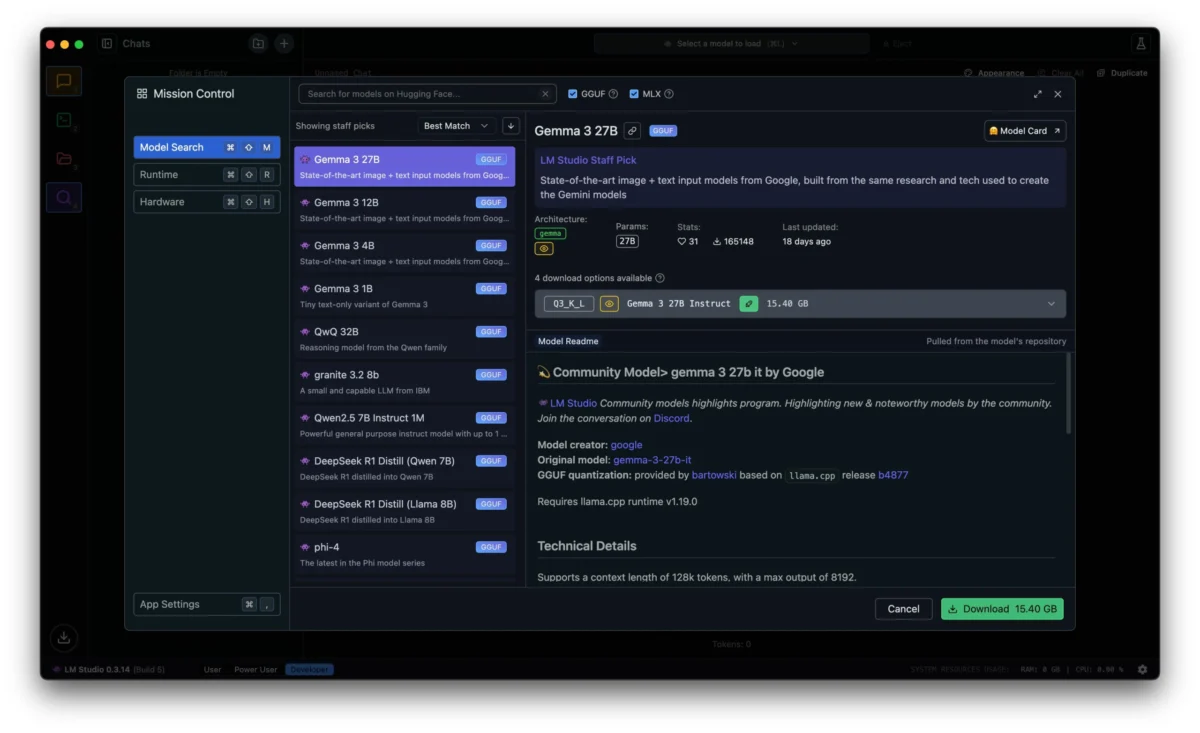
LM Studio, conversely, caters to users who prefer a graphical interface. It provides a robust search engine for discovering new models on Hugging Face and offers advanced controls for hardware acceleration. In 2026, LM Studio’s support for Apple’s MLX inference engine ensures that models are perfectly tuned for the Mac’s specific architecture, maximizing tokens-per-second while minimizing power consumption.
Market Analysis and Broader Implications
The shift toward local LLMs on the Mac mini is more than a technical trend; it is an economic and philosophical movement. Organizations are increasingly wary of "model collapse" and the privacy implications of sending proprietary data to cloud providers. By investing in high-memory Mac minis, companies are essentially "pre-paying" for their AI compute for the next several years, avoiding the variable and often high costs of token-based API pricing.
Furthermore, the "AI PC" era, spearheaded by Apple’s aggressive integration of NPUs (Neural Processing Units), has forced the software industry to adapt. We are seeing a "local-first" software renaissance where apps for photo editing, code IDEs, and project management tools come with built-in hooks for local LLMs.
Final Analysis
As we look at the state of AI in 2026, the Mac mini has transcended its role as a budget desktop to become a pivotal tool in the democratization of artificial intelligence. The ability to run models like Qwen 3.6 or GPT-OSS 20B on-device means that high-level intelligence is no longer the exclusive domain of those with massive server budgets.
The question for the modern professional is no longer whether a Mac mini can handle these workloads, but rather how to best configure the hardware to meet the demands of the specific models they intend to run. With the 2026 lineup of LLMs, the power of a world-class AI lab now fits comfortably on the corner of a desk.