rifanmuazin
In the intricate landscape of business-to-business (B2B) sales and marketing, many organizations find themselves grappling with inconsistent pipeline generation, despite implementing a comprehensive suite of outreach strategies. This article delves into the core issue, positing that the challenge rarely lies in the selection of communication channels – whether digital or human – but rather in the critical element of timing. As B2B sales cycles grow more complex and buyer journeys become increasingly personalized, a nuanced understanding of when to deploy specific engagement tactics is paramount to fostering meaningful connections and driving measurable results.
The prevailing assumption among many B2B teams is that a robust channel mix, encompassing paid advertising, email nurture campaigns, dedicated Sales Development Representative (SDR) outreach, and sophisticated retargeting efforts, should inherently yield a steady flow of qualified leads. However, experience often proves this theory insufficient. While these tactics are individually proven effective, their impact is significantly diminished, and potentially detrimental to the buyer experience, when executed at inopportune moments within the buyer’s decision-making process.
The Orchestration Gap: Beyond Channel Proliferation
A common reflex to flagging engagement metrics is to simply amplify existing efforts or introduce additional channels. This often manifests as an escalation in the volume of emails, a broader sweep of digital ads, or an increase in outbound calls. The underlying, though often unstated, theory behind this approach is that digital fatigue is primarily a technological problem, solvable by more advanced platforms or a wider array of digital touchpoints. However, the reality is far more nuanced. The true impediment is not a lack of channels, but a fundamental deficit in the orchestration of these channels.
Many B2B teams find themselves caught in a cycle of reactive adjustments. They might be running campaigns that are meticulously crafted, employing advanced personalization techniques, and meticulously segmenting their audiences. Yet, the pipeline remains erratic. This situation arises when the focus is on what to send or who to contact, rather than when to make that contact relative to the prospect’s current stage of awareness, consideration, and intent. The issue isn’t that digital channels are inherently flawed, or that human interaction is obsolete; it’s that the synergy between them, dictated by precise timing, is absent.
The Limitations of Personalization Without Context
In an era where personalization is widely recognized as a key differentiator, many organizations are investing heavily in tailoring their messages to individual prospects and accounts. This involves leveraging data to understand company needs, industry trends, and even individual roles. While personalization is undoubtedly a crucial component of effective B2B engagement, it is not a panacea for poor timing.
A perfectly crafted, highly personalized message delivered too early in the buyer’s journey can feel intrusive and irrelevant, potentially alienating the prospect before a genuine connection can be established. Conversely, an automated follow-up message deployed too late, after a period of silence or a clear indication of interest, can come across as disconnected and demonstrate a lack of attentiveness. Buyers today are not merely seeking relevant information; they are actively responding to contextual relevance and precise timing. They expect communications that acknowledge their current stage of inquiry, their immediate pain points, and their readiness to engage.
Re-evaluating the Decision Framework: From "What Next?" to "What Do We Know?"
To move beyond this cycle of ineffective outreach, B2B teams are urged to shift their strategic questioning. Instead of defaulting to the question, "What communication should we deploy next?" the more impactful inquiry becomes, "What do we actually know about this account and their current engagement with our brand or the problem we solve?" This fundamental shift in perspective encourages a more data-driven and buyer-centric approach.
At a high level, understanding the current state of an account involves assessing several key indicators:
- Awareness: Has the prospect shown any initial signs of recognizing a problem or need that your solution addresses? This could be through website visits, content downloads related to industry challenges, or engagement with thought leadership pieces.
- Consideration: Is the prospect actively researching potential solutions? This might be indicated by visits to product pages, comparisons of different vendors, or attendance at webinars focused on solutions.
- Intent: Is the prospect demonstrating a clear and immediate intention to purchase? This is often signaled by actions like requesting a demo, downloading pricing information, or engaging directly with sales representatives.
By consistently answering these questions, teams can align their outreach efforts with actual buyer behavior, moving away from assumptions and towards strategically timed interventions. This empirical approach not only enhances the effectiveness of outreach but also optimizes resource allocation, ensuring that valuable human and digital efforts are directed where they are most likely to yield a positive return.
Common Pitfalls in B2B Engagement Timing
Several recurring errors in timing plague B2B engagement strategies:
- Premature Human Outreach: Initiating direct human contact, such as a phone call or personalized email from an SDR, before the prospect has demonstrated any level of awareness or interest, is a common misstep. This often results in low response rates, a poor initial impression, and a significant expenditure of valuable sales team time with minimal reward. The prospect is not yet receptive to a direct sales conversation, rendering the effort largely unproductive.
- Delayed Automation: Conversely, allowing high-intent accounts to languish in automated nurture sequences while competitors are actively engaging them is a critical missed opportunity. Automation is most effective when deployed strategically for lower-priority accounts or as a supporting element. The critical juncture for transitioning to a more personalized, human touch occurs when an account reaches a certain threshold of engagement, indicating a readiness for direct interaction.
- Lack of Prioritization: Treating all engaged accounts with the same level of urgency and attention, regardless of their potential value or demonstrated intent, represents a significant inefficiency. High-performing teams recognize that not all engagements are created equal. Prioritizing efforts based on account tier, industry significance, or specific buying signals ensures that resources are focused on the most promising opportunities.
The Benchmark of High-Performing Engagement Strategies
Leading B2B organizations are characterized by their ability to meticulously align their engagement efforts with demonstrable buyer signals. This strategic approach involves:
- Digital Engagement for Awareness and Early Consideration: Leveraging digital channels, such as targeted advertising, educational content, and SEO-optimized website experiences, to capture attention and build initial awareness. This phase is about attracting prospects who are beginning to identify a need.
- Automated Nurturing for Deeper Consideration: Employing automated email sequences and personalized digital content to guide prospects through the consideration phase. This involves providing relevant information, case studies, and webinars that address their emerging questions and challenges.
- Human Outreach for High-Intent and Conversion: Deploying SDRs and account executives for direct, personalized outreach when prospects exhibit clear buying signals, such as requesting a demo, visiting pricing pages, or downloading solution-specific collateral. This is where human interaction becomes most impactful, facilitating deeper conversations and driving towards a decision.
Crucially, these high-performing teams are adept at avoiding premature interventions. They understand that pushing for human interaction too early can be counterproductive. This is a particularly relevant consideration in the current environment, where the rapid advancements in Artificial Intelligence (AI) are scaling execution capabilities across various marketing and sales functions. AI can powerfully augment these efforts, but only when guided by a well-defined strategy that prioritizes timing and buyer intent.
A Practical Framework for Strategic Engagement Timing
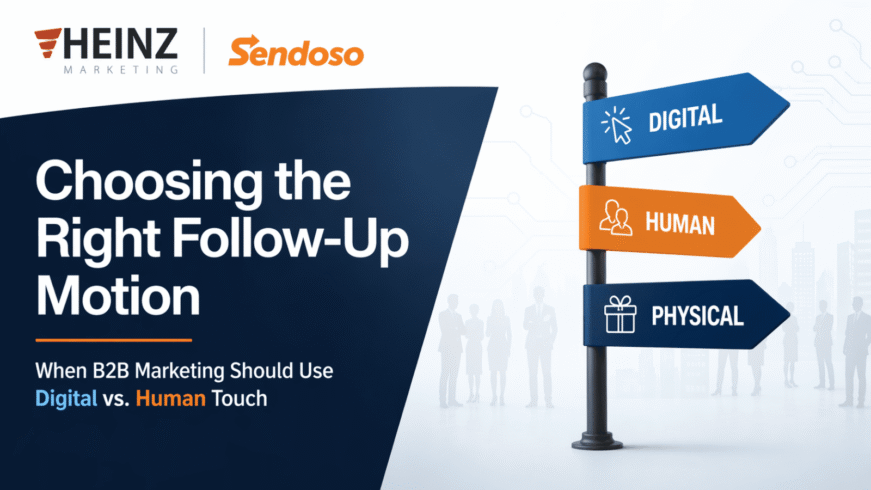
To translate these principles into actionable strategies, a clear framework is essential. In collaboration with industry partners, such as Sendoso, practical models have been developed to guide B2B teams in making informed decisions about their engagement tactics. This framework aims to answer the critical question: "When should we remain digital, and when should we transition to a human touch?"
This approach provides a structured methodology for:
- Identifying Buyer Signals: Establishing clear criteria for recognizing different stages of buyer intent and engagement.
- Channel Selection Based on Stage: Defining which communication channels are most effective at each stage of the buyer journey.
- Transitioning Between Digital and Human Touch: Developing protocols for seamlessly shifting from automated digital engagement to personalized human interaction when signals indicate readiness.
- Optimizing Resource Allocation: Ensuring that sales and marketing resources are deployed strategically to maximize impact and efficiency.
Conclusion: Precision Over Volume in B2B Outreach
The pursuit of consistent pipeline generation in the B2B sector is not a matter of simply executing more tactics or expanding channel reach. It is fundamentally about achieving greater precision through superior timing. The strategy for success lies not in doing more, but in making smarter, more informed decisions about the next appropriate action to take. By understanding the buyer’s journey, recognizing their signals, and orchestrating digital and human touchpoints with strategic timing, B2B teams can move beyond inconsistent results and build a more predictable and robust pipeline.
To further refine these strategies, comprehensive guides and frameworks are available, offering practical methodologies for implementing the right follow-up motions and optimizing engagement. These resources empower teams to not only choose the appropriate channel but to master the art of deploying it at the most opportune moment, thereby enhancing buyer experience and driving tangible business outcomes. For those seeking to deepen their understanding or address specific challenges in their engagement strategies, direct consultation and expert guidance remain invaluable resources.