A decade ago, the journey to establish an online presence was often a formidable undertaking, requiring either specialized coding skills in HTML, CSS, and JavaScript, or significant financial investment in professional web development. Today, a paradigm shift is underway, largely driven by the advent of Artificial Intelligence (AI) website builders. These innovative platforms have democratized web creation, enabling individuals and businesses alike to generate professional-looking websites in mere minutes, often with just a few intuitive prompts. This comprehensive guide delves into the mechanics of AI website builders, their transformative impact on the digital landscape, and the practical steps involved in leveraging this technology, from initial concept to live publication.
Understanding the AI Website Builder Phenomenon
At its core, an AI website builder is a sophisticated generative AI platform specifically engineered for the creation of websites. Unlike general-purpose AI tools that might generate text or images in isolation, these builders synthesize entire web pages. Users describe their desired website—detailing their industry, target audience, brand aesthetic, and overarching goals—and the AI autonomously constructs a professional-grade first draft. This process eliminates the need for manual coding, complex design software, or extensive technical knowledge, effectively turning abstract ideas into tangible digital assets with unprecedented speed.
It is crucial to differentiate AI website builders from mere automation tools or traditional drag-and-drop interfaces. While automation might schedule blog posts or perform routine website maintenance, and drag-and-drop builders offer visual editing on a blank canvas, AI builders go further. They leverage generative AI to conceptualize and produce layouts, draft content, suggest relevant imagery, and propose design elements. Crucially, this initial AI-driven generation is not a final product; it serves as an intelligent starting point, providing users with a robust foundation that can then be fine-tuned through an intuitive visual editor before publication.
The Mechanics of AI-Powered Web Creation
The operational framework of an AI website builder mirrors that of other generative AI applications: instructions are provided, interpreted by the AI, and a result is generated. The distinction lies in the output—a foundational website structure rather than just text or images. Most AI website builders adhere to a streamlined three-step process:
-
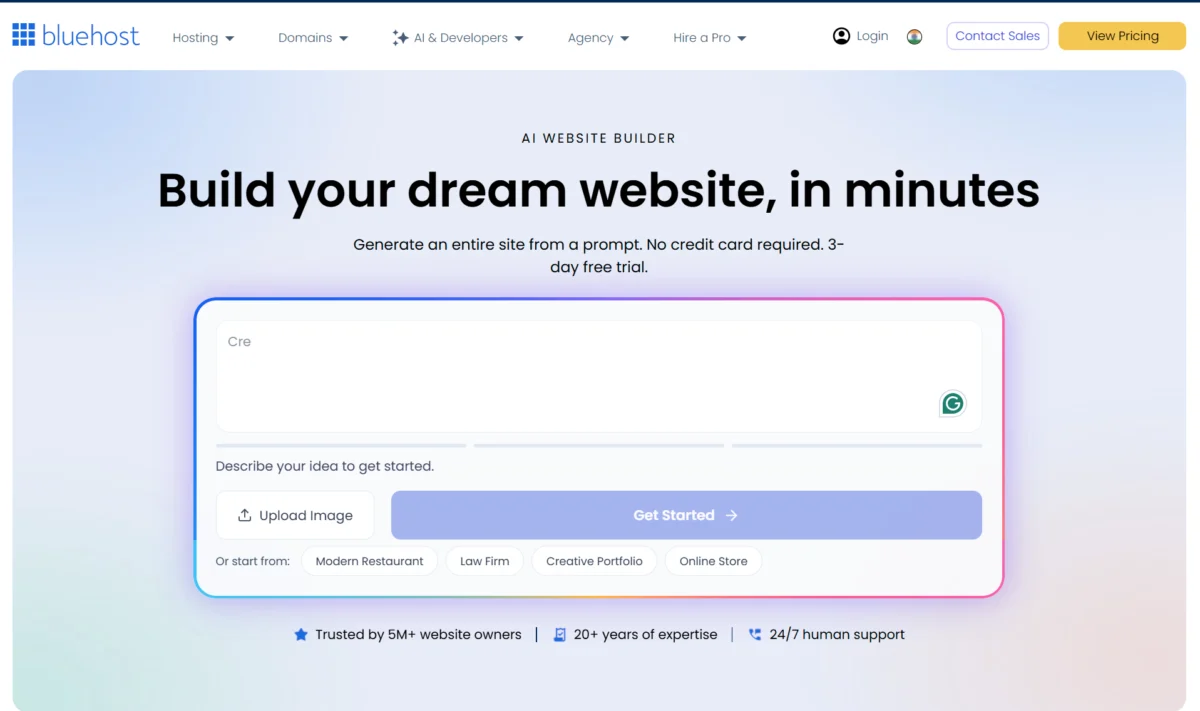
Prompt and Response: The Genesis of Design: Every AI-driven website creation begins with a prompt. Users engage with the AI by answering a series of questions or articulating their vision for the website. This includes specifying the industry, target demographic, brand style preferences, and the essential pages required. The efficacy of the AI’s output is directly proportional to the richness and specificity of the context provided; a more detailed prompt enables the AI to craft a website that more precisely aligns with the user’s objectives.
-
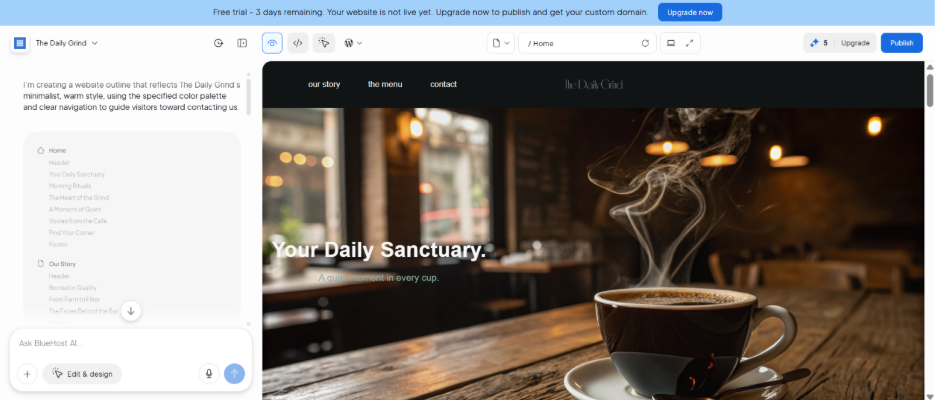
Automated Generation: From Concept to Blueprint: Once the AI has assimilated the user’s requirements, it initiates the automated generation phase. Within minutes, the platform constructs page layouts, drafts placeholder or preliminary copy, suggests relevant visual assets, and organizes the content into a coherent website structure. This rapid prototyping capability is a cornerstone of the AI builder’s appeal, dramatically reducing the time traditionally spent on initial design and content population.
-
Visual Editing: Refinement and Personalization: The AI-generated website is a dynamic entity, not a static endpoint. Following the creation of the first draft, users gain access to a visual editor, empowering them to customize every aspect. This includes updating text, swapping or generating new images, rearranging sections, modifying color schemes and fonts, and refining the overall design. This step underscores the collaborative nature of AI website builders: the AI provides the initial blueprint, but the user retains ultimate creative control, ensuring the final product reflects their unique brand identity.
Driving the Digital Transformation: Market Growth and Adoption
The integration of AI into web design is no longer an emerging trend but a rapidly mainstreaming phenomenon. Market intelligence firmly underscores this trajectory. According to Custom Market Insights, the global AI-powered website builder market is projected to expand significantly, from an estimated $3.41 billion in 2026 to an impressive $14.78 billion by 2035. This substantial growth reflects a burgeoning demand for faster, more accessible, and code-free web creation solutions. Another forecast by Precedence Research is even more optimistic, predicting the market could reach $17.4 billion by 2035. This widespread adoption is evident across businesses of all scales, from burgeoning startups to established enterprises, all seeking to curtail development timelines, reduce operational costs, and accelerate their online launch.
This exponential growth is not coincidental. AI website builders effectively address numerous long-standing challenges in web development, ranging from technical complexity and the steep learning curve of coding to protracted development cycles and high upfront costs. By seamlessly integrating generative AI capabilities with intuitive visual editing tools, these platforms have made the creation of professional-grade websites accessible to a vastly broader audience.
Key Advantages Driving Adoption:
- No-Code "Vibe Coding": The most compelling advantage is the complete elimination of traditional coding requirements. Users articulate their vision in natural language, and the AI translates these "vibe codes" into functional web structures. This liberation from HTML, CSS, or JavaScript allows creators to focus purely on their ideas and brand message, while the AI manages the technical heavy lifting.
- Accelerated Launches with Reduced Effort: Conventional website projects can span days, weeks, or even months, particularly when starting from scratch. AI website builders drastically compress this timeline by generating comprehensive layouts, preliminary copy, relevant images, and structured pages within minutes. This efficiency allows users to commence with a robust AI-generated draft, dedicating their time to refinement rather than initial construction, thereby facilitating quicker, yet quality-assured, launches.
- Intelligent Context Awareness: Modern AI website builders transcend generic templates. They are designed to interpret and leverage contextual information provided by the user—such as industry specifics, business objectives, target audience demographics, and design preferences—to produce a highly relevant starting point. For instance, an AI will intelligently differentiate and create distinct websites for a culinary establishment versus a photography portfolio or an e-commerce store, tailoring functionality and aesthetics to the specific domain. The greater the contextual input, the more bespoke and effective the AI’s initial output.
While these advantages position AI website builders as invaluable tools, achieving optimal results still hinges on strategic utilization. This begins with selecting an appropriate platform and furnishing the AI with precise, comprehensive information.
A Practical Guide: Building Your Website with AI (Bluehost Case Study)
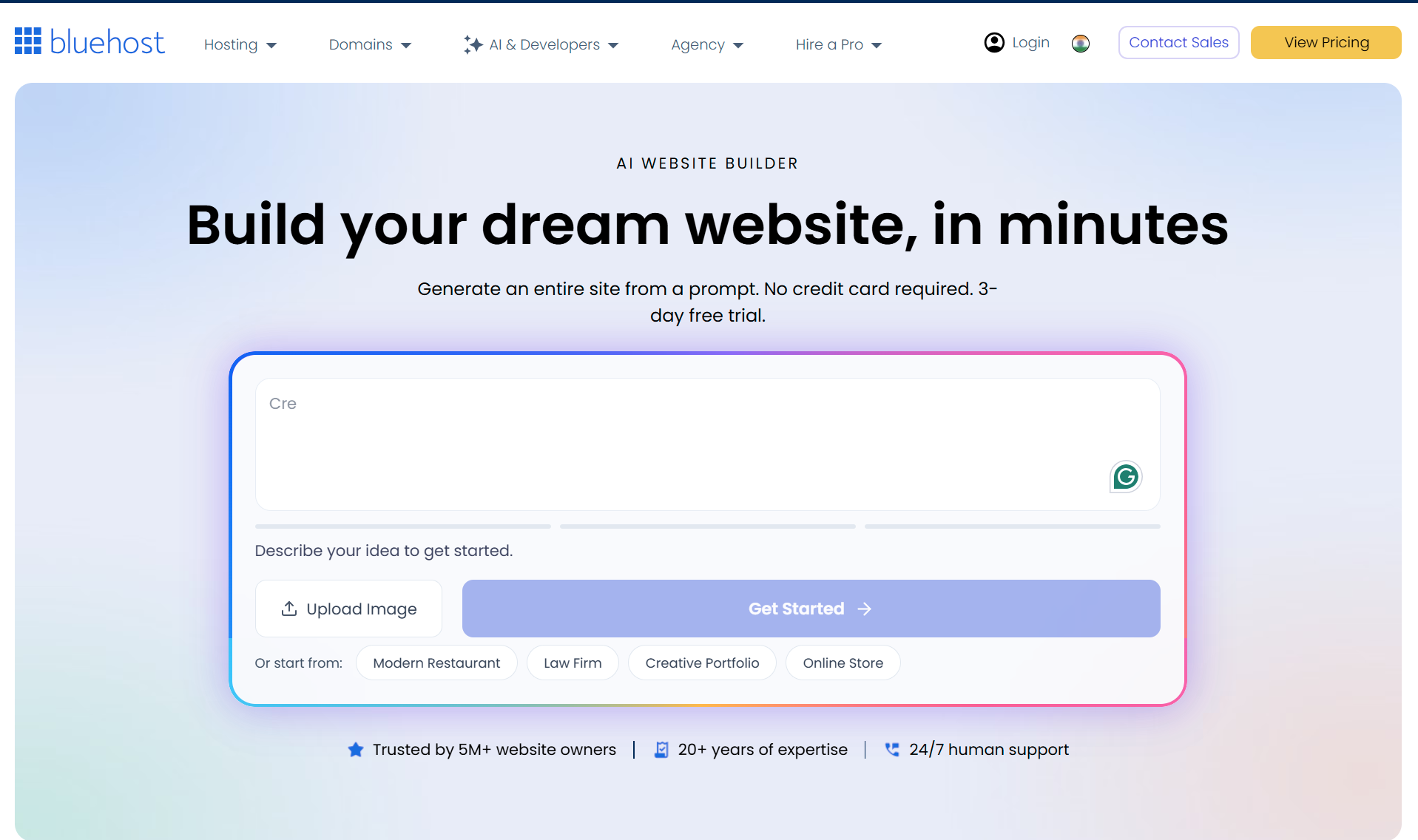
Even with the advent of AI, the fundamental principles of website creation endure: a domain name, reliable hosting, and a platform to coalesce these elements. Once these prerequisites are secured, AI assumes a significant portion of the development burden. Below is a step-by-step guide to building an AI-powered website, using Bluehost AI Website Builder as a representative example.
Step 1: Securing the Digital Foundation (Prerequisites)
Before embarking on the AI-driven website construction, several foundational elements must be in place:
- Domain Name: This is your website’s unique address on the internet (e.g., yourbusiness.com). A memorable, brand-aligned domain name is crucial for recognition and shareability. Services like Bluehost Domains facilitate searching for and purchasing a suitable domain, often integrated with hosting management.
- Web Hosting: Essential for storing all website files, images, and content, web hosting ensures your site is accessible online. A dependable hosting provider guarantees optimal speed, uptime, and security. Bluehost Web Hosting, for example, offers a combined solution with WordPress support and AI-powered website creation, catering particularly to beginners.
- SSL Certificate: An SSL (Secure Sockets Layer) certificate encrypts data transfer between your website and visitors, safeguarding sensitive information and enabling HTTPS—a recognized symbol of a secure connection in web browsers. It is now a standard security practice and an expectation for any credible professional website.
- Website Builder: This is the primary tool for website creation and customization. While traditional builders rely on drag-and-drop, AI builders advance this by generating initial layouts, content, and imagery based on user prompts, accelerating the journey from concept to functional website.
- Content Management System (CMS): A CMS is vital for managing your website post-launch. Tasks such as publishing blog posts, updating pages, uploading media, or integrating new features are streamlined without requiring coding expertise. WordPress stands out as a highly flexible, beginner-friendly CMS, powering a substantial segment of the internet. It offers complete content ownership, extensive themes and plugins, and scalability from simple portfolios to complex e-commerce platforms.
Step 2: Choosing Your AI Website Builder
The selection of an AI website builder is pivotal. The most effective platforms offer more than just generation capabilities; they simplify the entire ecosystem of web presence. The Bluehost AI Website Builder exemplifies this integrated approach, consolidating various services into a single, cohesive platform.
- All-in-One Solution: Bluehost AI integrates website creation, managed WordPress hosting, and domain registration into a single platform. This eliminates the complexities of managing multiple providers and configuring disparate services, offering a streamlined experience, particularly beneficial for first-time website creators.
- Intelligent Prompting for Superior Results: While many AI builders accept brief descriptions, Bluehost employs a more nuanced approach. It queries users with a series of industry-specific questions to gain a deeper understanding of the business, its goals, and its target audience. This enriched context empowers the AI to generate a more pertinent and refined initial draft, minimizing subsequent editing.
- AI-Powered Image Generation and Editing: Beyond merely suggesting images, Bluehost’s AI allows users to describe and generate new images directly within the builder. This feature simplifies visual customization, eliminating the need to source external stock photos or design tools.
- Integrated SEO Foundation: Recognizing that discoverability is paramount, Bluehost builds websites on WordPress and includes Yoast SEO Premium with its paid plans. This grants users immediate access to industry-leading SEO tools, enabling optimization of pages, content enhancement, and search engine preparation from the outset, rather than treating SEO as an afterthought.
- Note: While an AI builder accelerates creation and Yoast SEO Premium provides robust tools, a thoughtful SEO strategy, valuable content creation, and continuous optimization remain the user’s responsibility. AI facilitates, but does not replace, strategic effort.
- Robust Security and 24/7 Support: Sustaining an online presence necessitates ongoing security and reliable support. Paid Bluehost plans include a free SSL certificate, malware scanning and removal, weekly backups, and a global Content Delivery Network (CDN) to ensure website security and performance. Additionally, 24/7 access to WordPress experts via chat or phone provides crucial assistance whenever technical challenges arise.
Step 3: Getting Started with Bluehost AI Website Builder
The process of initiating a website with the Bluehost AI Website Builder is remarkably straightforward:
- Initiate Your Website: The journey begins with accessing the builder and selecting the option to start your website.
- Customize Brand Identity: Users input their business name, select a preferred color palette, specify their location, and choose a design style. This initial customization phase guides the AI in shaping the aesthetic of the site. Upon satisfaction, the "Build My Site" command is executed.
- Create/Log In to Bluehost Account: Before generation, users either log into an existing Bluehost account or create a new one, linking the website to their account for subsequent management.
- Review and Personalize: Within moments, Bluehost presents the first draft. The visual editor becomes the primary interface for personalization: editing text, generating or replacing images with AI, adjusting layouts, adding/removing pages, altering colors, and even requesting AI to create additional sections—all without coding.
- Domain Selection and Publication: Once content and design are finalized, users select an AI-suggested domain name or connect an existing one. Completing the checkout process automatically configures hosting, SSL, security features, and WordPress installation. The website is then ready for live publication.
Navigating the AI Web Design Landscape: Best Practices
Launching an AI-generated website is the initial step; sustaining its growth and maximizing its impact requires ongoing refinement and strategic application of best practices.
- Embrace Context Over Keywords (Initial Prompting): AI builders excel when provided with a holistic understanding. Instead of terse, keyword-centric prompts, furnish a detailed description of your business, target audience, objectives, services, and desired brand tone. This contextual richness yields a more relevant and tailored initial website draft.
- Human-Centric Content and SEO: The same principle extends to website content. Prioritize thorough keyword research to understand audience search intent. Then, integrate keywords naturally into high-quality content that genuinely addresses reader needs. Post-AI generation, infuse your unique brand voice, authentic customer narratives, original imagery, and testimonials. These human elements cultivate trust and differentiate your site from generic AI outputs.
- Cultivate Uniqueness and Verify Accuracy: While AI is proficient at generating initial drafts, it often draws from learned patterns, potentially leading to designs or content that lack distinctiveness. Before publishing, meticulously review every page for accuracy, factual verification of AI-generated content, and inject details reflecting your brand’s unique personality and expertise. Adhering to SEO-friendly content practices ensures originality and genuine utility for your audience.
- Regular Testing and Optimization:
- Pre-Launch Checklist: Prior to public launch, conduct a thorough technical SEO audit. Verify that critical pages are crawlable, ensure no accidental blocking of search engines, and confirm XML sitemap availability. Tools like Yoast SEO’s crawl optimization settings can help. Manually review metadata, internal links, and page structure.
- Post-Launch Maintenance: A website is a living entity. Implement a routine for reviewing pages, testing responsiveness across devices, rectifying broken links, updating outdated information, and improving page performance. For blog content, regularly revisit and optimize older articles to enhance search visibility and user engagement.
- Prioritize Accessibility: A truly effective website is universally accessible. Incorporate descriptive alt text for images, maintain adequate color contrast, structure content logically with proper headings, and ensure keyboard navigability. For WordPress users, numerous accessibility plugins can bolster usability and compliance with best practices.
- Create Valuable Content: While design attracts, valuable content retains. Whether publishing blog posts, service pages, or product descriptions, focus on resolving audience pain points and answering their queries. Adhering to proven content SEO and blog SEO strategies enhances search engine performance and enriches the reader experience.
Implications and the Future of Web Development
The rise of AI website builders carries profound implications across the digital ecosystem:
- Democratization of Digital Presence: AI has significantly lowered the barrier to entry for website creation, empowering small businesses, entrepreneurs, and individuals who previously lacked the technical skills or financial resources to establish a professional online footprint. This fosters greater digital inclusion and economic opportunity.
- Shift in Developer Roles: While some fear job displacement, the more likely scenario is a shift in the roles of web developers. AI handles routine, repetitive coding tasks, freeing developers to focus on complex problem-solving, custom integrations, advanced functionality, and strategic architectural design. The demand for prompt engineering and AI-tool proficiency will grow.
- Increased Speed to Market: For businesses, the ability to rapidly deploy a functional website means faster market testing, quicker product launches, and accelerated iteration cycles. This agility is a significant competitive advantage in today’s fast-paced digital economy.
- Challenges and Ethical Considerations: The widespread use of AI in content and design also presents challenges. Concerns include the potential for generic or homogeneous content, copyright issues surrounding AI-generated images and text, inherent biases in AI models, and the critical need for human oversight to ensure factual accuracy and ethical representation. Data privacy in AI prompts also remains a significant consideration.
- The Evolving Ecosystem of Tools: The integration of AI will continue to evolve, with increasingly sophisticated functionalities like predictive design, personalized user experiences, and advanced SEO optimization being built directly into AI website builders. The future likely holds a hybrid model where AI and human expertise collaboratively build and refine digital experiences.
Build Smarter, Launch Faster
The era of web development characterized by arduous coding, expensive hiring, or time-consuming manual assembly is rapidly receding. AI website builders have ushered in an age where the process is faster, more intuitive, and universally accessible. As demonstrated throughout this article, the transformation from a nascent idea to a fully functional, live website now requires little more than the right platform, a clear vision, and a series of thoughtful prompts.
As Sachin Puri, CEO of Bluehost, succinctly articulates, "the real power of AI lies in removing complexity for users." This ethos perfectly encapsulates the mission of modern AI website builders. They effectively abstract away the technical intricacies of website creation, allowing entrepreneurs, creators, and small businesses to channel their energy into their core mission: cultivating their brand and expanding their digital footprint.
For those who have awaited the opportune moment to leverage AI for their online presence, that moment has arrived. Embrace the power of the prompt, personalize the AI’s output, and empower your website to evolve dynamically alongside your business. The future of web creation is here, and it is intelligently designed for you.