The marketing landscape is at a critical juncture, defined by ambitious aspirations for artificial intelligence adoption and a stark reality of stalled budgets and organizational unpreparedness. A growing chasm exists between the desire to lead in AI and the foundational readiness to implement it effectively. This challenge, however, is often met with a familiar, yet ultimately misdirected, solution: a complete overhaul of the organizational chart. Experts argue that a faster, more impactful approach lies not in rearranging personnel, but in a fundamental re-evaluation of how work flows and how decision-making authority is structured.
Recent industry surveys paint a clear picture of this complex environment. According to Gartner’s 2026 CMO Spend Survey, a staggering 70% of Chief Marketing Officers identify becoming an AI leader as a critical objective for the current year. This ambition, however, is significantly outpaced by actual organizational readiness, with only 30% of CMOs reporting mature AI capabilities. Compounding this challenge, marketing budgets remain largely stagnant, hovering at an average of 7.8% of company revenue. This financial constraint, coupled with the nascent state of AI integration, creates a potent cocktail of pressure for marketing leaders.
Faced with this confluence of high ambition, limited financial growth, and organizational immaturity, many marketing executives naturally turn to the most visible and historically potent lever at their disposal: the organizational structure. This often manifests as the creation of new departments, the reassignment of roles, the consolidation of teams, or even workforce reductions. While organizational structure undeniably plays a role in departmental effectiveness, experts contend that this approach is often reactive and slow, frequently obscuring the root causes of inefficiency.
"Reaching for the org chart first is often the backwards answer to a marketing org design problem," states Sarah Threet, a Marketing Consultant at Heinz Marketing. "It’s not that structure doesn’t matter, but it’s the slowest, most political, and most publicly visible tool available. It usually gets pulled before anyone has truly diagnosed what’s actually slowing the team down." This perspective suggests that a focus on structural changes, without first understanding the underlying operational dynamics, can lead to significant disruption with minimal tangible benefit.
The Structural Divide: Technology vs. Workflow
The core of the AI readiness gap, according to industry analysis, is not a deficit in technological access but rather in the fundamental design of operational workflows. Research from McKinsey & Company’s "The State of AI" report highlights this disparity, indicating that only approximately 6% of organizations globally qualify as "AI high performers." These elite organizations not only attribute at least 5% of their Earnings Before Interest and Taxes (EBIT) impact to AI utilization but also report significant and demonstrable value derived from its implementation.
Crucially, these high-performing entities are nearly three times more likely than their peers to report having fundamentally redesigned individual workflows. This intentional redesign of how tasks are performed and sequences are managed emerged as one of the strongest predictors of meaningful business impact in McKinsey’s comprehensive analysis of 31 organizational variables. The implication is profound: the same AI models, platforms, and vendors are accessible to virtually all organizations. The differentiating factor lies not in the tools themselves, but in the meticulously orchestrated manner in which work is organized and executed.
This distinction becomes particularly apparent when AI is introduced into an environment with pre-existing process inefficiencies. As has been observed in discussions around B2B Go-to-Market (GTM) AI strategy, AI does not inherently create misalignment between marketing, sales, and Revenue Operations (RevOps). Instead, it strips away the buffer that previously absorbed these discrepancies. For instance, if teams struggle to articulate the rationale behind lead prioritization, implementing AI to automate this step will merely result in faster, but equally untrustworthy, output. The lack of a clear, shared understanding of the process renders the automated step ineffective.
Redefining the Unit of Design: The Handoff Over the Box
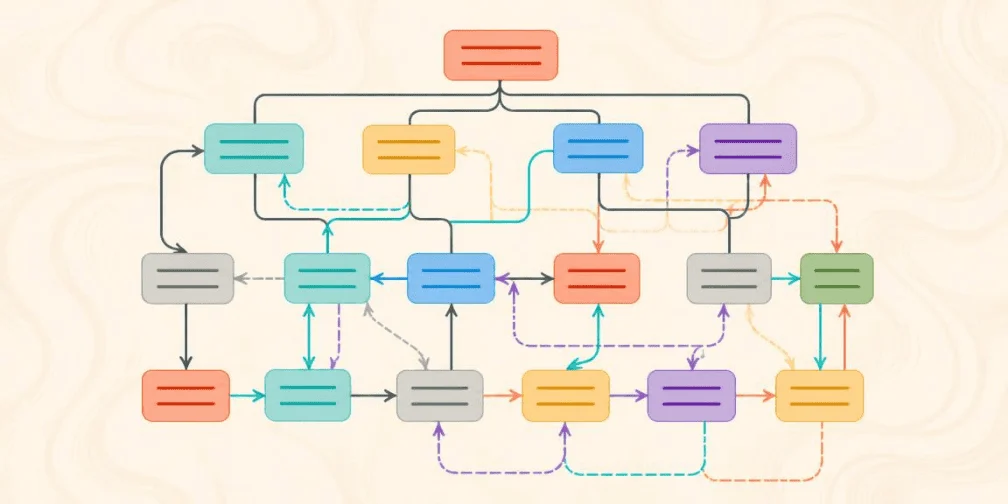
The most practical and impactful reframe for marketing organizations grappling with AI integration is to shift the focus from reporting lines and departmental boxes to the critical "handoffs" between stages of a process. Most B2B marketing and sales organizations, while competently staffed within individual functions, often exhibit structural weaknesses at the junctures where work transitions from one team or individual to another.
Consider a typical marketing workflow: content creation yields an asset, which is then handed off to the campaign team. The campaign team launches initiatives and passes the resulting engagement data to sales enablement. Sales enablement, in turn, delivers a qualified lead to a sales representative. While each of these individual functions typically has a designated owner, the transitions between them frequently lack clear accountability or defined processes.
It is within these gaps that valuable time is lost. A campaign that theoretically takes six weeks to execute rarely spends all six weeks in active production. Instead, it can languish for weeks waiting in the inter-departmental void: awaiting a crucial review, clarifying a decision where no single authority was designated, or undergoing rework that could have been averted with clearer initial briefs that anticipated stakeholder needs.
This accumulated inefficiency has been termed "orchestration debt." Its significance in the context of AI is amplified because deploying AI agents within these existing silos does little to address it. If a content team is equipped with a drafting agent that accelerates asset creation, the overall campaign timeline may remain unchanged if the subsequent four weeks are consumed by waiting periods outside the content team’s direct control.
Organizations that successfully navigate this challenge treat alignment as a deliberately engineered outcome, rather than an aspirational encouragement. Successful Vice Presidents of Revenue Marketing, for example, embed shared definitions, metrics, and accountability directly into their operational frameworks, rather than relying on good intentions alone. Consequently, the most valuable organizational redesign available to many CMOs today is not a new structure, but the designation of a single owner for a revenue-critical workflow, extending end-to-end across the marketing-sales boundary, and empowering them with the authority to refine how these critical handoffs occur.

The Documentation Imperative: Automating the Undocumented
Beneath the surface of workflow inefficiencies lies a second, often underestimated, constraint that can derail even the most well-conceived AI initiatives: the lack of documented processes. AI agents, unlike human team members, cannot inherit implicit knowledge or "tribal wisdom." An individual who has spent years performing quality assurance for campaigns possesses an ingrained understanding of what issues trigger flags, which stakeholders require prior notification, and which exceptions are permissible versus those that carry significant career risk. This knowledge, often unwritten and residing solely in the individual’s mind, becomes an invisible barrier when automation is attempted.
The moment any part of such a workflow is delegated to a system, the undocumented logic becomes the primary impediment. The initiative then reveals itself not as an automation of a process, but as an attempt to automate a person’s intuition and experience, a task for which the system is fundamentally unprepared. This issue extends beyond the immediate implementation of AI, representing a significant succession risk. When critical context is not captured in documented procedures, the departure of key personnel can lead to an irretrievable loss of institutional knowledge, hindering current operations even before any resignation occurs.
Furthermore, this lack of documentation directly contributes to the hiring challenges many teams face. Job descriptions that read like wish lists for "unicorns"—individuals expected to be strategic thinkers, proficient prompt engineers, adept data interpreters, and capable workflow managers—are often a symptom of undocumented workflows. When the logic of how work is done resides primarily in an individual’s head, the role must absorb all associated ambiguity, leading to JD requirements for individuals who can "figure it out." Conversely, by documenting workflows, the role can be clearly defined and made significantly more hireable.
Decision Rights Precede Reporting Lines
In the evolving landscape of AI integration, the pertinent organizational design question shifts from the physical placement of AI agents on an org chart to the explicit definition of their decision-making authority. This involves clarifying critical questions: Which AI agents are authorized to allocate budget? Which can publish content without human review? Which are empowered to reprioritize leads and alter the immediate tasks of sales representatives?
These are fundamentally questions of "decision rights," and many marketing organizations lack a precedent for addressing them, as these considerations have historically applied only to human actors. The market is currently exhibiting a cautious approach to this issue. Even technically proficient teams developing AI agents internally are largely confining their capabilities to contained tasks rather than granting them end-to-end control. The enthusiasm for AI autonomy is palpable, but the willingness to accept the associated liability is considerably more reserved.
A more productive approach involves making autonomy an explicit design choice, rather than allowing it to emerge by default. This can be conceptualized as a progression from assistive AI to partially autonomous systems, and ultimately to fully autonomous agents. The process of designing an AI-enhanced organizational structure largely entails determining which classes of tasks are appropriate for each tier of autonomy. Routine reporting and A/B test variations, for instance, present a different risk category than making pricing claims or drafting executive communications. This governance decision can be made by CMOs within the current quarter, without necessitating any changes to the existing organizational structure.
Four Moves Beyond Reorganization
For marketing leaders who find the prospect of a complete structural overhaul daunting, a more incremental and manageable approach can be adopted. These four strategic moves, which do not require a full-scale reorganization, can pave the way for more effective AI integration and improved operational efficiency:
- Codify Workflow Handoffs: Select one revenue-critical workflow, such as lead handoff from marketing to sales, and meticulously document each step, the responsibilities at each juncture, and the criteria for successful transition. This documentation serves as the foundation for automation and clarifies expectations.
- Assign End-to-End Workflow Ownership: Designate a single individual responsible for the entire lifecycle of a chosen workflow, from initiation to completion. This person will have the authority to identify and address bottlenecks, streamline processes, and ensure smooth transitions between teams.
- Define AI Decision Rights within a Workflow: For the chosen documented workflow, explicitly outline the types of decisions an AI agent can make autonomously, the conditions under which it can make them, and the required human oversight or escalation paths.
- Document Tribal Knowledge: Identify key individuals with deep, tacit knowledge of critical processes. Implement a structured approach to capture this knowledge through interviews, process mapping sessions, and the creation of detailed standard operating procedures.
These initiatives do not require a restructuring of the organization. Instead, they focus on clarifying and optimizing the operational fabric that underpins marketing effectiveness, providing a solid groundwork for future AI adoption and structural adjustments if and when they become necessary.
The True Risk: AI Illiteracy, Not Reorg Failure
While many marketing leaders approach AI integration with caution due to the career-visible risks associated with a failed reorganization, industry experts suggest this focus may be misdirected. The more significant threat lies in a lack of AI literacy and the inability to adapt to the rapidly changing role of marketing leadership in an AI-augmented world.
Gartner’s research indicates that 65% of CMOs anticipate AI will profoundly alter their roles within the next two years. Paradoxically, only 32% of these leaders believe their own skill sets require significant adaptation. This disconnect is alarming, as Gartner now predicts that by 2027, a deficiency in AI literacy will rank among the top three reasons for CMO replacement in large enterprises. Compounding this concern, only 15% of CEOs currently express confidence in their marketing leaders’ AI acumen.
The true exposure for marketing leaders is not a reorganization that falters, but rather a failure to articulate, in concrete operational terms, how their teams function and where artificial intelligence can be effectively integrated. Addressing this gap—by documenting workflows, defining handoffs, and clarifying decision rights—is achievable without touching a single reporting line. Successfully navigating these operational challenges not only mitigates the risk of being left behind but also lays a robust foundation for any future structural changes that may become necessary.
For marketing leaders seeking to address these complex challenges within their own teams, the path forward involves a pragmatic focus on operational clarity and documented processes. Reaching out to experts can provide invaluable guidance in navigating these uncharted territories. As the industry continues to evolve at an unprecedented pace, the ability to adapt and integrate AI effectively hinges on a deep understanding of internal operations, rather than a reliance on superficial structural adjustments.