Marketing leaders are grappling with a significant paradox: a surge in ambition to harness Artificial Intelligence (AI) is met with stagnant budgets and organizational unpreparedness. While the drive to become AI leaders is a critical goal for 70% of Chief Marketing Officers (CMOs), as revealed by Gartner’s 2026 CMO Spend Survey, only a mere 30% report having mature AI readiness capabilities. This stark discrepancy occurs against a backdrop of marketing budgets remaining effectively flat, holding steady at 7.8% of company revenue. In the face of this complex challenge, many marketing executives default to a seemingly obvious solution: reorganizing the existing team structure. However, this approach, often involving shuffling roles, creating new titles, consolidating departments, or even downsizing, is frequently a misdirected effort.
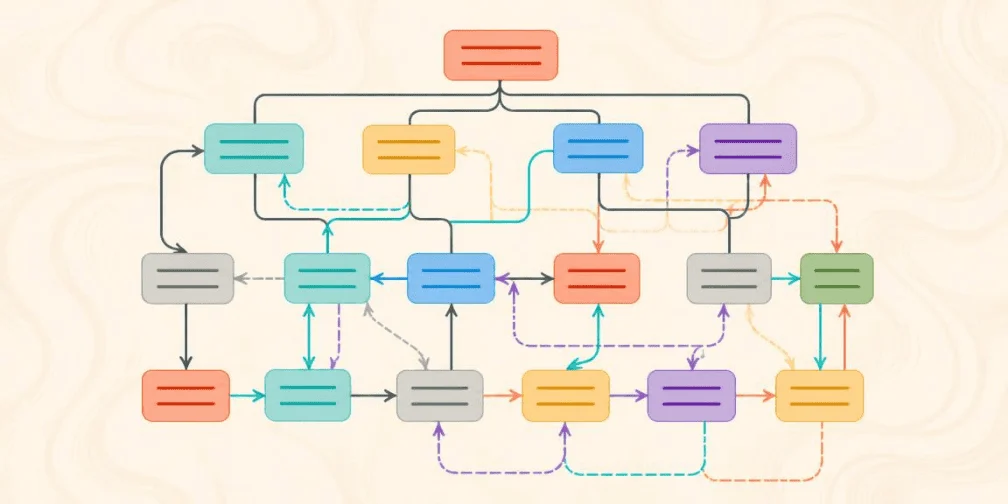
This reliance on the org chart as the primary lever for addressing marketing organizational design issues is fundamentally flawed. While organizational structure undeniably plays a role in efficiency, it represents the slowest, most politically charged, and most publicly scrutinized tool available. It is typically invoked before a thorough diagnosis of the actual impediments to team performance has been conducted. The root cause of the AI readiness gap often lies not in the boxes on an org chart, but in the fundamental way work is arranged and executed.
The Structural Bottleneck: Beyond Technological Access
The disconnect between AI aspirations and organizational capability is not a matter of access to technology. Research from McKinsey, such as their "State of AI" report, highlights this reality. The report indicates that approximately 6% of organizations can be classified as AI high performers, meaning they attribute at least 5% of their Earnings Before Interest and Taxes (EBIT) impact to AI utilization and derive substantial value from it. These high-performing entities are nearly three times more likely than their peers to have fundamentally redesigned individual workflows. Among the 31 organizational variables McKinsey examined, intentional workflow redesign demonstrated one of the strongest correlations with meaningful business impact.
This finding carries a significant, and perhaps uncomfortable, implication: the AI leaders and the remaining 94% of organizations have access to largely the same AI models, platforms, and vendors. The critical differentiator is not the technology itself, but the underlying operational architecture and the way work is structured.
This underlying issue can amplify existing process inefficiencies. As observed in discussions around B2B Go-To-Market (GTM) AI strategy, AI does not create misalignment between marketing, sales, and revenue operations; rather, it strips away the buffers that previously absorbed such misalignments. For instance, if marketing and sales teams lack a clear, shared understanding of why a particular lead is prioritized, the introduction of AI-powered automation into the prioritization step will simply yield faster output of untrusted information.
Reimagining Marketing Organization Design: Focus on Handoffs, Not Reporting Lines
A more effective and practical approach to marketing organization design begins with an examination of the "handoffs" between different stages of a process, rather than solely focusing on reporting lines. Most B2B marketing and sales organizations, while adequately staffed within their respective silos, often exhibit structural weaknesses at the critical transition points between these stages.
Consider a typical workflow: content marketing teams produce assets and "handoff" these to campaign management. Campaign teams launch initiatives and pass resulting engagement data to sales enablement. Sales enablement then delivers a lead to a sales representative. While each of these functions typically has a designated owner, the transitions between them frequently lack clear ownership or defined protocols.
This lack of clarity at the handoff points is precisely where inefficiencies accumulate, leading to extended cycle times. A campaign that should ideally take six weeks might instead drag on for ten. This extended duration is rarely due to protracted production periods. Instead, it often stems from four weeks of waiting in the gaps: waiting for a crucial review, for clarification on a decision that lacks clear authority, or for rework loops that could have been avoided with better initial briefs specifying the needs of the next stakeholder.
The Accumulating Cost of Orchestration Debt
The cumulative impact of these inefficiencies has been termed "orchestration debt." In the context of AI adoption, this debt becomes particularly problematic because deploying AI agents within existing silos does little to address it. If a content team is equipped with a drafting agent, content creation may indeed accelerate. However, the overall campaign timeline may remain protracted because the four weeks of waiting were never within the content team’s direct control.
Organizations that successfully navigate this challenge treat alignment as something that is engineered, not merely encouraged. This is evident in the practices of successful Vice Presidents of Revenue Marketing, who embed shared definitions, metrics, and accountability directly into their operational frameworks, rather than relying on good intentions. Consequently, the most impactful redesign available to many CMOs is not a new organizational structure, but the appointment of a single owner responsible for a revenue-critical workflow from end to end, spanning the marketing-sales boundary, and empowered to redefine how these crucial handoffs operate.
The Undocumented Logic: A Barrier to Automation
A second, often overlooked, constraint that can stall AI initiatives, even those that appear well-conceived on paper, is the presence of undocumented tribal knowledge. AI agents, unlike experienced human team members, cannot inherit implicit understanding. A seasoned professional who has managed campaign quality assurance for years possesses a mental model of common pitfalls, stakeholders requiring advance notice, acceptable exceptions, and critical issues that could have significant career repercussions. This knowledge is rarely documented and may not be perceived as necessary as long as that individual remains in their role.
The moment any part of such a workflow is delegated to a system, this undocumented logic becomes the primary impediment. The undertaking then transforms from automating a defined process into the realization that the "process" was, in fact, a person.
Many CMOs already frame this issue in terms of succession risk: the potential loss of context when key personnel depart without adequate knowledge transfer. However, this perspective often understates the problem. The undocumented workflow is actively constricting current operations, even before any resignations occur.
This undocumented logic also contributes to the hiring challenges many teams face. Job descriptions that read like requisitions for mythical unicorns – individuals expected to be strategic thinkers, adept prompt engineers, data interpreters, and workflow managers all in one – are frequently a symptom of undocumented workflows. When the core logic of the work resides solely in an individual’s mind, the role must absorb all associated ambiguities, leading to the creation of job descriptions for individuals who can "figure it out." By documenting workflows, the role can be clarified and made more effectively hireable.

Decision Rights Precede Reporting Lines in the AI Era
The genuinely novel organizational design question in the age of AI is not where AI agents will reside on an org chart, but rather what decisions they will be authorized to make. This includes critical questions such as: Who grants an AI agent the authority to spend budget? To publish content without human review? To reprioritize a lead, thereby dictating a sales rep’s actions on a Monday morning? These are the realms of decision rights, and most marketing organizations lack a precedent to follow because these questions have never before applied to non-human actors.
This is also an area where the market is experiencing a subtle bottleneck. Reports indicate that even technically proficient teams developing AI agents internally are largely scoping them to contained tasks rather than granting them end-to-end control. While the appetite for AI autonomy is palpable, the willingness to accept the associated liability is not.
A more productive approach involves making autonomy an explicit design choice rather than a default. This can be conceptualized as a progression from assistive AI to partially autonomous AI, and ultimately to fully autonomous AI. Designing an AI-enhanced marketing organization is largely about determining which task categories belong at each tier. Routine reporting and A/B test variations, for instance, do not carry the same risk profile as making pricing claims or crafting executive communications.
This represents a governance decision that CMOs can implement within the current quarter, without the need to reassign a single team member.
Four Moves That Bypass the Need for a Full Reorg
When the prospect of a complete organizational restructure feels overwhelming, focusing on smaller, actionable steps can be more effective. These initial moves can lay the groundwork for more significant changes and yield immediate improvements:
-
Map a Critical Workflow End-to-End: Select one revenue-critical workflow (e.g., lead qualification to sales handoff) and meticulously document every step, every decision point, and every handoff. Identify the individuals involved and the explicit criteria for each transition.
-
Assign a Single Owner to that Workflow: Grant one individual the authority and accountability for the entire mapped workflow. This person becomes the champion for its efficiency and the point person for any necessary adjustments, regardless of reporting lines.
-
Codify Decision Rights for AI Agents within that Workflow: For the selected workflow, define precisely what decisions AI agents can make autonomously. This might involve setting parameters for lead scoring adjustments, automated follow-up triggers, or content personalization variations.
-
Establish a Documentation Cadence: Implement a regular process for documenting key operational knowledge and decision-making frameworks. This can be as simple as weekly knowledge-sharing sessions or a dedicated platform for capturing and updating procedural information.
None of these initiatives necessitate a structural overhaul. For those seeking a more granular, tactical guide on integrating AI agents without rebuilding their entire organizational chart, comprehensive resources are available.
The Real Risk: Mismanaging the AI Revolution
Many marketing leaders approach AI integration with caution, acutely aware that a poorly executed organizational restructure can have career-limiting consequences. This instinct is understandable, but it may be misdirected, focusing on the wrong risk.
Gartner’s research indicates a significant expectation among CMOs: 65% anticipate AI will dramatically alter their roles within two years. However, a concerningly low 32% believe significant changes are needed in their own skill sets. This disparity has led Gartner to predict that by 2027, a lack of AI literacy will rank among the top three reasons for CMO replacement in large enterprises. Currently, only 15% of CEOs express confidence in their marketing leaders’ AI acumen.
The true exposure for marketing leaders is not a restructuring effort that falters. Instead, it lies in being a leader who cannot articulate, in specific operational terms, how work is accomplished within their team and where AI technology can be effectively integrated. Addressing these fundamental questions of workflow and operational clarity, which can be answered without touching the org chart, is paramount. Successfully answering these questions is what will ultimately make any future structural changes meaningful and effective.
For marketing leaders navigating these complex challenges within their own teams, reaching out for collaborative discussion is encouraged. Sharing points of friction and seeking expert guidance can illuminate pathways forward in this rapidly evolving landscape.