
 rifanmuazin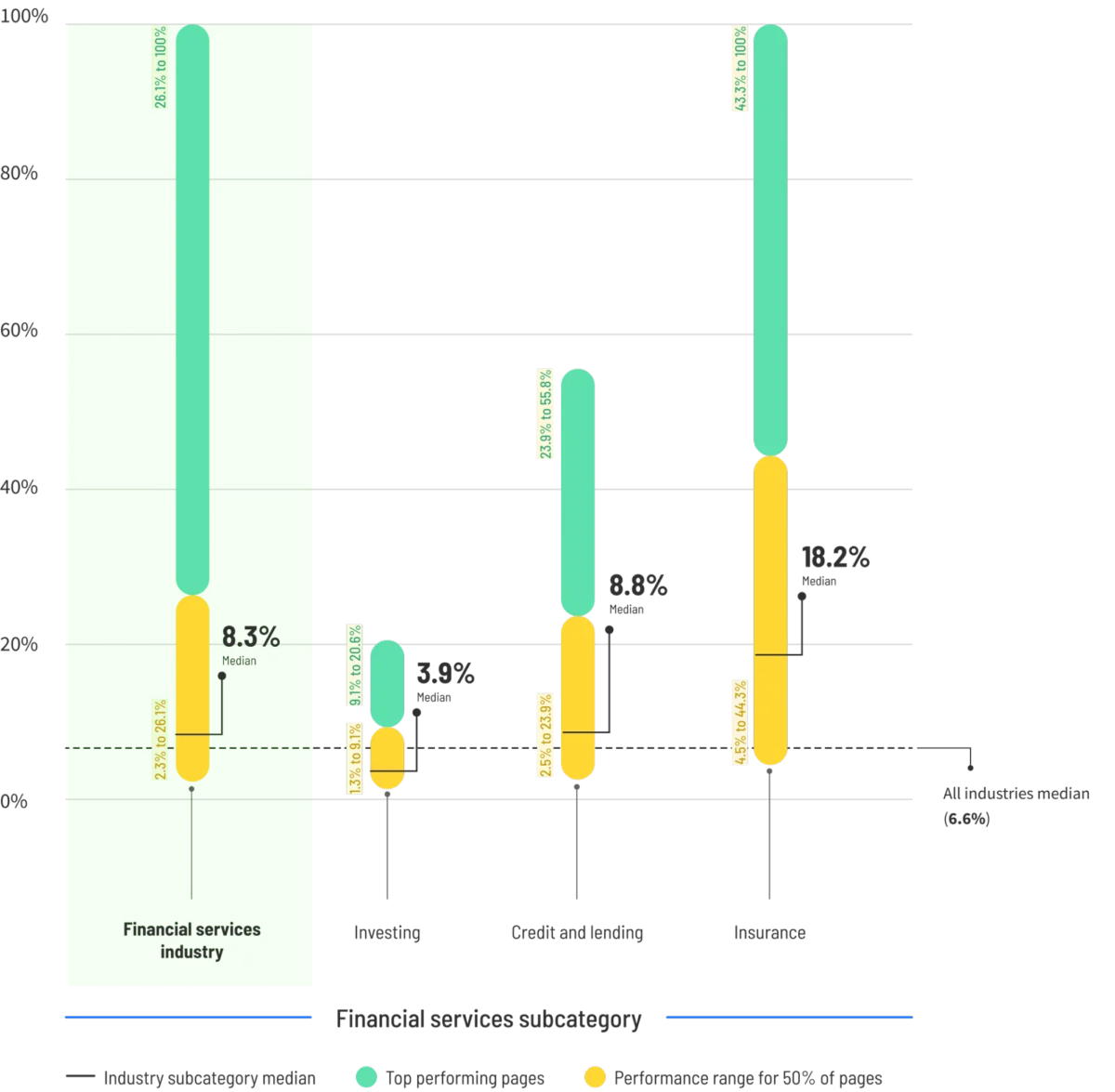
Digital marketing performance in 2024 is increasingly defined by a widening gap between average performers and industry leaders, according to the latest comprehensive analysis of landing page conversion data. With digital advertising costs rising and consumer attention spans fragmenting, the ability to convert traffic into leads or sales has become the primary lever for business growth. Data derived from over 57 million conversions, 41,000 landing pages, and 464 million pageviews reveals that the global median conversion rate for landing pages currently stands at 6.6%. However, this baseline figure masks significant volatility across different sectors, traffic channels, and device types, suggesting that a one-size-fits-all approach to digital strategy is no longer viable.

The findings, headlined by Unbounce’s 2024 Conversion Benchmark Report, indicate that while a 6.6% conversion rate represents the middle of the market, "good" performance—defined as the 75th percentile—starts at 11.4% and can soar as high as 40.8% in specific high-intent niches. This disparity highlights a critical transition in the industry: the move from volume-based marketing to precision-based optimization. Marketers are no longer merely competing for clicks; they are competing for the psychological commitment of the user within seconds of a page load.
The Statistical Foundation: Median vs. Average Performance
In the realm of data science and marketing analytics, the distinction between "average" and "median" is vital for accurate benchmarking. The 2024 report utilizes median values to provide a more realistic snapshot of the typical marketer’s experience. Unlike a mean average, which can be heavily skewed by "unicorn" pages—outliers that convert at 80% or 90% due to viral anomalies—the median represents the true center of the dataset.

For a firm evaluating its current performance, the median serves as the baseline for survival, while the 75th percentile serves as the target for competitive advantage. Industry analysts suggest that companies failing to meet the median benchmark are likely experiencing a negative return on ad spend (ROAS), particularly as cost-per-click (CPC) rates on platforms like Google Ads and Meta continue to escalate due to increased competition and privacy-related targeting limitations.
Industry-Specific Performance Analysis
The 2024 data underscores that user intent varies dramatically by industry, which in turn dictates the "ceiling" for conversion rates.
Ecommerce and Retail
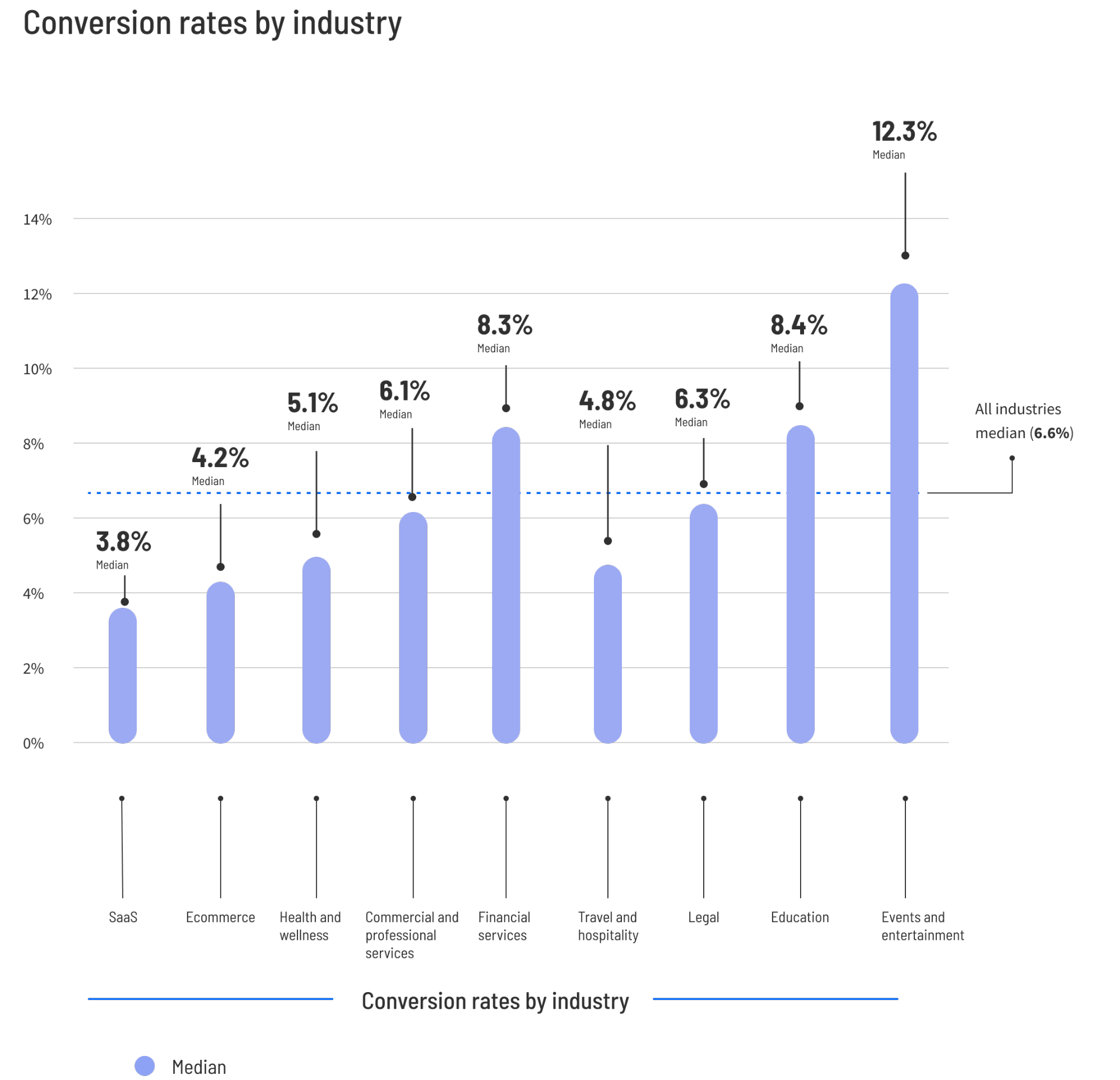
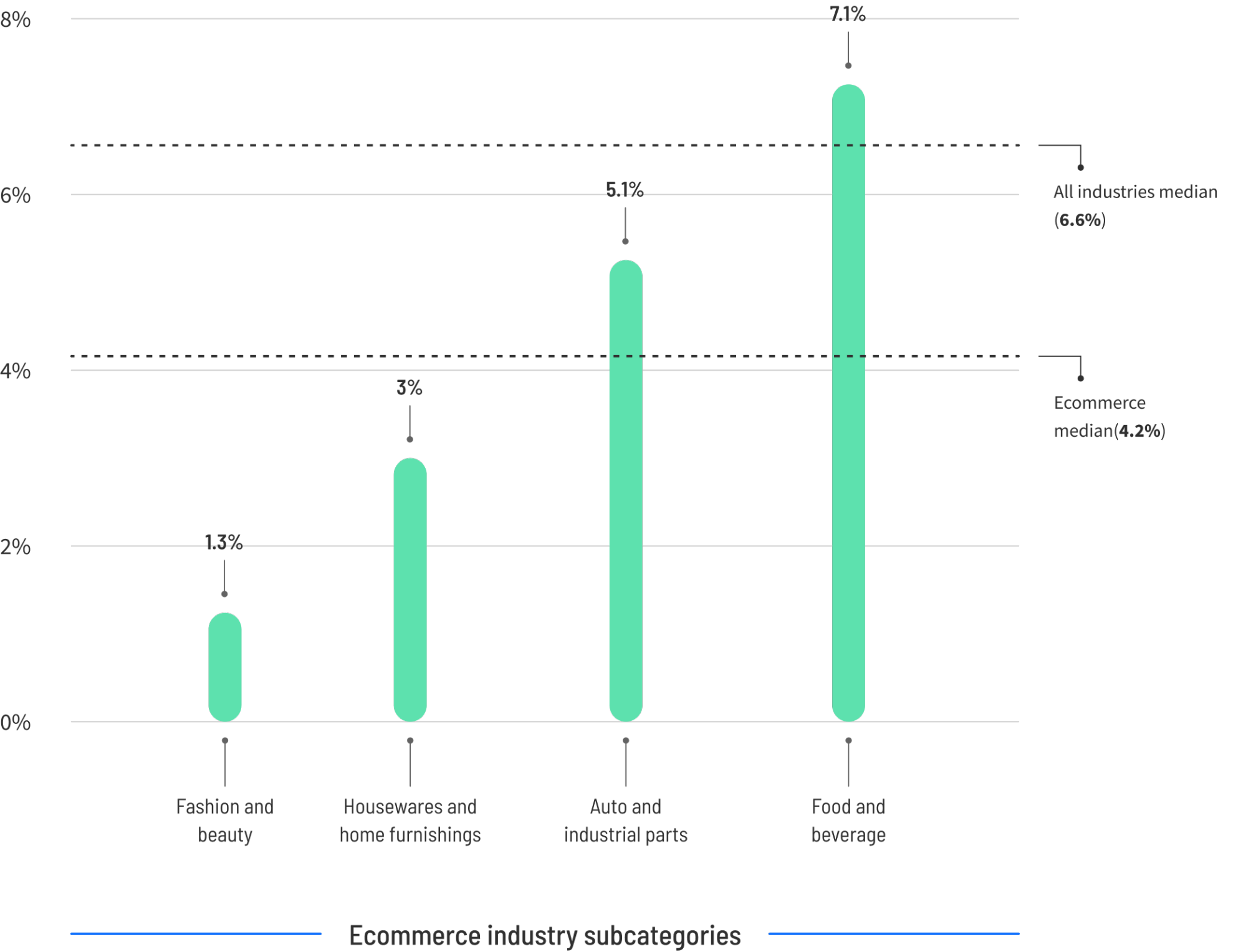
The median conversion rate for ecommerce landing pages is currently 4.2%. While this is lower than the cross-industry median, it reflects the high-volume, high-competition nature of online retail. In this sector, the gap between average and elite is massive; top-performing ecommerce pages (the top 25%) are achieving rates of 11.4% or higher.
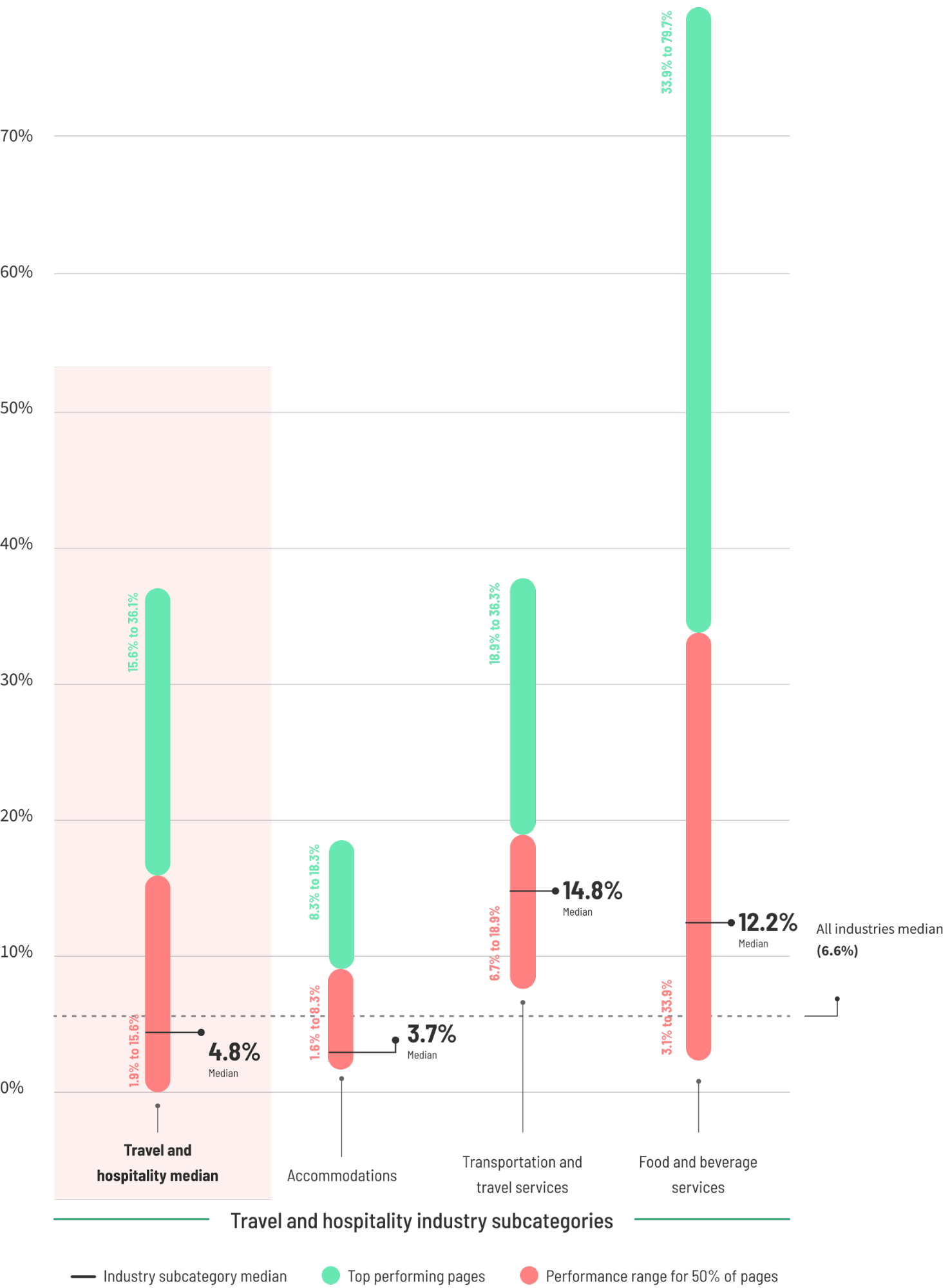
Within ecommerce, sub-sectors show further divergence. Food and beverage pages lead with a 7.1% median, likely due to the lower price point and immediate gratification of the product. Conversely, fashion and beauty maintain a lower median of 1.3%, as these categories often require more "window shopping" and brand comparison before a purchase is finalized.
Software as a Service (SaaS)
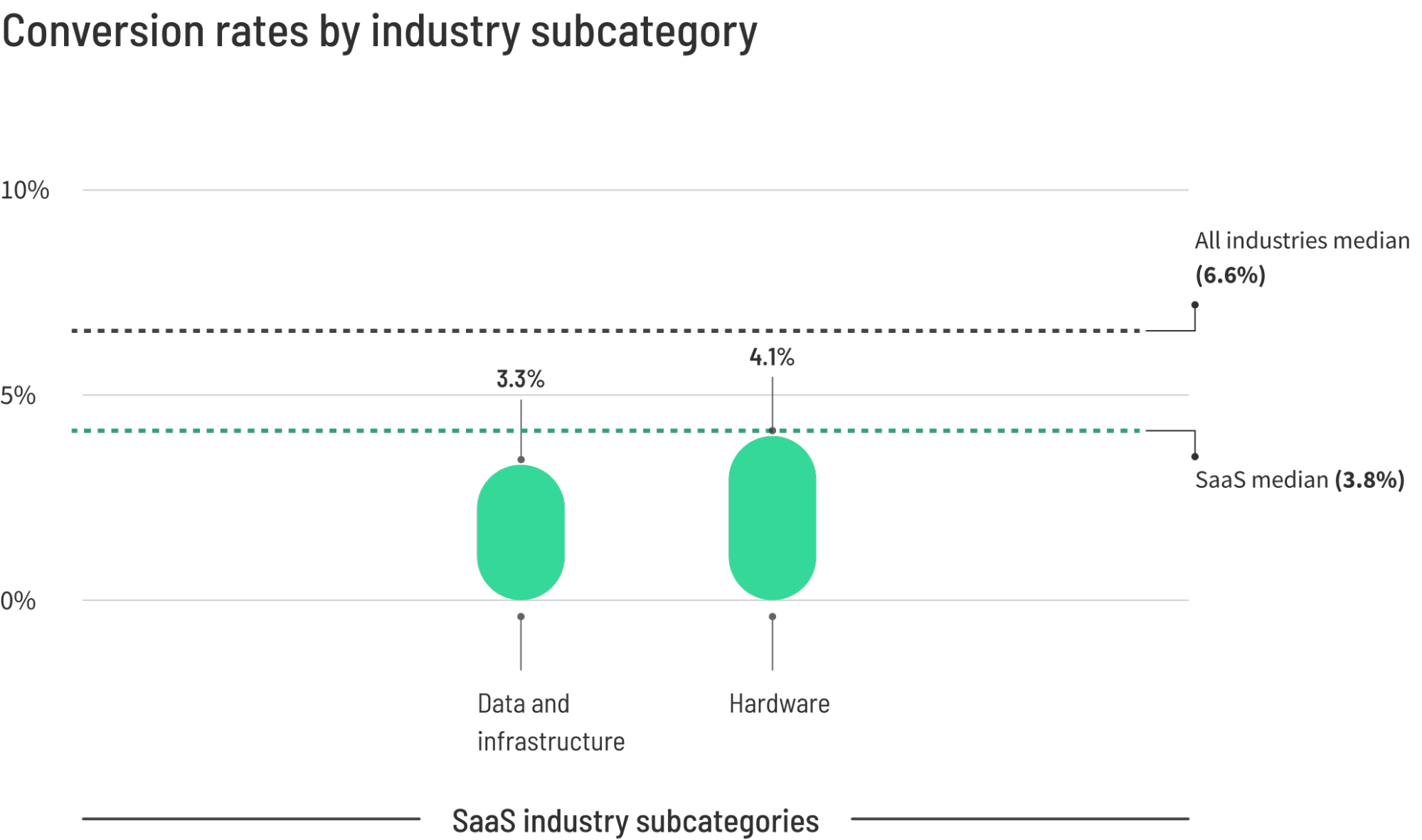
SaaS companies face a unique challenge with a median conversion rate of 3.8%. This reflects the complexity of the products and the length of the B2B sales cycle. SaaS landing pages are rarely "one-click" environments; they often require the user to commit to a trial or a demo, which involves a higher degree of perceived risk. Elite SaaS performers, however, are hitting 11.6%, often by streamlining their value propositions and utilizing "no-credit-card-required" trial offers to lower the barrier to entry.
Financial and Legal Services
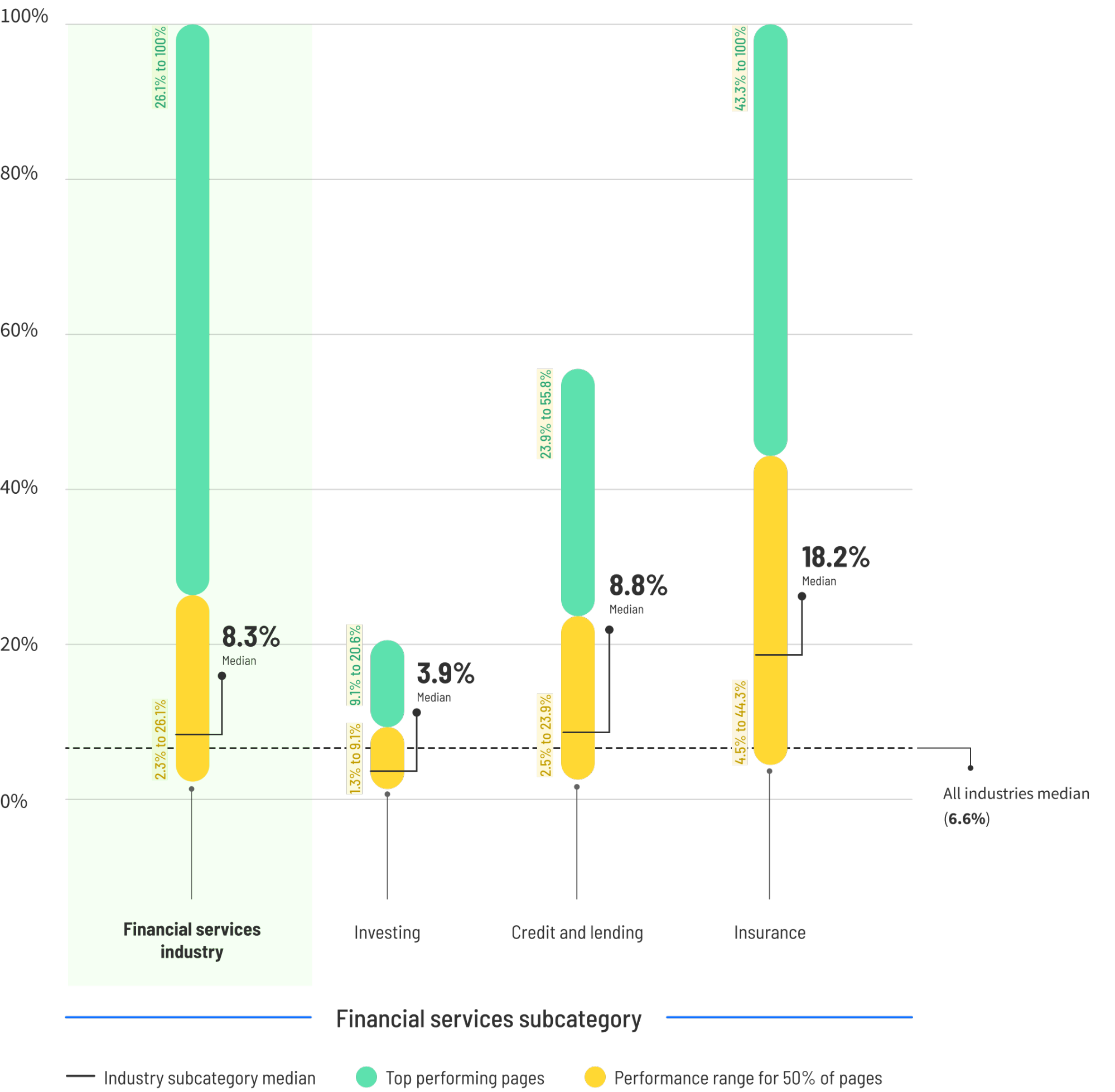
High-stakes industries such as finance and law see significantly higher conversion rates due to the "urgent need" factor. Financial services boast a median of 8.3%, with insurance-specific pages reaching an impressive 18.2%. In the legal sector, the median is 6.3%, but mobile performance is the standout story here. Legal services convert at 21% on mobile compared to 15.9% on desktop, a trend driven by "emergency" searches—such as a user looking for a lawyer immediately following an accident or legal notification.
The Role of Traffic Channels and Device Optimization
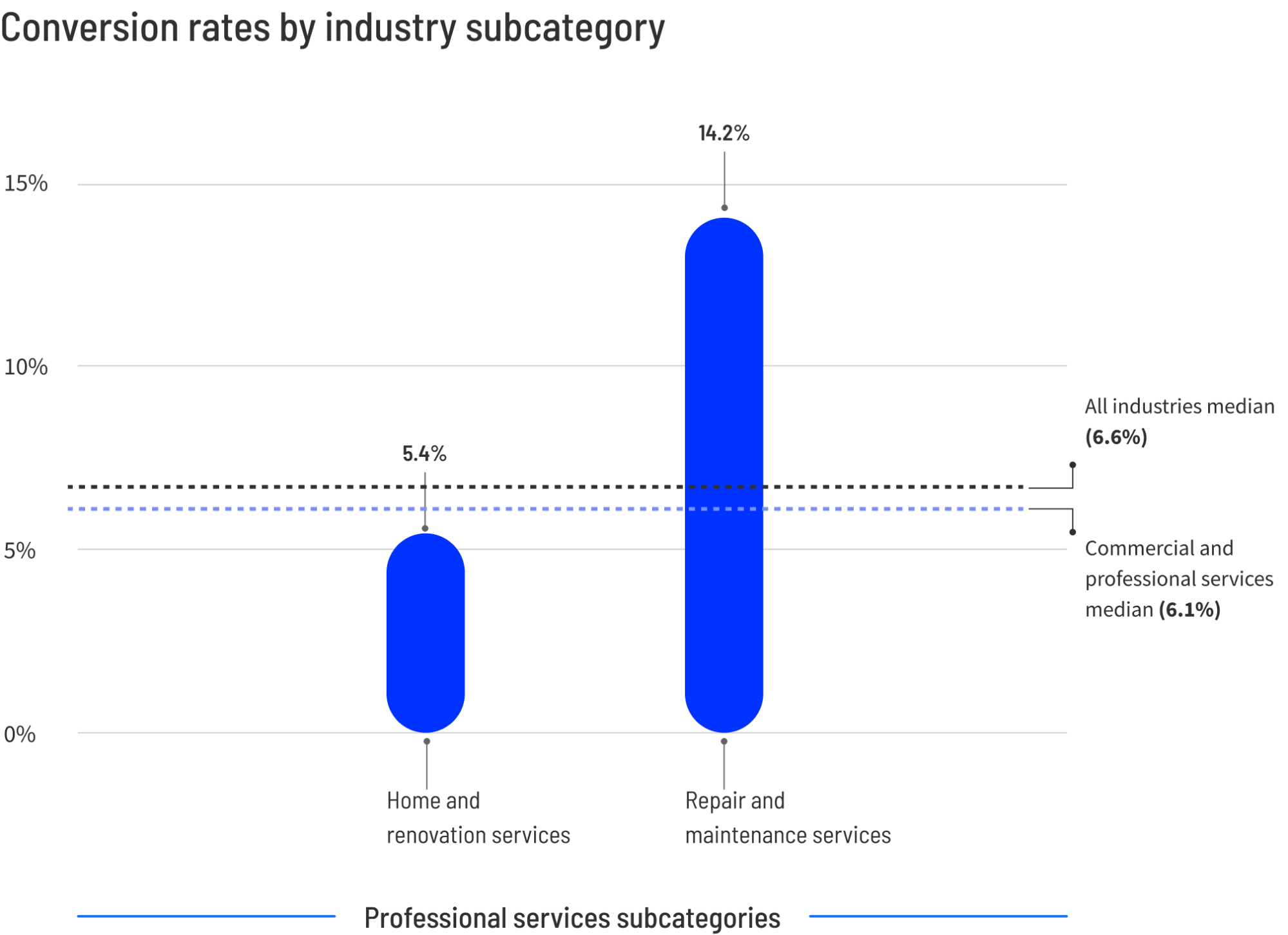
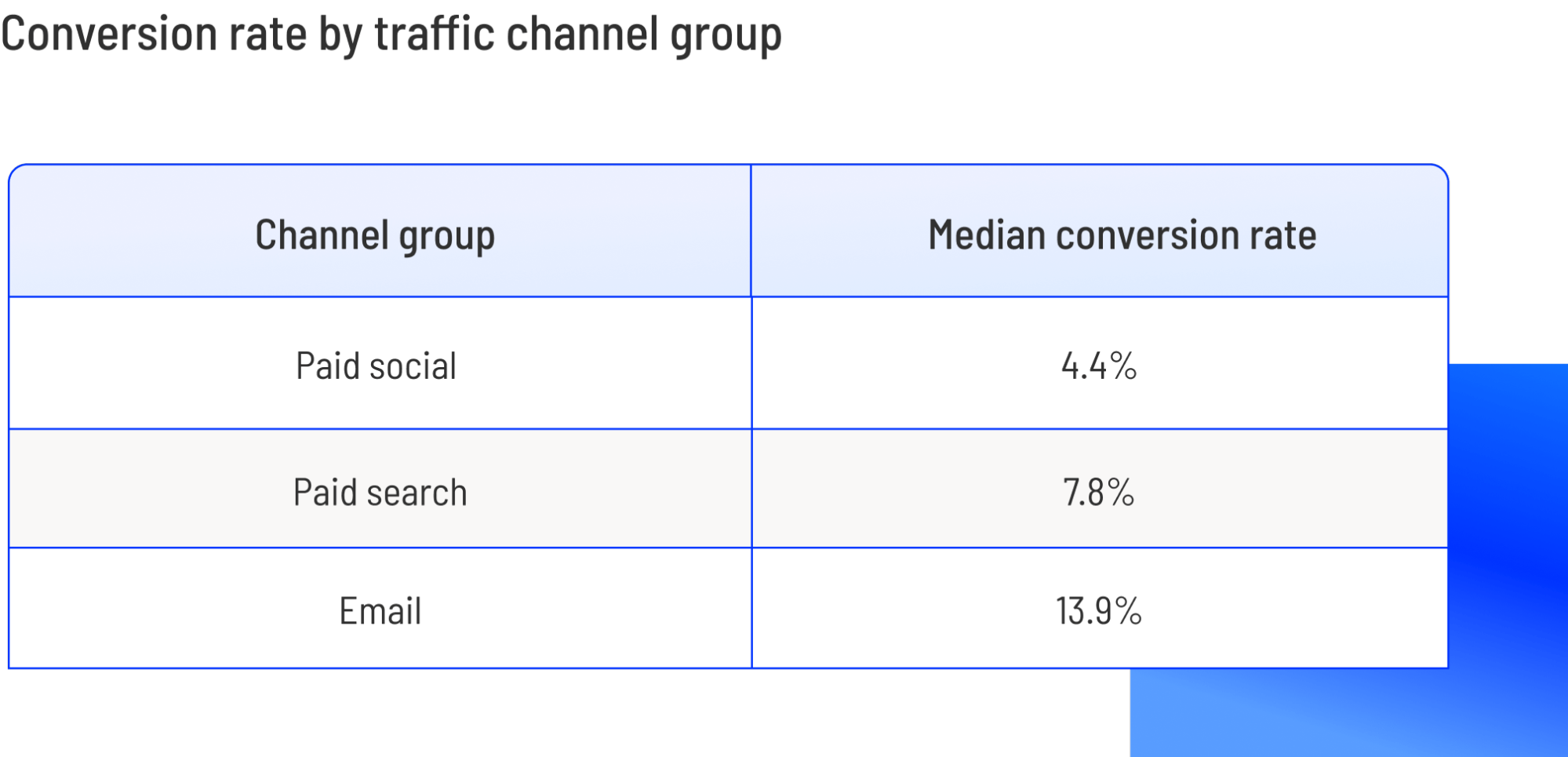
A significant revelation in the 2024 data is the continued dominance of email as a high-conversion channel. Across professional services, for example, email traffic converts at nearly 14%, while paid social traffic lags at 4.4%. This suggests that "warm" leads who have already opted into a brand’s ecosystem are significantly more valuable than "cold" traffic generated through social media interruption marketing.
Furthermore, the "Mobile-First" imperative has evolved into a "Mobile-Only" reality for many sectors. Mobile devices now account for approximately 83% of all landing page visits. However, conversion rates on mobile often lag behind desktop due to friction in form-filling and slow load times. The industries that have bucked this trend—specifically Finance and Law—have done so by optimizing for "click-to-call" functionality and simplified mobile forms, recognizing that a mobile user is often a user in a hurry.
The Psychology of Conversion: Reading Ease and Social Proof
One of the most actionable insights from the 2024 research involves the linguistic complexity of landing pages. There is a direct, measurable correlation between the simplicity of a page’s copy and its ability to convert.
Pages written at a 5th-to-7th-grade reading level convert at a median of 11.1%. In contrast, pages that utilize "professional" or "sophisticated" language (8th-to-9th-grade level or higher) see conversion rates drop by more than 50%. This data suggests that jargon and complex sentence structures create "cognitive load," causing users to bounce rather than engage. In an era of information overload, clarity is the ultimate competitive advantage.
Additionally, the strategic placement of social proof—testimonials, trust badges, and review counts—remains a cornerstone of high-performing pages. However, the 2024 trend shows a shift toward "contextual proof." Rather than burying testimonials at the bottom of a page, elite marketers are placing specific, relevant reviews directly adjacent to the Call to Action (CTA) or form, addressing user hesitation at the exact moment of decision.
Implications for 2025 and Beyond: The Strategic Outlook
The broader implications of this data suggest a tightening market where efficiency is favored over raw scale. As artificial intelligence (AI) begins to play a larger role in page generation and A/B testing, the barrier to creating "decent" landing pages has lowered. However, the barrier to creating "high-performing" pages remains high, requiring a deep understanding of audience psychology and industry-specific nuances.
Industry experts anticipate that the next 12 to 18 months will see an increased focus on "Hyper-Personalization." With Smart Traffic algorithms now able to route visitors to different versions of a page based on their location, device, or previous behavior, the concept of a single "static" landing page is becoming obsolete.
Analysis of the "Performance Gap"
The difference between a 4.2% conversion rate and an 11.4% conversion rate in ecommerce is not just a statistical curiosity; it is the difference between a struggling business and a market leader. For a company receiving 10,000 visitors a month with an average order value of $75, moving from the median to the 75th percentile represents an additional $54,000 in monthly revenue. This "optimization dividend" is often the most cost-effective way to grow, as it requires no additional ad spend—only a more efficient use of existing traffic.
Conclusion and Recommendations
The 2024 benchmarks serve as a wake-up call for digital marketers to move beyond generic best practices. To outperform industry medians, organizations must adopt a systematic approach to Conversion Rate Optimization (CRO). The path to the top quartile involves:
- Simplification: Reducing copy to a 5th-7th grade reading level to ensure universal accessibility and rapid comprehension.
- Mobile-Centricity: Moving beyond "responsive design" to "mobile-native" experiences that prioritize speed and ease of action.
- Intent Matching: Aligning the landing page offer strictly with the traffic source. High-urgency search traffic requires a different experience than low-urgency social discovery traffic.
- Continuous Testing: Moving from "one-off" tests to a culture of experimentation, utilizing AI-driven tools to handle multivariate testing at scale.
As the digital landscape becomes increasingly saturated, these benchmarks provide the roadmap for brands to navigate the transition from surviving to thriving in a high-competition economy. The data is clear: the rewards for those who master the art and science of conversion have never been greater, while the costs of remaining "average" have never been higher.








