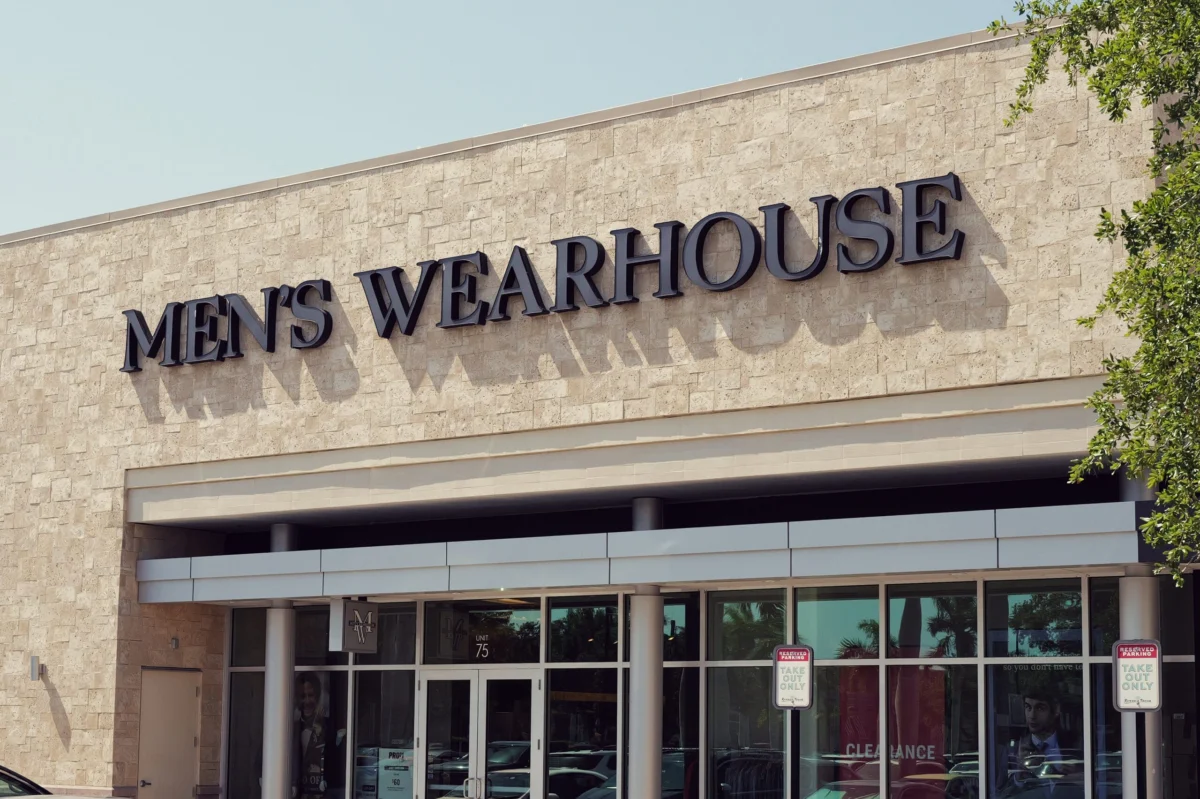
Tailored Brands, the retail conglomerate encompassing well-known menswear brands such as Men’s Wearhouse, Jos. A. Bank, Moores, and K&G Fashion Superstore, has formally initiated the process for its initial public offering (IPO). The company publicly filed its registration statement with the U.S. Securities and Exchange Commission (SEC) on July 13, marking a significant step in its journey back to public markets. This move signals a strategic redirection and a renewed focus on leveraging its extensive retail footprint and burgeoning e-commerce capabilities. The proposed ticker symbol, "MENW," for its common stock on the Nasdaq exchange, is a direct nod to Men’s Wearhouse, the company’s largest banner by both sales volume and store count, underscoring its continued importance within the corporate structure.
Navigating the Path to Public Markets
The IPO filing, a crucial document for potential investors, outlines Tailored Brands’ intention to offer its common stock to the public. While the exact number of shares to be offered and the anticipated price range remain undetermined, the company has indicated that these details are contingent upon prevailing market conditions and other factors. Tailored Brands has been transparent about the inherent uncertainties, stating, "There can be no assurance as to whether or when the offering may be completed, or as to the actual size or terms of the offering." This cautious approach is standard practice in IPO preparations, as companies aim to maximize valuation and investor interest.
The underwriting of this significant financial undertaking will be managed by a consortium of leading financial institutions. Goldman Sachs & Co. LLC, Morgan Stanley, and Jefferies are slated to serve as the lead bookrunning managers, spearheading the sales effort. They will be joined by BofA Securities, Evercore ISI, Guggenheim Securities, Wells Fargo Securities, Baird, and Stifel as joint bookrunners. Telsey Advisory Group will also play a role as a co-manager. The selection of these reputable firms suggests a robust strategy to ensure broad investor participation and a successful market debut.
E-commerce: A Cornerstone of Tailored Brands’ Future Strategy
The filing underscores Tailored Brands’ strategic pivot towards a more digitally integrated business model. The company explicitly identifies e-commerce as "a significant and growing opportunity" for comparable sales growth. This emphasis is not merely aspirational; it is backed by data. In fiscal year 2025, omnichannel customers demonstrated a markedly higher engagement, spending twice as often and twice as much as their single-channel counterparts. This highlights the value of a seamless integration between online and in-store experiences.
The company’s e-commerce performance in 2026 has shown considerable momentum, with sales across all banners experiencing a robust 16% year-over-year increase. This growth was complemented by a 20% surge in digital traffic during the same period. Tailored Brands attributes this success to a multifaceted digital marketing strategy, including an "optimized media mix across search, social, and display channels," coupled with enhanced audience targeting. Furthermore, investments in membership and loyalty programs, search engine optimization (SEO), and content expansion have been instrumental in driving these positive outcomes.
The company’s filing also highlights "tangible gains in conversion, traffic, and cross-selling" as direct results of its e-commerce initiatives. A significant untapped potential, or "whitespace opportunity," exists to further penetrate digital channels across all its retail banners. This is particularly noteworthy given that e-commerce currently represents 9% of total sales across all Tailored Brands banners in fiscal year 2025, even in the absence of an online presence for K&G Fashion Superstore.
Looking ahead, Tailored Brands envisions e-commerce as a primary engine for sustained long-term growth. The company’s strategy involves continually enhancing its digital platform and expanding omnichannel engagement to increase digital penetration and boost customer lifetime value. A key element of this strategy is the management of a unified retail inventory pool that spans both physical stores and online operations. This enables critical functionalities like "buy online, pick up in store" (BOPIS) and ship-from-store capabilities, which are essential for providing customers with flexibility and convenience.
To further elevate the customer experience, Tailored Brands is actively improving checkout flows, integrating customer journeys across rental and retail services, and implementing AI-driven personalization and guided shopping tools. These enhancements aim to create a more intuitive and seamless path to purchase for consumers. A significant technological undertaking involves consolidating its three legacy banner websites onto a single, unified platform. This consolidation is expected to yield improvements in speed, agility, and overall user experience. Additionally, the company plans to optimize its online assortment by introducing and expanding e-commerce-exclusive product offerings, catering to evolving online consumer preferences.
Performance Snapshot: Tailored Brands’ Retail Banners in Fiscal Year 2025
A deeper dive into the company’s performance reveals the individual contributions of its various retail banners to its overall sales in fiscal year 2025:
- Men’s Wearhouse: This flagship brand was the dominant contributor, accounting for 63% of Tailored Brands’ total sales. Private labels formed a substantial 86% of these sales, with rental services making up 21% of the banner’s business. As of May 2, 2026, Men’s Wearhouse operated a vast network of 637 stores.
- Jos. A. Bank: This brand contributed 16% to the company’s sales in fiscal year 2025. Its private-label penetration rate was exceptionally high at 95%, with rentals representing a smaller 6% of its business. As of May 2, 2026, Jos. A. Bank had 181 stores.
- K&G Fashion Superstore: This banner generated 14% of Tailored Brands’ sales in fiscal year 2025. It reported a 42% private-label penetration rate and did not offer rental services during that period. With 81 stores, it was the smallest banner in terms of physical locations.
- Moores: This was the smallest banner by sales in fiscal year 2025, contributing 7% to Tailored Brands’ revenue. Private labels constituted 84% of its business, and rentals accounted for 8%. Moores operated 107 stores as of May 2, 2026.
Market Context and Historical Performance
Tailored Brands’ journey to this IPO has been marked by significant corporate transformations. The company was formerly known as The Men’s Wearhouse, Inc. and underwent a significant rebranding to Tailored Brands following its acquisition by KKR, a private equity firm, in 2017. This privatization marked an effort to restructure and streamline operations away from the public spotlight. The subsequent filing for an IPO indicates that the company believes it has achieved a level of stability and growth potential that warrants re-entry into the public market.
The apparel retail sector, particularly menswear and formal wear, has faced considerable headwinds in recent years due to shifting consumer preferences towards casualization and the rapid growth of online retail. Brands that have successfully adapted by embracing digital strategies, offering personalized experiences, and managing efficient supply chains have demonstrated resilience. Tailored Brands’ stated focus on e-commerce, omnichannel integration, and AI-driven personalization suggests an awareness of these industry dynamics and a proactive approach to addressing them.
Digital Commerce 360 Data and Projections
Analysis from Digital Commerce 360 provides valuable context for Tailored Brands’ market position and future outlook. The company is recognized as No. 190 in the Top 2000 Database, which tracks North America’s largest online retailers based on annual e-commerce sales and other metrics. This ranking highlights its existing presence in the digital retail landscape.
Looking ahead, Digital Commerce 360 projects that Tailored Brands will achieve approximately $509 million in e-commerce sales by 2026. This projection anticipates a 1.4% year-over-year growth rate, suggesting a steady but measured expansion in its online revenue stream. Furthermore, Tailored Brands is ranked No. 393 in Digital Commerce 360’s new AI Rankings, available within the Top 1000 Pro with AI Database. This indicates its adoption and integration of artificial intelligence technologies within its operations, a critical factor for future competitiveness.
Implications of the IPO Filing
The decision to go public again is multifaceted. For Tailored Brands, it offers an opportunity to raise capital to fuel further investment in its digital transformation, store modernization, and potential acquisitions. It also provides liquidity for existing investors, such as KKR, who have held the company privately. For investors, the IPO presents a chance to participate in the turnaround and growth story of a well-established retail entity as it navigates the evolving landscape of the apparel industry.
However, the success of the IPO will hinge on the market’s perception of Tailored Brands’ strategy and its ability to execute its digital and omnichannel plans effectively. The retail sector remains highly competitive, and consumer behavior continues to evolve rapidly. The company’s commitment to enhancing customer experience through technology and seamless integration will be paramount. The detailed breakdown of its various banners also presents both opportunities and challenges; while Men’s Wearhouse remains a strong performer, the smaller banners will need to demonstrate their own path to sustainable growth and digital relevance.
The filing is a significant milestone, signaling the company’s confidence in its strategic direction and its readiness to re-engage with public investors. The coming months will be critical as Tailored Brands works to finalize the terms of its offering and navigate the complex process of becoming a publicly traded company once again. The market will be closely watching its progress and its ability to translate its strategic vision into tangible financial results.

 Ammar Sabilarrohman
 Nila Kartika Wati