The digital marketing industry currently stands at a crossroads where the promise of scientific precision often clashes with the reality of outdated statistical practices. While A/B testing is fundamentally rooted in the concept of the randomized controlled trial (RCT)—a cornerstone of modern physics, genetics, and clinical medicine—the methodology applied by many contemporary practitioners remains significantly behind the curve. Experts argue that the common advice found in digital marketing literature is lagging nearly half a century behind the rigorous standards maintained in biostatistics and experimental psychology. As companies increasingly rely on data-driven decision-making, the reliance on flawed statistical models is creating a "replication crisis" within the corporate sector, leading to illusory gains and misinterpreted consumer behavior.
The Structural Flaws in Modern Digital Experimentation
At its core, an A/B test is designed to eliminate confounding variables by randomly splitting a user base into two or more groups. This allows for a causal link to be established between a specific change—such as a headline adjustment or a pricing restructure—and a resulting shift in conversion rates. However, the integrity of this causal link is entirely dependent on the statistical framework used to interpret the results.
The most prevalent issue in the field is the systemic misuse of statistical significance tests. Most practitioners utilize the Student’s T-test or similar Frequentist models, which were originally designed for experiments with a fixed sample size. In a laboratory setting, a researcher determines the number of subjects required before the experiment begins and only analyzes the data once that threshold is reached. In the high-velocity world of digital marketing, this "fixed-horizon" approach is frequently ignored.
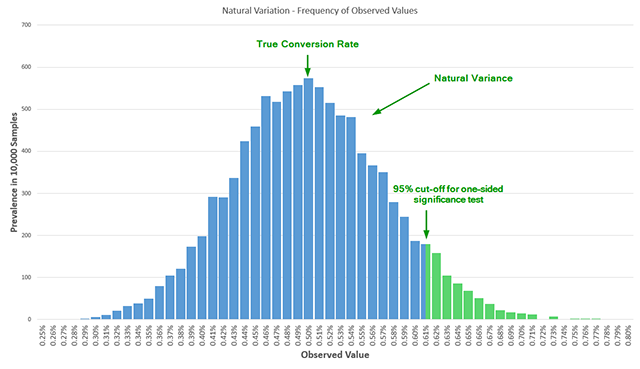
The practice of "data peeking"—monitoring results daily and stopping a test as soon as a p-value reaches a certain threshold—is perhaps the most damaging trend in the industry. When a practitioner looks at a test multiple times without adjusting the statistical model, the probability of a false positive (Type I error) increases exponentially. Historical data from statistical literature as early as 1969 demonstrates that peeking at data just five times can more than triple the actual error rate compared to the reported nominal error. This phenomenon, often referred to as "data-driven optional stopping," results in companies implementing changes based on "winners" that are merely the result of natural variance in the data.
The Invisible Crisis of Statistical Power
Beyond the misuse of significance, a second major hurdle is the lack of consideration for statistical power, often referred to as "test sensitivity." While significance levels (Alpha) protect against false positives, statistical power (Beta) ensures that a test is capable of detecting a genuine effect when one exists.
A review of influential A/B testing literature published over the last decade reveals a startling omission: nearly 85% of the most-read guides fail to mention statistical power in a meaningful context. When power is ignored, tests are often terminated too early or designed with insufficient sample sizes to detect anything but the most massive shifts in behavior.
For example, a marketing team might run a test for two weeks and see no "significant" result, concluding that the new variant has no impact. However, if the test had a power of only 50% (equivalent to a coin toss), there was a 50% chance the test would fail to detect a real improvement. This leads to "false negatives," where potentially lucrative innovations are discarded because the experimental design was too weak to validate them. To achieve a standard power of 80% or 90%, many companies would find they need significantly more traffic than they currently allocate to their experiments, necessitating a trade-off between the number of tests run and the reliability of those tests.
The Economic Inefficiency of Classical Models
The third pillar of the current crisis is the inherent inefficiency of classical fixed-sample testing. In clinical trials for life-saving medication, it is considered unethical to continue a trial if the interim data shows that one treatment is clearly superior or, conversely, is causing harm. Digital marketing faces a similar, albeit financial, dilemma.
Under classical statistical rules, if a company plans a test for 100,000 users but sees a massive 20% lift after only 20,000 users, they are technically required to finish the test to maintain statistical validity. Conversely, if a new variant is causing a 15% drop in revenue, the "fixed-horizon" rule suggests they should continue the test until the end, resulting in significant financial loss.
This rigidity has created a vacuum where practitioners either follow the rules and lose money through inefficiency, or break the rules and lose data integrity through peeking. The industry’s failure to adopt modern "Sequential Analysis"—methods that allow for interim checks while adjusting for error—has left digital marketers choosing between being "statistically sound" or "business-agile."
The AGILE Solution: Lessons from Biostatistics
To bridge this gap, a new framework is emerging that draws inspiration from group sequential designs used in modern clinical trials. Dubbed the "AGILE" statistical approach, this method seeks to align the mathematical rigor of the laboratory with the operational needs of the digital economy.
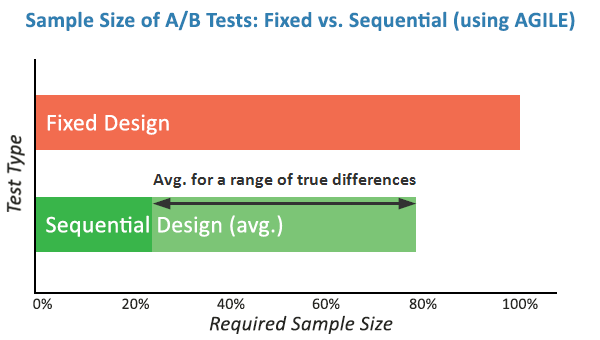
The AGILE method introduces several critical components to the A/B testing workflow:
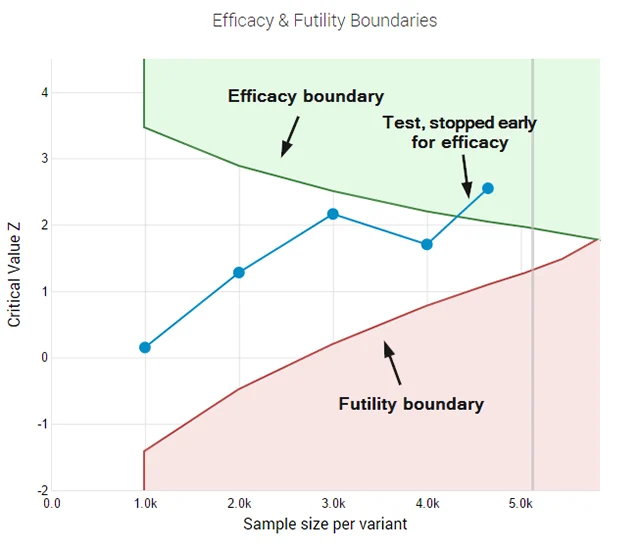
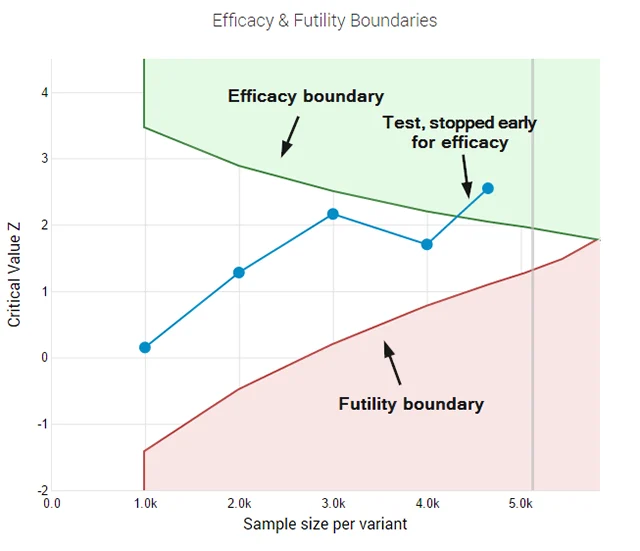
- Error-Spending Functions: Instead of a single "look" at the end of a test, AGILE uses mathematical functions to "spend" the allowed error probability across multiple interim analyses. This allows teams to peek at the data legally, adjusting the significance threshold at each step to ensure the overall false positive rate remains controlled.
- Futility Stopping Rules: One of the most significant advantages of the AGILE approach is the ability to "fail fast." If the data indicates that a variant has a very low probability of ever reaching significance, the test can be stopped for futility. This prevents the "zombie test" phenomenon, where experiments drag on for months without yielding actionable insights.
- Efficiency Gains: Simulations show that the AGILE method can provide efficiency gains of 20% to 80% in terms of sample size. By allowing for early stopping when effects are large, companies can move through their testing backlog much faster, compounding the gains from their optimization efforts.
Chronology of the Testing Evolution
The journey toward the AGILE method represents the third wave of digital experimentation:
- The Gut-Feeling Era (Pre-2000s): Decisions were made by the "HiPPO" (Highest Paid Person’s Opinion). Marketing was largely creative and intuitive with little to no feedback loops.
- The Classical Testing Era (2000s–2015): Tools like Google Website Optimizer and Optimizely popularized A/B testing. However, these tools often used simplified "frequentist" calculators that encouraged the very peeking behaviors that invalidate results.
- The Scientific Rigor Era (2016–Present): A shift toward more sophisticated models. Companies like Netflix, Booking.com, and Microsoft have built internal platforms that utilize sequential testing and Bayesian frameworks to handle the complexities of "peeking" and "power."
Industry Implications and the Path Forward
The transition to more advanced statistical methods like AGILE is not merely a technical upgrade; it is a strategic necessity. As the cost of customer acquisition continues to rise across platforms like Meta and Google, the margin for error in conversion rate optimization (CRO) has narrowed.
Industry analysts suggest that the "low-hanging fruit" of digital optimization has largely been picked. The next generation of gains will come from detecting smaller, more nuanced improvements in user experience. These smaller lifts are impossible to detect reliably using the "Garbage In, Garbage Out" (GIGO) approach of misconfigured significance tests and under-powered samples.
Furthermore, the move toward AGILE testing reflects a broader trend of "Data Democracy" within organizations. When the statistical framework is robust, stakeholders across the company—from product managers to CEOs—can trust the results. This reduces internal friction and allows for a more aggressive experimental culture.
Ultimately, the goal of the AGILE statistical method is to harmonize the speed of business with the requirements of science. By adopting the same rigorous standards used in the medical field, digital marketers can move beyond "illusory findings" and begin building a foundation of true, reproducible knowledge about their customers. The companies that fail to modernize their statistical toolkits risk making expensive decisions based on noise, while their more rigorous competitors capitalize on the signal.