
 rifanmuazin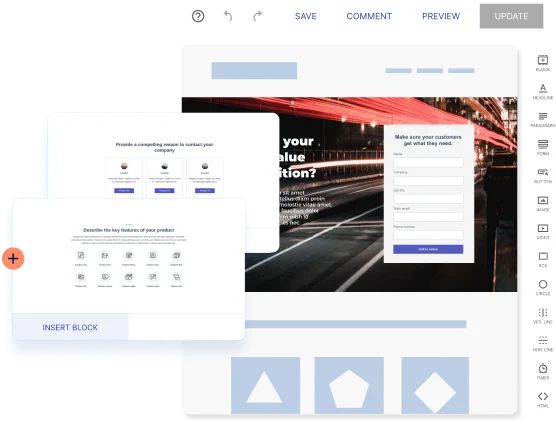
The digital recruitment landscape is currently facing a significant efficiency crisis characterized by rising acquisition costs and diminishing returns on advertising spend. Organizations are frequently observing a trend where they invest upwards of $5.00 per click to drive traffic to job postings, only to witness prospective candidates abandon the process before submitting an application. This phenomenon, often referred to as "candidate drop-off," is rarely a result of the job offer itself or the creative quality of the advertisement. Instead, it is a direct consequence of the post-click experience. When paid traffic is directed toward generic corporate career sites—which are often cluttered with complex navigation, dozens of unrelated listings, and no clear conversion path—candidates become overwhelmed and exit the site. To combat this, industry leaders are increasingly adopting recruitment landing pages: standalone, high-focus web pages designed with the singular objective of converting visitors into applicants.
The Evolution of Digital Recruitment Strategy
The methodology of talent acquisition has undergone a dramatic transformation over the last two decades. In the early 2000s, recruitment was primarily a function of job boards like Monster and CareerBuilder, where quantity of listings was the primary metric. By the 2010s, the focus shifted toward the corporate career portal, integrated into a company’s main website. However, as digital advertising costs on platforms like LinkedIn, Google, and Meta have surged, the traditional career portal has proven too "leaky" for paid traffic.
The current era, beginning around 2020, has seen the rise of the specialized recruitment landing page. This evolution mirrors the trajectory of B2B and B2C digital marketing, where dedicated landing pages are used to maximize the ROI of every paid visitor. For recruiters, this means stripping away the distractions of the broader corporate brand to focus exclusively on the specific value proposition of a single role or a specific hiring campaign.
Data-Driven Analysis of Candidate Abandonment
Research into candidate behavior suggests that the window of opportunity to capture interest is exceptionally narrow. According to industry benchmarks from the Society for Human Resource Management (SHRM) and various recruitment marketing platforms, nearly 60% of job seekers quit mid-application because the process is too long or complex. Furthermore, for every additional field added to a lead generation form, conversion rates typically drop by 5% to 10%.
The financial implications are stark. If a company spends $1,000 on a PPC campaign at $5.00 per click, they receive 200 visitors. On a generic career site with a 2% conversion rate, they gain 4 applicants at a cost of $250 each. Conversely, a high-performing recruitment landing page with a 10% conversion rate yields 20 applicants at a cost of $50 per applicant. This 80% reduction in acquisition cost highlights why landing page optimization is no longer optional for high-growth organizations.
Core Principles of High-Converting Recruitment Pages
To bridge the gap between an ad click and a completed application, several technical and psychological principles must be applied to the landing page architecture.
Message Match and Headline Alignment
The psychological "bridge" between an advertisement and a landing page is known as message match. If a candidate clicks an ad promising a "Remote Senior Developer" position with a specific salary range, the landing page headline must immediately mirror that promise. Discrepancies in job titles, locations, or benefits create cognitive dissonance, leading the candidate to believe they have landed on the wrong page or that the offer was misleading.
The "Above the Fold" Mandate
In digital journalism and marketing, the most critical information must appear "above the fold"—the area of the screen visible without scrolling. For recruitment, this section should include the job title, three to four primary benefits (such as flexible hours, health insurance, or signing bonuses), a visible trust signal (company logo or industry rating), and a prominent "Apply Now" Call to Action (CTA).
Minimizing Form Friction
Friction is the enemy of conversion. Modern recruitment landing pages prioritize "short-form" entry, often requiring only a name, email, phone number, and a resume upload. Advanced strategies include two-step forms, where the candidate’s contact information is captured first, ensuring that even if they do not finish the full application, the recruitment team has a lead to follow up with later.
Social Proof and Credibility
In an era of "ghosting" and fraudulent job postings, candidates seek authenticity. High-performing pages integrate social proof in the form of employee testimonials, glassdoor ratings, or "Great Place to Work" certifications. Utilizing real photography of actual employees rather than generic stock imagery has been shown to increase trust and engagement significantly.
Technical Optimization for Mobile Users
With over 70% of job seekers now using mobile devices to browse opportunities, page speed is a critical ranking and conversion factor. A delay of just one second in mobile load time can result in a 7% reduction in conversions. Effective recruitment pages utilize compressed imagery, Content Delivery Networks (CDNs), and minimal script execution to ensure load times remain under three seconds.
Case Studies: Industry Leaders in Recruitment Conversion
The gig economy and high-volume hiring sectors have perfected the recruitment landing page. Analyzing the strategies of Uber, Lyft, and DoorDash provides a blueprint for other industries.
1. Uber: The Driver Onboarding Model
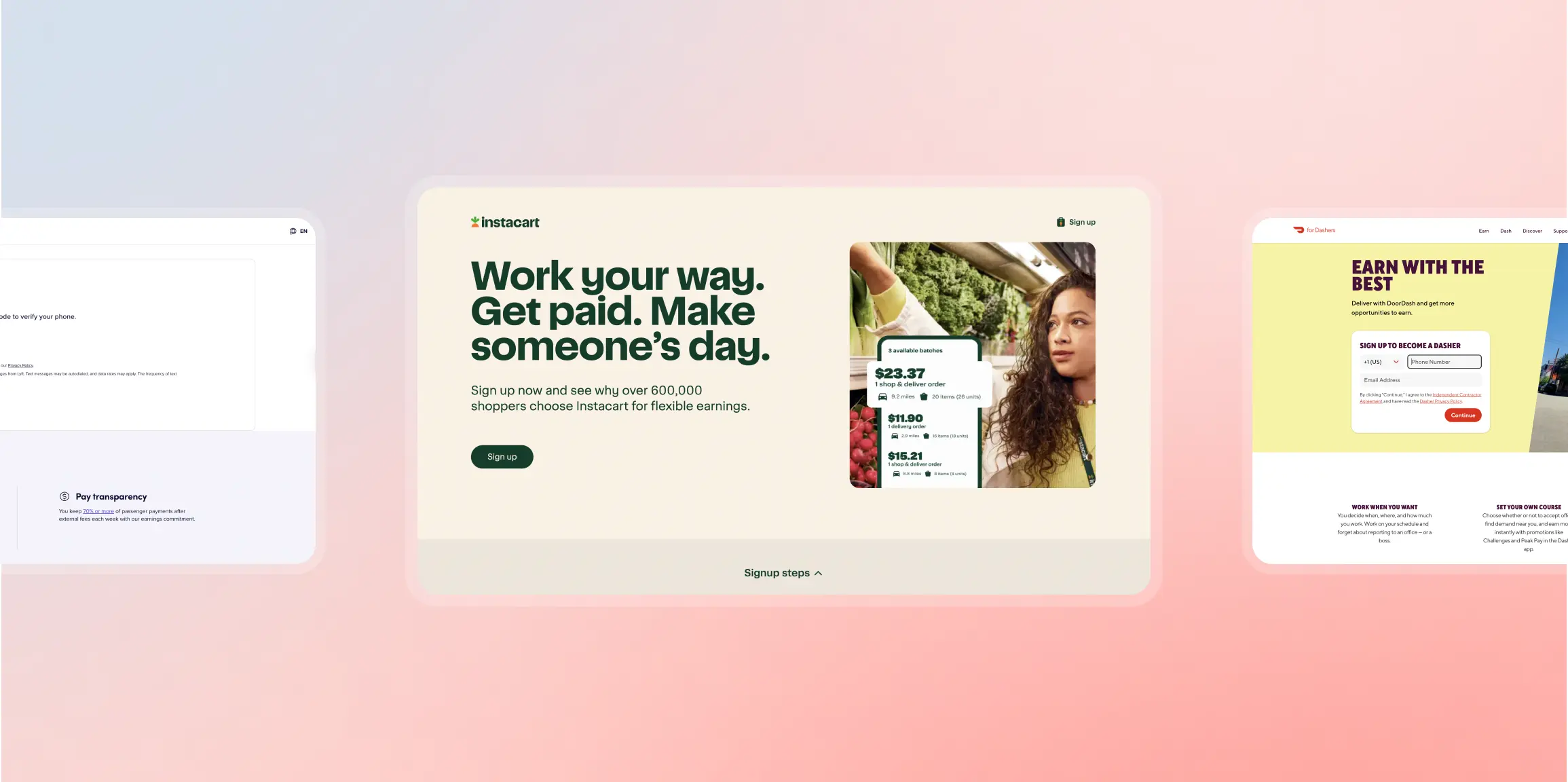
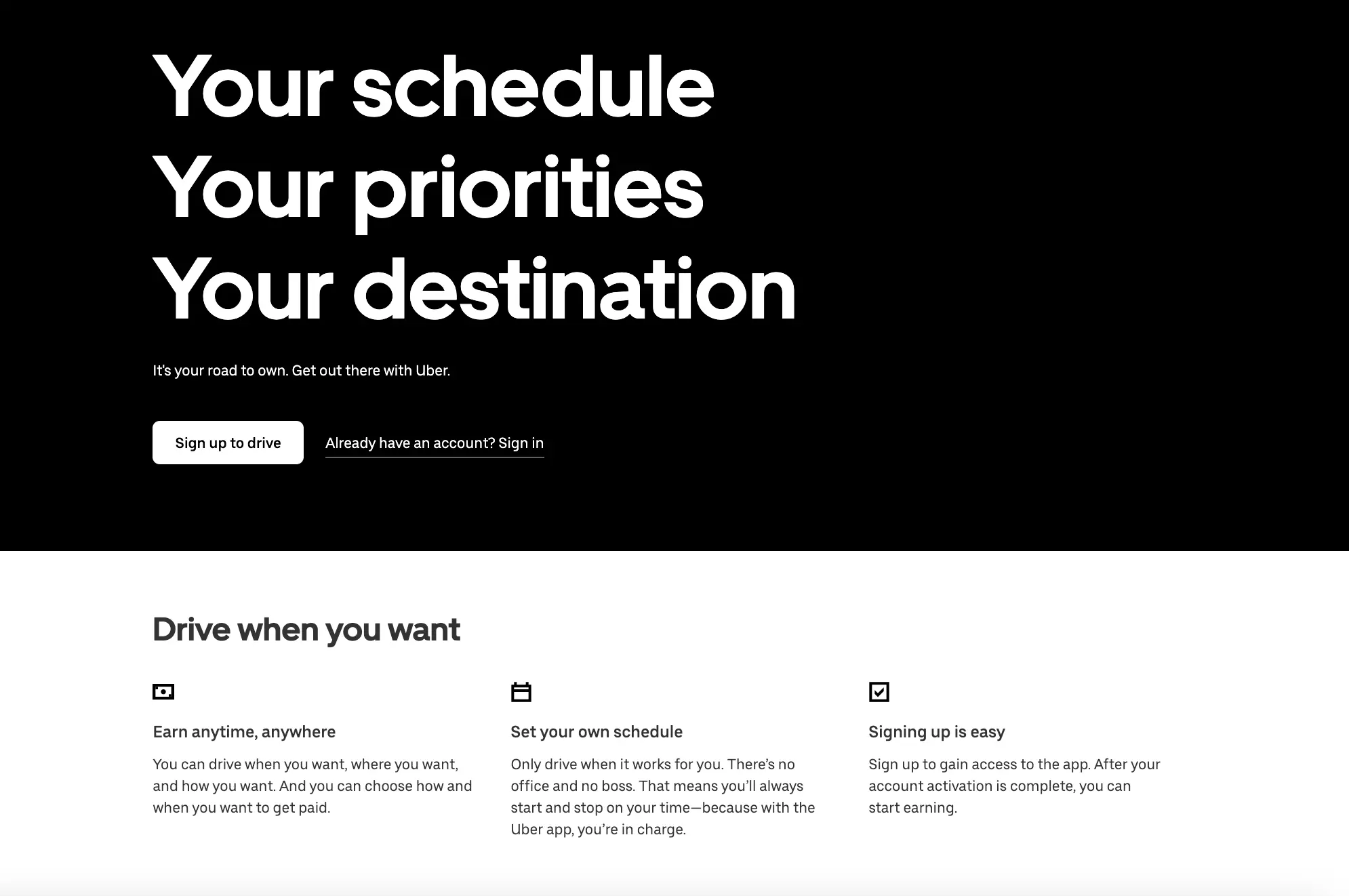
Uber’s recruitment pages for drivers and delivery partners are notable for their radical simplicity. They utilize a "distraction-free" environment where the main navigation menu is removed, preventing users from clicking away to other parts of the Uber site. The focus is entirely on the "Sign Up to Drive" form. Uber also leverages geo-targeting to show local earning potential, which serves as a powerful localized incentive.
2. Lyft: Emphasizing Flexibility and Earnings
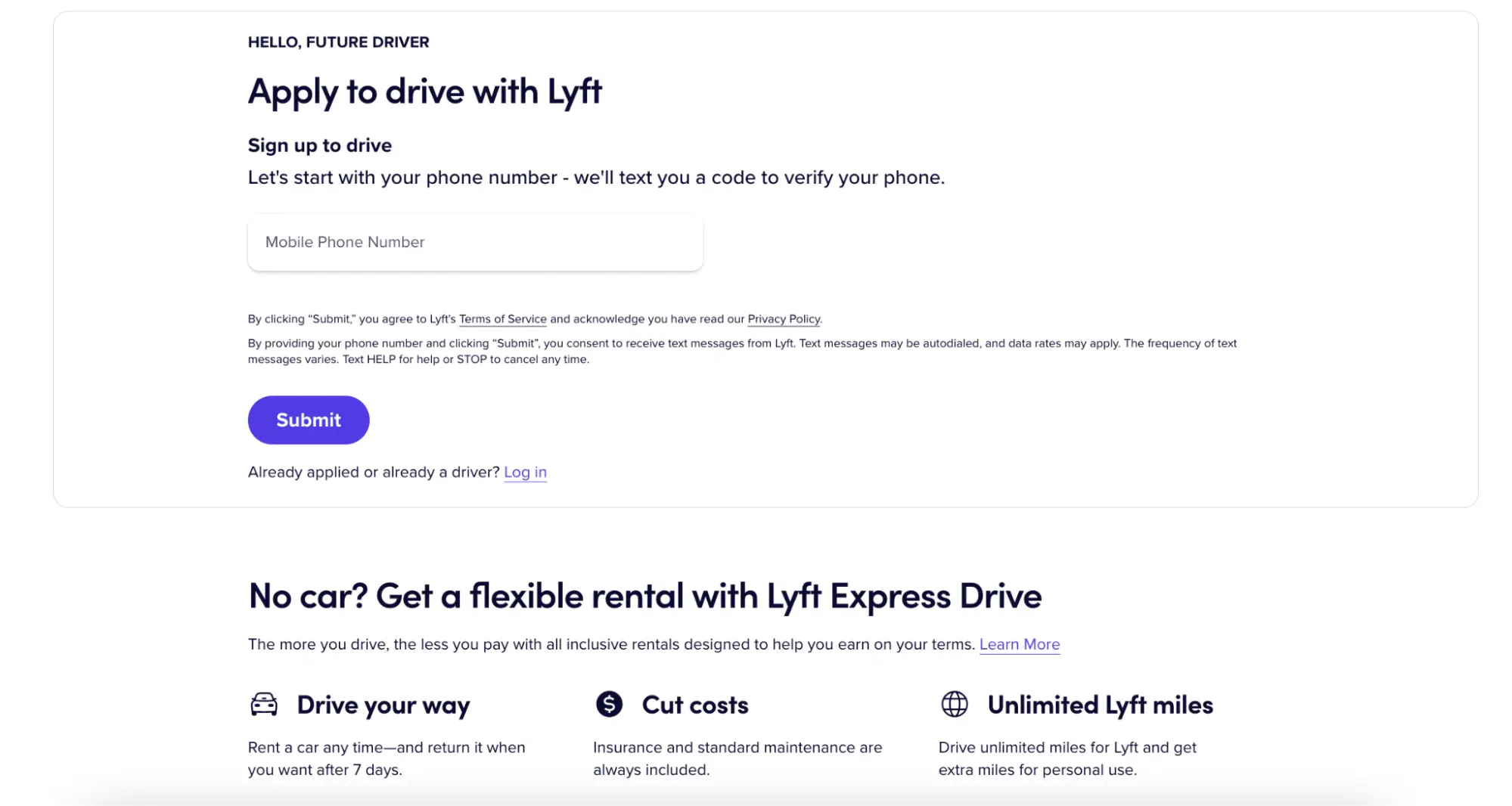
Lyft’s landing pages often feature an "Earnings Calculator" or a prominent display of current driver bonuses. By addressing the candidate’s primary concern—income—immediately, they reduce the time spent searching for information. Their mobile-first design ensures that the application process feels as intuitive as using the Lyft app itself.
3. DoorDash: Streamlined Dashers Signup
DoorDash utilizes high-contrast CTA buttons and a "What to Expect" section that outlines the onboarding process in three simple steps. This transparency reduces the anxiety associated with a new job application and sets clear expectations for the candidate, leading to higher completion rates.

4. Instacart: Visual Clarity and Trust
Instacart’s recruitment pages focus on the visual aspect of the role, showing "shoppers" in action. They effectively use white space to highlight the benefits of the role, ensuring that the reader is not overwhelmed by blocks of text.
The Role of A/B Testing and Artificial Intelligence
The final stage of recruitment landing page maturity is the implementation of continuous experimentation. A/B testing—the process of comparing two versions of a page to see which performs better—allows recruiters to make data-backed decisions rather than relying on intuition.
Key elements for testing include:
- Headlines: Testing "Work from Home" vs. "Flexible Remote Roles."
- CTAs: Comparing "Apply Now" with "Start Your Journey."
- Media: Evaluating the impact of a 30-second culture video versus a static hero image.
- Form Length: Testing whether a 3-field form yields better quality candidates than a 5-field form.
Recent advancements in AI-powered testing, such as those offered by platforms like Instapage, allow for "Multi-Armed Bandit" testing. This technology automatically shifts traffic toward the winning variation in real-time, maximizing conversions even while the test is still running. This level of automation is becoming essential for companies managing large-scale hiring campaigns across multiple regions.

Broader Implications for the Labor Market
The shift toward specialized recruitment landing pages represents a broader move toward "Recruitment Marketing," where the HR department adopts the tools and mindsets of the marketing department. As competition for top-tier talent remains fierce, the "Candidate Experience" (CX) is becoming a primary differentiator for employer branding.
Organizations that fail to optimize their post-click experience are essentially subsidizing their competitors’ efforts by driving up the cost of advertising for everyone while failing to secure the talent themselves. Conversely, those who master the art of the recruitment landing page can expect not only lower costs per applicant but also a higher volume of qualified leads and a more streamlined path to filling critical vacancies.
In conclusion, the recruitment landing page is the most effective tool currently available to combat the inefficiencies of modern digital hiring. By aligning messaging, reducing friction, and leveraging data-driven optimization, companies can transform their careers pages from static repositories of information into dynamic engines of organizational growth. The transition from generic career sites to focused, high-conversion landing pages is no longer a luxury for the tech elite; it is a fundamental requirement for any business looking to compete in the modern talent economy.








