
 rifanmuazin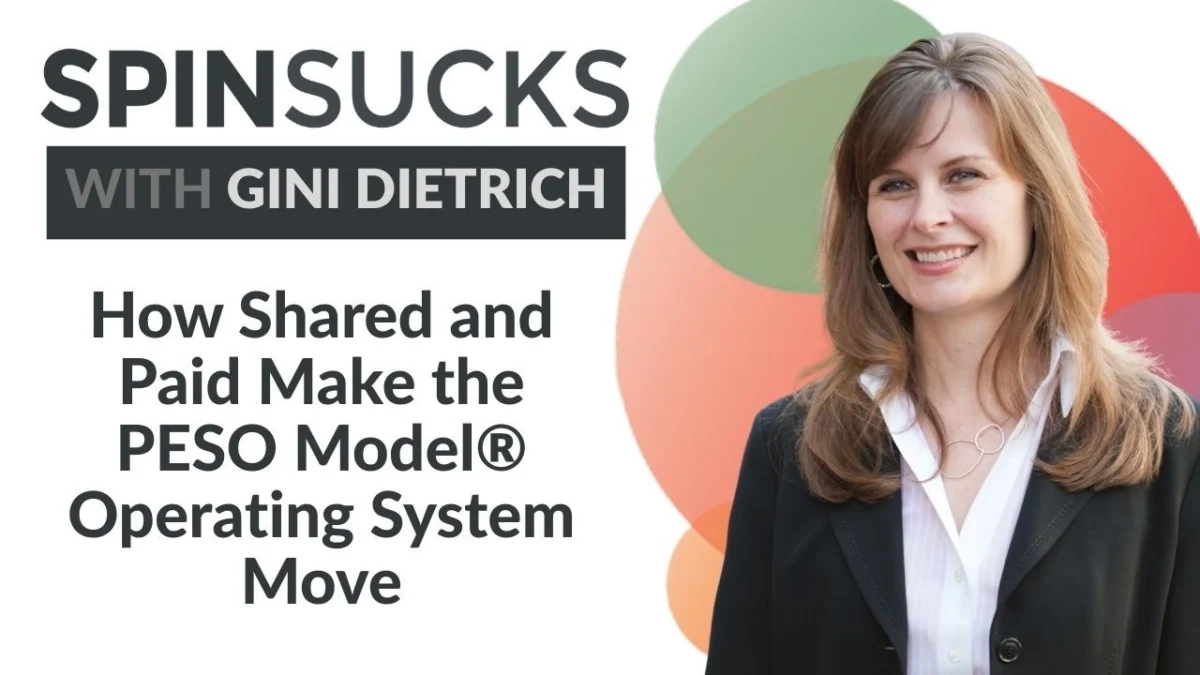
The evolution of digital communication has necessitated a fundamental shift in how organizations approach media distribution and brand authority, moving away from siloed tactics toward an integrated "operating system" known as the PESO Model. As attention becomes increasingly fragmented across what researchers identify as 12 distinct media realities, the roles of Shared and Paid media have transitioned from optional add-ons to essential layers of distribution and acceleration. According to recent updates to the PESO Model Certification®, these two components must function as a feedback loop that identifies market signals and scales them to ensure brand consistency in an era increasingly dominated by artificial intelligence and peer-to-peer communities.
The Paradigm Shift in Media Consumption and Brand Discovery
The traditional marketing funnel has been largely superseded by a distributed ecosystem where information is consumed in fragments. Consumers and B2B decision-makers no longer rely solely on primary brand websites or traditional news outlets. Instead, they gather intelligence through a complex web of creator recaps, private community threads, Slack channels, and AI-generated summaries.
Data from Axios indicates that the modern media landscape has fractured into a dozen different "realities," ranging from legacy news consumers to "lurkers" in niche digital forums. This fragmentation means that a significant portion of a brand’s target audience may form a definitive opinion based on a forwarded newsletter, a single social media screenshot, or an AI assistant’s synthesis of available online data without ever visiting the brand’s owned properties.
In this environment, the PESO Model—comprising Paid, Earned, Shared, and Owned media—serves as a framework to ensure that "proof-backed authority" travels to where the audience resides. The latest industry analysis suggests that while Owned and Earned media create the foundation of authority and credibility, Shared and Paid media are the critical mechanisms that move that authority through networks that influence actual decision-making.
Chronology of the PESO Model Evolution
The PESO Model was originally conceptualized by Gini Dietrich in 2014 as a way to help public relations professionals move beyond traditional media relations and embrace the digital transition.
- 2014–2018: The model focused on the integration of four media types to prove the ROI of PR. Shared media was largely synonymous with organic social media management.
- 2019–2022: The rise of "Dark Social" and private communities (Slack, Discord) shifted the definition of Shared media. Organizations began to realize that "posting" was not the same as "distributing."
- 2023–Present: The emergence of Generative AI and Large Language Models (LLMs) changed how information is surfaced. AI systems now prioritize "corroborated" information—signals that appear consistently across multiple media layers. This led to the 2024 rebuilding of the PESO Model Certification® to emphasize Shared and Paid as systemic distribution layers.
Reimagining Shared Media: Beyond the "Social Media" Misconception
A common pitfall in modern communication strategies is the conflation of Shared media with social media management. In the updated PESO framework, Shared media is defined as any space where content is distributed, discussed, forwarded, and validated by third parties. This includes not only LinkedIn and X (formerly Twitter) but also subreddits, niche industry forums, and private Slack groups.
The primary objective of Shared media is no longer "engagement" in the form of likes or comments, but "movement." Effective Shared media strategies focus on how "proof" travels. This proof can take the form of a specific point of view, a proprietary methodology, or a result of earned validation.
Industry experts argue that Shared media functions as a "signal detector." By monitoring which ideas are repeated by the audience and which objections are raised in community threads, organizations can refine their messaging in real-time. This creates a reinforcing signal that AI discovery engines can recognize. When a brand’s core message is echoed across community discussions and social commentary, it increases the likelihood that AI assistants will present those signals as objective truths.
Strategic Paid Media: From Panic Button to Accelerator
Paid media is frequently the most misused element of the PESO Model, often treated as a "pressure valve" to compensate for soft pipelines or late-quarter revenue gaps. However, in a systemic approach, Paid media is utilized only to accelerate what has already been proven to work in the Owned, Earned, and Shared layers.
Strategic amplification involves four specific functions:
- Audience Precision: Reaching specific segments that are not currently within the organic reach.
- Consistent Frequency: Ensuring that a proven message is seen enough times to build recognition.
- Controlled Messaging: Guaranteeing that the narrative remains intact during the distribution process.
- Testing and Optimization: Using small budgets to validate which "proof points" resonate before committing to larger campaigns.
The danger of reactive Paid media is the "acceleration of confusion." If an organization’s positioning is muddy or its proof is weak, Paid media simply spreads those negative signals faster and to a wider audience. Conversely, when Paid is used to amplify high-performing Shared content or Earned media wins, it creates a compounding effect that builds trust and demand simultaneously.
The Feedback Loop: Shared and Paid as a System
The integration of Shared and Paid media creates a self-sustaining feedback loop. Shared media identifies the "signal"—the content or proof points that the market naturally responds to. Once a signal is identified, Paid media is used to scale that response with speed and consistency.
This systemic approach requires a departure from traditional organizational structures where social media teams (Shared) and advertising teams (Paid) operate independently. Under the PESO Model, these teams must align on a single "distribution plan" that starts with proof and ends with measurable outcomes.
The Sequential Process of the PESO Operating System:
- Identify Proof: Use Owned and Earned media to establish authority.
- Distribute via Shared: Observe which proof points are shared, saved, or repeated in communities.
- Amplify via Paid: Invest budget into the specific assets that showed traction in the Shared phase.
- Refine and Repeat: Use the data from Paid performance to update the Owned content ecosystem.
Industry Implications and the Role of AI
The broader implication of this integrated model is its impact on AI-driven search and brand discovery. As search engines transition into "answer engines," the volume of content becomes less important than the "corroboration" of content. AI models look for patterns across different sources to determine the reliability of information.
If a brand’s proof is only found on its own website (Owned), it lacks external validation. If it is only found in news articles (Earned), it may lack the specific language used by the target audience. Shared media provides the "human" corroboration, while Paid media ensures the signals are prominent enough to be indexed frequently.
Communication professionals are now being tasked with managing "signal strength" rather than content volume. This shift reduces the "chaos" of constant posting and "boosting" without direction. By building decision rules around when to move an asset from Shared to Paid, organizations can create repeatable distribution models that do not depend on viral luck or massive, unguided budgets.
Conclusion: Building a Repeatable Distribution Engine
The transition to the PESO Model Certification® standards reflects a broader professionalization of digital distribution. The goal is to move from "activity"—the endless to-do list of posting and responding—to "cumulative results."
Organizations that successfully implement this model stop asking "What should we post today?" and start asking "What proof are we moving this week, and through which networks?" This strategic clarity allows Shared media to act as a living R&D layer and Paid media to act as a precision tool for growth.
As the digital landscape continues to fragment, the ability to build a distribution system that humans and AI systems alike can recognize and trust will be the primary differentiator between brands that merely exist and those that lead their respective markets. The PESO Model provides the structural framework for this transition, ensuring that even in a world of 12 media realities, a brand’s authority remains consistent and visible.










