

The restaurant industry, perpetually dynamic and increasingly competitive, is witnessing a profound shift in how establishments connect with their clientele. In this evolving environment, SMS marketing has emerged as a high-return, indispensable channel, enabling restaurants to deliver promotions, reservation reminders, and loyalty rewards directly to customers’ mobile devices. This direct-to-consumer approach is not merely supplementary but foundational for businesses aiming to cut through the digital noise, drive immediate engagement, and cultivate lasting customer loyalty.
The Modern Restaurant Landscape: A Battle for Attention
The year 2026, as projected by industry analysts, underscores a future where restaurants face unprecedented competition. The proliferation of dining options, coupled with the ubiquity of food delivery services and a globalized culinary landscape, means consumers have more choices than ever before. Simultaneously, the digital age has reshaped consumer behavior, characterized by shorter attention spans and a preference for instant gratification. In this context, traditional marketing methods often fall short, struggling to capture and retain the fleeting attention of modern diners.
It is precisely this environment that makes SMS marketing so effective. Text messages are delivered instantly, boast exceptionally high open rates—often cited upwards of 98%—and align perfectly with mobile-first behavior. For instance, individuals frequently make spontaneous food decisions while scrolling on their phones or determining their next meal on the go. An offer or reminder delivered directly to their SMS inbox can intercept these decision-making moments, translating into immediate action, whether it’s an online order, a reservation, or an in-person visit. This direct, immediate reach provides a significant competitive edge, allowing restaurants to influence customer choices at critical junctures.
Understanding the High-ROI Channel
Text marketing for restaurants is distinguished by its high return on investment (ROI). Unlike broader advertising campaigns that can be costly and yield unpredictable results, SMS targets an opted-in audience, ensuring a receptive recipient base. This pre-qualified audience translates into higher conversion rates for promotions, special offers, and loyalty incentives. By sending tailored messages, restaurants can effectively increase conversions during off-peak hours, fill empty tables, and boost online orders. Crucially, these messages are only sent to customers who have explicitly opted in, ensuring compliance with regulations like the Telephone Consumer Protection Act (TCPA) in the US, which mandates prior express written consent for marketing SMS. This consent-based approach not only mitigates legal risks but also fosters trust and a sense of exclusivity among subscribers.
The strategic deployment of SMS marketing encompasses a range of use cases, each designed to address specific operational and marketing objectives. These include, but are not limited to, event promotions offering early access and rewards, such as a complimentary drink to incentivize attendance, driving both foot traffic and online engagement.
Why SMS Marketing Resonates with Restaurants
The fundamental reason SMS marketing excels for restaurants lies in its intrinsic connection to timing, which directly impacts sales. In the food service industry, customer decisions – what to eat, where to dine, or whether to order online – often occur within minutes. SMS fits this paradigm perfectly, enabling establishments to dispatch offers to customers at the precise moment they are contemplating their next meal. This immediacy significantly boosts sales and fosters a more responsive customer base.
The efficacy of restaurant SMS marketing can be attributed to several key factors:
- Instant Delivery and High Open Rates: Unlike emails that might languish in an inbox for hours, text messages are typically read within minutes of receipt. Industry data consistently shows SMS open rates far exceeding those of email, making it an unparalleled channel for urgent communications.
- Direct Access: SMS bypasses the clutter of social media feeds and email inboxes, delivering messages directly to a customer’s personal device, fostering a more intimate and immediate connection.
- Mobile-First World: With smartphones being the primary device for communication and information access, SMS naturally integrates into daily routines, making it a seamless and convenient communication channel.
- Personalization Potential: Advanced SMS platforms allow for deep segmentation and personalization, enabling restaurants to send highly relevant offers based on past purchases, dining preferences, or special occasions, significantly enhancing engagement.
- Cost-Effectiveness: Compared to traditional advertising or even some digital ad campaigns, SMS marketing can offer a lower cost per engagement, particularly given its high conversion potential.
Strategic SMS Campaign Ideas for Restaurants
The versatility of restaurant SMS marketing allows for a diverse range of campaign ideas, all aimed at supporting core business goals, from enhancing customer feedback to increasing conversions. Below are several highly effective campaign types, complete with sample messages to inspire implementation:
Reservation Reminders and Booking Confirmations
Reducing no-shows and offering flexibility for cancellations are critical for restaurant profitability. An automated confirmation text sent immediately after a booking, followed by a reminder SMS approximately 24 hours prior, keeps customers informed and significantly lowers last-minute cancellations. These messages typically include booking specifics (date, time, guest count) and a direct link to modify or cancel, along with optional arrival notes (parking, directions). This automation dramatically reduces manual administrative tasks, freeing staff from repetitive phone calls and enhancing brand trust by preventing frustrating delays.
Sample SMS: “Hi Sam, your table for four at Olive & Ash is booked for Friday at 7:30 pm. To change it, tap here: [link]. Reply STOP to opt out.”
Limited-Time Promotions and Slow-Hour Offers
These campaigns are instrumental in boosting sales during typically quieter periods. Sending lunch-hour specials, happy-hour promotions, or flash discounts leverages the instant visibility of text messages to drive off-peak traffic. High-converting promotions are characterized by urgency, a single clear offer, and a direct call to action (CTA). Messages should clearly instruct customers on the next step.
Sample SMS: “Flash deal: 20% off all pizzas from 12–3 pm today only. Dine in and show this message, or order online here: [link]. Reply STOP to opt out.”
Timing is paramount; send these messages close to typical decision-making windows, such as 10:30 AM–11:30 AM for lunch offers and 3:00 PM–5:00 PM for dinner plans. Personalization based on customer location or past orders, alongside weather-triggered offers (e.g., drink specials on sunny evenings), further enhances relevance and click-through rates.
VIP Programs and Loyalty Rewards
Cultivating repeat purchases is a cornerstone of restaurant success, and VIP programs or loyalty reward SMS are highly effective. These can include personalized birthday offers, exclusive VIP deals, or early access to new menus for subscribers of an SMS loyalty club. Tiered reward systems (e.g., silver, gold, platinum) can incentivize higher spending and more frequent visits. Referral incentives also reward existing customers for bringing in new patrons, benefiting both parties with discounts. Personalization using customer data such as birthdays, past orders, or visit frequency ensures messages are highly relevant and drive conversions.
Sample SMS: “Happy birthday, Maria! Enjoy a free dessert with any main meal this week at Olive & Ash. Show this message when you visit to redeem. Reply STOP to opt out.”
Feedback and Review Requests
Collecting post-visit feedback and reviews is crucial for improving online reputation and service quality. A concise SMS sent a few hours after a customer’s visit, including a direct link to Google or Yelp, facilitates the review process. High ratings bolster local search rankings and can be leveraged in future marketing campaigns to build trust with new customers. Quick satisfaction surveys embedded within the SMS (e.g., a one-to-five rating or “How was your visit?”) ensure feedback is captured while the experience is still fresh.
Sample SMS: “Thanks for dining with us tonight, Alex. We’d love your quick take. Leave a 30-second review here: [link]. Reply STOP to opt out.”
Online Ordering and Abandoned Cart Reminders
These messages are critical for recovering lost sales and encouraging repeat orders. An abandoned cart recovery SMS, sent one to two hours after items are left in a digital cart, serves as a gentle nudge with a direct link to complete the purchase. This directly addresses the customer’s existing intent to buy. If the first reminder doesn’t convert, a follow-up with a limited-time discount can further incentivize completion. Reorder reminders, based on a customer’s purchase history (e.g., weekly reminders for a regular Friday order), with direct menu links, streamline the ordering process.
Sample SMS: “Still craving BBQ chicken pizza? Your order is waiting. Finish it in two clicks and we’ll start preparing it right away: [Link]. Reply STOP to opt out.”
Event and Seasonal Promotions
Attracting customers during holidays, sports events, or local festivals is made easier with targeted SMS. Restaurants can promote live music nights, launch seasonal menus, or run themed promotions for occasions like Valentine’s Day or Mother’s Day. Limited-time menu items create urgency, encouraging visits before offers expire. For events with limited availability, adding reservation urgency prompts early bookings. Tying offers to local happenings (e.g., “Game day wings deal before the match starts”) and incorporating engaging elements like GIFs can significantly boost message standout and engagement.
Sample SMS: “Game day at The Tap House. Reserve your table now for special offers on wings and pitchers: [link]. Seats are going fast. Reply STOP to opt out.”
Best Practices for Effective Restaurant SMS Marketing
To maximize the efficacy of SMS marketing, restaurants must adhere to a set of best practices that encompass compliance, message crafting, timing, audience segmentation, and automation.
Get Permission and Stay Compliant
Consent is non-negotiable. In the US, the TCPA strictly mandates prior express written consent before sending marketing SMS. Consent can be collected via website signup forms, reservation systems, or in-person sign-ups. Non-compliance can result in substantial fines, ranging from $500 to $1,500 per message, as stipulated by the FCC. Additionally, messages must be sent within designated “quiet hours” (typically 8 AM to 9 PM local time) to avoid disturbing customers. All messages must include clear opt-out instructions, such as “Reply STOP to opt out,” and explicitly state what customers are signing up for.
Keep Messages Short and Clear
The most effective SMS messages are concise, ideally under 160 characters to ensure they are received as a single message and to avoid additional billing segments. The offer should be front-loaded, preceding the brand name, and conclude with a single, clear call to action. Avoiding all caps, excessive exclamation marks, or misleading urgency prevents triggering spam filters, which can reduce delivery rates and erode customer trust. Tools like SMS calculators can help preview message length and estimated costs.
Timing is Key
Strategic timing can determine whether a message is opened or ignored. Lunch offers, for instance, are best sent between 10:30 AM and 11:30 AM, aligning with midday meal planning. Dinner promotions should go out between 3:00 PM and 5:00 PM to influence evening plans. Messages should never be sent during quiet hours (9 PM–8 AM) to respect personal time and prevent opt-outs. Staying attuned to local events, weather patterns, and seasonal changes allows for relevant and timely promotions, such as promoting indoor seating during rain or outdoor dining on warm evenings.
Use a Strong Call to Action (CTA)
Every SMS should guide the recipient toward a single, explicit action. Vague phrases like “visit us soon” should be replaced with direct commands such as “Reserve your table” or “Order now.” CTAs are most effective when placed at the end of the message, after the offer has been presented, ensuring customers understand what they are getting. The subsequent step should be as simple as possible, ideally a one-click link to a pre-filled order or booking page. A/B testing different CTA wordings can reveal which phrases yield the highest conversions.
Segment Your Audience
SMS segmentation is crucial for increasing clicks and conversions by enabling highly personalized messaging. Generic messages lead to low engagement. By grouping customers based on their behavior, dining preferences, and purchase history, restaurants can send tailored communications. For example, repeat customers might receive thank-you offers or early access to new menus, while loyalty members get reminders to redeem points. Location-based promotions are also effective for multi-branch restaurants. This level of personalization significantly enhances message relevance and effectiveness.
Automate Key Customer Messages
Automated SMS workflows are invaluable for scaling engagement and loyalty without manual intervention. These workflows are triggered by specific customer actions or events. Examples include immediate booking confirmations, pre-visit reservation reminders to reduce no-shows, automated birthday rewards to make customers feel valued, abandoned cart reminders to recover sales, and post-visit feedback requests to capture fresh customer experiences. Manual execution of these messages is prone to delays and lost opportunities, making automation a cornerstone of efficient SMS marketing.
Avoid Over-messaging
Over-messaging can quickly lead to subscriber fatigue, where customers begin to ignore or even opt out of messages. If a subscriber’s phone is constantly pinging with promotions, the brand can be perceived as an annoyance rather than a valuable source of information. This leads to decreased engagement, lower conversion rates, and higher opt-out rates. A judicious frequency, such as two to four promotional SMS per month, is generally recommended to maintain top-of-mind awareness without overwhelming subscribers.
Real-World Applications and Examples
Examining successful restaurant SMS marketing examples provides valuable inspiration for crafting effective campaigns. These demonstrate how reservation reminders, limited-time promotions, and loyalty messages can be implemented to boost engagement and revenue.
Reservation Reminder Example
Upon a customer booking a reservation, an automated confirmation is sent immediately. A follow-up reminder SMS a day prior, detailing the date, time, and guest count, along with a link to modify or cancel, significantly reduces no-shows and builds trust through flexibility.
Sample SMS: “Reservation reminder: Your table for two at Cafe Lumen is tomorrow at 7pm. Tap to confirm, change, or cancel: [link]. Reply STOP to opt out.”
Limited-Time Promotion Example
An effective limited-time promotion features a single offer, a clear deadline, and a compelling CTA. Phrases like “Tonight only” or “Only $9.99 before 9 PM” create urgency, driving immediate conversions.
Sample SMS: “Tonight only: Get any large pizza for $9.99 when you order by 9 PM. Tap to order: [link]. Reply STOP to opt out.”
Brands like Papa John’s have successfully used this model, starting with a deadline (e.g., “Saturday night special”), followed by a clear discount and a direct ordering link, demonstrating its effectiveness in driving quick sales.
Loyalty Example
Restaurant loyalty SMS campaigns are designed to foster repeat visits through personalization, such as incorporating customer names, birthdays, or milestone rewards. Reminding customers of their loyalty points or offering exclusive discounts for program members enhances retention.
Sample SMS: “You’re 15 stars from a free drink, Jordan. Order ahead today and get there faster: [link] Reply STOP to opt out.”
Starbucks Rewards exemplifies this, offering personalized deals with clear redemption instructions and deadlines, driving members back to stores.
Leveraging Platforms for High-Converting SMS Campaigns
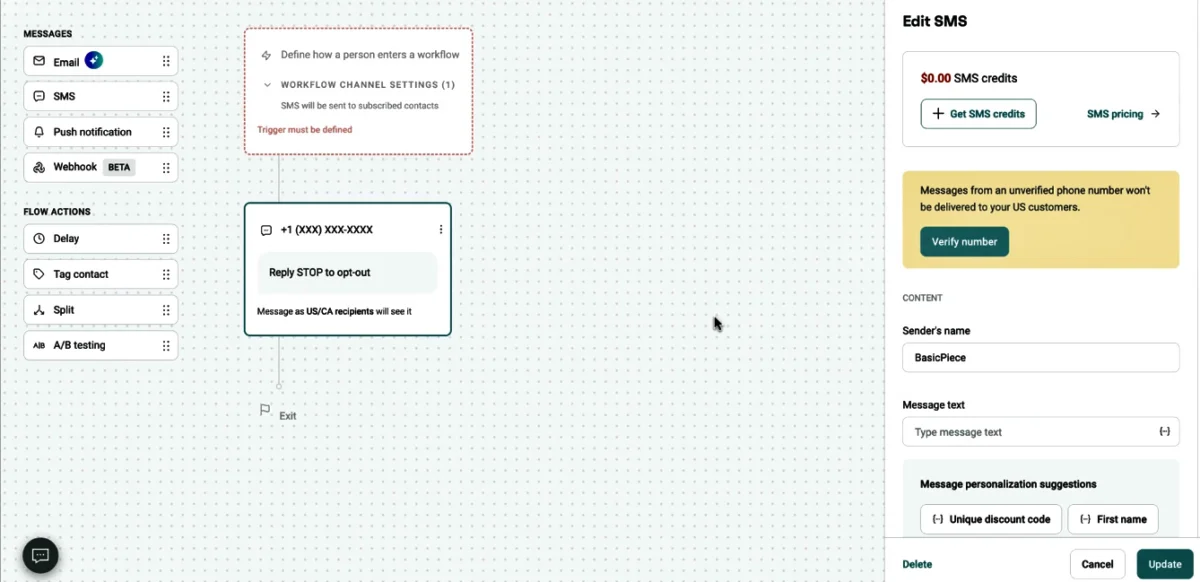
Platforms like Omnisend empower restaurants to create high-converting SMS campaigns through intuitive automation workflows. These platforms facilitate the automation of critical messages such as reservation reminders, promotional offers, abandoned cart recovery, and feedback requests. Users can define triggers and edit messages within a visual builder, streamlining the entire process. Understanding SMS marketing pricing structures is also essential for budgeting and maximizing ROI.
Conclusion: The Indispensable Role of SMS in Restaurant Success
SMS marketing is no longer a peripheral strategy but a high-ROI marketing channel that allows restaurants to connect with customers instantly and directly on their mobile phones. In an era defined by fierce competition and fleeting attention spans, this direct channel significantly improves engagement, open rates, click-throughs, and ultimately, conversions.
From promoting limited-time offers and reducing no-shows with timely reservation reminders to fostering repeat visits through engaging loyalty rewards and gathering invaluable customer feedback via review requests, restaurant text messaging offers a comprehensive toolkit for growth. The ability to send targeted, personalized messages at opportune moments is a powerful differentiator.
Restaurants should strategically integrate SMS into their marketing mix, starting with a few focused campaigns and meticulously measuring the results. Experimentation with different offers, messaging styles, calls to action, and personalization based on customer behavior is crucial for refinement. Critically, automating workflows for reservation reminders, abandoned cart recovery, and feedback requests not only enhances operational efficiency but also ensures consistent, timely communication without manual overhead. Over time, a well-executed restaurant text marketing strategy will prove to be a pivotal driver of increased repeat purchases, stronger customer loyalty, and sustainable revenue growth.








