The digital marketplace is a dynamic and often competitive arena, with businesses constantly seeking the most effective tools to establish and grow their online presence. Two prominent contenders in this space are Shopify and ThriveCart, both offering solutions to facilitate online sales. However, a crucial distinction exists between them: Shopify is a comprehensive e-commerce platform, while ThriveCart functions primarily as a specialized checkout and funnel optimization tool. Understanding this fundamental difference is paramount before committing financial resources to either. This in-depth analysis compares both platforms across key areas, offering a nuanced perspective to guide business owners toward the most suitable choice for their unique operational models.
The Core Distinction: Platform vs. Tool
At its heart, Shopify presents itself as an all-encompassing e-commerce operating system. It provides merchants with a fully hosted storefront, robust product catalog management, inventory tracking, integrated shipping solutions, and a seamless checkout experience. In essence, Shopify aims to be the central nervous system for an online retail business.
ThriveCart, on the other hand, is designed to enhance specific stages of the sales funnel. It excels as a powerful checkout and funnel optimization tool, intended to be integrated with existing online infrastructure. Rather than building a storefront from scratch, ThriveCart focuses on maximizing conversion rates and average order value at the point of sale. This means users typically need to have their own website or sales page from which they direct traffic to ThriveCart’s optimized checkout pages.
A Comparative Analysis of Key Features and Pricing
To provide a clear picture, a detailed comparison of critical features and pricing structures is essential. All pricing figures presented have been verified against current public rates from each vendor, ensuring accuracy and relevance for today’s market.
| Category | Shopify | ThriveCart |
|---|---|---|
| Core Functionality | Full hosted e-commerce platform | Checkout, cart, and funnel tool |
| Entry-Level Pricing | $39/month ($29/month billed annually) | $495 one-time (no recurring fee for Standard) |
| Higher Tiers | Grow $105/month, Advanced $399/month, Plus from $2,300/month | Pro+ $295/year, Ultimate Bundle $985 one-time |
| Platform Transaction Fees | None with Shopify Payments; 0.6% to 2% with third-party gateways | None on any plan |
| Card Processing Fees | 2.9% + 30c (Basic) to 2.5% + 30c (Advanced) | Your processor’s own rate (Stripe, PayPal, Authorize.net) |
| Storefront & Themes | Yes, extensive free and paid themes, full site builder | No storefront, checkout pages only |
| Inventory Management | Yes, native, multi-location support | Minimal, not designed for complex inventory |
| Order Bumps & Upsells | Via apps (additional monthly costs) | Native, unlimited |
| Affiliate Program | Via third-party apps | Native affiliate center (Pro+ tier) |
| Course Selling | Via apps | Built-in (Learn / Learn+) |
| SEO & Blogging | Yes, native blogging and SEO tools | No inherent SEO or blogging features |
| Free Trial | Yes, plus a $1/month promo for the first three months | No free trial, money-back guarantee only |
| Best For | Physical products, growing brands, multichannel sellers | Digital products, courses, coaching, one-product funnels |
Pricing: The Initial Allure of ThriveCart
ThriveCart’s marketing often emphasizes its one-time payment model, presenting a stark contrast to Shopify’s recurring monthly fees. On the surface, this appears to offer significant long-term savings. Shopify’s Basic plan, when billed annually, costs approximately $348 per year. In contrast, ThriveCart Standard is a one-time payment of $495. This means ThriveCart would break even against Shopify Basic in roughly 17 months, offering pure profit thereafter.
However, the financial calculus becomes more nuanced when considering additional features. For instance, if an affiliate program is a crucial component of a business model, the ThriveCart Pro+ tier becomes necessary. This tier costs $295 annually. In this scenario, over three years, the total cost for ThriveCart would be approximately $1,085 ($495 initial + $295 x 2 years), which is slightly higher than Shopify Basic’s estimated $1,044 over the same period. The "pay once and own forever" narrative primarily holds true for users who remain solely on the Standard plan.
A significant advantage for Shopify is its risk-free entry. New users can benefit from a free trial, followed by a promotional rate of $1 per month for the first three months. This allows businesses to test the platform extensively with minimal financial outlay, a feature ThriveCart, which relies on a money-back guarantee, does not offer.
A critical detail in Shopify’s pricing is the platform transaction fee. While Shopify Payments eliminates this surcharge, using third-party payment gateways incurs an additional fee ranging from 0.6% to 2%, depending on the Shopify plan. ThriveCart, conversely, charges zero transaction fees on all its plans, allowing users to leverage their chosen payment processor’s standard rates and maintain greater control over their revenue streams.
The E-commerce Landscape: Shopify’s Dominance
When the objective is to establish a comprehensive online store, particularly one dealing with physical products, Shopify emerges as the more suitable choice. Its strength lies in its holistic approach, providing an integrated ecosystem for managing virtually every aspect of an e-commerce operation.
Shopify offers a fully customizable storefront, complete with product pages, collection management, and a robust site builder. Its native inventory management system supports multiple locations, and higher-tier plans include advanced shipping tools with real-time carrier-calculated rates. For businesses operating both online and in physical retail, Shopify’s Point of Sale (POS) system offers a seamless integration. Furthermore, its ability to syndicate product listings to major marketplaces like Amazon, Etsy, Instagram, TikTok, and Google provides unparalleled multichannel selling capabilities.
The platform’s native features also extend to essential e-commerce functions such as abandoned cart recovery, fraud analysis, tax calculation, gift card generation, and customer account management. While many of these functionalities might require separate app subscriptions on other platforms, Shopify integrates them natively, simplifying operations and reducing the need for a multitude of third-party integrations.
The Shopify App Store is a vast marketplace, offering thousands of applications to extend functionality. This extensive ecosystem ensures that almost any business requirement can be met. However, this flexibility often comes at a cost, as many of these apps introduce recurring monthly fees for features like advanced reviews, loyalty programs, or subscription management.
ThriveCart’s Niche: Conversion Optimization
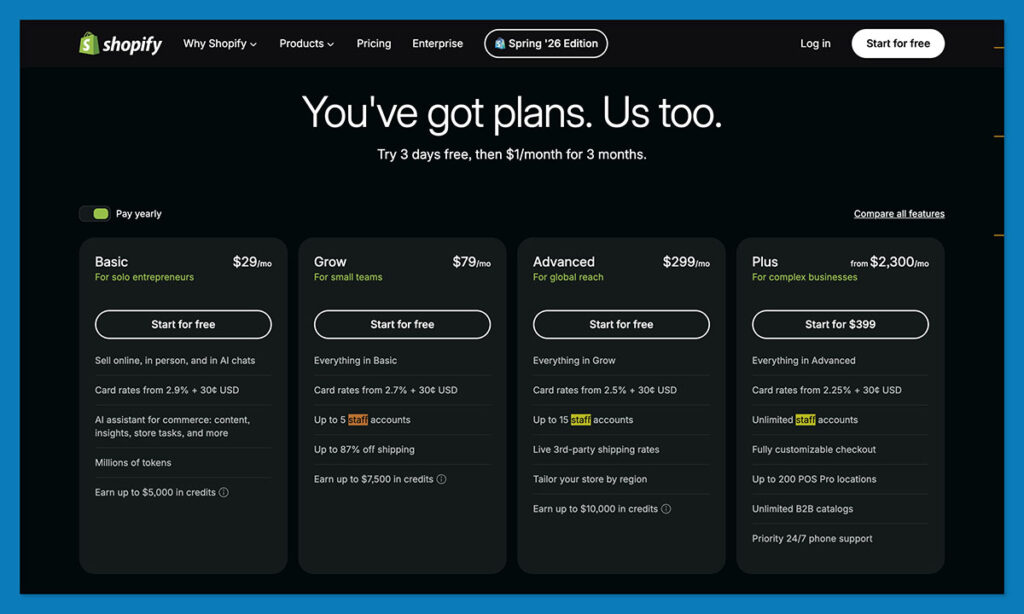
ThriveCart’s value proposition lies in its specialized focus on optimizing the checkout process and maximizing conversion rates. It does not offer a browsable storefront, product catalog, or site-building capabilities. Instead, it provides highly customizable and conversion-focused checkout pages designed to be embedded on a sales page or linked directly from marketing materials.
Within its designated scope, ThriveCart excels. It natively supports a wide array of pricing models, including one-time payments, recurring subscriptions, split payments, and "pay-what-you-want" options, all within the same product offering. While it can accommodate physical products by allowing the input of shipping weights and dimensions and integrating with fulfillment providers, it is not designed for managing a complex inventory of physical goods. The platform’s strength lies in its ability to integrate with other essential business tools, including popular course platforms (Kajabi, Teachable, Thinkific), CRM systems (ActiveCampaign, ConvertKit, Mailchimp, Drip), and through Zapier for broader automation.
The Checkout Battleground: ThriveCart’s Native Advantage
When it comes to the critical juncture of the checkout process, ThriveCart demonstrates a clear advantage in native functionality. Features such as order bumps (offering an additional product at checkout), one-click post-purchase upsells and downsells, and A/B split testing are built directly into ThriveCart. These tools are instrumental in increasing the average order value and maximizing revenue from each customer.
On Shopify, these same functionalities typically require the integration of third-party applications, which often come with additional monthly subscription costs ranging from $10 to $100 or more. While Shopify’s native checkout is fast, reliable, and benefits from features like Shop Pay for one-tap checkouts, it lacks the built-in conversion optimization tools that ThriveCart offers as standard. For businesses whose model revolves around driving traffic to a single high-converting offer and maximizing average transaction value, ThriveCart’s native capabilities are a significant draw.
Marketing and Growth: Shopify’s Acquisition Engine
A crucial aspect of any online business is its ability to attract customers. This is where Shopify’s breadth truly shines, providing a robust engine for customer acquisition that ThriveCart cannot replicate.
Shopify offers a native blogging platform, customizable meta titles and descriptions, image alt text, and automatic sitemap generation, all of which contribute to strong Search Engine Optimization (SEO) capabilities. This allows businesses to build organic traffic over time. Furthermore, Shopify’s product syndication to AI-driven shopping surfaces is becoming an increasingly important channel for customer discovery.
ThriveCart, by its nature, does not offer SEO or blogging features, as its focus is on the conversion of existing traffic. Its checkout pages are not intended to be indexed by search engines. Therefore, for businesses relying on organic search as a primary acquisition strategy, ThriveCart cannot be the sole solution.
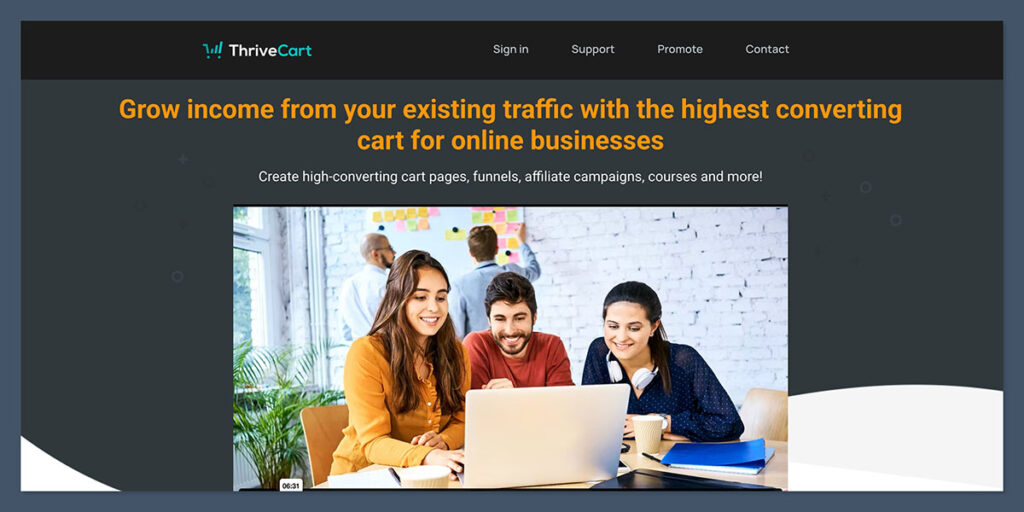
Shopify’s multichannel selling capabilities also provide a significant advantage. By integrating with social media platforms and marketplaces, businesses can expand their reach and tap into diverse customer bases. ThriveCart, lacking a product catalog and storefront, does not engage in multichannel selling.
While ThriveCart integrates with email marketing platforms and offers powerful behavior rules for tagging customers and triggering automations, it does not provide native email marketing tools. Shopify includes Shopify Email for basic campaigns and automations, offering a more integrated approach to customer communication.
Ease of Use: A Tale of Two Focuses
The user experience with both platforms differs significantly, largely due to their distinct core functions.
Shopify’s onboarding process is designed to guide new users through setting up their store. The dashboard features a checklist of essential tasks, making it relatively straightforward to add products, select a theme, and configure payment settings. The site editor, while powerful, uses a section-based approach rather than a freeform drag-and-drop system, which helps maintain design consistency but can limit creative layout control without coding knowledge. The complexity in Shopify often arises from managing a growing number of installed apps, each with its own settings and billing.
ThriveCart, with its narrower scope, offers a faster learning curve for its primary function. Building a checkout page, including adding order bumps and upsells, can be accomplished in under an hour. The interface is intuitive for its intended purpose. However, the challenge with ThriveCart lies in assembling the surrounding infrastructure. Users must integrate it with their own sales pages, email marketing platforms, and content delivery systems. This requires managing multiple tools and troubleshooting potential integration issues, often via platforms like Zapier.
Design and Aesthetics: The Storefront Advantage
Shopify offers a comprehensive design system, boasting a vast library of themes catering to diverse retail niches. Many of these themes are free and sufficiently robust for launching a business, with premium options available as one-time purchases. All themes are responsive and customizable through the platform’s section editor.
ThriveCart’s design focus is solely on its checkout pages. These templates are optimized for conversion, clean, and mobile-friendly. While they can be customized without coding, they are limited to the checkout experience. The overall brand aesthetic and customer-facing design are the responsibility of the user’s external website or sales page.

Affiliate Programs: ThriveCart’s Native Strength
ThriveCart’s Pro+ tier includes a powerful native affiliate center. This feature provides affiliates with their own portal, automatic link tracking, commission calculations that extend to upsells and bumps, and automated payouts via PayPal. It also includes a joint venture platform for revenue sharing. This integrated approach is highly beneficial for creators launching products and leveraging affiliate marketing.
In contrast, Shopify relies on third-party apps for affiliate management. While these apps can be effective, they add to the monthly subscription costs and operate independently of the core checkout. The $295 annual fee for ThriveCart’s Pro+ tier, which includes the affiliate center, is often more cost-effective than the combined cost of Shopify’s platform fee and a comparable affiliate app.
Support and Stability: Shopify’s Established Infrastructure
Shopify provides 24/7 customer support through live chat, with options for escalation to human advisors. Its extensive Help Center, active community forums, and a vast network of experienced partners offer comprehensive support. While Shopify has phased out email support, its overall support infrastructure is a significant advantage.
ThriveCart offers support through a helpdesk and ticket system, supplemented by documentation and a user community. While adequate, it does not operate at the same 24/7 scale as Shopify.
A notable point of consideration regarding ThriveCart is its history of ownership changes. While the platform has stabilized under new management and is actively developed, some long-term users have reported periods of downtime and connectivity issues in the past. This history, while not indicative of current performance, warrants consideration when evaluating a lifetime license, as the platform’s longevity is tied to the company’s stability. Shopify, as a publicly traded entity, offers a higher degree of perceived platform stability.
Verdict: Choosing the Right Tool for the Job
For the vast majority of businesses aiming to establish a comprehensive e-commerce presence, Shopify is the superior choice. It provides an all-in-one solution encompassing storefront, catalog, inventory, shipping, SEO, and multichannel selling, all backed by robust support and a massive partner ecosystem. ThriveCart, while excellent at what it does, does not attempt to fulfill these core e-commerce platform functions.
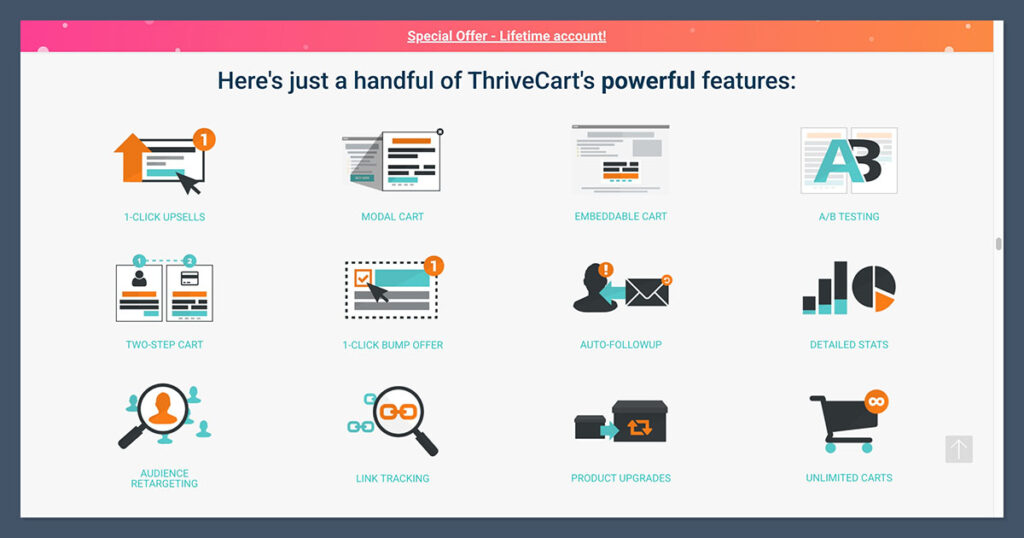
However, ThriveCart presents a compelling option for a specific segment of sellers, particularly those focused on digital products, online courses, and coaching. Its advanced checkout features, built-in course builder (in higher tiers), and native affiliate program offer significant advantages for businesses prioritizing conversion optimization and affiliate-driven sales. The $495 Standard license, with its one-time payment and absence of recurring fees, is particularly attractive for businesses that do not require a full storefront.
Key considerations for ThriveCart users:
- The "lifetime" pricing advantage is most pronounced on the Standard plan. The Pro+ tier, which includes the affiliate center and other advanced features, renews annually at $295.
- ThriveCart does not offer a free trial. Evaluation requires an initial purchase, with reliance on the refund policy.
Recommendation for Uncertainty:
For businesses uncertain about their long-term needs, starting with Shopify’s free trial and its $1 per month promotional period is a prudent approach. This allows for low-cost validation of whether a full storefront is truly necessary. If the analysis reveals that the business model is centered around a single offer, a focused funnel, and an affiliate program, ThriveCart remains a strong option and can be adopted once this need is clearly identified.
Frequently Asked Questions
-
Can ThriveCart completely replace Shopify?
Only if your business model involves selling a limited number of digital products and does not require a browsable storefront, complex inventory management, or SEO capabilities. ThriveCart is a checkout tool, not a full e-commerce platform. -
Can Shopify and ThriveCart be used together?
Yes, many businesses utilize both. A common strategy is to run the primary store on Shopify and leverage ThriveCart for selling high-margin digital products, courses, or specific funnel-driven offers. This requires managing data across both platforms. -
Is ThriveCart’s lifetime deal truly lifetime?
The Standard plan at $495 is a one-time payment. However, the Pro+ tier, which includes advanced features like the affiliate center, renews annually at $295. -
Does ThriveCart charge transaction fees?
No, ThriveCart does not charge any transaction fees on any of its plans. Users pay only their chosen payment processor’s standard rates.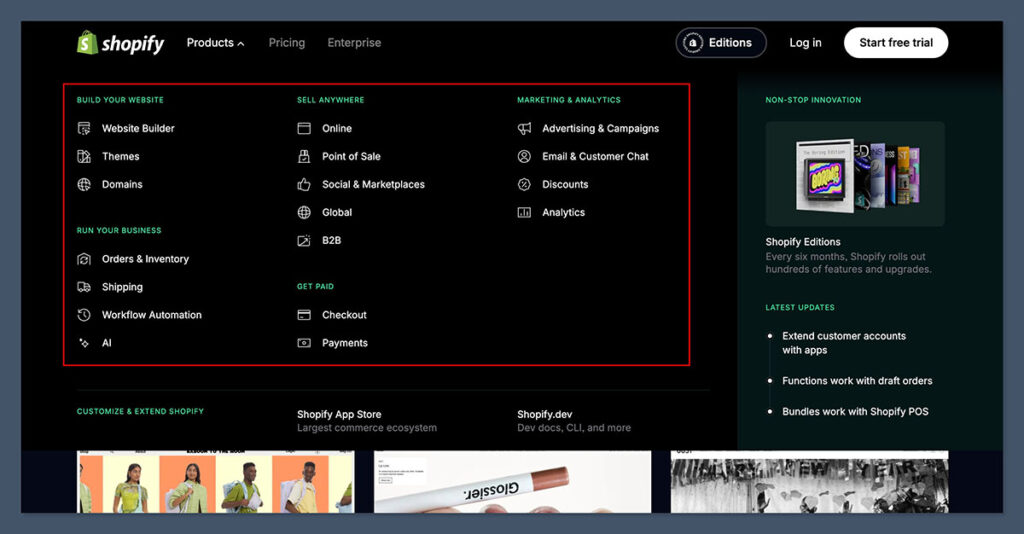
-
Which platform is more cost-effective over three years?
Shopify Basic (annual billing) costs approximately $1,044 over three years. ThriveCart Standard alone is $495. However, if ThriveCart Pro+ is needed for affiliate features, the three-year cost rises to around $1,085, slightly exceeding Shopify Basic. The decision hinges on the necessity of Pro+ features. -
Does ThriveCart offer a free trial?
No, ThriveCart does not offer a free trial. Evaluation is done post-purchase, with reliance on the money-back guarantee. Shopify provides a free trial and a low-cost introductory period. -
Can physical products be sold with ThriveCart?
While ThriveCart allows for inputting shipping details for physical products, it lacks comprehensive inventory management, catalog features, and shipping rate calculations, making it suitable for single-product funnels rather than multi-product stores. -
Which is better for selling online courses?
ThriveCart is often preferred due to its built-in course builder and integrated checkout/affiliate features. However, for core course hosting as the primary business, dedicated course platforms may offer a more specialized experience than either Shopify or ThriveCart.

 Raul Delapena Setiawan
 Ammar Sabilarrohman