Shopify and Booqable, while both prominent in the e-commerce and business management landscape, serve distinctly different primary functions. For businesses that incorporate rental services, the decision between these two platforms, or even how to integrate them, is a critical one. After extensive testing and analysis, a clear distinction emerges: the optimal choice hinges on whether rentals constitute the core of your business or a supplementary offering. This comprehensive comparison delves into their pricing structures, rental-specific features, broader e-commerce capabilities, user-friendliness, and design aesthetics to provide a definitive recommendation, including scenarios where a combined approach might be the most advantageous.
Shopify vs. Booqable: A Quick Verdict
The core difference lies in their foundational purpose. Shopify is a powerhouse for general e-commerce and omnichannel retail, designed to facilitate the sale of products directly to consumers. Booqable, conversely, is purpose-built for the intricacies of equipment and product rentals, with a strong emphasis on date-based bookings and rental management. This fundamental divergence dictates their respective strengths and weaknesses, particularly for businesses navigating the complexities of rental operations.
Quick Comparison: Shopify vs. Booqable
To provide a clear overview, here is a side-by-side comparison of the two platforms:
| Feature | Shopify | Booqable |
|---|---|---|
| Primary Focus | General e-commerce and omnichannel retail | Equipment and product rentals with date-based bookings |
| Rental Features | Requires third-party apps; not native | Built-in rental logic, contracts, deposits |
| Starting Price | $29/month (Basic, annual billing) | $29/month (Start) |
| Higher Tiers | $79, $299/month, Shopify Plus from $2,300/month | $69 and $149/month |
| Free Trial | 3 days | 14 days |
| Inventory Model | SKU stock per location | Time-based availability with rental calendars |
| Checkout | High-converting e-commerce checkout | Rental-specific checkout with deposits |
| POS/In-person | Full retail POS (Lite and Pro) | Mobile rental check-in/check-out workflows |
| App Ecosystem | Over 8,000 third-party apps | Smaller integration list, API on higher tiers |
| Best For | Product-led brands, DTC, omnichannel retail | Rental-first businesses or hybrid via Shopify integration |
Best for Pricing: A Close Contest
At the entry-level, both Shopify and Booqable present an identical starting price point of $29 per month. However, a deeper examination of their pricing models reveals significant differences, particularly as businesses scale.
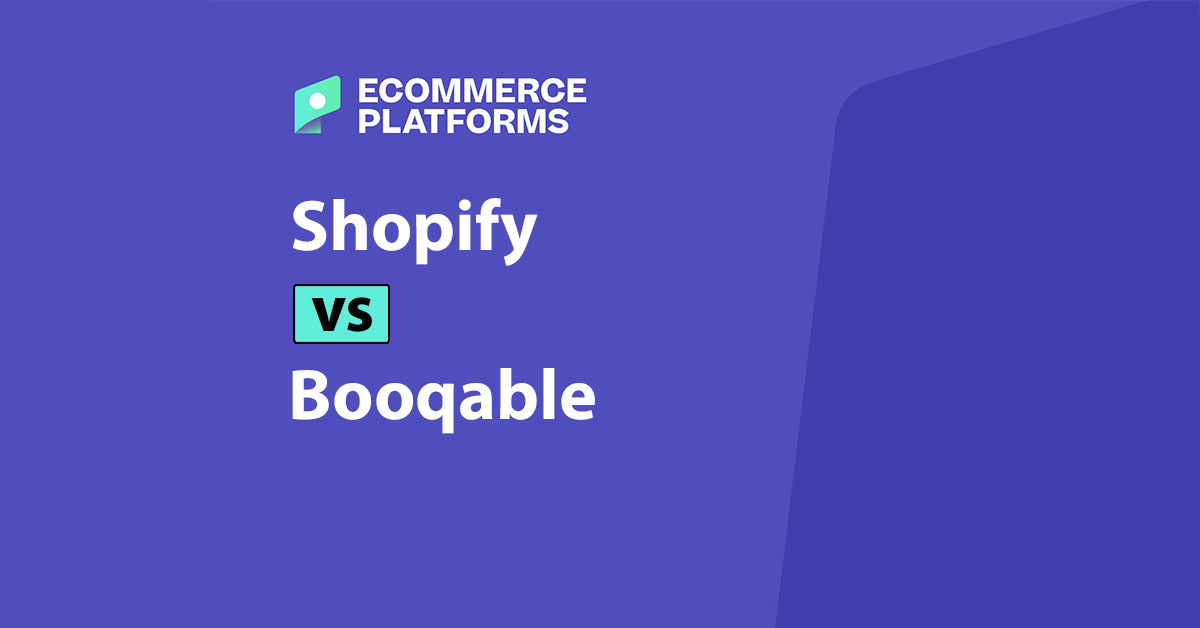
Shopify’s annual billing structure for its core plans in 2026 is as follows:
- Basic: $29/month
- Shopify: $79/month
- Advanced: $299/month
- Shopify Plus: Custom pricing, starting from $2,300/month for high-volume merchants.
Beyond the monthly subscription, Shopify imposes payment processing fees. When using Shopify Payments, these fees begin at 2.9% + $0.30 per transaction for the Basic plan, decreasing to 2.4% + $0.30 for the Advanced plan. If a third-party payment gateway is used, Shopify adds its own transaction fee on top of the gateway’s charges. This tiered fee structure, combined with potential third-party app costs, can lead to rapidly escalating expenses for growing businesses.
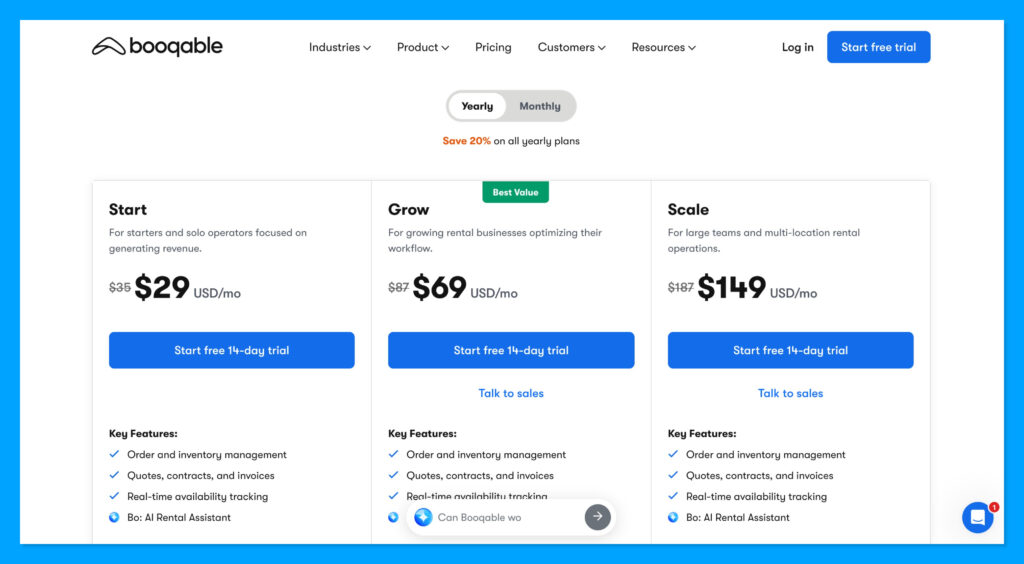
Booqable offers a more straightforward, flat-rate pricing model with three distinct tiers:
- Start: $29/month
- Grow: $69/month
- Business: $149/month
A key differentiator for Booqable is its absence of transaction fees or commission on bookings. Users pay their chosen payment gateway directly. Higher Booqable tiers unlock advanced features such as multi-location support, expanded user access, API integration capabilities, and detailed activity logs, making it a more predictable cost structure for businesses focused on rentals.
In terms of free trials, Booqable offers a more generous 14-day period, allowing ample time for comprehensive testing. Shopify provides a shorter 3-day trial, though it frequently offers promotional introductory rates, such as $1 per month for the first three months, which can be appealing for new ventures. Neither platform requires a credit card to initiate a trial.
For businesses opting for a hybrid setup, combining both Shopify and Booqable, the cumulative monthly subscription costs will increase. A minimum setup would involve Shopify Basic ($29/month) and Booqable Grow ($69/month) to fully leverage the integration, totaling approximately $100 per month before factoring in payment processing fees and any additional app subscriptions.
The Winner for Pricing: While both platforms are competitive at the entry level, Booqable emerges as the more cost-effective solution at scale. Its flat-rate pricing and lack of transaction fees provide greater cost predictability as rental volume increases, a significant advantage over Shopify’s escalating fee structure driven by payment processing and app integrations.
Best for Rental Features: Booqable
This is where the fundamental divergence between the two platforms becomes most pronounced. Shopify’s inventory management is built around Stock Keeping Units (SKUs), quantity counts, and specific locations. It excels at answering "how many do I have in stock?" but struggles with the concept of "is this item booked from Friday to Sunday?". Booqable, conversely, is architected around time-based availability, which is the very essence of rental software.
Rental Inventory and Booking Logic
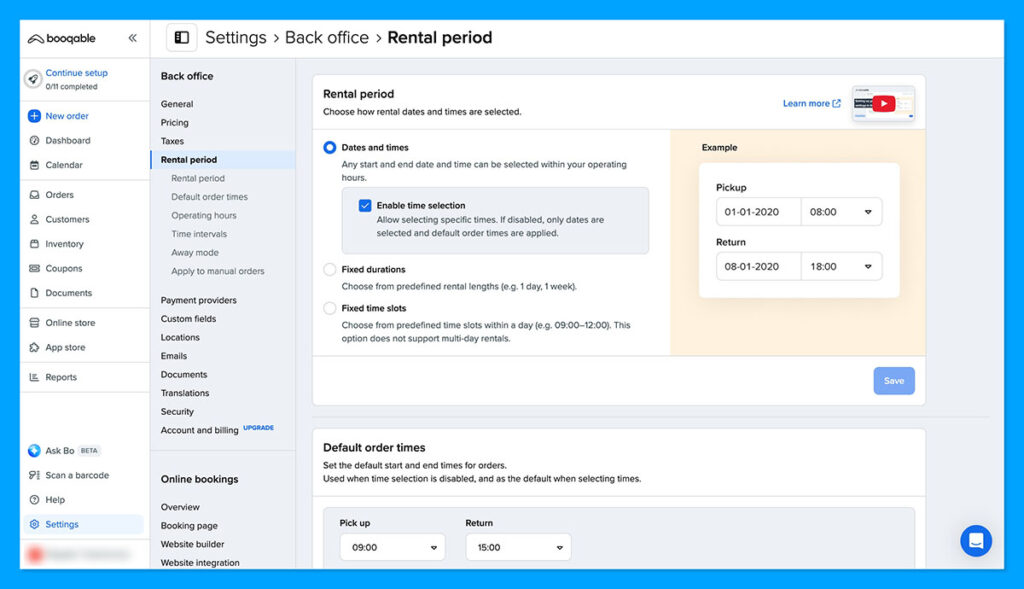
During testing, Booqable demonstrated a robust capability to link each product to specific date and time windows, incorporating real-time availability checks during checkout to prevent double bookings. The platform adeptly manages both individual, trackable items (such as high-value equipment with serial numbers) and bulk inventory (like a large quantity of chairs). Its intelligent handling of bundles ensures that when a bundle is reserved, all its constituent components are automatically blocked out from further rental.
Recent updates to Booqable have further enhanced its rental management features. These include refined time selection for stock creation to improve availability precision, improved handling of bundles within orders, and more sophisticated calendar filtering capabilities.
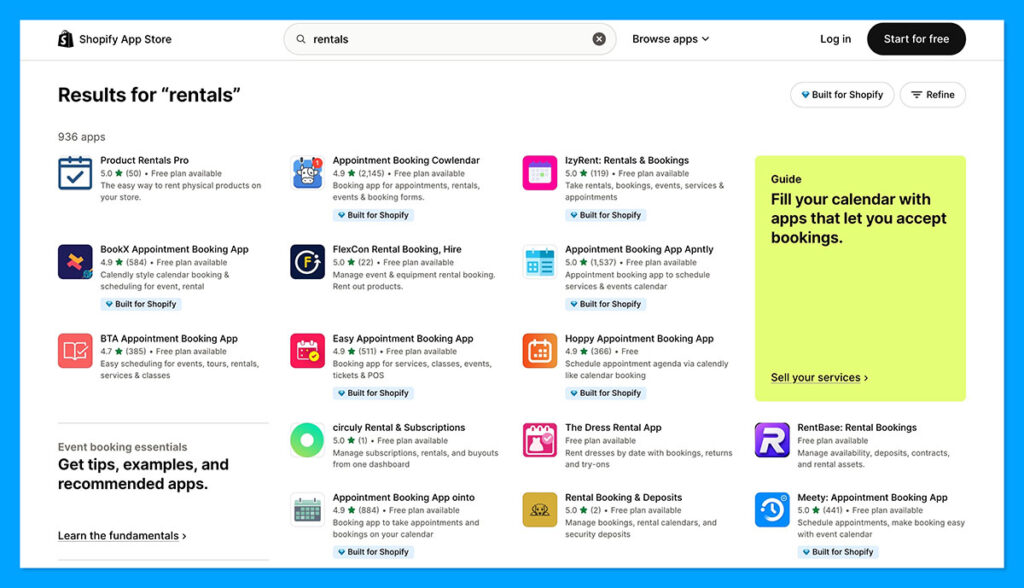
Shopify, in its native form, lacks these specialized rental functionalities. The rental apps available on the Shopify App Store typically overlay simplified rental logic onto Shopify’s existing stock model, often resulting in a less seamless and integrated experience compared to Booqable’s purpose-built solution.
Quotes, Contracts, and Deposits
Booqable seamlessly integrates the quote-to-contract workflow, a standard practice in equipment rental. This includes customer quote requests, internal review and approval processes, contract generation for electronic signatures, and the separate collection of deposits from the final rental fees. While Shopify can approximate these functions through various third-party applications, the experience often feels fragmented and less integrated than a system designed specifically for these rental operations.
Check-in and Check-out Workflows
Booqable’s mobile applications are designed to streamline the daily operations of a rental business. They facilitate efficient item check-outs, customer returns, and post-rental inspections, including the flagging of any damages. In contrast, Shopify POS is optimized for retail transactions and lacks the specific workflows required for managing items that leave and then return to inventory. For businesses with a physical presence and a high volume of in-person rentals, this distinction in operational workflow is critical.
The Winner for Rental Features: Booqable is the undisputed champion for rental operations. Its native functionality, encompassing time-based availability, quote management, contract handling, deposit collection, and specialized check-in/check-out workflows, is purpose-built for the rental industry. Shopify, while versatile, requires third-party applications to even approximate these capabilities, often leading to a less efficient and integrated user experience.
Best for Selling Products: Shopify
When the primary business model revolves around the outright sale of products – whether it be apparel, cosmetics, electronics, or any other item with a one-time transaction – Shopify operates in a class of its own. The platform has dedicated over a decade to optimizing the e-commerce experience, and nearly every facet of the buying journey reflects this commitment.
Sales Features
Shopify offers a comprehensive suite of e-commerce tools, including sophisticated product variant management, discount code creation, abandoned cart recovery mechanisms, gift card functionality, customer account management, multi-channel selling capabilities, and a checkout process that consistently ranks among the highest in conversion rates within the industry. Furthermore, Shopify Magic, an integrated AI tool, assists merchants in generating product descriptions, blog posts, and email content from concise prompts, streamlining content creation efforts.
While Booqable provides a functional cart and checkout system, it is primarily designed for rentals, accommodating deposits and date-based pricing rather than complex promotional cross-sells or subscription upsells. For businesses primarily focused on outright product sales, Booqable’s checkout, while functional, will not deliver the optimized conversion experience that Shopify offers.
App Market
Shopify’s app store is a significant competitive advantage, boasting over 8,000 third-party integrations. These apps cover a vast spectrum of business needs, including email marketing, subscription management, loyalty programs, customer reviews, shipping solutions, accounting software, and virtually any other business function imaginable. Many of these integrations are available free of charge or offer free tiers, further enhancing Shopify’s value proposition.
Booqable, in contrast, does not feature a comparable app marketplace. Its integration capabilities are primarily focused on major website platforms (Shopify, WordPress, Squarespace, Wix), payment gateways, and accounting tools. Higher subscription tiers offer API access for custom integrations. While sufficient for many dedicated rental businesses, this limited ecosystem can be a constraint for businesses seeking deep customization in areas such as marketing automation, loyalty programs, and advanced merchandising layers.
Payment Options
Shopify supports over 100 payment methods, including popular options like PayPal, Apple Pay, and Google Pay, as well as its proprietary Shopify Payments gateway. Booqable integrates with a select number of payment gateways, such as Stripe and Mollie. Shopify’s extensive international payment support is particularly beneficial for businesses with a global customer base or those requiring region-specific payment options like Klarna, iDEAL, or local digital wallets.
The Winner for Selling Products: Shopify is the clear leader for businesses focused on selling products outright. Its highly optimized checkout process, robust sales features, extensive payment options, and unparalleled app ecosystem provide a superior platform for driving sales and customer engagement.
Best for Marketing and SEO: Shopify
Marketing and search engine optimization (SEO) are areas where Shopify’s maturity and extensive development efforts are particularly evident. Building traffic and converting visitors represent a distinct challenge from managing rental inventory, and Shopify has invested heavily in addressing both.
Marketing Tools
Shopify facilitates direct integration with social media platforms such as Instagram, TikTok, and Facebook, enabling seamless product catalog synchronization with marketplaces like Amazon and Etsy via the Shopify Marketplace Connect app. The built-in Shopify Email tool empowers merchants to design, send, and track email campaigns directly from their admin panel, with the first 10,000 emails per month provided free across all plans.
Booqable’s focus is predominantly on the operational aspects of rentals rather than customer acquisition marketing. While integrations with email marketing tools are possible through platforms like Zapier or Booqable’s API, it does not offer the same depth of integrated marketing workflows as Shopify.
SEO
Shopify provides essential SEO features, including editable meta titles, descriptions, alt text, and automated sitemaps and canonical tags. Its partnership with Semrush, facilitated by the Ecommerce Booster app, offers merchants actionable SEO recommendations tailored to their specific business needs.
Booqable’s hosted rental sites and embeddable widgets offer functional basic SEO capabilities. However, the platform is not inherently designed for content marketing strategies in the same way Shopify is. For businesses where organic search is a primary customer acquisition channel, Shopify’s SEO advantages are significant.
Internationalization
Shopify offers robust internationalization features, supporting over 30 languages and enabling automatic redirection to translated storefronts based on browser language settings. Multi-currency selling is natively integrated, and Shopify Markets provides advanced capabilities for region-specific pricing, tax, and duty calculations.
Booqable supports multi-language back-office operations and can be configured for different currencies. However, its multi-region capabilities are less extensive compared to Shopify’s comprehensive offerings.
The Winner for Marketing and SEO: Shopify significantly outperforms Booqable in marketing, SEO, and international expansion tools. For businesses prioritizing customer acquisition through search, social media, and email marketing, Shopify offers a far more comprehensive and integrated suite of tools from the outset.
Easiest to Use: Shopify (for E-commerce), Booqable (for Rentals)
The perception of ease of use is subjective and heavily dependent on the specific tasks a user aims to accomplish. Shopify generally offers a more polished and faster onboarding experience for general e-commerce setup. However, once the rental-specific logic is understood, Booqable can feel more intuitive for managing rental operations.
Upon signing up for Shopify, the onboarding process is typically swift and guided, asking a few key questions about the business to tailor the initial setup. The administrative dashboard is clean and well-organized, with a section-based theme editor that is user-friendly for beginners. Adding products is a straightforward process.
Booqable’s signup process is also quick and efficient. The dashboard is structured around core rental functionalities such as orders, calendar views, and inventory status, rather than extensive catalog management. For users new to rental software, there may be an initial learning curve in setting up products with rental-specific pricing (hourly, daily, weekly) and managing bundles. However, once the core rental model is grasped, the interface is logical and efficient.
Where Shopify clearly excels in usability is in template editing, brand customization, and general content management. Booqable, on the other hand, offers superior usability for day-to-day rental management, including live bookings, availability conflict resolution, and order processing.
The Winner for Ease of Use: The determination depends on the primary function. Shopify is more user-friendly for general e-commerce setup, content editing, and brand customization. Conversely, Booqable is more intuitive for the practicalities of running a rental operation on a daily basis. For beginners focused on e-commerce, Shopify offers a smoother entry point. For those prioritizing rental operations, Booqable provides a more streamlined experience.
Best Templates and Storefront Design: Shopify
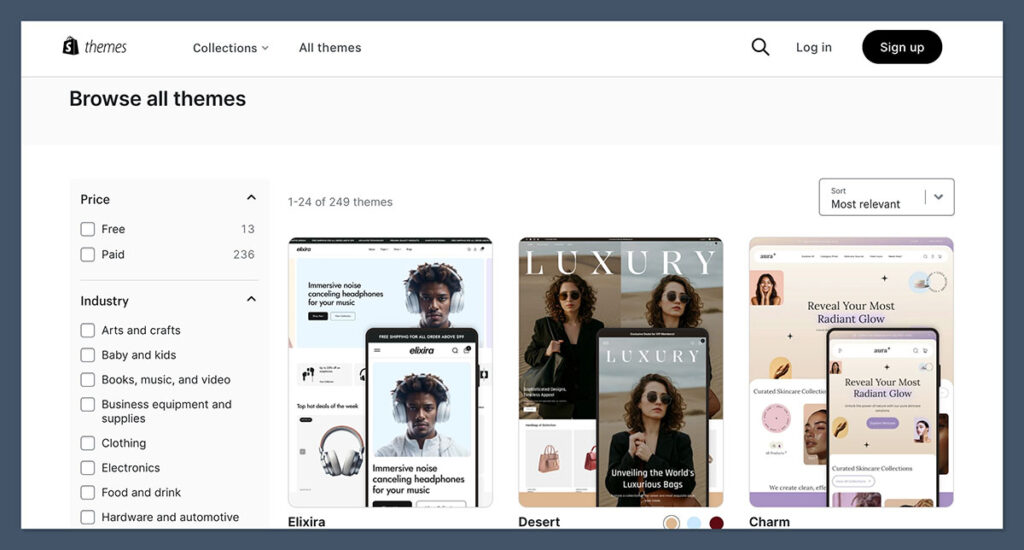
Shopify provides an extensive library of over 190 templates, catering to a diverse range of industries. These include 13 free options and premium themes ranging from $180 to $350, which are one-time purchases. The themes are characterized by their modern aesthetics, mobile optimization, and conversion-focused design, featuring customizable sections that allow for easy rearrangement and personalization without requiring coding knowledge.
Booqable offers a rental website builder with a more limited selection of templates specifically tailored for rental businesses. Alternatively, businesses can embed Booqable’s booking widgets into their existing websites on platforms like WordPress, Squarespace, Wix, or even Shopify, rather than utilizing Booqable’s native site builder.
For brand-centric businesses where the storefront’s design is integral to the overall brand experience, Shopify’s design flexibility is a significant advantage. For rental operators who prioritize operational efficiency and booking flow over cutting-edge design, Booqable’s templates are generally sufficient.
The Winner for Templates and Storefront Design: Shopify offers a broader array of templates and significantly greater design flexibility. For businesses where brand experience is as critical as product offering, Shopify’s design ecosystem provides more options. Booqable’s themes are functional but comparatively limited in scope.
Shopify + Booqable: The Power of Integration
A crucial insight is that businesses are not necessarily forced to choose between Shopify and Booqable. Booqable offers a native Shopify integration that leverages Shopify as the customer-facing storefront while Booqable manages the underlying rental logic, inventory, and checkout processes. For many hybrid businesses, this combined stack represents the optimal solution.
How the Integration Works
The Booqable Shopify app allows for the seamless embedding of rental products, date pickers, and real-time availability directly onto Shopify product pages. While product information must exist in both systems, Booqable serves as the central source for rental pricing, availability, and inventory synchronization with the embedded elements on Shopify. The rental cart and checkout can be customized to match the brand’s aesthetic and can optionally be hosted on the business’s own domain, ensuring a cohesive customer experience.
Pros of the Combined Stack
- Best of Both Worlds: Access to Shopify’s powerful e-commerce features, marketing tools, and extensive app ecosystem alongside Booqable’s specialized rental management capabilities.
- Seamless Customer Experience: Customers interact with a familiar, conversion-optimized Shopify storefront, unaware of the complex rental logic operating behind the scenes.
- Scalability for Hybrid Models: Ideal for businesses that sell some products outright and rent others, or those looking to integrate memberships and subscriptions alongside rentals.
- Enhanced Operational Efficiency: Streamlined inventory management, booking, and checkout processes for rentals, coupled with robust sales and marketing tools.
Trade-offs of the Combined Stack
- Increased Complexity: Managing two platforms and ensuring data synchronization requires more administrative effort.
- Higher Cost: The combined subscription fees for Shopify and Booqable will be higher than using a single platform.
- Data Duplication: Product information may need to be maintained in both systems, requiring careful management to avoid discrepancies.
The combined stack is particularly well-suited for hybrid business models. It is also beneficial for businesses that prioritize content marketing, SEO, and brand storytelling for customer acquisition, requiring Shopify’s advanced content tools in conjunction with sophisticated rental operations.
For hybrid businesses, the Shopify + Booqable combination offers best-in-class solutions for both e-commerce and rental operations, albeit with a slight increase in complexity.
Best for Support: Shopify
Both platforms offer commendable support services, but Shopify’s larger scale and extensive resources provide a more comprehensive support network.
Shopify Support
Shopify offers 24/7 live chat, phone support, and email support. Its extensive knowledge base, community forums, and a vast network of certified Shopify Partners provide a wealth of resources for merchants seeking assistance.

Booqable Support
Booqable provides email support and a comprehensive knowledge base. While their support is responsive and knowledgeable about rental-specific issues, it does not offer the same breadth of 24/7 live channels as Shopify.
The Winner for Support: Shopify takes the lead in support breadth and availability. Its round-the-clock live chat, extensive documentation, and vast partner network are difficult to rival. Booqable’s support is solid and focused on rental operations, but its overall resource scale is smaller.
How We Tested Shopify and Booqable
Our evaluation involved over 60 hours of hands-on testing, assessing both platforms across seven weighted criteria. This included signing up for trial accounts, building test stores, and simulating realistic rental scenarios to gauge performance. The Shopify + Booqable integration was also thoroughly tested to assess its practical application. Pricing details were verified against current published rates as of 2026.
The evaluation criteria included:
- Pricing and Value
- Rental Features and Functionality
- E-commerce Capabilities
- Ease of Use and Onboarding
- Design and Customization Options
- App Ecosystem and Integrations
- Customer Support and Resources
Shopify vs. Booqable: Our Final Verdict
The choice between Shopify and Booqable is not a direct competition but rather a strategic decision about how each platform can best serve your business needs.
Choose Shopify alone if: Your primary business is selling products outright, and rentals constitute a minor or negligible part of your revenue. Shopify’s unparalleled e-commerce depth, marketing tools, and vast app ecosystem make it the ideal platform for product-centric businesses. Any occasional rental needs can typically be managed with specialized third-party applications.
Choose Booqable alone if: You operate a rental-first business, such as equipment hire, party rentals, or audiovisual gear, where availability and date-based logic are the operational core. Attempting to replicate these essential rental functions within Shopify’s framework can lead to daily operational friction and inefficiencies.
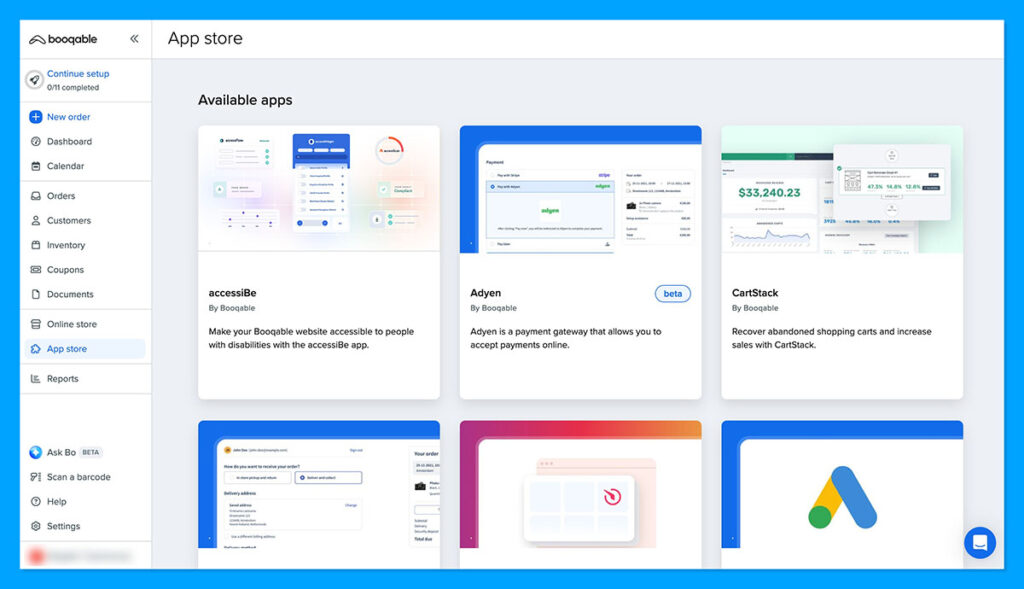
Choose Shopify + Booqable if: Your business is genuinely hybrid, involving both the sale of products and the rental of others. This combined approach is ideal for businesses that require sophisticated marketing capabilities alongside robust rental operations. While the combined stack introduces more complexity, it offers best-in-class tools for each facet of your operation.
Both platforms offer risk-free free trials, with no credit card required. The most prudent course of action is to test the platform or combination that best aligns with your business model and assess its practical suitability before making a long-term commitment.
Shopify vs. Booqable FAQ
Can Shopify handle rentals on its own?
Technically, yes, through third-party apps from the Shopify App Store. However, the experience is often limited. Shopify’s native inventory model does not inherently understand date-based availability, so rental apps work around this with varying degrees of success. For occasional or simple rentals, this can suffice. For a business where rentals are central, it is generally not recommended.
Can Booqable replace Shopify entirely?
For pure rental businesses, yes. Booqable includes a rental-focused website builder, checkout, and order management system. While it lacks Shopify’s extensive marketing depth and app ecosystem, these are often unnecessary for businesses solely focused on rentals.
How much does it cost to run Shopify + Booqable together?
At a minimum, expect around $100 per month, comprising Shopify Basic ($29/month) and Booqable Grow ($69/month), the latter being the tier where the Shopify integration becomes more robust. Factor in payment processing fees on Shopify, costs for any additional paid apps, and potential theme expenses, a realistic combined budget for a small operation would likely range from $150 to $250 per month.
Does Booqable charge transaction fees on bookings?
No, Booqable does not charge commission on bookings or impose platform transaction fees. You are solely responsible for your chosen payment gateway’s standard processing rates. This represents a significant cost advantage over Shopify as your rental volume scales.
Is Shopify or Booqable better for in-person rentals?
Booqable is superior for in-person rentals. Its mobile applications and in-store workflows are specifically designed for the practicalities of rental check-in, check-out, item inspection, and damage tracking. While Shopify POS excels at retail transactions, it lacks the specialized rental workflows.
Which is easier to set up for a beginner?
For beginners to e-commerce in general, Shopify offers a faster setup process with a more guided onboarding flow and a wider selection of templates. If you are new to rental software specifically, Booqable’s learning curve is manageable, and the time saved in streamlining rental operations typically outweighs the initial learning investment.