

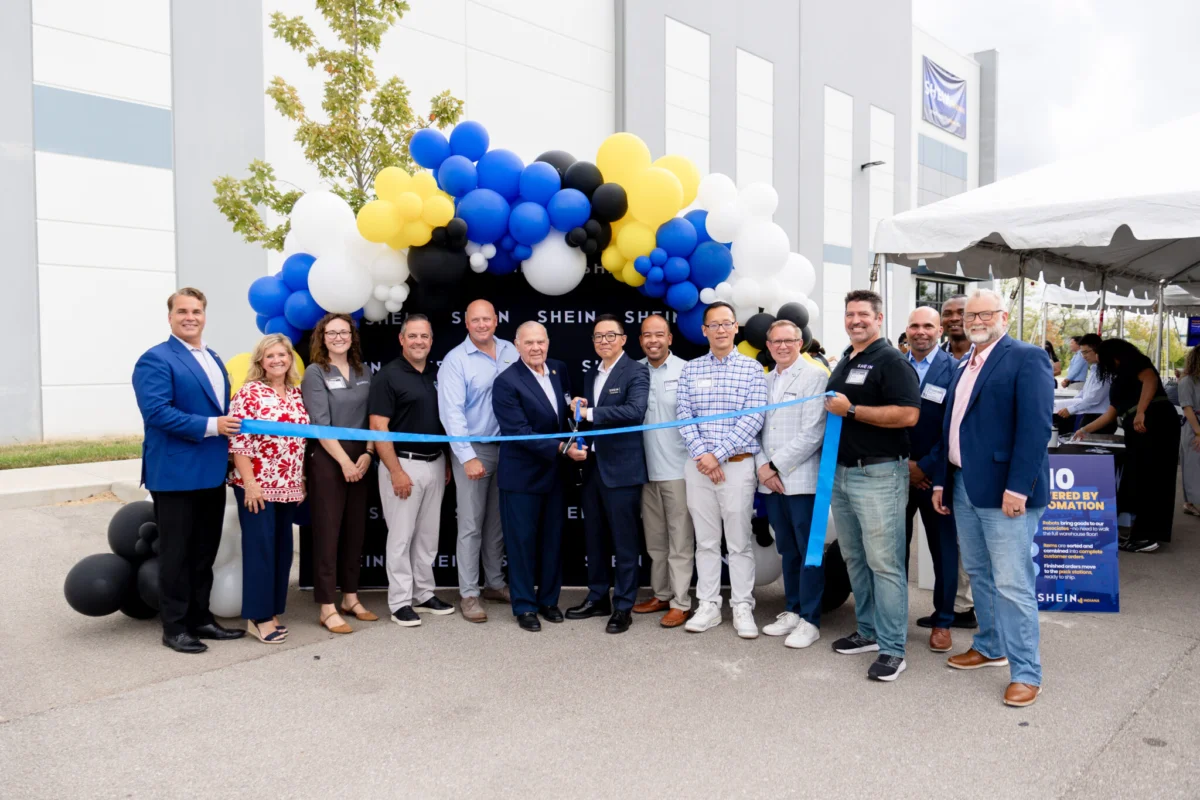
Less than two weeks after its highly anticipated initial public offering in Hong Kong, fast-fashion giant Shein has strategically expanded its U.S. distribution network with the grand opening of a sprawling new warehouse in Lebanon, Indiana. This significant investment underscores Shein’s commitment to bolstering its logistical capabilities within the United States, a critical market for the online behemoth. The newly operational facility, a testament to Shein’s rapid growth and ambition, spans an impressive 737,000 square feet and incorporates advanced automation, signaling a deliberate push towards greater efficiency and resilience in its supply chain.
This latest addition significantly amplifies Shein’s footprint in Indiana, a state that has become a central hub for its U.S. fulfillment operations since the company first established a presence there in 2022. With the addition of the Lebanon facility, Shein now claims to occupy over 2.5 million square feet of operational space across the state. This substantial real estate commitment highlights Indiana’s strategic importance as a logistical nexus for e-commerce companies looking to serve a broad U.S. customer base efficiently.
Shein, currently ranked No. 67 in Digital Commerce 360’s Global Online Marketplaces database, a benchmark for third-party gross merchandise value (GMV), is navigating a dynamic period. Its recent IPO in Hong Kong, following a series of attempts to list in other global financial centers, marks a new chapter for the company. While the IPO’s valuation of approximately $26.5 billion fell short of its peak private valuation of $100 billion in 2022, it still represents a significant financial milestone and provides capital for further expansion and operational enhancements.
Strategic Expansion and Job Creation in Indiana
The opening of the Lebanon warehouse is not merely about increasing square footage; it is about enhancing Shein’s ability to meet the demands of its vast customer base. George Chiao, the U.S. president for Shein, emphasized the strategic importance of this expansion. "Shein’s continued investment in Indiana reflects our commitment to building a more agile, resilient, and innovative fulfillment network while creating economic opportunities in the communities where we operate," Chiao stated during the opening ceremony. He further expressed gratitude for the "warm welcome and support" the company has received in Indiana, hinting at potential for further growth within the state.

This new facility is projected to create "hundreds of new jobs" in the Lebanon area, further solidifying Shein’s role as a significant employer in the region. The company currently employs 1,300 individuals across its Indiana operations, and the Lebanon warehouse is expected to support future growth and significantly improve its overall fulfillment capabilities. The emphasis on automation within the facility suggests a strategic move to optimize inventory management, order processing, and delivery times, crucial factors in the highly competitive e-commerce sector.
The development of this large-scale distribution center is part of a broader trend among major online retailers to invest heavily in logistics infrastructure. As consumer expectations for faster delivery times continue to rise, companies like Shein are compelled to build out robust networks of warehouses strategically located near major population centers. Indiana, with its central location and established transportation infrastructure, has proven to be an attractive state for such investments.
Navigating Global Market Dynamics and Regulatory Shifts
Shein’s recent IPO in Hong Kong occurred after a complex and drawn-out process of seeking a public listing. Initially, the company had confidentially filed for an IPO in the U.S. in November 2023. However, political challenges and scrutiny over its business practices reportedly led Shein to explore alternative markets. The eventual decision to list in Hong Kong highlights the evolving global financial landscape and the strategic considerations involved in achieving public market access.
Beyond its IPO journey, Shein’s business model has also faced scrutiny and adaptation due to evolving international trade regulations. The end of de minimis exemptions in the U.S., which previously allowed for duty-free importation of low-value shipments, has presented a significant challenge. This regulatory shift, which increases customs enforcement and potentially tariffs on imported goods, directly impacts the cost structure and logistical pathways of companies like Shein that rely on high volumes of direct-to-consumer shipments from overseas. The company’s investment in U.S.-based fulfillment centers, such as the new Indiana warehouse, can be seen as a strategic response to mitigate some of these challenges by holding inventory closer to the end consumer, thereby potentially reducing transit times and navigating import complexities more effectively.
Broader Growth Ambitions and Strategic Acquisitions
Despite these headwinds, Shein continues to signal strong growth ambitions. As of September, the company reported serving "hundreds of millions of active customers" across "approximately 160 markets." This global reach is supported by a dynamic and rapidly adapting supply chain.

Furthermore, Shein has been actively pursuing strategic acquisitions to expand its brand portfolio and market penetration. A notable move was the agreement in May to acquire the U.S.-based apparel brand Everlane for $100 million. This acquisition is significant as Everlane ranks No. 265 in Digital Commerce 360’s Top 1000 Database, which tracks the largest North American online retailers, and is categorized as an Apparel & Accessories retailer. Everlane also secured the No. 4 spot in Digital Commerce 360’s inaugural AI Rankings, suggesting a company that embraces technological innovation. The integration of Everlane could provide Shein with access to a different customer demographic and a brand reputation focused on more sustainable and ethically produced fashion, potentially diversifying its market appeal.
The acquisition of Everlane, coupled with the substantial investment in its U.S. logistics network, indicates a multifaceted growth strategy for Shein. The company appears to be focused on both expanding its direct-to-consumer e-commerce operations through its own platform and acquiring established brands to broaden its reach and appeal within the global fashion market.
The Indiana Advantage: A Hub for Logistics and Commerce
Indiana’s role as a central hub for Shein’s operations is a testament to the state’s strategic advantages for the logistics and distribution industry. Its central geographic location allows for efficient delivery to a large portion of the U.S. population. The state boasts a robust transportation infrastructure, including major highways, rail lines, and proximity to international airports, facilitating the movement of goods. Furthermore, Indiana has actively pursued policies to attract and retain businesses in the logistics sector, offering incentives and investing in workforce development.
The establishment of large-scale distribution centers by major e-commerce players like Shein creates a ripple effect, generating employment opportunities, stimulating local economies, and contributing to the overall growth of the logistics and supply chain ecosystem within the state. The continued expansion of Shein’s presence in Indiana signals a long-term commitment and a recognition of the state’s vital role in its operational success. As Shein continues to navigate the complexities of the global e-commerce market, its investments in domestic infrastructure, such as the new Lebanon warehouse, will be crucial in shaping its future growth trajectory and its ability to compete effectively in key markets like the United States. The company’s ability to adapt to regulatory changes, leverage technological advancements, and strategically acquire complementary businesses will be key indicators of its sustained success in the years to come.








