Asep Darmawan
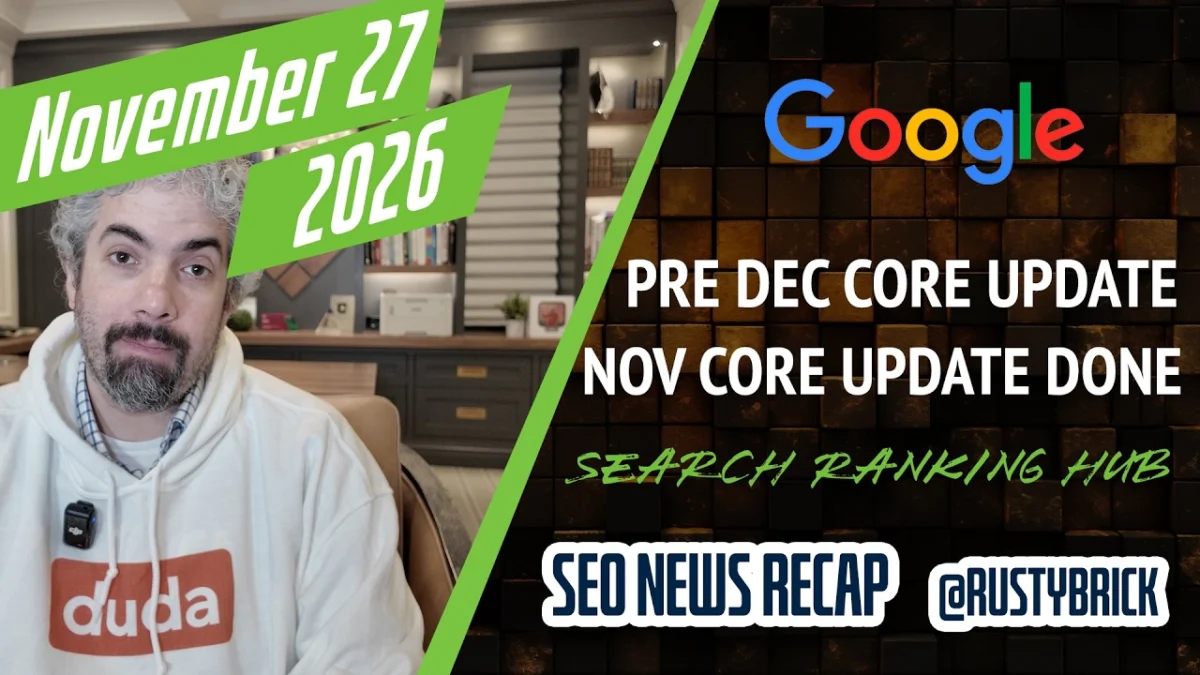
The digital marketing and search engine optimization (SEO) landscape is currently experiencing a period of intense transformation, marked by a rapid succession of major algorithm updates from Google, significant advancements in artificial intelligence integration, and critical adjustments to platform policies. The conclusion of the Google November 2026 Core Update, followed by an unusual pre-announcement of a December 2026 Core Update, has set the stage for heightened volatility and strategic reassessment among webmasters and digital marketers. Concurrently, Google has unveiled a comprehensive Search Ranking Hub designed to offer unprecedented transparency into its ranking mechanisms, including how AI-driven results are curated. These developments underscore Google’s ongoing commitment to refining search quality while navigating the complex integration of AI, a sentiment echoed by new features across Google AI Mode, Google Business Profiles, and various advertising platforms, including Bing and ChatGPT.
The Volatile Landscape of Google Core Updates
The end of November 2026 brought with it the completion of Google’s latest broad core algorithm update, an event that typically ushers in a period of significant shifts in search engine rankings. Core updates are fundamental changes to Google’s overall ranking algorithm, designed to improve the relevance and quality of search results across the board. They are not targeted at specific issues but rather aim to enhance how Google understands and evaluates content, leading to broad impacts across various industries and website types.
November 2026 Core Update Concludes Amidst Anticipation
The November 2026 Core Update, like its predecessors, was closely monitored by SEO professionals and website owners worldwide. These updates are notorious for introducing periods of ranking flux, often lasting several weeks, as Google’s systems re-evaluate vast swathes of content. Websites that align closely with Google’s quality guidelines and deliver exceptional user experience tend to fare better, while those with perceived shortcomings may see declines. The conclusion of the update signals a stabilization period, allowing webmasters to analyze the impact on their visibility and organic traffic. Early observations from the SEO community suggest that the update continued Google’s trend of prioritizing authoritative, trustworthy, and user-centric content, particularly in competitive niches. Many analysts speculate that this update further refined Google’s understanding of content nuance and user intent, rewarding sites that demonstrate clear expertise, experience, authoritativeness, and trustworthiness (E-E-A-T).
December 2026 Core Update Preannounced: A Rare Glimpse into Google’s Schedule
In an unusual move that surprised many in the industry, Google pre-announced a December 2026 Core Update shortly after the November update concluded. While core updates are a regular occurrence, Google rarely provides advance notice, typically confirming them only after their rollout has begun or is complete. This pre-announcement, while not indicating an immediate launch, offers webmasters a critical window to prepare. The decision to pre-announce could signify a more substantial or strategically important update, or perhaps an attempt by Google to foster greater transparency and reduce anxiety among the SEO community, allowing them to brace for potential changes rather than being caught off guard.
The implications of two back-to-back core updates are significant. It suggests an accelerated pace of algorithm refinement and could lead to sustained ranking volatility well into the holiday season and beyond. For businesses, this necessitates a proactive approach to SEO, focusing on fundamental quality, technical soundness, and continuous content improvement, rather than chasing short-term tactical gains. The search engine giant’s consistent message has been that the best way to prepare for core updates is to focus on delivering the best possible content and user experience.
Decoding Google’s AI Ambitions and Transparency Efforts
The integration of artificial intelligence into Google Search continues to be a dominant theme, evolving from experimental features to core functionalities. This evolution is accompanied by Google’s efforts to provide more insight into how these AI-driven systems operate.
Launch of the Google Search Ranking Hub: A New Era of Transparency?
In a move welcomed by webmasters, Google has launched a new Search Ranking Hub, offering a centralized resource with extensive information on how its search algorithms work. This hub represents a notable step towards greater transparency, a departure from Google’s historically opaque approach to its ranking factors. Crucially, the hub includes details on how Google selects links in AI Mode and AI Overviews, providing invaluable context for content creators grappling with the emergence of AI-generated summaries in search results.
This initiative is a response to the growing complexity of search algorithms and the increasing integration of AI, which can sometimes obscure the origin and ranking of information. By detailing the mechanisms behind link selection in AI-powered environments, Google aims to empower webmasters to better optimize their content for these evolving display formats. The hub provides guidance that can help content creators understand how their information might be surfaced in AI Overviews, encouraging them to focus on clarity, accuracy, and structured data to enhance discoverability in these new contexts.
The Dual Nature of AI Overviews: Innovation vs. Link Visibility Concerns
Google’s AI Mode and AI Overviews, designed to provide instant, comprehensive answers to user queries, continue to be a focal point of discussion. Google’s official stance is clear: "people don’t just want AI, they want AI with the web." This emphasizes Google’s commitment to grounding AI responses in verifiable, web-sourced information, ensuring that the foundational data for AI insights remains connected to the broader internet ecosystem.
However, a recent study has raised concerns within the publishing community, suggesting that Google is "burying links to the web in AI Overviews." This finding reignites the debate about the balance between providing direct answers via AI and driving traffic to original content sources. Publishers worry that if AI Overviews predominantly satisfy user queries without requiring clicks to external websites, it could significantly impact their organic traffic and revenue models. This tension highlights a critical challenge for Google: how to innovate with AI while sustaining the vibrant web ecosystem that feeds its search engine.
Despite these concerns, Google continues to roll out new features within its AI Mode to enhance user experience. The introduction of "Dive Deeper" links aims to address some of the visibility issues by providing clearer pathways for users to explore related content beyond the initial AI summary. Furthermore, Google AI Mode now allows users to upload multiple images for a search, greatly enhancing the platform’s visual search capabilities and enabling more complex queries based on visual input. Google Image Collections also now supports asking questions directly in AI Mode, transforming image search into a more interactive and intelligent experience. These features suggest Google is actively iterating on AI Overviews to make them more valuable and interactive, potentially mitigating some of the traffic concerns through improved engagement.
Unveiling ‘StarSearch’ and New Discover Insights
From a recent Discover job listing, information has surfaced about an internal Google project or initiative referred to as "StarSearch." While specific details remain scarce, its mention in relation to Discover suggests it is likely a foundational component or an advanced research project aimed at enhancing content discovery, personalization, or ranking within Google’s feed-based products. Google Discover, a personalized content feed that appears on Google’s mobile app and certain Android devices, relies heavily on AI to predict user interests and deliver relevant articles, videos, and other content. "StarSearch" could represent the next generation of algorithms or tools driving this personalization, potentially leading to even more refined content recommendations and a more engaging user experience in the future. The evolution of Discover is critical for publishers seeking to reach audiences beyond traditional keyword-based search.
Evolving Google Policies, Profiles, and Crawlers
Beyond the core algorithms and AI initiatives, Google has also rolled out important updates concerning its webmaster guidelines, business profiles, and technical aspects of crawling.
Clarifying Webmaster Guidelines: Back Button Hijacking and Inventory Management
Google has released new FAQs regarding its back button hijacking policy. Back button hijacking refers to malicious techniques that prevent users from navigating back to a previous page using their browser’s back button, often trapping them on a site. This is a severe violation of user experience principles and Google’s guidelines, leading to penalties. The updated FAQs aim to provide clearer guidance to webmasters on what constitutes this deceptive practice and how to ensure their sites adhere to a user-friendly navigation experience. This underscores Google’s commitment to maintaining a safe and predictable browsing environment.
Additionally, Google provided guidance on how businesses should handle inventory levels at geographic locations. This is particularly relevant for retailers and local businesses with multiple physical stores or service areas. Accurate and up-to-date inventory information can significantly impact local search visibility, product availability in local inventory ads, and overall customer satisfaction. Google’s guidance likely emphasizes the importance of structured data and accurate business profile information to ensure that search results reflect real-time product availability, thereby enhancing the utility of local search for consumers.
Shedding Light on Google’s Undocumented Crawlers and Fetchers
In a move towards greater transparency for technical SEO, Google has documented previously undocumented crawlers and fetchers. Google uses a variety of automated programs (crawlers or bots) to discover and index content on the web. While well-known crawlers like Googlebot are widely understood, there have always been specialized or less-publicized fetchers used for specific tasks (e.g., ad verification, image processing, or specific data collection). Documenting these previously unacknowledged crawlers provides webmasters with a more complete picture of how Google interacts with their websites. This information is crucial for advanced SEO auditing, troubleshooting crawl anomalies, and ensuring that websites are properly configured to allow legitimate Google bots access while blocking unwanted traffic.
Google Business Profile Enhancements and Local Search Dynamics
Google continues to invest heavily in local search and Google Business Profiles (GBP), recognizing their critical role for businesses connecting with local customers. The "Google Search Profiles" feature, which allows individuals and businesses to manage their presence directly within Google Search, has now rolled out globally, expanding its reach and utility for a broader user base.
Several key updates have been made to Google Business Profiles:
- Enhanced Controls for Appointment Booking and Dinner Reservation Links: Businesses now have more granular control over how appointment booking and dinner reservation links are displayed in their profiles. This allows for better integration with third-party booking systems and a smoother customer experience, directly converting search interest into tangible business interactions.
- Simplified Appeals Form: Google has simplified the appeals form for businesses whose profiles have been suspended or encountered issues. This aims to streamline the resolution process, reducing friction for legitimate businesses trying to regain their visibility on Google Maps and Search.
- Local Pack Bug: A temporary bug was reported in the Google local pack, causing some business listings to incorrectly display "no reviews" even when legitimate reviews existed. This kind of glitch, while often swiftly resolved, underscores the constant need for businesses to monitor their GBP listings actively, as inaccuracies can significantly impact customer perception and trust.
These updates collectively demonstrate Google’s ongoing effort to make GBP a robust and user-friendly platform for local businesses, emphasizing accuracy, control, and efficient problem-solving.
Advertising Innovations Across Search Ecosystems
The advertising landscape is also undergoing significant shifts, with Google, Bing, and ChatGPT introducing new tools and formats that leverage AI and provide deeper insights for advertisers.
Google Ads Search Insights Tool: Enhanced Visibility for Advertisers
Google Ads has launched an enhanced search insights tool, providing advertisers with unprecedented visibility into the customer journey. This tool allows advertisers to see exactly what people searched for, what ads they saw, and where they landed on the website. Crucially, it differentiates between what the advertiser explicitly added to their campaigns and what Google AI matched or expanded based on keywords and audience signals. This level of detail empowers advertisers to:
- Refine Keyword Strategies: Understand which search queries are actually triggering their ads and leading to conversions, even those expanded by AI.
- Optimize Ad Copy: See how specific ad creatives resonate with different queries.
- Improve Landing Page Experience: Analyze the conversion path from search to landing page, identifying areas for improvement.
- Leverage AI More Effectively: Gain insights into how Google’s AI is interpreting and expanding their campaigns, allowing for better strategic alignment.
This tool represents a significant step towards greater transparency and control for advertisers in an increasingly automated ad environment.
Bing and ChatGPT: AI-Powered Ad Experiences
Competitors are also rapidly innovating in the AI and advertising space:
- Bing’s New AI-Generated Answer Formats: Bing has introduced new AI-generated answer formats within its search results, seamlessly integrating advertising content. This indicates a strategic move to monetize the conversational AI experience, presenting ads within or alongside comprehensive AI-generated responses.
- Bing AI Mode Blending Ads with Organic: Bing AI Mode is increasingly blending advertisements with organic results, blurring the lines between paid and unpaid content. This approach aims to deliver ads that are highly relevant to the AI-generated context, potentially increasing engagement but also raising questions about user perception and disclosure.
- ChatGPT Product Results and Ads Updates: OpenAI’s ChatGPT is also evolving its monetization strategies. Its product results may now be influenced by OpenAI partnerships, suggesting a model where certain products or services could receive preferential placement based on commercial agreements. Furthermore, ChatGPT Ads has released a number of new updates, indicating a concerted effort to build out a robust advertising platform within the conversational AI ecosystem. These developments point to a future where AI chatbots become significant advertising channels, requiring advertisers to adapt their strategies for these new interactive environments.
Seasonal Flair and Community Engagement
Amidst these significant technical and policy updates, Google and Bing also continued their tradition of engaging users with festive elements. For Thanksgiving, both search engines featured special Doodles and Easter eggs, adding a touch of cultural celebration and delight to the user experience. These lighter elements serve as a reminder of the human element behind these powerful technological platforms. The Search Engine Roundtable, a prominent industry publication, continues to serve as a vital resource for staying abreast of these rapid changes, encouraging community engagement through subscriptions and discussions.
Conclusion
The period encompassing the Google November 2026 Core Update, the pre-announcement of the December 2026 Core Update, and the cascade of AI and platform enhancements marks a pivotal moment in the evolution of search. Google’s dual focus on refining core algorithms and integrating advanced AI capabilities, alongside efforts to enhance transparency through initiatives like the Search Ranking Hub, presents both challenges and opportunities for webmasters, businesses, and advertisers. The ongoing debate around AI Overviews and link visibility underscores the critical balance Google must strike between innovation and supporting the web ecosystem. Simultaneously, advancements in local search, advertising tools, and competitor offerings from Bing and ChatGPT highlight a rapidly converging landscape where AI is not just an additive feature but a fundamental driver of search and advertising experiences. Navigating this dynamic environment successfully will require continuous adaptation, a deep understanding of evolving algorithms, and an unwavering commitment to delivering high-quality, user-centric content.

 Pevita Pearce
 Jia Lissa