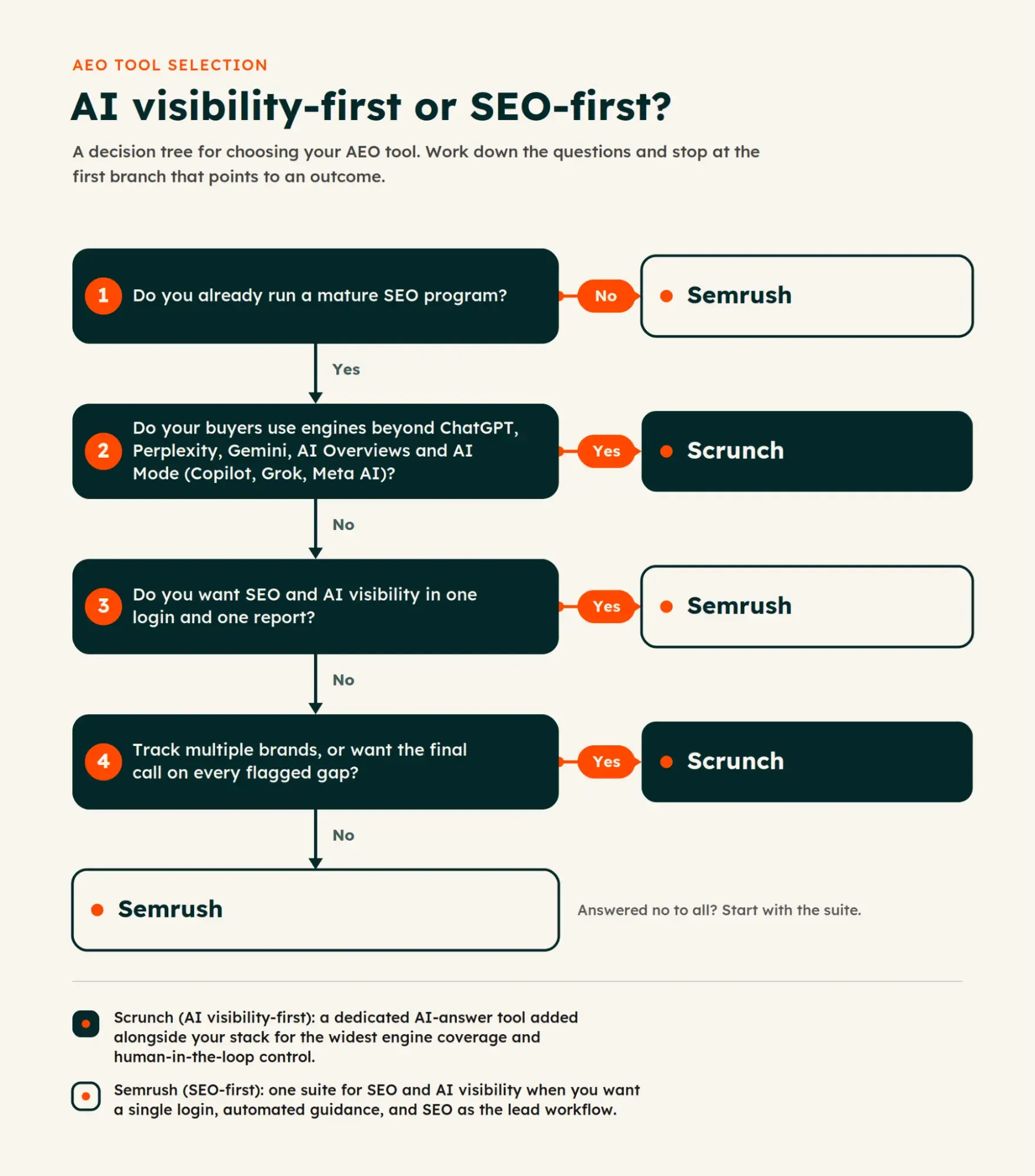
The burgeoning field of Answer Engine Optimization (AEO) has introduced a critical strategic dilemma for digital marketers: whether to adopt a specialized AI visibility tool or an all-encompassing SEO suite that has integrated AI tracking capabilities. This core distinction defines the operational differences between Scrunch, a dedicated AEO specialist, and Semrush, a comprehensive SEO platform that has expanded its offerings to include an AI Visibility Toolkit. The choice between these two platforms hinges on an organization’s existing marketing technology stack, budgetary considerations, and its strategic approach to brand visibility in the age of generative AI.
The Paradigm Shift: From SEO to AEO
The digital marketing landscape has undergone a profound transformation with the rapid ascent of generative artificial intelligence. For decades, Search Engine Optimization (SEO) was the primary battleground for online visibility, focusing on ranking high in traditional search results pages. However, the introduction of sophisticated Large Language Models (LLMs) like ChatGPT in late 2022, followed by Google’s AI Overviews, Perplexity AI, Microsoft Copilot, and Gemini, marked a pivotal shift. These "answer engines" fundamentally change how users seek and consume information. Instead of clicking through a list of links, users increasingly receive direct, synthesized answers, often without ever visiting an external website.
This evolution necessitates a new discipline: Answer Engine Optimization (AEO). AEO focuses on ensuring a brand’s presence, accuracy, and favorable sentiment within these AI-generated responses. Businesses must now strategically optimize their content not just for search engine crawlers, but for AI models designed to extract and summarize information. Industry analysts estimate that AI-powered search is projected to capture a significant share of information queries, potentially impacting over 50% of online searches by 2028. This underscores the urgency for brands to adapt their digital strategies to remain visible and authoritative.
Scrunch: The Dedicated AEO Specialist

Scrunch positions itself as "The AI Customer Experience Platform," a specialist tool engineered specifically for AI visibility. Its primary function is to monitor how a brand’s content, sentiment, and citations appear within AI-generated answers. This hyper-focused approach means Scrunch provides deep insights into AEO metrics without venturing into traditional SEO functionalities like keyword research, backlinks, or technical audits. For businesses that have robust SEO operations already in place, Scrunch offers a dedicated layer of AI answer monitoring that complements their existing toolkit.
At its self-serve Core and Agency Core tiers, Scrunch tracks four prominent AI engines: ChatGPT, Perplexity, Google AI Overviews, and Microsoft Copilot. For its Enterprise clients, this coverage expands significantly to include up to nine answer engines, adding Claude, Gemini, Google AI Mode, Meta AI, and Grok. Scrunch’s prompt-native monitoring estimates AI search volume at the topic level, identifying clusters of related queries, and offers daily refreshes for new prompts, ensuring timely data. A key feature is its sentiment analysis, categorizing brand mentions as positive, mixed, or negative, providing a nuanced understanding of brand perception in AI responses.
A distinguishing, and perhaps contentious, feature of Scrunch’s Enterprise plan is the Agent Experience Platform (AXP). This content-delivery layer operates at the Content Delivery Network (CDN) level, serving a simplified, AI-bot-friendly version of a webpage to AI assistant crawlers, while human visitors see the standard website. Scrunch asserts that AXP does not utilize llms.txt and crucially, does not serve this alternate version to Googlebot, thereby aiming to avoid Google’s cloaking penalties which apply to discrepancies served to its own crawlers. The company argues that the AI version reflects the "same intent" as the human-facing page, making it a technical optimization rather than a deceptive practice. This approach, while innovative, introduces a discussion point regarding content integrity and potential, albeit currently mitigated, risks.
Semrush: The Integrated SEO and AEO Suite
In contrast, Semrush, a long-standing leader in the SEO domain, has embraced the AI shift by integrating AEO capabilities into its comprehensive "brand visibility management platform." Known for its extensive tools covering SEO, content marketing, and paid media, Semrush has developed a dedicated AI Visibility Toolkit. This toolkit can be acquired as a standalone add-on or bundled within its "Semrush One" subscriptions, allowing marketers to manage both traditional SEO and emerging AEO within a single platform.
Semrush’s AI Visibility Toolkit tracks five key AI engines on its self-serve plans: Google AI Mode, Google AI Overviews, ChatGPT, Perplexity, and Gemini. For its Enterprise AIO tier, this expands to nine engines, incorporating Claude, Microsoft Copilot, Grok, and DeepSeek, alongside daily prompt tracking for up to 15,000 prompts. Semrush’s approach emphasizes prompt and topic research, leveraging a database of over 289 million AI queries to estimate demand for related topic clusters. Its core reports are updated daily, with Brand Performance metrics refreshed weekly. Sentiment analysis within Semrush categorizes mentions as favorable or neutral, offering a more generalized view compared to Scrunch’s three-tiered system.

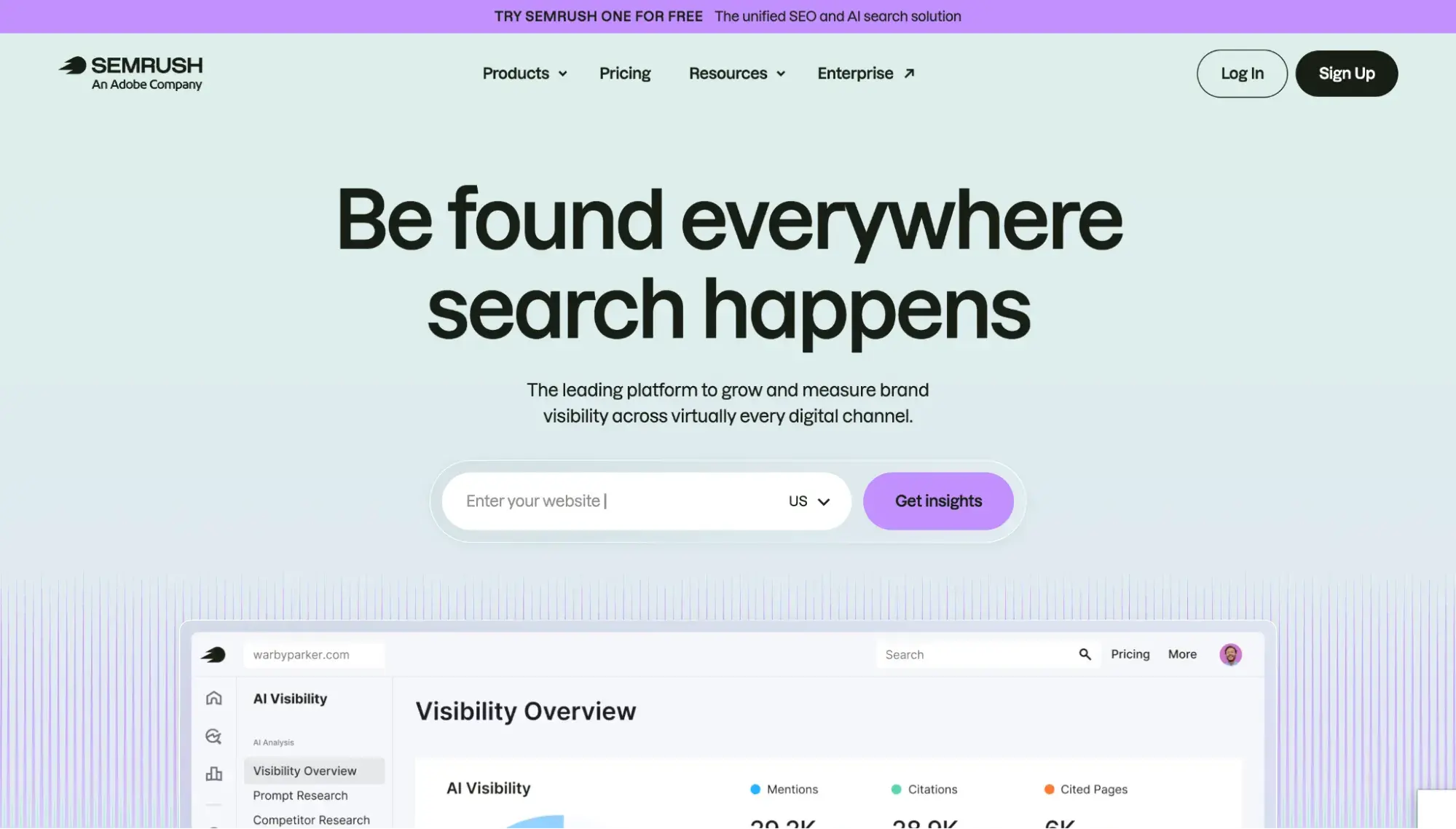
The strength of Semrush lies in its integrated workflow. AI visibility insights are not isolated but share projects, data, and reporting with its established SEO Toolkit. This means rank tracking, site audits, and AI visibility data reside in one login. Marketers can, for instance, push a detected AI content gap from the Prompt Research report directly into the Content Toolkit to begin drafting new content. Furthermore, its AI Search Site Audit brings SEO-style crawl checks into the AI workflow, providing a holistic view of content performance across both traditional and AI search. This consolidated approach appeals to lean teams or those already invested in Semrush’s ecosystem, seeking to expand their capabilities without introducing new platform complexities.
Pricing and Total Cost of Ownership: A Comparative Look
The financial implications of adopting either Scrunch or Semrush reflect their fundamental architectural differences. Scrunch’s pricing model is built around a standalone AEO subscription. Its Core plan starts at $250 per month, offering 5 user licenses, 1 brand workspace, 125 prompts tracked, and coverage for 4 engines, including a 7-day free trial. The Agency Core plan, at $500 per month, provides unlimited seats, 3 brand workspaces, and 250 prompts tracked across the same 4 engines. Enterprise plans are custom-quoted, unlocking all nine engines and tailored prompt tracking.
Semrush’s pricing is more modular, reflecting its suite approach. The AI Visibility Toolkit as an add-on costs $99 per month, in addition to a separate SEO Classic subscription (starting from $139.95 per month), totaling around $238.95 monthly for basic combined functionality. Alternatively, the "Semrush One" bundles offer integrated SEO and AEO. The Starter plan begins at $199 per month for 5 domains and 50 prompts across 5 engines. Higher tiers like Pro+ ($299/month for 15 domains, 100 prompts) and Advanced ($549/month for 40 domains, 200 prompts) scale capabilities. Enterprise solutions are custom, providing up to 15,000 prompts and all nine engines.
The total cost of ownership extends beyond the list price, encompassing factors such as the number of users, domains, prompts tracked, and the specific AI engines required. For instance, while both platforms offer coverage for up to nine engines at their respective Enterprise tiers, Scrunch’s Enterprise is the only one to include Meta AI, whereas Semrush’s Enterprise AIO uniquely covers DeepSeek. These subtle differences can influence strategic decisions for brands targeting specific AI environments.
Monitoring, Auditing, and Optimization: Workflow Divergence
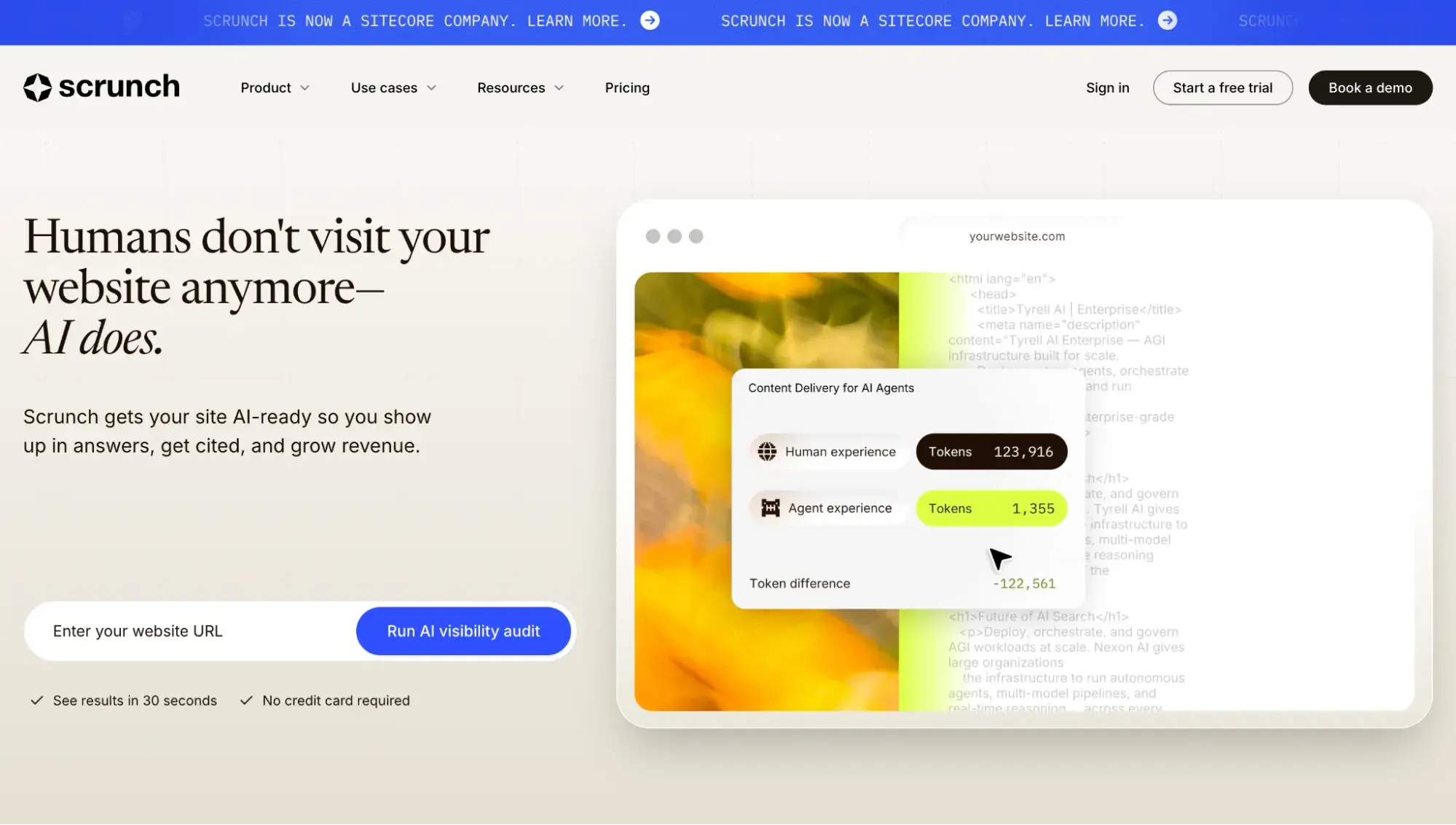
The operational workflows offered by Scrunch and Semrush also highlight their differing philosophies. Scrunch maintains a "human-in-the-loop" model for optimization. Its Content Gaps feature identifies prompts where a brand is absent or poorly represented, but the decision to act rests with the user. Scrunch then generates content briefs that can be handed off to content teams or used with generative AI tools like ChatGPT or Claude. Data can be pushed outward through a Data API, Looker Studio, GA4, and Adobe Analytics, fitting into existing analytics stacks. This approach prioritizes human oversight and custom integration.
Semrush, conversely, leans towards automated recommendations and in-platform execution. Its Brand Performance reports highlight "AI Strategic Opportunities" and translate data into suggested action plans. The Prompt Research report allows a topic to be pushed directly into the Content Toolkit for drafting. Semrush’s integrated nature means that AI visibility insights are seamlessly connected to its SEO tools, allowing for comprehensive site audits that factor in AI workflow. This streamlined, automated approach within a unified platform is designed for faster iteration and reduced context-switching.
For connecting AI visibility to revenue, both platforms offer solutions. Scrunch features an "AI Referrals" tab that, when connected to GA4, tracks AI-referred sessions and purchase revenue, presenting this data within its dashboard. Semrush integrates GA4 data into its "My Reports" builder, where an "AI Referral" traffic channel filter allows users to isolate AI-driven sessions and conversions. While neither offers native pipeline or CRM reporting, this is where platforms like HubSpot Marketing Hub differentiate themselves by connecting citation data directly to CRM records, allowing for a comprehensive tracing of AI visibility from prompt to lead and pipeline impact.
Strategic Implications and Best Fit
The choice between Scrunch and Semrush ultimately depends on an organization’s specific needs, existing infrastructure, and strategic priorities.
-
Scrunch is ideal for:
- Teams with a mature, established SEO program that seek to add a dedicated, specialized AI-answer monitoring layer without overhauling their existing SEO stack.
- Agencies managing multiple brands, benefiting from Scrunch’s Agency Core plan with unlimited seats and multiple brand workspaces.
- Organizations that prefer a "human-in-the-loop" model for content optimization, where editorial judgment guides the decision to act on AI insights.
- Brands specifically requiring Meta AI tracking, an engine currently unique to Scrunch’s coverage across all tiers.
- Teams focused on routing AI data into a pre-existing, sophisticated analytics environment like Adobe Analytics.
-
Semrush is ideal for:
- Leaner teams or those seeking a unified platform to manage both traditional SEO and AI visibility from a single login.
- Businesses that prioritize automated recommendations and one-click drafting to accelerate their content production cycles.
- Organizations that primarily rely on traditional SEO metrics (rank tracking, site audits, backlinks) and view AI visibility as an integrated component of this broader workflow.
- Companies that value the lower-risk content delivery model of optimizing a single page for all audiences, avoiding the complexities of separate bot-serving layers.
- SMBs and mid-market teams looking for a comprehensive, cost-effective solution that scales with their growth.
Industry experts widely advise that regardless of the tool chosen, the fundamental principles of AEO revolve around creating content that is easily extractable and understandable by AI models, while remaining valuable to human readers. This involves structuring content with direct answers, using question-matching headers, incorporating structured data (Schema.org), ensuring factual specificity, and maintaining scannable formatting. This "lower-risk route" of optimizing a single page for both audiences minimizes potential duplicate content exposure and aligns with best practices for user experience.
The Future Landscape of AI Search
As AI technologies continue to evolve, the distinction between traditional search and AI-driven answers will likely blur further. The capabilities of both specialized AEO tools and integrated SEO suites will need to adapt continuously. The emphasis will remain on generating high-quality, authoritative content that can be reliably cited by AI, alongside robust measurement and attribution models to connect AI visibility directly to business outcomes. The strategic selection of tools like Scrunch or Semrush represents a proactive step for brands to secure their digital future in an increasingly AI-centric world.