
The landscape of digital retail and product development has undergone a fundamental shift, moving away from intuitive decision-making toward a rigorous, data-driven methodology known as experimentation. At the forefront of this evolution is Apurva Sandbhor, Manager of Platform and Product Experimentation at The Home Depot. Based in Atlanta, Sandbhor oversees a complex ecosystem where testing is not merely a tactical exercise but a core strategic pillar. In a detailed exploration of modern Conversion Rate Optimization (CRO), Sandbhor outlines the frameworks necessary to scale experimentation across massive organizations without compromising data integrity or human judgment.
As organizations grow, the traditional "test and learn" model often encounters significant friction. The challenge for enterprise-level companies like The Home Depot is to maintain velocity while ensuring that every experiment yields high-integrity insights that can shape corporate strategy. Sandbhor’s approach emphasizes that scaling is not a matter of increasing headcount, but rather a matter of re-architecting platforms and shifting cultural mindsets.
The Structural Evolution of Experimentation Programs
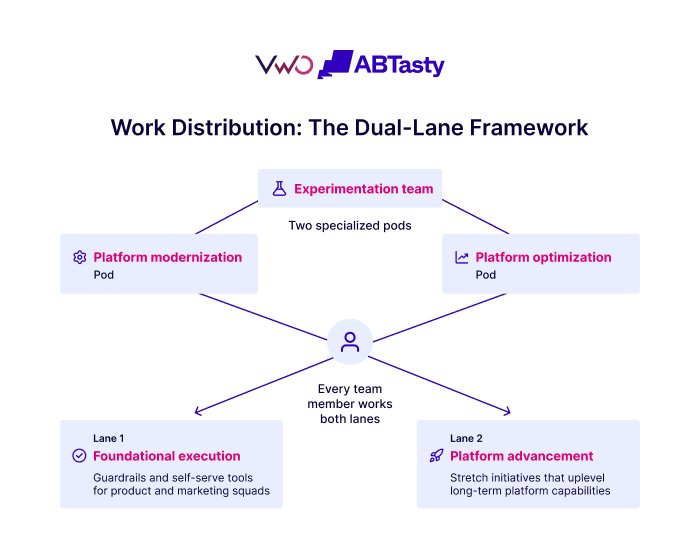
In the early stages of digital optimization, most companies operated with small, centralized teams that handled every aspect of a test, from hypothesis to analysis. However, as digital footprints expand, this model becomes a bottleneck. Sandbhor proposes a "Dual-Lane Framework" to decouple day-to-end enablement from core innovation. This model is designed to prevent a centralized team from becoming overwhelmed by reactive, transactional requests.
The first lane, Decentralized Enablement, focuses on providing product squads with the tools and training necessary to run their own experiments. This self-service model allows for high-volume testing across various product categories. The second lane, Centralized Innovation, allows the core experimentation team to focus on complex, high-impact initiatives that require advanced statistical modeling or architectural changes. By separating these functions, an organization can achieve both breadth and depth in its testing program.

This structural shift aligns with broader industry trends. According to recent industry reports, companies that adopt decentralized experimentation models see a 2.5x increase in testing velocity compared to those with strictly centralized structures. For a retailer of The Home Depot’s scale, where thousands of product iterations occur simultaneously, this distribution of labor is essential for maintaining a competitive edge in the e-commerce sector.
Prioritizing Platform over Headcount
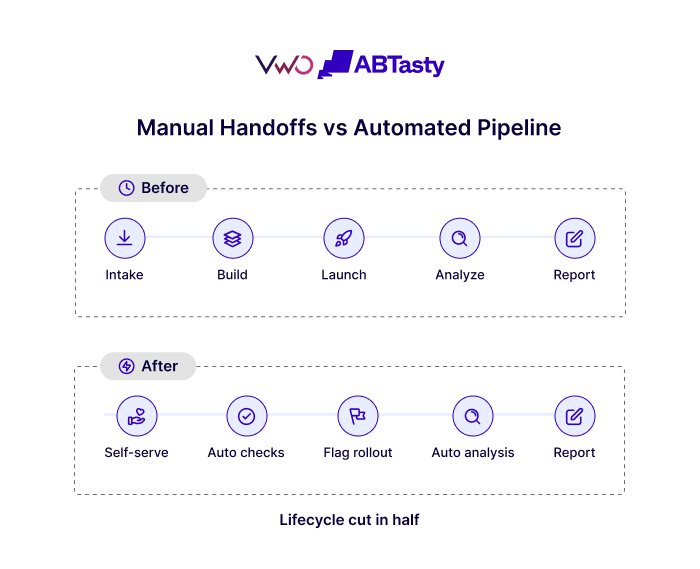
A common pitfall in corporate scaling is the "linear growth" fallacy—the belief that doubling the number of tests requires doubling the number of analysts. Sandbhor argues that this approach is unsustainable. Instead, leadership must focus on a "platform-first" strategy. The goal is to build an infrastructure that acts as a force multiplier, allowing a lean team to manage an exponentially increasing workload through automation.
Before expanding a team, Sandbhor suggests that leaders must evaluate their current operating model. If a team is still manually performing Quality Assurance (QA) or hand-calculating statistical significance, adding more people only compounds existing inefficiencies. The emphasis should instead be on automating the end-to-end pipeline, from traffic allocation to the generation of executive reports. By treating experimentation as a product-driven infrastructure rather than a series of manual projects, an enterprise can achieve precision at scale.
Data Integrity and Statistical Guardrails
In an era of rapid deployment, the risk of data contamination is high. Sandbhor identifies "Sample Ratio Mismatch" (SRM) and traffic anomalies as primary threats to experimentation validity. To combat this, she advocates for embedding statistical guardrails directly into the ingestion pipeline.
One of the most significant advancements in the Home Depot’s experimentation platform is the integration of a proprietary statistical engine. This engine runs sequential, error-corrected statistics in the background, flagging issues the moment they arise. For example, if a specific variation begins to underperform against a predefined "guardrail metric"—such as page load speed or error rates—the system can automatically disable that variation to protect the user experience.

This automated vigilance is critical for maintaining "Decision Integrity." In high-stakes retail environments, a false positive result can lead to the rollout of a feature that inadvertently harms conversion or customer trust. By automating the detection of anomalies, teams can spend less time auditing data and more time interpreting the strategic implications of their findings.
The Transition to Server-Side Experimentation
As organizations mature, they often move from client-side testing (where changes are made in the user’s browser) to server-side experimentation (where changes are made at the application code level). Sandbhor notes that this transition requires a significant cultural and structural evolution. Server-side testing offers greater control over complex logic and improves site performance by reducing "flicker," but it also requires deeper integration with engineering workflows.
Before making this leap, an enterprise must have a robust change management plan. This includes training stakeholders on the technical nuances of server-side deployments and ensuring that there is clear executive buy-in. The ROI of server-side experimentation is found in its ability to test core product features—such as search algorithms or pricing logic—that are beyond the reach of client-side tools.
Re-evaluating Success: Beyond Win Rates
One of the most provocative aspects of Sandbhor’s philosophy is her critique of "win rates" as a primary metric for program health. In many organizations, a high percentage of "winning" tests is seen as a sign of success. However, Sandbhor warns that over-indexing on win rates creates a culture of risk aversion.
Teams incentivized by win rates tend to focus on low-risk, incremental changes—such as button colors or font sizes—that are likely to yield minor positive results. While these "wins" look good on a report, they rarely contribute to true innovation. Sandbhor cites Harvard Business School Professor Stefan Thomke, who notes that for every successful online experiment, nearly ten do not reach statistical significance or show a positive result.
Instead of win rates, Sandbhor advocates for three alternative metrics:
- Learning Velocity: The speed at which an organization generates actionable insights, regardless of whether the test was a "win" or a "loss."
- Decision Integrity: The accuracy and reliability of the data used to make high-stakes business decisions.
- Strategic Risk Avoidance: The estimated revenue loss prevented by stopping a flawed feature from being fully rolled out.
By framing a "failed" test as a "win" for risk mitigation, experimentation leaders can maintain executive engagement even when results are inconclusive.
Case Study: Turning Decision Paralysis into Revenue
Sandbhor shares a specific instance where an unexpected experimental result reshaped a major feature launch at The Home Depot. During a high-visibility checkout optimization project, the team introduced an algorithmic recommendation engine designed to cross-sell accessories. Initial data showed a surprising drop in aggregate cart conversion rates.
Rather than abandoning the project, the team performed a deep-dive analysis. They discovered that while the recommendations worked well on discovery pages, presenting multiple individual choices during the high-intent checkout phase triggered "decision paralysis" in users. The cognitive load of choosing between several accessories caused customers to stall and, in some cases, abandon the purchase entirely.
Based on this insight, the team pivoted. They replaced the multi-choice layout with a single, pre-configured bundle. This reduced cognitive friction while still providing the cross-sell value. The follow-up test validated this hypothesis, converting the initial loss into a net revenue lift. This case illustrates the importance of the "insight-to-hypothesis loop"—the process of using data from one test to fuel the next iteration.
The Human Element in an AI-Driven Future
As Artificial Intelligence (AI) becomes increasingly integrated into experimentation workflows, the role of the practitioner is changing. AI is already being used to automate data pulls, build test variants, and flag anomalies. However, Sandbhor maintains that human judgment remains irreplaceable in three key areas:
- Strategic Vision: Humans must choose which "mountain" to climb, defining the long-term goals and ethical boundaries of testing.
- Psychological Insight: Translating complex user behaviors into novel hypotheses requires a level of empathy and intuition that AI currently lacks.
- Stakeholder Alignment: Building a culture of experimentation requires navigating corporate politics and aligning diverse teams around a shared vision.
As AI commoditizes the execution layer of CRO, the value of a leader shifts from tactical management to high-level strategy. The future of experimentation will be defined by those who can curate a portfolio of risk and use automated tools to uncover profound business truths.
Implications for the Broader Industry
The principles outlined by Sandbhor have implications far beyond the retail sector. As every company becomes a digital company, the ability to experiment at scale is becoming a prerequisite for survival. The shift from "launch and forget" to a continuous engine of compounding insights represents a maturation of the digital economy.
Organizations that fail to invest in the infrastructure and culture of experimentation risk falling behind more agile competitors. Conversely, those that treat experimentation as a long-term capability—focusing on learning value and risk mitigation rather than vanity metrics—will be better positioned to navigate the complexities of the modern marketplace.
In conclusion, the insights from The Home Depot’s experimentation program suggest that the path to success is paved with rigorous data, automated guardrails, and a willingness to embrace the lessons found in failure. By building systems that empower people to make better decisions, leaders like Apurva Sandbhor are not just optimizing websites; they are re-engineering the way modern enterprises think and grow.