Every year, the Black Friday Cyber Monday (BFCM) shopping season looms large, a critical period that can define a retailer’s annual performance. For marketing teams, the lead-up to BFCM has traditionally been an arduous, data-intensive undertaking, fraught with manual reviews of past performance, list segmentation, campaign planning, and automation checks. This intricate process, while individually manageable, collectively consumes vast amounts of time, often leaving marketers scrambling for last-minute adjustments. However, a significant shift is underway, promising to transform this landscape. Omnisend, a prominent e-commerce marketing automation platform, is leveraging its Model Context Protocol (MCP) to integrate AI assistants directly into the BFCM preparation workflow, offering marketers an unprecedented level of efficiency and strategic insight.
The Evolving Landscape of BFCM and the Need for AI
BFCM has evolved from a single-day event into a multi-week phenomenon, often extending from early November through Cyber Monday and beyond. In 2023, online spending during the five-day BFCM period in the U.S. alone reached a staggering $38 billion, a testament to its immense economic significance. This explosive growth brings with it increased competition and complexity. Marketers are tasked with navigating vast datasets, identifying nuanced customer behaviors, and executing highly personalized campaigns across multiple channels – email, SMS, and push notifications.
The traditional BFCM to-do list – reviewing previous year’s results, cleaning subscriber lists, building granular segments, planning send schedules, and auditing automations – is inherently complex. Each step requires deep dives into analytics, often involving exporting data, cross-referencing reports, and painstakingly piecing together a coherent narrative. This manual data aggregation and analysis can consume a significant portion of a marketing team’s time, diverting resources from creative strategy and execution. Industry reports consistently highlight data overload and time constraints as primary challenges for marketers. According to a recent survey, marketers spend up to 40% of their time on data analysis and reporting, much of which could be automated.
Enter AI. The integration of artificial intelligence into marketing operations is not a new concept, but its application in orchestrating the entire BFCM preparation cycle represents a substantial leap forward. Omnisend’s approach, through its MCP, connects popular AI assistants like ChatGPT and Claude directly to a user’s Omnisend account. This allows marketers to query their historical data, compare performance metrics, and receive actionable next steps using natural, plain language prompts. The true power, however, lies in the AI’s ability to move beyond mere analysis, enabling the creation of segments, campaigns, automations, and templates directly within the platform.
Omnisend’s AI-Powered Solution: A Deep Dive into the Model Context Protocol (MCP)
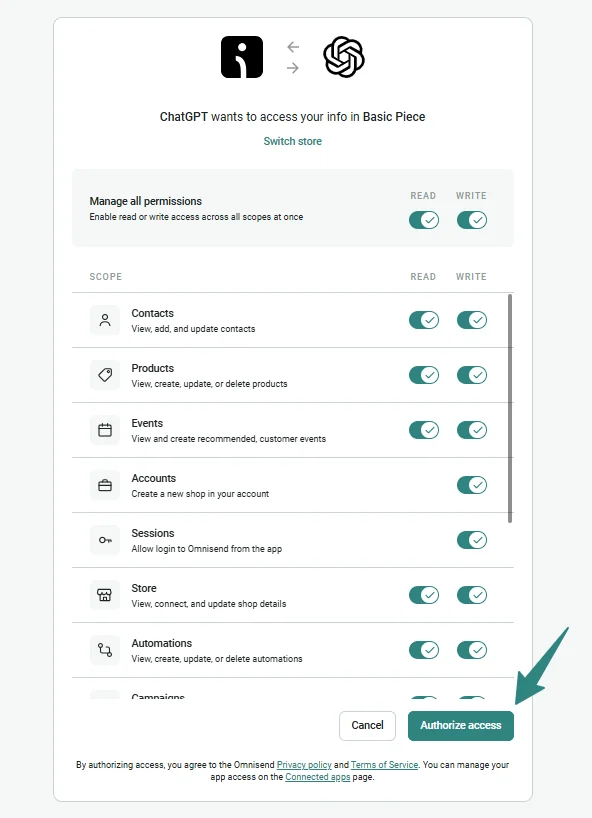
The Model Context Protocol (MCP) serves as the bridge, securely linking an AI assistant to an Omnisend account. This connection facilitates real-time data exchange, allowing the AI to access and process campaign performance, subscriber behavior, purchase history, and other critical metrics. For most users, connecting their AI assistant means installing the Omnisend Plugin in ChatGPT or utilizing the official Omnisend connector in Claude. For advanced users working with tools like Claude Code or Cursor, manual connection via Omnisend’s MCP server v2 API is also supported.
A critical aspect of this integration is the emphasis on security and control. Users with Owner, Admin, Manager, or Partner roles in Omnisend are authorized to establish the connection. Crucially, Omnisend provides granular control over read and write permissions for each data area. This means marketers can initially grant read-only access for audit phases and progressively enable write access for tasks like segment or campaign creation, ensuring data integrity and user confidence. Omnisend recommends utilizing more advanced frontier AI models, as their enhanced reasoning capabilities are better suited for complex multi-step MCP tasks, reducing the likelihood of incomplete or inaccurate results.
A Chronological Blueprint for AI-Assisted BFCM Success
The power of Omnisend’s AI integration is best understood through its application across the BFCM preparation timeline, structured into distinct phases:
Phase 1: Strategic Pre-Audit (10+ Weeks Out)
Starting early is paramount for BFCM success. Data from previous years indicates that campaigns planned and executed with sufficient lead time often outperform last-minute efforts by as much as 15-20% in terms of conversion rates. The AI assistant allows marketers to begin by auditing the previous BFCM window, leveraging historical campaign and performance data to establish a baseline.
- Full BFCM Performance Recap: A simple prompt can generate a comprehensive overview of last year’s performance, breaking down revenue, campaign effectiveness, and daily sending activity. This allows for channel-by-channel and day-by-day comparisons, highlighting overall trends. This replaces hours of manual report aggregation with an instant, consolidated view.
- Identifying Winning Patterns: The AI can then analyze the highest-performing campaigns from the previous year, looking for shared patterns across subject lines, offers, calls to action, messaging angles, and sending days. For instance, it might reveal that campaigns featuring time-sensitive flash sales sent on Tuesdays consistently achieved higher open and conversion rates. This data-driven insight helps marketers refine their strategy for the upcoming season, moving beyond guesswork.
- Detecting Revenue Leakages: Beyond identifying successes, the AI can audit past activity for potential "revenue leaks" – weak sends, missed sending days, or gaps in automation. For example, it might highlight a significant drop in engagement for a specific product category or an underperforming abandoned cart flow during the peak BFCM period, suggesting areas for improvement.
Phase 2: Optimizing List Health and Deliverability Runway (6-8 Weeks Out)
Email deliverability is a critical, yet often overlooked, component of BFCM success. A strong sender reputation, built over weeks of consistent engagement, is crucial for ensuring messages land in inboxes during high-volume sending periods. Poor deliverability can severely impact campaign reach and revenue.
- Deliverability Warning Signs: The AI can review a 90-day range of deliverability and engagement data, flagging trends in bounces, complaints, unsubscribes, and overall engagement. If, for instance, complaint rates have been steadily climbing or open rates declining, the AI will highlight these as urgent issues requiring attention.
- Assessing List Growth: The AI can analyze subscriber growth and form performance over a specified period, identifying which sign-up sources are most effectively contributing to the BFCM-ready list and where growth might be stagnating. This helps marketers prioritize efforts on high-performing forms or optimize underperforming ones. Studies show that a healthy, engaged email list can yield an ROI of $36 for every $1 spent.
Phase 3: Precision Segmentation for Targeted Campaigns (4-6 Weeks Out)
Personalization drives conversions, and effective segmentation is its cornerstone. With the ability to create segments directly, the AI transforms a tedious process into a strategic advantage.
- Lapsed BFCM Buyers: The AI can identify customers who purchased during the previous BFCM but haven’t returned since. This allows marketers to craft targeted re-engagement campaigns designed to reactivate these valuable, but dormant, customers.
- VIP Audience for Early Access: Based on purchase frequency, total revenue, and average order value, the AI can analyze customer data to identify a high-value VIP segment. This group can then be offered exclusive early access to BFCM deals, fostering loyalty and driving initial sales. Research indicates that VIP programs can increase customer lifetime value by up to 30%.
- Engaged Non-Buyers: The AI can pinpoint subscribers who consistently engage with campaigns (e.g., clicking emails) but have yet to make a purchase. This segment is ripe for conversion-focused messaging during BFCM, addressing potential barriers to purchase.
- Exclusion of Low-Engagement Contacts: To protect sender reputation and optimize campaign performance, the AI can identify contacts with prolonged low engagement. Marketers can then decide to exclude these individuals from peak BFCM sends or send them less frequently, focusing resources on more receptive audiences.
Phase 4: Crafting Campaigns and Creative (3-4 Weeks Out)
With insights gathered and segments defined, the focus shifts to campaign creation. The AI’s write access capabilities become invaluable here, moving from analytical support to direct content generation.
- AI-Generated Send Calendar: Based on last year’s audit findings and confirmed offer dates, the AI can construct a detailed BFCM campaign calendar, outlining pre-sale teasers, launch announcements, mid-sale pushes, and last-chance reminders. This ensures a strategic flow of communication across the entire period.
- Creative Briefs from Winning Patterns: The AI can transform the approved calendar and winning patterns into comprehensive creative briefs for each send. These briefs include objectives, target audience, key message, desired call to action, and content suggestions, ensuring consistency and alignment with proven strategies.
- Editable Email Template Generation: A significant breakthrough is the AI’s ability to generate ready-to-edit email templates directly within Omnisend. Leveraging the user’s Brand Assets (logo, colors, fonts), the AI can build a complete, on-brand email based on an approved creative brief. This dramatically reduces the time spent on design and copywriting, allowing marketers to focus on refining the message.
Phase 5: Automation Stress-Test (2-3 Weeks Out)
While BFCM campaigns grab headlines, underlying automations (like welcome and abandoned cart flows) carry a significant portion of the sales burden, especially during periods of high traffic.
- Message-by-Message Automation Audit: The AI can audit active welcome and abandoned cart automations, analyzing performance data for each individual message. It can identify underperforming subject lines, offers, delays, or content within a multi-step flow that might weaken overall effectiveness during a traffic surge.
- Identifying BFCM Automation Variants: The AI can recommend where BFCM-specific messaging would add useful context to evergreen automations. For example, a welcome email during BFCM might include a brief mention of ongoing sales, while an abandoned cart message could highlight the urgency of a limited-time BFCM discount.
Phase 6: Real-time Monitoring During BFCM (The Weekend Itself)
During the intense BFCM weekend, marketers need quick, actionable insights, not lengthy reports.
- Five-Minute Morning Check: The AI can provide a concise daily performance check, summarizing revenue, campaign performance, and deliverability from the previous day. It flags anything unusual and prioritizes three critical areas for immediate attention, allowing marketers to make agile, data-backed decisions.
Phase 7: Post-BFCM Analysis and Retention (First Week of December)
The work doesn’t end when the sale does. Post-BFCM analysis is crucial for future planning and customer retention.
- Executive Recap: The AI can generate a comprehensive executive recap, comparing the current BFCM performance against the previous year across key metrics like revenue, orders, AOV, and channel performance. It identifies what improved, what declined, and what key lessons should be carried forward.
- New BFCM Customer Retention: The AI can identify customers whose first purchase occurred during BFCM. It then recommends a 30-day retention plan, suggesting follow-up messages based on their purchase and engagement data, aiming to convert first-time buyers into loyal, repeat customers. This is vital, as acquiring a new customer can be five times more expensive than retaining an existing one.
Implications for E-commerce Marketers
The integration of AI into BFCM preparation via Omnisend’s MCP represents a paradigm shift for e-commerce marketers. It liberates them from tedious data aggregation and analysis, allowing them to focus on higher-level strategic thinking, creative execution, and customer relationship building. This technology democratizes advanced analytics, making sophisticated insights accessible to teams of all sizes. Smaller businesses, in particular, can leverage AI to compete more effectively with larger enterprises that traditionally have greater resources for data science and personalization. The marketer’s role evolves from a data gatherer to a strategic orchestrator, empowered by intelligent tools.
Ensuring Responsible AI Use: Guardrails and Permissions
Despite the immense benefits, Omnisend emphasizes the critical importance of human oversight and responsible AI use. The AI assistant is a planning layer, while Omnisend remains the platform where campaigns are ultimately launched.
- Verification is Key: Marketers are urged to verify all important data points, segments, templates, and automation changes within Omnisend before anything goes live. This includes checking audience exclusions, links, discount codes, offer dates, content, and schedules.
- Granular Permissions: The granular control over read and write permissions ensures that the AI assistant only accesses the data necessary for its assigned tasks, enhancing data security and privacy.
- AI as a Tool, Not a Replacement: The AI is designed to augment human intelligence, not replace it. Its recommendations and creations serve as a robust starting point, requiring human review and final approval to ensure brand alignment, compliance, and strategic fit.
In conclusion, Omnisend’s integration of AI assistants through its Model Context Protocol is poised to redefine how e-commerce businesses approach Black Friday Cyber Monday. By streamlining complex analytical and creative tasks, it empowers marketers to execute more strategic, personalized, and ultimately, more successful campaigns, transforming a traditionally stressful period into a testament to intelligent automation and human ingenuity. As AI continues to mature, its role in optimizing and personalizing the customer journey will only grow, setting new benchmarks for efficiency and effectiveness in the dynamic world of e-commerce marketing.