The persistent demand for fresh, engaging content presents a significant challenge for bloggers, marketers, and digital publishers globally. The phenomenon colloquially known as "writer’s block" or a general drought of creative ideas is a universal hurdle, often leading to stalled publishing schedules and diminished online presence. In an era where digital content fuels search engine optimization (SEO), audience engagement, and brand authority, the ability to consistently generate compelling blog post ideas is not merely a creative luxury but a strategic imperative. While advanced AI tools like Large Language Models (LLMs) and specialized content planners offer modern solutions, a multifaceted approach combining technological aids with traditional creative techniques remains the most robust strategy for maintaining a vibrant content pipeline.
The Evolving Landscape of Digital Content Creation
The digital ecosystem has transformed content creation from a niche activity into a central pillar of modern business and communication. With an estimated 7.5 million blog posts published daily worldwide, according to recent industry analyses, and global content marketing spending projected to exceed $600 billion by 2024, the volume and competitive intensity are unprecedented. This proliferation underscores the critical need for content creators to not only produce high-quality material but also to differentiate themselves through innovative and relevant topics. The objective is no longer just to fill a website with words, but to strategically address audience needs, answer specific queries, and establish thought leadership.
Historically, content ideation relied heavily on individual creativity, brainstorming sessions, and reactive responses to industry trends. However, the sheer scale and speed of today’s digital environment necessitate more structured, data-driven, and often technologically assisted methodologies. The integration of SEO principles means that ideas must not only be original but also aligned with search intent and keyword strategy, a layer of complexity absent in earlier forms of content production. This evolution has driven the development of sophisticated tools and refined strategies designed to ensure a continuous flow of relevant and impactful content.
Leveraging Internal Resources for Content Inspiration
Effective content strategy often begins by looking inward, harnessing existing data and direct audience interactions. These internal resources provide invaluable, authentic insights into what an audience truly seeks.
Inspiration from Your Audience:
Direct engagement with an audience is arguably the most potent source of new content ideas. Platforms like blog comment sections, contact forms, and social media channels are rich repositories of user queries and feedback. While much of this interaction might be general sentiment, specific questions often emerge that are too complex for a simple reply or fall outside the immediate scope of existing content. These questions represent clear gaps in current information and direct signals of audience interest. For instance, a reader asking for "detailed steps to set up a home compost system" on an eco-living blog, rather than a general "composting tips" post, indicates a need for more granular, actionable content.
Beyond passive feedback, proactive engagement through questionnaires or polls can systematically gather input. Distributing a survey asking about pain points, topics of interest, or challenges related to a blog’s niche can yield a wealth of tailored ideas. Maintaining a dedicated list or digital repository for these questions ensures that when inspiration wanes, a ready supply of audience-validated topics is at hand. This approach not only provides ideas but also builds a stronger connection with the readership, demonstrating responsiveness to their needs. Research by HubSpot indicates that companies that prioritize customer feedback see a 25% higher customer retention rate, a principle that extends directly to content relevance and reader loyalty.
Finding Blog Ideas in Google Search Console (GSC):
Google Search Console remains an indispensable, free tool for content creators seeking data-driven insights. It offers a direct window into how users discover a site, revealing the precise search queries that lead visitors to specific pages. This direct data is critical for identifying topics that an audience cares about but which the existing content may not fully address.
The GSC Performance Report is the primary resource for these insights, detailing search queries, impressions, clicks, and average ranking positions. By analyzing queries where content ranks moderately but doesn’t fully answer the user’s implicit question, bloggers can uncover significant content gaps. For example, if a parenting blog ranks for "how to keep toddlers busy without screens" but lacks a dedicated, comprehensive article on the subject, it signifies a clear demand for such a post. The search query "best hiking trails for beginners in [local area]" appearing for a travel blog that only has general hiking guides highlights an opportunity for hyper-local, beginner-focused content.
For WordPress users, integrating Google Search Console data directly into the dashboard via plugins like Yoast SEO with Google Site Kit streamlines this process. This integration eliminates the need to switch between platforms, offering immediate access to top search queries and performance metrics. While premium tools like Ahrefs or Semrush provide broader competitive analysis and keyword research capabilities, GSC’s direct, first-party data from Google is unparalleled for understanding immediate audience search behavior related to one’s own site. This combination of proprietary data and external analysis tools creates a powerful framework for content ideation and optimization.
Using the Yoast AI Content Planner:
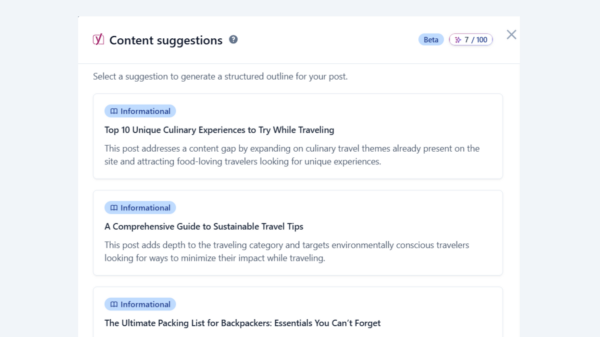
In response to the perennial challenge of content ideation, tools like the Yoast AI Content Planner have emerged, leveraging artificial intelligence to assist content creators. This planner, integrated into Yoast SEO Premium products, is designed to analyze a site’s existing content, identify conceptual gaps, and propose relevant blog ideas.
When initiating a new post, the Yoast AI Content Planner scans the entire website’s content portfolio. It then generates five specific ideas tailored to the site’s niche, based on what the audience is already engaging with and what pertinent topics might be missing. For instance, a food blog with extensive content on meal preparation but a sparse collection on quick vegetarian lunches might receive suggestions in the latter category. This analytical approach moves beyond generic prompts, offering suggestions rooted in the site’s unique content landscape and audience interests.

Once an idea is selected, the planner extends its utility by creating a structured draft, complete with a suggested title, key headings, and even a meta description. This immediate outline significantly accelerates the writing process, providing a clear roadmap from the outset. The ability to generate new batches of ideas with a single click ensures flexibility and continued inspiration, even if initial suggestions don’t perfectly align with current objectives. This AI-powered assistance aims to reduce decision fatigue and maintain publishing consistency, ensuring that content production remains a proactive, rather than reactive, endeavor.
Strategic Keyword Research: A Foundation for Ideas
Beyond basic keyword identification, a deeper dive into keyword research documents can unlock a wealth of blog post ideas. The key lies in understanding the search intent behind each keyword, not just the keyword itself. Are users seeking informational guides, commercial product comparisons, navigational assistance, or transactional opportunities?
Tools like Yoast SEO’s Semrush integration, Google’s autocomplete suggestions, and the emerging Google AI Overviews or AI Mode answers are invaluable for discerning user intent. For example, the keyword "best running shoes for flat feet" might seem straightforward, but a deeper inquiry reveals multiple potential angles:
- What are the specific features to look for in running shoes for flat feet? (Informational, guide-focused)
- Which brands offer the most supportive shoes for flat feet? (Commercial, comparison-focused)
- Are there specific exercises to complement shoe choices for flat feet? (Informational, related topics)
- What are common misconceptions about flat feet and running? (Informational, myth-busting)
Each of these questions can be expanded into a distinct blog post, addressing specific micro-intents within the broader topic. For instance:
- "The Ultimate Guide to Selecting Running Shoes for Flat Feet"
- "Top 5 Running Shoe Brands for Flat Feet: A Comparative Review"
- "Strengthening Exercises for Runners with Flat Feet: Beyond the Shoes"
- "Debunking Myths: Everything You Thought You Knew About Flat Feet and Running"
This granular approach ensures that content directly answers user queries, increasing relevance and search visibility. Furthermore, integrating rank tracking tools like Wincher with Yoast SEO allows creators to monitor the performance of these keyword-targeted posts over time, providing data for continuous optimization and future ideation. Data from industry reports suggests that content optimized for specific search intent can achieve up to 3x higher conversion rates compared to generic content, highlighting the strategic importance of this detailed research.
External Platforms and AI for Broadened Perspectives
While internal data provides tailored insights, external platforms and advanced AI tools offer broader perspectives, trend identification, and creative ignition.
Pinterest:
Pinterest remains a potent visual discovery engine, particularly beneficial for blogs in visually-driven niches such as food, DIY, fashion, travel, and home decor. Its utility extends beyond aesthetics; it’s a powerful tool for identifying emerging trends and content gaps. Searching for broad terms like "[blog post ideas]," "[blog ideas]," or "[what to blog about]," then narrowing down with niche-specific modifiers (e.g., "[blog post ideas for parents]," "[blog post ideas for lifestyle bloggers]"), can quickly yield a wealth of concepts. Analyzing top-pinned posts within these categories reveals what resonates most with users, offering direct validation of popular topics.
However, a cautious approach is warranted, as Pinterest can be prone to "clickbait" titles and an emphasis on quantity over quality. The goal should be to extract genuine topical interest and adapt it into high-value, substantive content, rather than merely replicating viral but superficial ideas. Focus on the underlying need or interest a popular pin addresses, and then craft a comprehensive piece around it.
Content Idea Generators:
Online content idea generators, such as Portent’s Title Maker, serve as creative sparks rather than definitive content outlines. While they may not provide ready-to-publish article ideas, their strength lies in generating unexpected and often humorous titles that can break mental blocks and inspire tangential thinking. For example, entering "house plant" might yield "The 15 Biggest House Plant Blunders," which can be expanded into a comprehensive guide on common plant care mistakes. A query for "wine" could suggest "17 Unexpected Uses for Wine," prompting ideas for creative recipes, cleaning hacks, or even historical anecdotes. Similarly, "baby" might generate "20 Ideas You Can Steal From Babies," leading to posts about simplicity, curiosity, or resilience.
The value of these generators is in their ability to jolt creativity, offering fresh angles or humorous perspectives that might not emerge during conventional brainstorming. They encourage thinking outside the box, transforming a mundane keyword into a unique content proposition.
Using AI and Chatbots for Inspiration:
The advent of sophisticated AI tools and chatbots like ChatGPT, Claude, or Gemini has revolutionized content ideation. However, their effectiveness hinges on the specificity and context provided by the user. Generic prompts yield generic results. To maximize their utility, users should:
- Ask for specific angles: Instead of "Give me blog ideas about parenting," try "Generate blog ideas for a parenting blog focusing on sustainable practices for toddlers, targeting millennial parents."
- Refine vague ideas: If a broad topic like "healthy eating" is the starting point, ask AI to narrow it down: "I have a broad topic of ‘healthy eating.’ Can you suggest five niche blog post ideas that address common misconceptions or time-saving strategies for busy professionals?"
- Reverse-engineer competitors: Provide a competitor’s blog URL and ask: "Analyze this blog’s recent posts and suggest three topics they haven’t covered but would align with their audience and my niche."
- Avoid commodity content: AI frequently suggests topics that are generic or overdone. The human element is crucial for adding unique perspective, personal experience, proprietary data, or a distinct voice. For instance, if AI suggests "10 tips for better sleep," transform it into "My 3-Month Experiment: How I Optimized My Sleep Using Wearable Tech and What I Learned" or "Expert Interview: A Neurologist’s Top 5 Overlooked Sleep Tips." This human-AI collaboration ensures content stands out in a crowded digital space. Data from a recent study by McKinsey suggests that companies integrating AI into creative processes report up to a 15% increase in content output efficiency, emphasizing the potential when managed strategically.
Days Of The Year:
Websites like "Days Of The Year" provide a treasure trove of inspiration by cataloging a vast array of global holidays, both official and whimsical. This resource allows bloggers to tap into cultural relevance and topical content opportunities. For example, April 9th being "Unicorn Day" could inspire a fantasy-themed blog to explore the mythology of unicorns or a children’s craft blog to offer unicorn-themed DIY projects. "Towel Day" on May 25th, commemorating Douglas Adams, could lead a travel blogger to discuss the essential role of towels in travel or a lifestyle blogger to share tips on maintaining towel softness.
This approach offers a unique way to connect niche topics to broader cultural moments, generating timely and often shareable content. The sheer variety ensures that virtually every niche can find a relevant "day" to build content around, fostering creativity and providing a consistent content calendar framework.
Other Blogs and Fellow Bloggers:
The internet itself is an expansive source of inspiration. Following other bloggers within or adjacent to one’s niche can spark new ideas, reveal different content formats, or highlight underserved topics. Engaging with online communities, such as Facebook groups for bloggers or industry-specific forums, provides a platform for discussing challenges, sharing insights, and brainstorming collectively. The collaborative spirit of these communities can be a powerful antidote to creative isolation. However, it is paramount to uphold ethical standards: inspiration should never devolve into plagiarism. Ideas should be adapted, reinterpreted through one’s unique lens, and credit given where appropriate, ensuring originality and integrity.
Drawing Inspiration from Real-World Experiences
Some of the most authentic and compelling content stems directly from real-world events and personal experiences.
Current Events:
Connecting current events to a blog’s niche offers a powerful way to create timely, relevant content. The art lies in linking breaking news to an audience’s concerns in an organic and value-adding manner. For a parenting blog, a new study on screen time could prompt an article titled "How Much Screen Time is Too Much? What the Latest Research Says and Practical Parental Strategies." A personal finance blog could leverage changes in tax laws to produce "Three Ways New Tax Rules Affect Your Savings and How to Adapt." The goal is to move beyond simply reporting the news and instead analyze its implications for the readership, providing actionable advice or insightful commentary.
Setting up Google Alerts for industry keywords ensures constant awareness of emerging news. When a relevant event surfaces, the immediate consideration should be its impact on the target audience. For a sustainable living blog, a new local recycling policy could inspire "Navigating the New Rules: How to Adjust Your Recycling Habits for Maximum Impact." While topical content can boost engagement, sensitive or highly controversial subjects should be approached with extreme caution, focusing on factual reporting and constructive guidance rather than exploiting trends.
Your Daily Life:
Personal and professional experiences are often overlooked reservoirs of content ideas. Everyday situations, challenges faced by clients or colleagues, or even routine problem-solving can be transformed into valuable blog posts. If a client frequently encounters a specific technical issue, a step-by-step guide to resolve it could become a highly sought-after resource. A therapist blogging about mental health tips might draw inspiration from common themes in their practice (with anonymized details), such as "Coping with Holiday Stress: A Therapist’s Guide."
When utilizing real-life examples, respecting privacy is non-negotiable. Names, identifying details, and specific circumstances must be altered to protect individuals and maintain confidentiality. Seeking explicit permission is crucial when using any recognizable situation. This approach allows for content that is authentic, relatable, and grounded in practical experience, fostering trust and authority with the audience.
Clear Your Head to Find Fresh Ideas:
Sustained periods of intense focus can lead to mental fatigue and creative stagnation. When staring at a blank screen yields no results, stepping away from the desk is often the most productive action. Engaging in activities that shift focus—a short walk, household chores, or even a brief meditation—allows the subconscious mind to process information and make new connections. The best ideas frequently emerge during these periods of relaxed mental engagement, when the pressure to perform is lifted.
For those who prefer a more structured break, a "brainstorming sprint" can be highly effective. Setting a timer for 10 minutes and rapidly generating ideas around a specific topic, aiming for a mix of practical, unconventional, and humorous concepts, can break rigid thought patterns. For instance, "What are twenty blog ideas about [your topic]? Make five weird, five practical, and ten in between." Without self-censorship, this exercise forces divergent thinking. Following this, a 5-minute "freewriting" session on the most intriguing idea can further develop the concept. This technique not only generates ideas but also re-energizes the mind, fostering a more focused return to work.
Keep a List of Ideas:
The simplest yet most effective strategy for combating writer’s block is proactive preparation. Some days are abundant with ideas, while others are barren. Maintaining a running list of potential blog posts—whether in a digital note-taking app, a dedicated document, or a physical notebook—ensures a buffer against creative droughts. Every time an idea, however fleeting, comes to mind, it should be captured. This habit transforms spontaneous flashes of inspiration into a tangible resource, ready to be tapped when the well of creativity feels dry. This repository acts as a strategic reserve, allowing content creators to maintain publishing consistency even during periods of low inspiration.
The Strategic Imperative of Continuous Content Generation
In the competitive digital landscape, a consistent and relevant content output is paramount for maintaining SEO rankings, fostering audience loyalty, and establishing brand authority. The confluence of traditional creative methods with advanced technological aids, particularly AI, has redefined the content ideation process. The optimal approach integrates structured, data-driven strategies (like GSC analysis and keyword research) with intuitive, audience-centric insights (from comments and surveys) and innovative tools (such as AI content planners and chatbots).
The implications of sustained content generation are far-reaching. It directly impacts a website’s visibility on search engines, drives organic traffic, and positions a brand as a trusted resource. Furthermore, a dynamic content calendar reinforces audience engagement, encouraging repeat visits and fostering a loyal community. The future of content ideation points towards a symbiotic relationship between human creativity and artificial intelligence, where AI handles the heavy lifting of data analysis and preliminary idea generation, allowing human creators to focus on injecting unique perspectives, narrative depth, and authentic voice. By embracing this multifaceted approach, bloggers and digital publishers can ensure their content pipeline remains robust, innovative, and continuously responsive to the evolving needs of their audience.

 Jia Lissa
 Siti Muinah