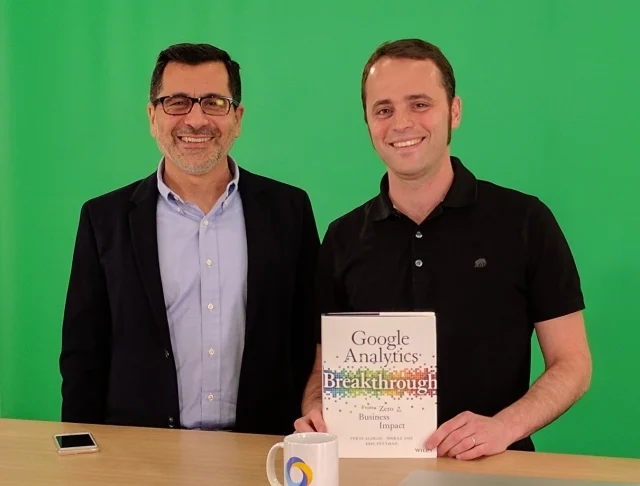
The landscape of digital marketing and data science has undergone a radical transformation over the past decade, shifting from a niche technical requirement to a fundamental pillar of corporate strategy. In a comprehensive dialogue held at the Google Analytics studio, industry veterans Feras Alhlou, Co-Founder and Principal Consultant at E-Nor, and Daniel Waisberg, a prominent figure in the analytics community, explored the methodologies required to navigate this increasingly complex environment. As businesses grapple with an unprecedented volume of data originating from a multitude of touchpoints, the conversation highlighted a critical paradigm shift: analytics must be viewed not merely as a set of technical tools, but as a holistic business process designed to drive measurable growth.
The Foundation of Modern Measurement Strategy
At the core of the discussion was the E-Nor Optimization Framework, a systematic approach developed by Alhlou and his team to help organizations move beyond basic reporting and toward advanced data maturity. This framework is predicated on the belief that data, in isolation, lacks value unless it is integrated into a broader organizational strategy. The framework begins with a rigorous dual-layered audit process. This phase is divided into a technical audit—ensuring that tracking codes, tags, and data pipelines are functioning correctly—and a business audit, which involves deep engagement with stakeholders.
The business audit is often the most overlooked component of analytics implementation. It requires identifying Key Performance Indicators (KPIs) that align with the specific goals of the organization, rather than relying on generic "vanity metrics" such as page views or total sessions. By understanding what matters most to stakeholders—be it lead generation quality, customer lifetime value, or conversion velocity—analysts can ensure that the data collected is actually capable of informing executive decisions.
Once the technical and business foundations are secured, the process moves into the reporting layer. This stage focuses on the visualization and dissemination of data. However, Alhlou emphasized that reporting is only a stepping stone. The true value of an analytics program is realized in the subsequent stages: analysis and actionable insights. Analysis involves interpreting the reports to understand the "why" behind user behavior, while actionable insights provide the "what next," offering specific recommendations for site improvements or marketing adjustments. The final and most impactful stage of the framework is testing and personalization, where data is used to tailor user experiences in real-time, directly influencing the bottom line.
Contextualizing Data in an Omnichannel World
The complexity of the modern digital ecosystem was a primary theme of the interview. Alhlou noted that the "simple life" for marketers—characterized by a single device and a handful of predictable channels—has been replaced by a fragmented reality. Today, a single customer journey might span multiple mobile devices, social media platforms, web browsers, and offline interactions. This proliferation of data sources has created a "data deluge" that can often lead to analysis paralysis if not managed correctly.
To combat this, the discussion centered on the necessity of context. Understanding the context around data means recognizing the nuances of different platforms. For instance, user intent on a mobile device may differ significantly from that on a desktop, and social media engagement may represent a different stage of the marketing funnel than a direct search. By focusing on the context of the data, organizations can avoid the trap of looking at metrics in a vacuum. This involves integrating backend data—such as CRM information and sales records—with front-end behavioral data to create a 360-degree view of the customer.
Industry data supports the urgency of this approach. According to recent market research, organizations that leverage customer behavioral insights outperform peers by 85% in sales growth and more than 25% in gross margin. However, the challenge remains the integration of these disparate data sets. The transition from "data collection" to "data orchestration" is now the primary hurdle for most mid-to-large-scale enterprises.
Developing a Phased Data Roadmap
A significant portion of the dialogue was dedicated to practical advice for companies seeking to elevate their analytics maturity. Alhlou strongly advised the adoption of a structured data roadmap. This roadmap serves as a strategic guide, preventing organizations from attempting to implement overly complex systems before they have mastered the basics.
The first step of this roadmap involves mastering "owned" data. This primarily includes web and mobile analytics. Before a company can effectively analyze market trends or competitor behavior, it must have a crystalline understanding of how users are interacting with its own digital properties. Once this baseline is established, the roadmap suggests augmenting these reports with social data. Integrating social metrics allows for a better understanding of brand sentiment and the qualitative aspects of user engagement.
The final stage of the roadmap involves the integration of the "voice of the customer." Alhlou highlighted the evolution of tools like Google Surveys, which have democratized market research. In the past, conducting large-scale consumer surveys was a prohibitively expensive and time-consuming endeavor, often reserved for the largest corporations with massive research budgets. Modern tools allow businesses of all sizes to run targeted surveys on their own properties or across the web to gather qualitative data. This provides the "why" that quantitative analytics often misses, allowing companies to conduct market research and competitive analysis with surgical precision.
The Role of Leadership and Organizational Culture
While the technical aspects of analytics are vital, the conversation between Waisberg and Alhlou underscored the importance of organizational culture. Implementing a measurement strategy is as much a human challenge as it is a technological one. For analytics to be successful, there must be a culture of data literacy from the C-suite down to the operational level.
Stakeholder engagement is not a one-time event at the start of an audit; it is a continuous process of alignment. Analysts must be able to translate complex data points into narratives that resonate with business leaders. This requires a shift in the role of the analyst from a "reporter" to a "strategic advisor." When the reporting layer is automated and the data is trusted, analysts are freed to spend their time on high-value activities like hypothesis testing and predictive modeling.
Furthermore, the interview touched upon the implications of "Google Analytics Breakthrough," a book co-authored by Alhlou. The text serves as a comprehensive guide for those looking to bridge the gap between technical proficiency and business application. The book’s success reflects a broader industry trend: the need for educational resources that treat analytics as a discipline requiring both scientific rigor and creative problem-solving.
Broader Implications and the Future of the Industry
The implications of the strategies discussed by Alhlou and Waisberg extend far beyond the immediate technical benefits. As privacy regulations like GDPR and CCPA become more stringent, the ability to effectively manage and derive value from first-party data is becoming a competitive necessity. Organizations that have built a robust data roadmap and a culture of testing are better positioned to adapt to a "cookieless" future.
Moreover, the rise of artificial intelligence and machine learning is set to further accelerate the capabilities of the "Analysis" and "Personalization" layers of the E-Nor framework. Automated insights and predictive analytics are no longer futuristic concepts; they are currently being integrated into standard analytics platforms. However, as Alhlou noted, these advanced technologies still require a solid foundation of clean, well-audited data to be effective. An AI model is only as good as the data it is fed.
The meeting at the Google Analytics studio served as a timely reminder that despite the rapid pace of technological change, the fundamentals of business remain constant. Success in the digital age requires a clear strategy, a commitment to understanding the customer, and a disciplined approach to measurement. By treating analytics as a core business process rather than a peripheral IT function, organizations can unlock new levels of efficiency and innovation.
In conclusion, the insights shared by Feras Alhlou highlight a path forward for businesses navigating the complexities of the modern data landscape. Through the application of structured frameworks, the development of comprehensive data roadmaps, and a relentless focus on the business context of data, companies can transform their analytics departments into engines of growth. As the industry continues to evolve, the principles of transparency, stakeholder alignment, and actionable insight will remain the hallmarks of a successful, data-driven organization. The collaboration between experts like Alhlou and Waisberg continues to provide the roadmap necessary for the next generation of digital leaders to achieve breakthrough results in an increasingly data-centric world.


 Ali Ikhwan
 Dwi Wanna