Social media risk management is the systematic process of identifying, assessing, and mitigating potential threats stemming from an organization’s engagement with social media platforms. This comprehensive approach addresses risks across various fronts, including brand channels, employee activity, and wider audience interactions, encompassing everything from reputational crises and security breaches to stringent compliance violations. A truly robust strategy integrates clear social media policies, continuous real-time monitoring, and advanced technological tools, underpinned by cross-functional collaboration among marketing, legal, compliance, IT, and customer service departments, each playing a crucial role in safeguarding the brand.
The Escalating Stakes: Why Social Media Risk Management is Paramount in 2026

In 2026, the landscape of social media has evolved into a complex, high-velocity environment where a single post can achieve global reach within moments, and a misstep can trigger a full-blown crisis with equal speed. The stakes for businesses are unprecedentedly high, the pace relentlessly fast, and the regulatory framework in constant flux. The sheer ubiquity of social media means that brands, customers, and employees are all active participants, creating a common ground for conversations—both constructive and potentially damaging—and a fertile breeding ground for crises.
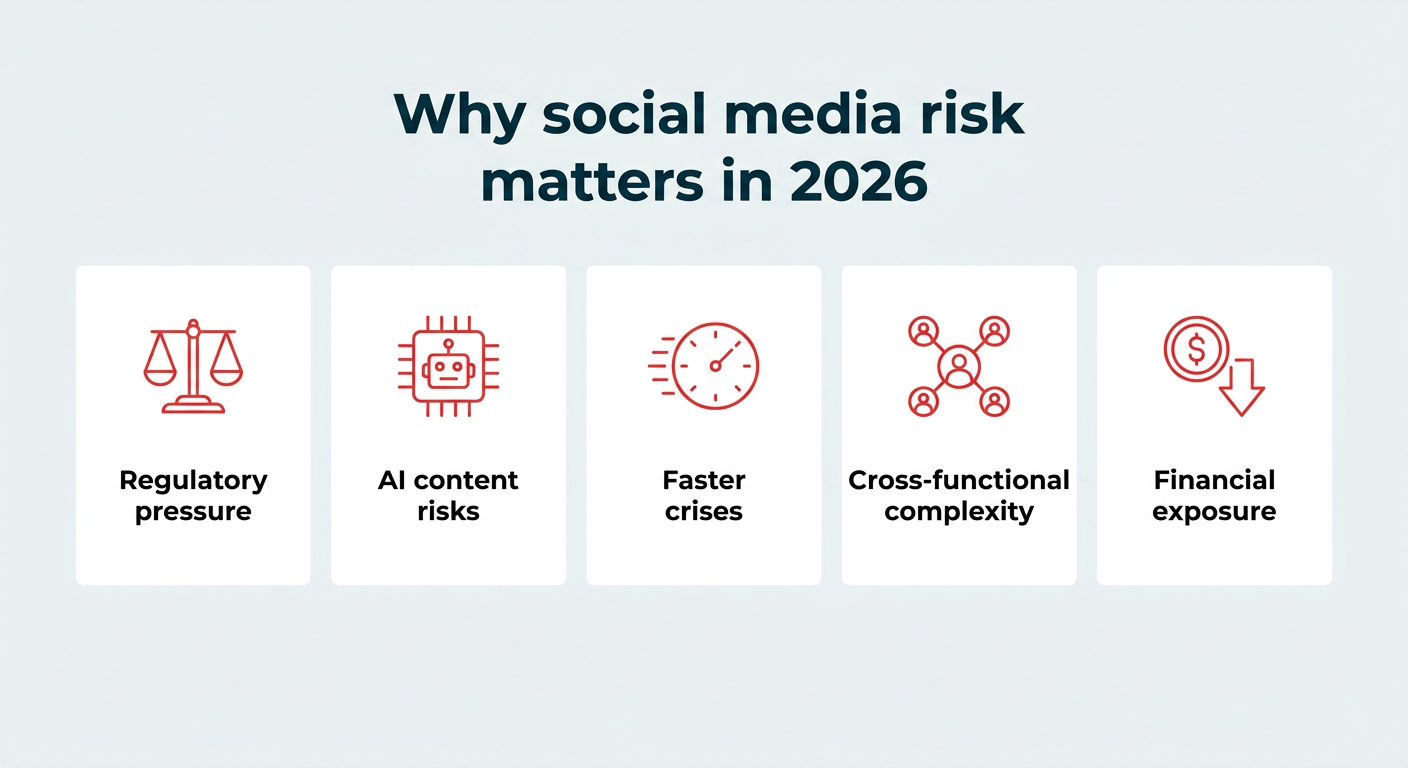
The urgency for sophisticated risk management is driven by several critical factors: the exponential growth in social media users, the proliferation of platforms, the increasing sophistication of cyber threats, and an ever-tightening regulatory environment. As of recent estimates, global social media penetration continues to rise, with billions of users actively engaging daily, amplifying the potential reach of any content. This scale means that a localized issue can rapidly globalize, impacting reputation and operations across borders. Furthermore, the advent of advanced AI technologies has introduced new layers of complexity, with deepfakes and sophisticated misinformation campaigns posing significant challenges to brand integrity and public trust. For enterprise brands, a proactive and meticulously crafted social media risk management strategy is no longer merely advantageous; it is an absolute necessity for survival and sustained growth in the digital age.
A Spectrum of Vulnerabilities: Understanding Key Social Media Risks

Businesses today face a diverse array of social media risks, each capable of impacting brand value, operational efficiency, and legal standing in distinct ways. A granular understanding of these categories is fundamental to developing effective mitigation strategies. These principal risk types include reputational damage, security breaches, compliance violations, legal issues, operational disruption, and crisis communication failures.
Reputation Risks: The digital age has rendered brand trust more fragile than ever. Negative comments, inappropriate posts, or critical reviews can swiftly erode public confidence. Data from the 2025 Edelman Trust Barometer, which indicated that 68% of people worry that business leaders intentionally mislead them, underscores this pervasive skepticism. This vulnerability is particularly acute among younger demographics who often place as much, if not more, trust in social media as traditional news sources. Given the public nature of social platforms, crises can spiral out of control rapidly, with a single viral misstep cementing negative perceptions in mere minutes. Effective brand reputation monitoring and a well-rehearsed social media crisis management response plan are indispensable for limiting this pervasive risk.
Security Risks: Compromised social media accounts represent a critical security vulnerability. A breach can lead to unauthorized spamming, loss of account control, or exposure of sensitive customer data, jeopardizing data privacy and corporate integrity. This risk is compounded during employee transitions; immediate removal of account access and permissions for departing staff is paramount to safeguarding social media accounts. Enterprise-level teams can significantly reduce these risks through robust controls such as Single Sign-On (SSO), Multi-Factor Authentication (MFA), and meticulously designed role-based permissions, which restrict who can access accounts and what actions they can perform. The emerging threat of AI-generated content, including highly convincing deepfakes and fake accounts impersonating brands or executives, necessitates advanced monitoring for impersonation as a new cornerstone of social media security.
Compliance Risks: Social media compliance mandates adherence to a complex web of rules set by regulatory bodies, platform terms of service, and internal organizational policies. Depending on the industry, this often requires meticulous care in content creation and publication. Regulations such as GDPR (General Data Protection Regulation) dictate how personal data is handled, HIPAA (Health Insurance Portability and Accountability Act) protects patient information for healthcare brands, and FTC (Federal Trade Commission) guidelines require transparent disclosure of sponsored content. In highly regulated sectors like healthcare, sharing patient information without explicit consent is not only risky but potentially illegal. For brands engaging with partners, influencers, or running promotional campaigns, strict adherence to advertising regulations is non-negotiable. The integration of AI-generated content further complicates compliance, raising questions about accuracy, necessary disclosures, and intellectual property rights, demanding careful review of all such posts. Legal teams must review all contracts and provide clearance for social content to be shared by all parties.
Legal Risks: Beyond regulatory compliance, social media exposes businesses to a range of legal liabilities. These include intellectual property infringement (e.g., unauthorized use of copyrighted images or trademarks), defamation (false statements damaging reputation), and liability arising from employee personal accounts. While employees are encouraged to share work-related updates, a lack of clear social media guidelines can inadvertently create significant legal issues. This is especially pertinent for businesses in regulated industries, where employee posts can have profound implications. A comprehensive social media policy is crucial for setting clear expectations regarding acceptable and unacceptable employee posts, thereby protecting both the brand and its workforce.
Operational Risks: Operational risks stem from the day-to-day management of social media at scale. Inefficient processes can lead to coverage gaps, inconsistent messaging, and costly errors. For large enterprises, these risks often manifest as fragmented content strategies across different regions or sub-brands, ambiguous account ownership, and a disconnected ecosystem of tools that leaves conversations unmonitored. Approval bottlenecks can also impede rapid response, a critical factor in mitigating emerging issues. Strong social media governance is essential for aligning these numerous moving parts, ensuring seamless operations and preventing oversights.
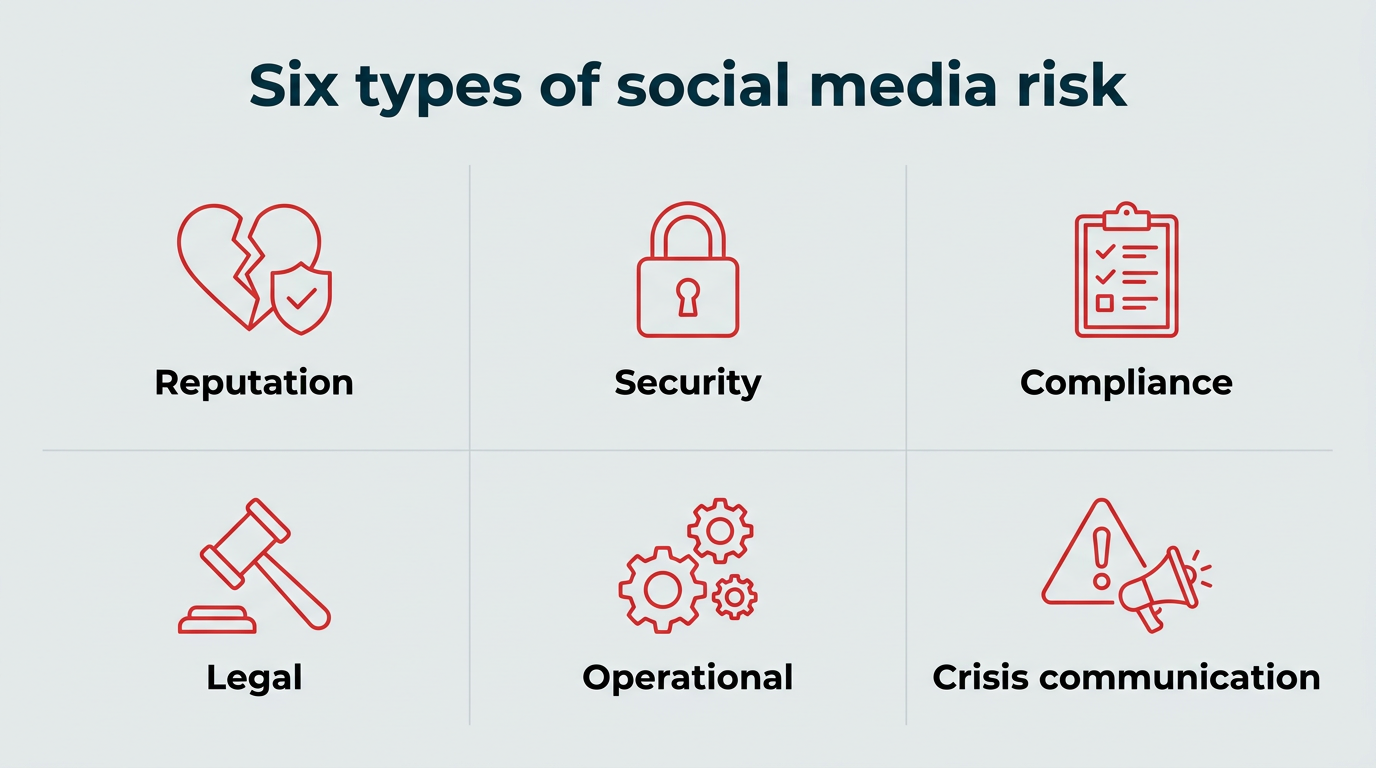
Crisis Communication Risks: This category refers specifically to the danger that a delayed, defensive, or tone-deaf response will exacerbate the damage of an initial incident. Unlike reputation risk, which concerns the underlying issue, crisis communication risk pertains to the failure in how a brand communicates during a sensitive period. Brands that remain silent, react defensively, or post insensitive messages during a crisis often magnify the negative impact. A single mishandled reply can transform a minor complaint into a viral sensation. Developing a robust plan, with the PR and communications teams fully aligned and prepared in advance, is the most effective way to prevent a difficult moment from spiraling into a catastrophic event.
The Tangible and Intangible Costs of Neglect
The failure to effectively manage social media risks can lead to minor incidents escalating into significant financial, legal, and reputational damage, often directly impacting the bottom line. A stark illustration of this occurred in the fall of 2022 when pharmaceutical giant Eli Lilly experienced a 4.37% drop in its stock value after a fake account falsely tweeted that insulin would be free. This single, unaddressed impersonation post wiped billions from the company’s market capitalization, demonstrating the immediate and profound financial repercussions of social media vulnerability.

Beyond stock market fluctuations, security incidents carry a steep price. IBM’s 2025 Cost of a Data Breach Report highlighted that the global average cost of a data breach reached $4.4 million, serving as a sobering reminder of the financial burden associated with security lapses. These figures underscore the direct economic consequences. However, the costs extend far beyond monetary losses. Brands suffer intangible damages, including erosion of customer trust, diminished brand equity, reduced customer loyalty, increased difficulty in attracting and retaining talent, and heightened skepticism from investors. Such fallout precisely illustrates why a proactive social media risk management plan is not merely advisable but indispensable for any brand operating in the contemporary digital landscape.
Crafting a Resilient Social Media Risk Management Strategy
Building an effective social media risk management strategy begins with a thorough assessment of potential risks and the establishment of appropriate policies, skilled personnel, and advanced technological tools. Trish Riswick, former Social Engagement Specialist at Hootsuite, offers invaluable insights into the seven key steps for constructing such a strategy.

1. Create a Comprehensive Social Media Policy: The foundational step in managing social media risk is the establishment of a clearly defined social media policy. This document must outline a detailed plan of action for various scenarios, including emergencies, PR crises, and security breaches. A robust policy, often built from a customizable template, should encompass: acceptable use guidelines, content creation standards, privacy protocols, security measures, crisis communication procedures, intellectual property guidelines, and employee advocacy rules. Crucially, the policy must also address team transitions, defining precise handover processes and steps to secure accounts, ensuring seamless operations in the absence of key personnel.
2. Implement Robust Employee Training on Social Media Risk: Employees can be powerful brand advocates, yet without continuous and comprehensive training, they can inadvertently expose the business to significant risks. An off-message or non-compliant post can rapidly damage brand reputation. As Riswick notes, "Many employees want to be more active on social and showcase what they’re doing at their company, however, they need to understand what they can and cannot post.” Clear social media guidelines for employees are vital. The risk management plan must include explicit direction on what employees can share from their personal accounts, covering confidentiality rules and industry regulations. Employee training should be refreshed at least quarterly, utilizing updated guidelines templates, and immediately following any policy changes. Tools like Hootsuite Parliament, an employee advocacy app, can simplify this by enabling the generation of pre-approved, on-brand content for employees to share securely on their personal channels.
3. Establish Clear Roles and Responsibilities: Defining clear roles and responsibilities is crucial for ensuring alignment and rapid response when a risk emerges, preventing assumptions about who is addressing an issue. Cross-functional coordination often poses the greatest challenge for large enterprises. Roles across the social media team, legal, compliance, IT, PR, and customer service must be explicitly defined. A RACI (Responsible, Accountable, Consulted, Informed) framework is particularly effective for crisis scenarios, ensuring that responsibilities are documented in advance, allowing teams to react swiftly rather than scrambling for clarity under pressure.

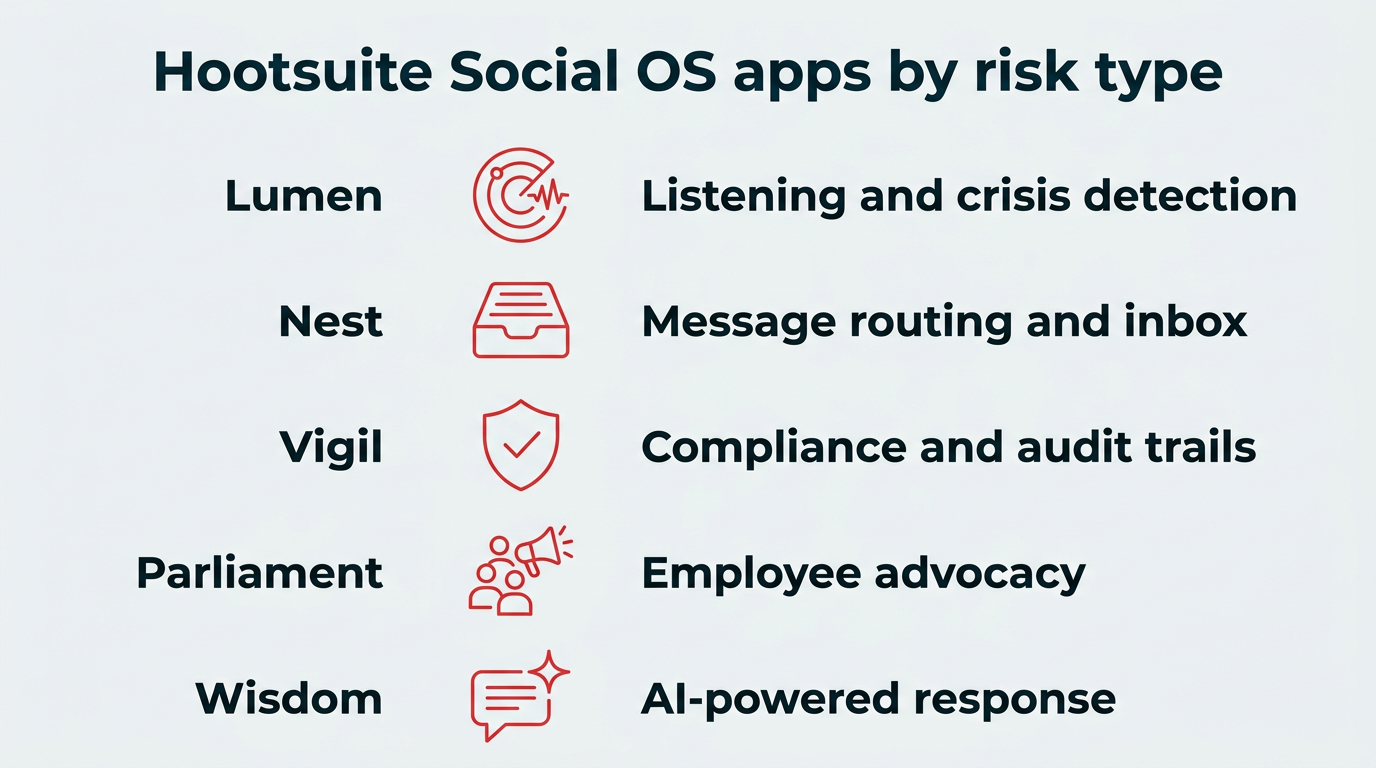
4. Monitor Social Media Channels in Real Time: Real-time monitoring of social channels is essential for early detection of potential issues, enabling timely intervention before escalation. This responsibility extends beyond the social media team. Depending on the situation, customer service or PR teams may require immediate visibility into emerging trends. Therefore, a clear process for routing critical messages to the appropriate teams and stakeholders is imperative. Riswick advises, "A lot of information can get lost when moving from team to team.” To mitigate this, she recommends using an internal system to categorize, tag, and relay critical messages, allowing more personnel to monitor developments and leverage the information as business intelligence to improve their respective areas. Tools such as Lumen, Hootsuite Social OS’s listening and insights app, facilitate real-time monitoring by tracking brand mentions, analyzing sentiment shifts, and setting keyword alerts to notify teams the moment a potential crisis arises.
5. Build a Comprehensive Crisis Management Plan: A meticulously developed crisis management plan prepares a team to act swiftly and consistently when an incident occurs. Proactive preparation, including crisis detection and response tools, is the critical differentiator between a contained incident and a full-blown crisis. The plan should feature pre-approved response templates, an escalation matrix, a designated spokesperson, and channel-specific response protocols. Detailed guidance on handling a social media crisis ensures that teams avoid improvising under immense pressure.
6. Conduct Regular Social Media Channel Audits: Regular social media audits are a preventative measure, identifying risks before they manifest as problems. These audits serve as a health check for accounts, access permissions, and content. A thorough audit includes reviewing account access, scrutinizing content for anything off-brand or non-compliant, verifying adherence to current platform policies, and benchmarking performance. Quarterly audits are recommended to ensure consistent adherence to guidelines and prevent drift. Regular audits maintain clean, secure, and consistent channels across all teams and regions.
7. Review and Update Policies on a Regular Basis: As social media platforms, trends, and regulations constantly evolve, social media policies must adapt accordingly. Riswick emphasizes, "In order to stay compliant within your industry, you need to revise your policy on a regular basis. This not only protects the brand but, more importantly, protects employees.” Monitoring emerging platforms, shifting social trends, and updates to industry and local regulations is crucial. In 2026, updating AI usage guidelines is a top priority, given the rapid evolution of AI tools and regulatory frameworks. Clear communication of policy updates ensures that employees are always aware of acceptable and unacceptable posting practices.
Executing a Crisis Response: A Five-Step Protocol
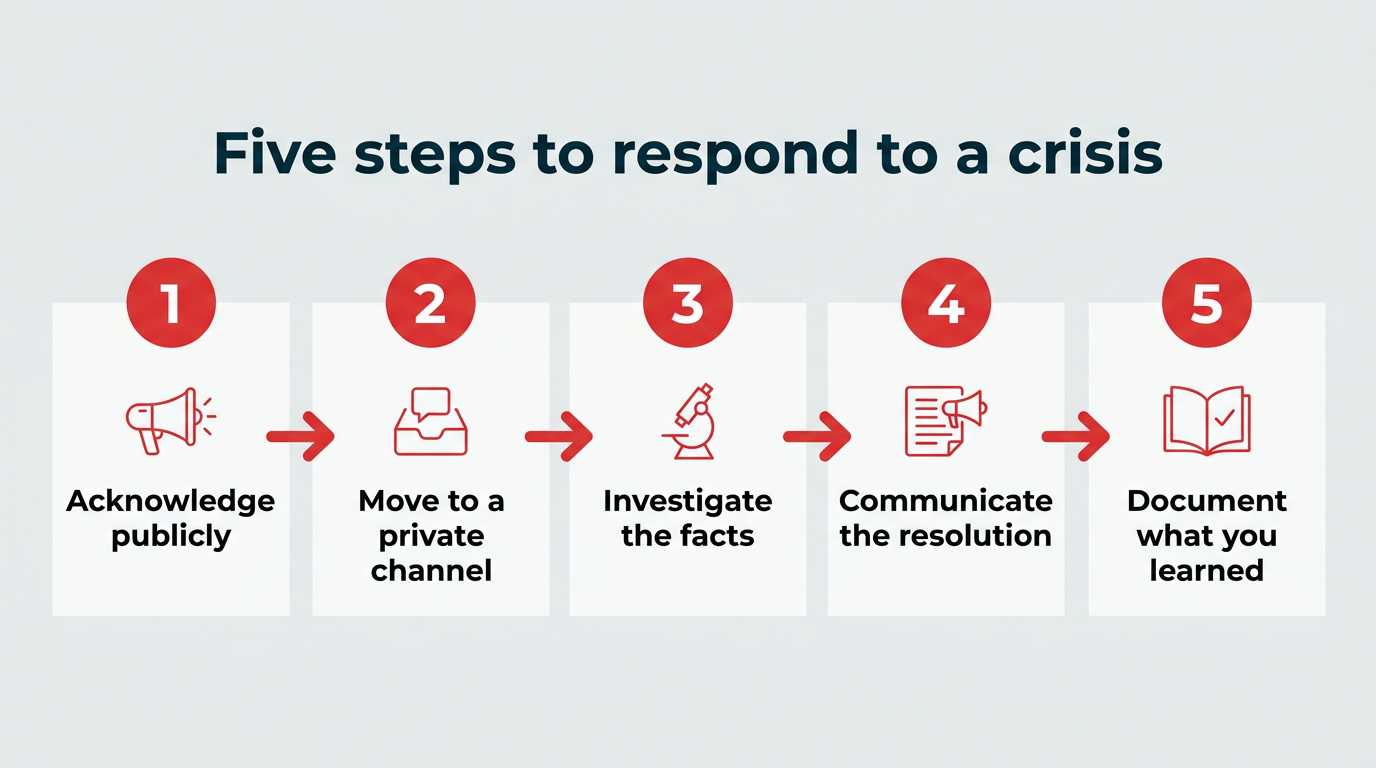
When a crisis strikes, a swift and structured response is paramount to acting with confidence and minimizing damage. Here are five essential steps to guide an effective crisis response:
- Acknowledge the Issue Promptly: The first step is to publicly acknowledge the issue. This informs customers and the wider audience that the brand is aware of the situation and taking it seriously. Delay can amplify negative sentiment.
- Assess and Triage the Situation: Utilize real-time monitoring tools to understand the scope and severity of the crisis. Categorize the issue (e.g., security, reputation, operational) to determine the appropriate response team and escalation path.
- Activate the Crisis Communication Plan: Engage the pre-defined crisis management plan, including pre-approved messaging and designated spokespersons. Ensure all internal stakeholders are aligned on the message and strategy.
- Communicate Transparently and Empathically: Address concerns directly, honestly, and with empathy. Avoid defensive language. Focus on providing accurate information and outlining steps being taken to resolve the issue.
- Move the Conversation to Private Channels: As Riswick advises, “My best practice is to always move that conversation from public to private as quickly as possible.” This allows for personalized problem resolution, de-escalates public confrontation, and prevents the issue from gaining further momentum.
Acting quickly helps prevent negative comments from gaining traction and spiraling into a larger public relations crisis. Following these steps ensures a controlled and effective response.
Leveraging Technology for Enhanced Risk Mitigation
A centralized social media management tool is indispensable for reducing risk by providing every team with a single source of truth for conversations, permissions, and approvals. Rather than managing fragmented logins and disconnected applications, an organization gains a unified, governed system. This centralized approach significantly lowers risk by providing: unified dashboards for oversight, granular permissions for controlled access, streamlined content approval workflows, comprehensive audit trails for accountability, secure asset management, and integrated compliance features.

How Hootsuite Social OS Helps Manage Social Media Risk: Hootsuite Social OS integrates listening, engagement, compliance, and advocacy into one connected ecosystem, enabling organizations to identify risks early and respond effectively before they escalate. Each application within Social OS directly addresses different types of social media risk. Lumen’s listening tools track brand mentions, monitor sentiment, and detect potential issues proactively. Nest, the social media inbox app, centralizes all messages – private DMs, public comments, and reactions – with intelligent routing to ensure the right team handles each issue swiftly. Vigil adds a crucial compliance and governance layer, featuring approval workflows and audit trails to maintain regulatory adherence. Together, these tools provide a comprehensive framework for proactive social media risk management.
Conclusion
Social media risk management is an ongoing, dynamic process, not a one-time task. It requires continuous vigilance, strategic planning, cross-functional collaboration, and the intelligent application of technology. The accelerating pace of digital evolution, coupled with increasing regulatory scrutiny and the rising sophistication of cyber threats, mandates that businesses adopt a proactive and integrated approach to safeguard their brands. By meticulously implementing comprehensive policies, fostering a culture of informed employee engagement, establishing clear governance structures, and leveraging advanced social media management platforms, enterprises can navigate the inherent complexities of the digital landscape. This commitment ensures not only the mitigation of immediate risks but also the sustained resilience, reputation, and long-term success of the brand in an ever-evolving digital world.

 rifanmuazin
 Pevita Pearce