The digital landscape is undergoing a profound transformation, with artificial intelligence fundamentally reshaping how consumers discover information and interact with brands. In this evolving environment, traditional search engine optimization (SEO) is being complemented, and in some cases supplanted, by Answer Engine Optimization (AEO). This shift underscores a critical challenge for businesses: if a brand lacks visibility within these AI-powered answer engines, it risks missing crucial early-stage influence and customer touchpoints. According to a recent report by McKinsey, a significant 50% of consumers now utilize answer engines, with over 70% relying on them to pose questions and gather comprehensive information. This indicates a growing proportion of initial discovery occurring directly within AI tools, often before users even navigate to a brand’s website. As such, marketers are increasingly seeking robust tools to monitor, measure, and enhance their brand’s presence in these nascent search models. Two prominent platforms, Profound and Bluefish AI, have emerged as key players in this space, each offering distinct capabilities tailored to different strategic priorities.
The Dawn of Answer Engine Optimization: A Paradigm Shift in Digital Discovery
The advent of sophisticated generative AI models has ushered in a new era of search. Historically, search engines provided a list of "blue links" to websites, tasking users with sifting through results to find answers. Modern AI-powered answer engines, such as Google AI Overviews, ChatGPT, Perplexity, and Gemini, aim to directly answer user queries, often synthesizing information from multiple sources into a concise, conversational response. This fundamental change means that for a brand to be discovered, it must not only rank high in traditional search but also be recognized and cited accurately within these AI-generated summaries.
This evolution from a "link-based" internet to an "answer-based" internet represents a significant challenge and opportunity for marketers. Brands must ensure their content is authoritative, verifiable, and structured in a way that AI models can readily interpret and incorporate into their responses. The stakes are high; early adoption of AEO best practices can establish a brand as a trusted source, while neglect can lead to invisibility in a rapidly expanding and influential channel. This context makes the evaluation of specialized AEO tools, like Profound and Bluefish AI, not just beneficial but imperative for modern marketing strategies.
Profound: Driving Proactive AI Search Visibility and Growth

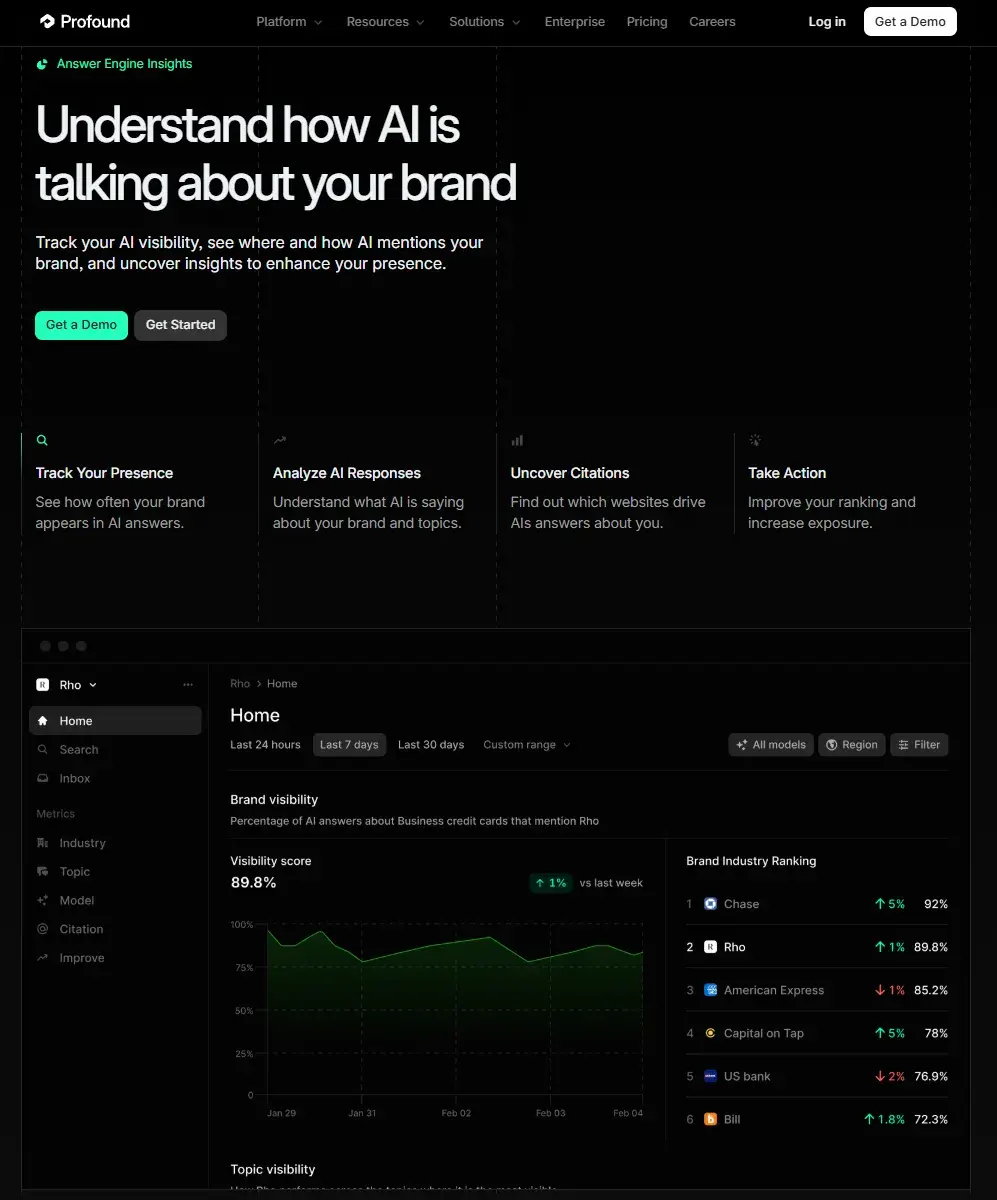
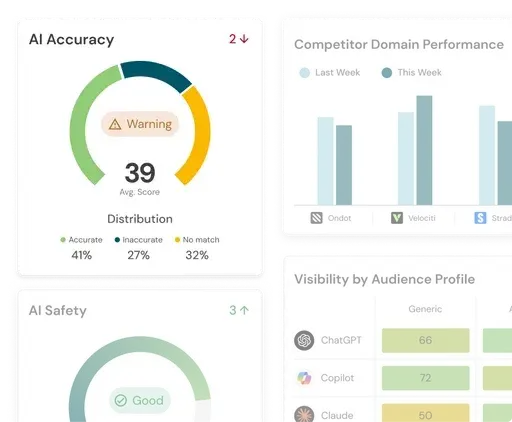
Profound positions itself as an enterprise-grade platform dedicated to AI search visibility and Answer Engine Optimization. Its core mission is to empower brands to understand and proactively improve their appearance within AI-generated answers. At the heart of Profound’s offering is its specialization in AI visibility tracking and comprehensive citation analysis. The platform continuously monitors how brands are referenced across a wide array of major AI systems, meticulously tracking the sources of these citations. Crucially, it provides prompt-level insights, enabling marketing teams to discern precisely where and why their brand appears in AI responses, offering a granular view into the mechanics of AI attribution.
For marketing and SEO leaders focused on growth, Profound distinguishes itself through its depth of data, robust enterprise-ready reporting functionalities, and seamless workflow integrations. It connects AI search visibility metrics directly to measurable business outcomes, moving teams beyond mere passive monitoring to active, data-driven optimization. As AI answers increasingly displace traditional organic search results, Profound offers the essential infrastructure for brands to quantify, attribute, and enhance their presence within these AI-driven search experiences. Its focus is on enabling brands to actively compete for and secure a dominant share of voice in the answer engine landscape, treating AEO as a direct channel for customer acquisition and brand growth.
Bluefish AI: Prioritizing Brand Safety and Risk Management in AI Search
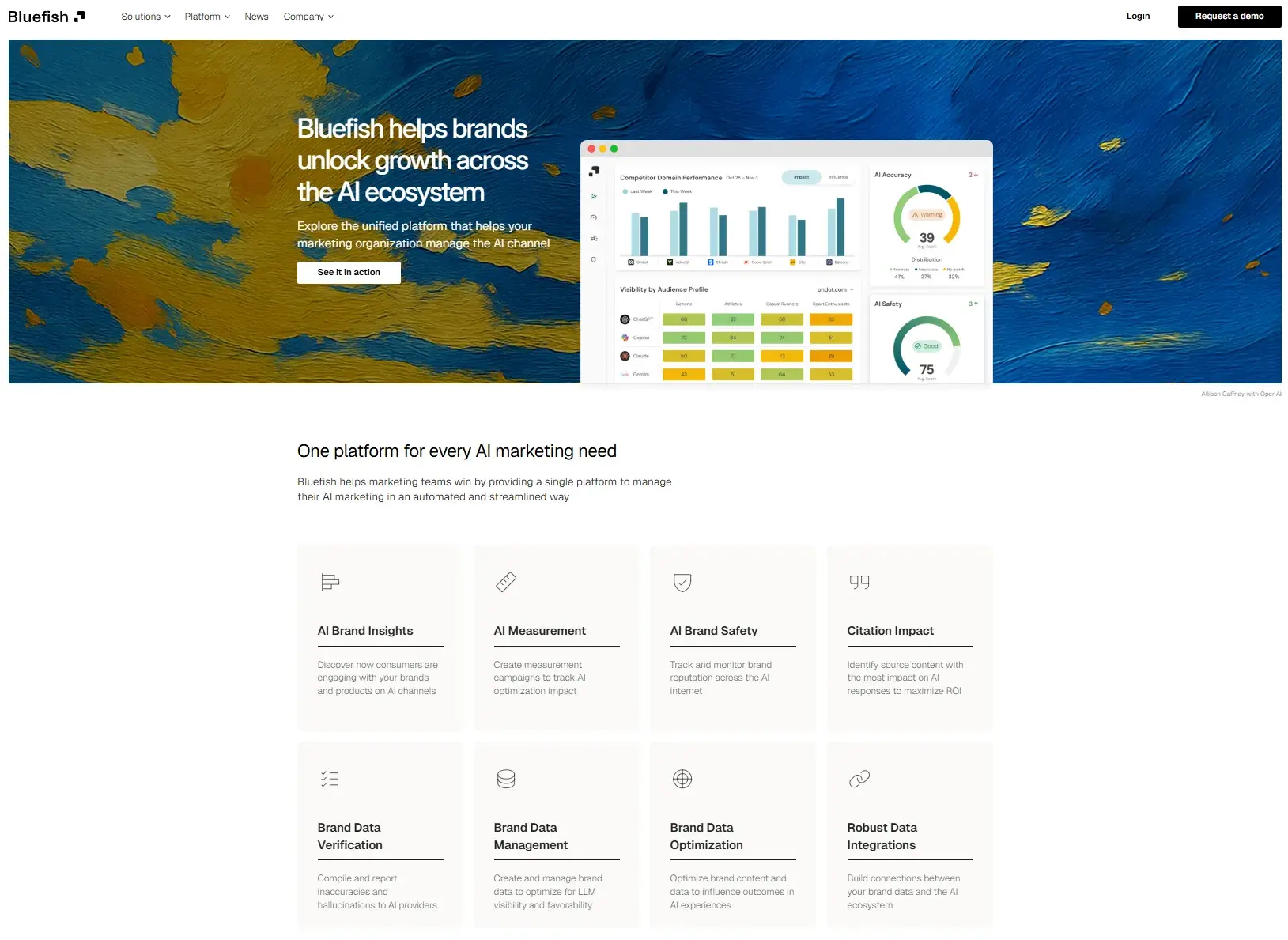
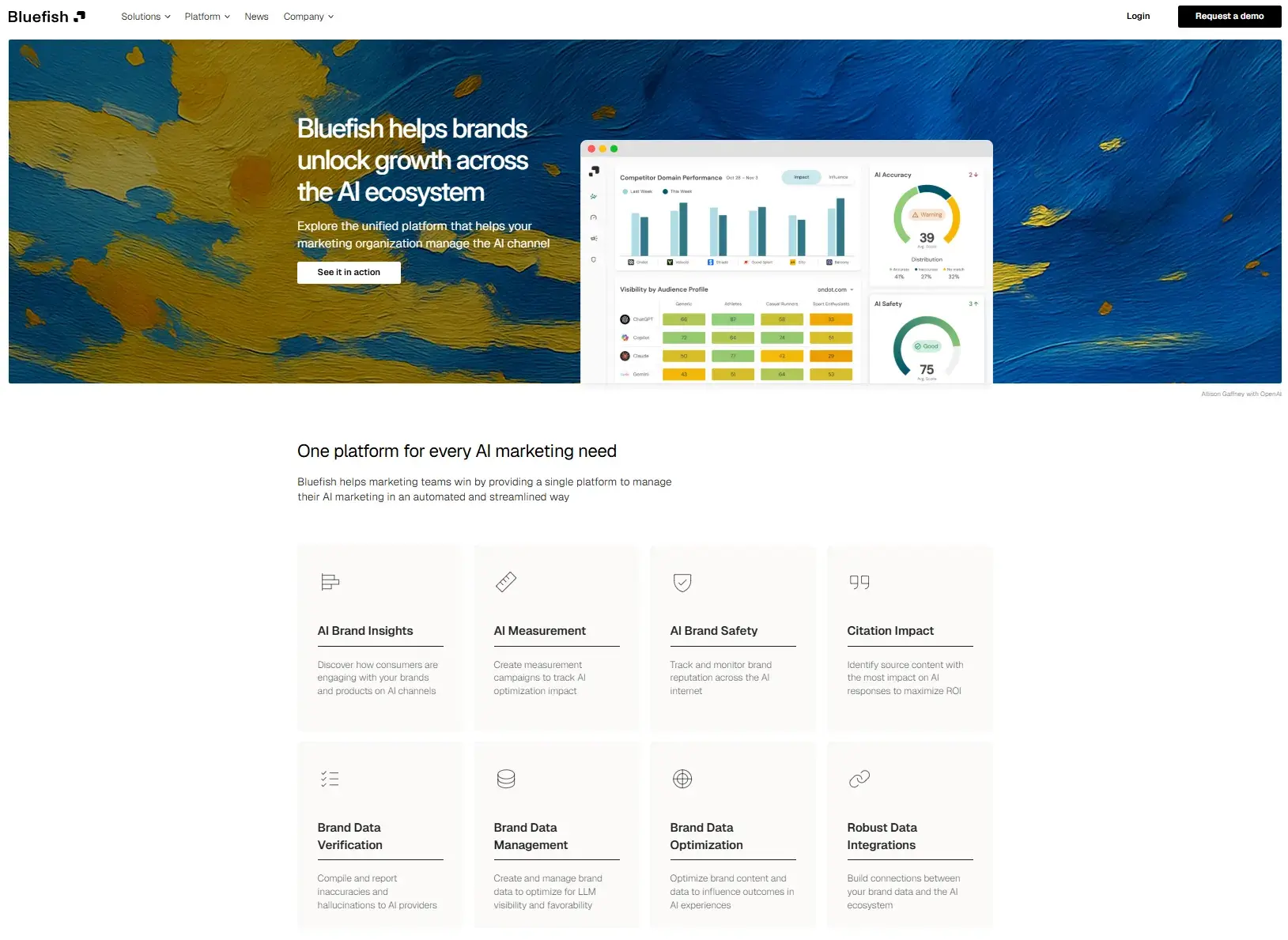
In contrast to Profound’s growth-centric approach, Bluefish AI is designed as an AI visibility and brand safety platform. Its primary objective is to assist organizations in monitoring how their brand is referenced in AI-powered search and generated answers, with a distinct emphasis on prioritizing risk management and ensuring accuracy. Bluefish AI extends beyond fundamental visibility metrics by focusing intensely on protecting brand integrity. It is engineered to alert teams promptly when their brand is misrepresented, inaccurately cited, or inadvertently associated with harmful or sensitive content within search generative experiences (SGE). This proactive risk detection is vital for mitigating potential reputational damage.
Bluefish AI is particularly well-suited for industries with high regulatory scrutiny or inherent risk sensitivity, such as healthcare, finance, and legal sectors, as well as large enterprise brands operating at scale. For these organizations, the platform delivers context-rich insights, robust governance workflows, and advanced signal filtering capabilities. These features collectively empower marketers to maintain stringent control over how AI systems cite and present their content, ensuring compliance and safeguarding brand reputation. As AI-generated answers become an integral part of the customer journey, Bluefish offers a differentiated perspective on visibility, coupling optimization efforts with critical oversight to manage the inherent risks associated with AI-driven content generation.
Initial Assessment: The Value of HubSpot’s AEO Grader
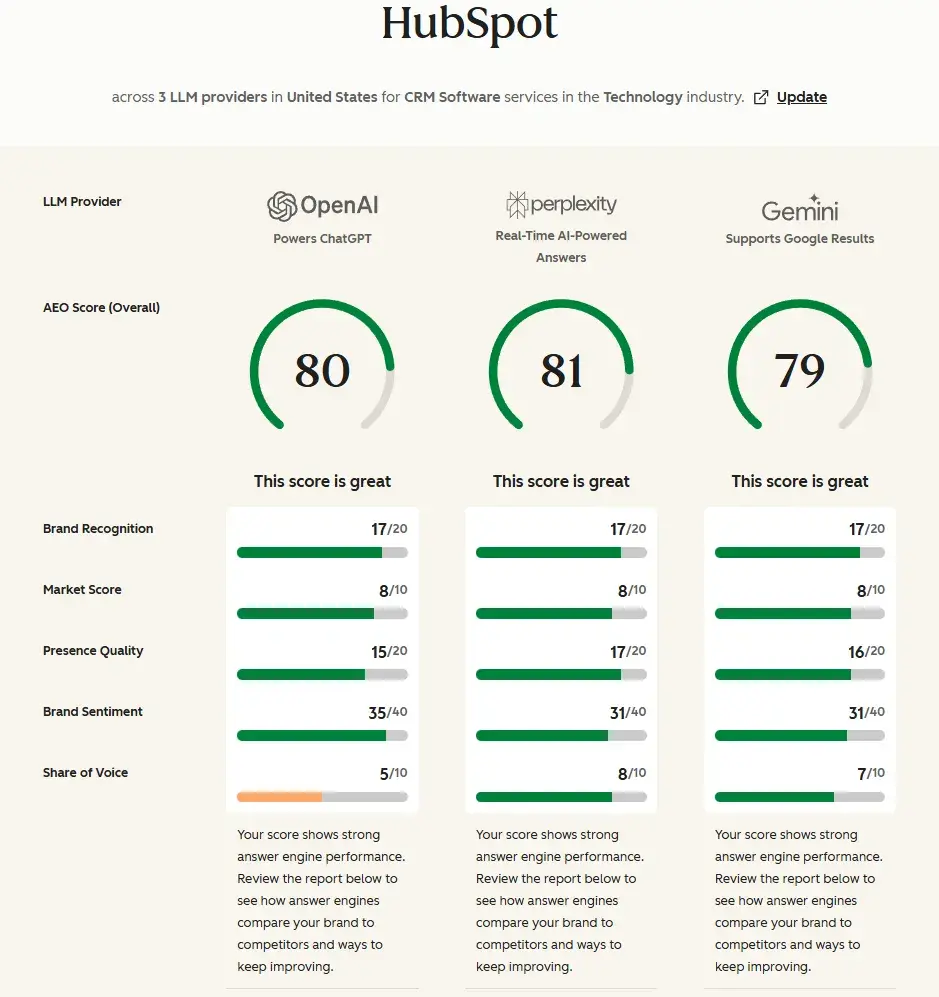
Before organizations commit to an enterprise-level AEO platform like Profound or Bluefish AI, many marketing teams find immense value in utilizing free AEO tools for initial benchmarking. HubSpot’s AEO Grader stands out in this regard, offering a complimentary, rapid snapshot of how major answer engines currently represent any given brand. This tool provides marketing leaders with an efficient and practical means to assess their brand’s AI visibility without immediate financial investment, helping to inform subsequent decisions about deeper platform investments.
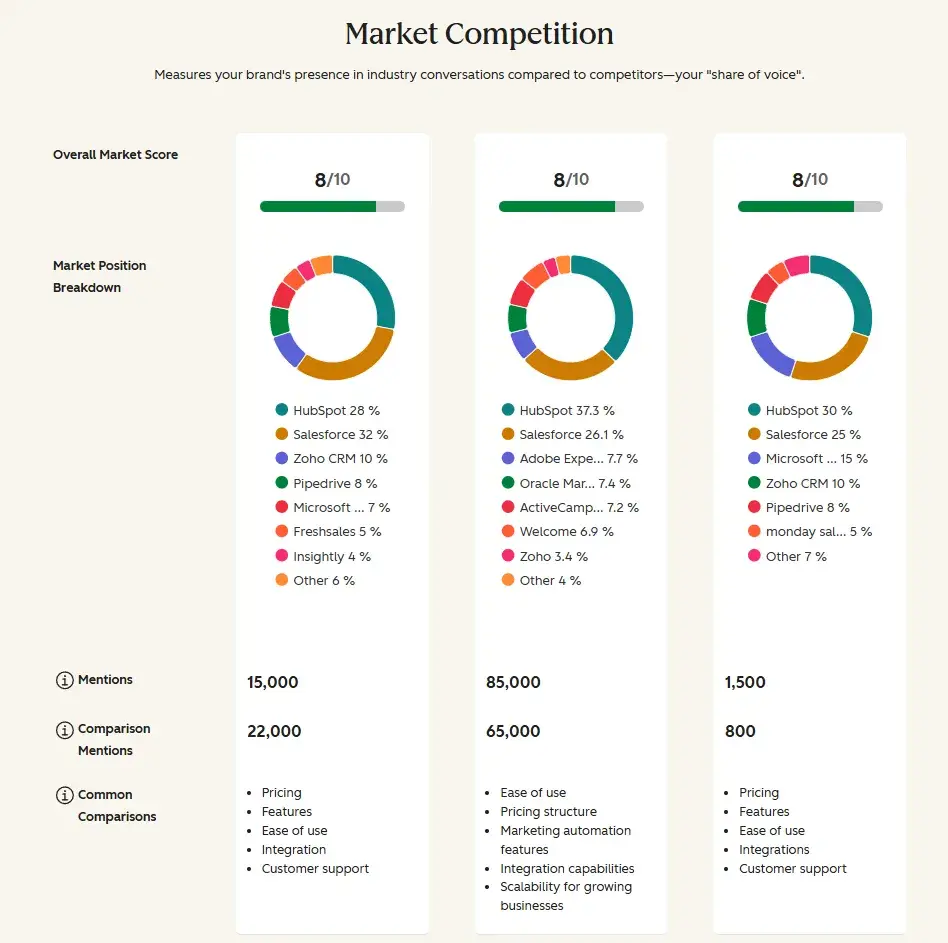
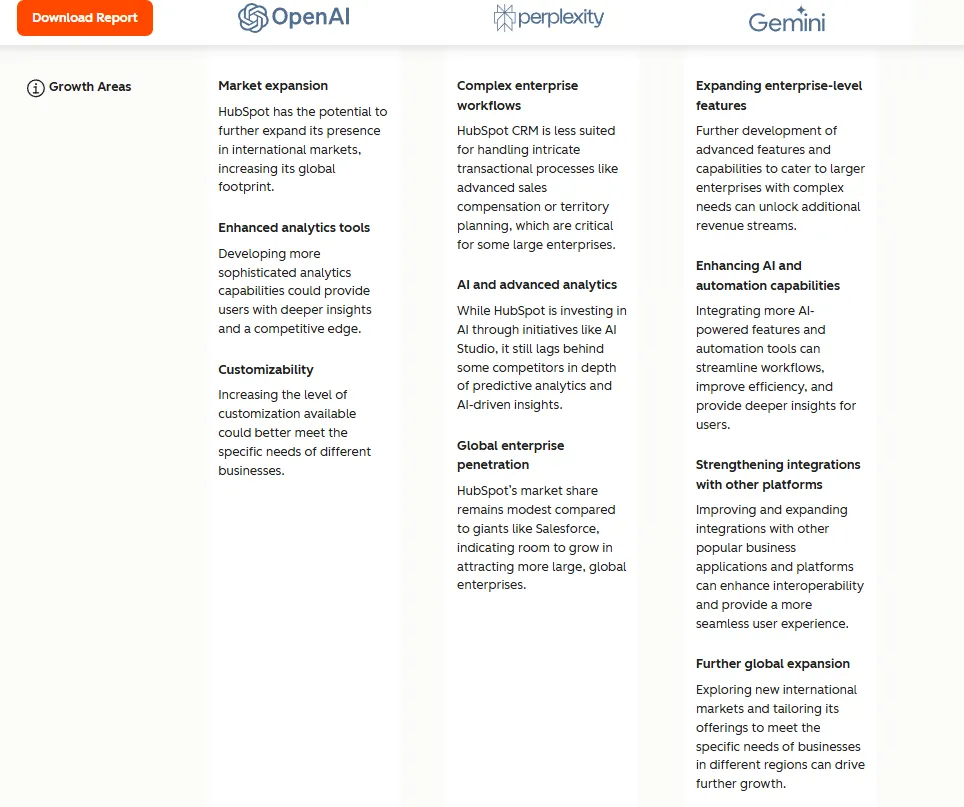
The HubSpot AEO Grader delivers a detailed breakdown of a brand’s performance across various AI systems. Marketers can review their competitive positioning, receive a comprehensive visibility score, and compare how frequently their brand is cited relative to competitors within their industry. A "Market Competition" score highlights the brand’s standing, while integrated recommendations provide specific, actionable steps to enhance AI visibility. These recommendations range from strategic content adjustments to identifying opportunities for building greater authority. The tool also provides marketers with immediate, actionable advice, allowing them to begin addressing AEO issues using free resources before "graduating" to more comprehensive paid solutions. This makes HubSpot’s AEO Grader an invaluable first step in evaluating the landscape and determining where more substantial investment in platforms like Profound or Bluefish AI is justified.
Detailed Comparison: Profound vs. Bluefish AI for AEO
The choice between Profound and Bluefish AI hinges on several critical factors, each aligning with distinct organizational priorities.
1. Supported AI Engines and Platform Coverage:
The breadth of platform coverage is a paramount consideration for marketers investing in AEO. Users engage with various AI platforms, including Google AI Overviews, ChatGPT, Perplexity, Gemini, and others. Incomplete tracking can lead to significant blind spots in AEO strategy.
- Bluefish AI’s Approach: Bluefish AI concentrates its monitoring efforts on brand representation across major generative AI platforms, particularly those with significant influence on consumer research and enterprise risk exposure. Its coverage strategy prioritizes widely adopted AI engines where misinformation or brand misrepresentation could pose substantial reputational risks. This approach caters to organizations that value safeguarding their presence in commercially relevant AI ecosystems over exhaustive coverage of experimental models.
- Profound’s Approach: Profound adopts a broader, visibility-first strategy. It supports a comprehensive range of AI models, including Google AI Overviews, ChatGPT (including search functionalities), Perplexity, Claude, Gemini, Microsoft Copilot, Grok, DeepSeek, and other emerging models. By leveraging front-end capture and prompt-level tracking, Profound allows marketers to analyze response variations across multiple engines, compare citation order, and monitor competitive share of voice at scale. This extensive coverage makes it exceptionally strong for teams executing proactive, multi-engine AEO programs aimed at maximizing overall digital presence.
- Verdict: Profound generally offers broader platform coverage, making it suitable for teams aiming for maximum visibility across the evolving AI landscape. Bluefish AI focuses on high-impact engines where brand safety is paramount.
2. Reporting Depth and Competitive Intelligence:
Effective AI visibility tracking must translate into actionable insights. Marketing leaders require not just mention counts but also context, competitive positioning, and a deep understanding of how AI narratives are constructed.
- Bluefish AI’s Approach: Bluefish AI’s reporting is heavily skewed towards brand safety monitoring and misinformation alerts. It excels at identifying instances where a brand is misrepresented, associated with sensitive topics, or inaccurately cited. Its reporting emphasizes signal clarity, offering detailed context around critical mentions, real-time alerts for brand safety violations, and impact analysis of misattributed content. This makes it invaluable for compliance-driven teams where maintaining narrative control and mitigating risk take precedence over aggressive optimization.
- Profound’s Approach: Profound emphasizes analytical depth in its reporting. It specializes in granular AI visibility tracking and citation analysis, enabling teams to evaluate citation order, market share of voice, prompt-level variations, and cross-engine positioning. Marketers can analyze citation frequency, prominent themes and entities, and the competitive landscape of AI-generated answers. For teams that view AEO as a direct growth channel, this depth of data supports structured experimentation, performance attribution, and continuous content optimization.
- Verdict: Profound is the clear winner for analytical depth and competitive intelligence, offering granular data for growth-focused strategies. Bluefish AI excels in providing critical, actionable alerts for brand safety and risk mitigation.
3. Integrations and Workflow Connectivity:
For AEO to deliver measurable return on investment (ROI), it must integrate seamlessly into existing marketing and business workflows. Both Profound and Bluefish AI offer integration capabilities with tools like Google Analytics 4 (GA4), Business Intelligence (BI) platforms, and Customer Relationship Management (CRM) systems like HubSpot.
- Bluefish AI’s Approach: Bluefish AI supports API access and data exports, facilitating the integration of AI monitoring insights into broader reporting and compliance environments. Its focus is on governance workflows, efficient alert routing to relevant stakeholders, and structured reporting for brand and legal teams. This ensures that AI-related brand risks are promptly escalated and addressed within existing organizational structures, prioritizing oversight and rapid response.
- Profound’s Approach: Profound boasts an extensive integration ecosystem designed to operationalize AEO insights across the entire marketing stack. Rather than confining visibility data to standalone dashboards, the platform connects with Content Management Systems (CMS), Content Delivery Networks (CDNs), marketing intelligence tools, analytics systems, and collaboration software. This robust connectivity ensures that AI visibility data becomes actionable and integrated into key processes such as content creation, performance reporting, and marketing automation. For growth-oriented teams, this structure simplifies the process of directly linking AI visibility to measurable business outcomes.
- Verdict: Profound offers a more comprehensive integration ecosystem, enabling deeper operationalization of AEO insights across the marketing stack. Bluefish AI provides essential integrations for governance and risk management workflows.
4. Pricing Structure, Onboarding, and Scalability:
The cost of AI tools and their scalability are often decisive factors in evaluating AEO platforms, influenced by budget constraints, internal resources, and long-term growth plans.
- Bluefish AI’s Approach: Bluefish AI does not publicly disclose its pricing tiers, onboarding processes, or detailed scalability models. Organizations interested in Bluefish AI must directly contact their sales team for a customized quotation and discussion tailored to their specific needs. This opaque pricing model often suggests a focus on highly customized, enterprise-level solutions where a direct sales engagement is necessary to understand complex requirements and deliver bespoke services.
- Profound’s Approach: Profound is positioned as an enterprise-grade solution catering to growth-focused marketing organizations. It offers enterprise-level security controls, compliance features, and structured onboarding processes designed to support large, geographically distributed teams. Its implementation model typically aligns with established enterprise procurement cycles, encompassing stakeholder onboarding, governance setup, and technical integration planning. While this may entail a longer ramp-up time compared to lighter-weight tools, it facilitates scalable deployment across global regions and diverse business units. Profound offers defined paid packages starting from approximately $82.50/month for its Starter package (which includes only ChatGPT), $332.50/month for the Growth package, with Enterprise pricing customized based on specific needs.
- Verdict: Profound offers more transparent, albeit tiered, pricing with a clear path for enterprise scalability. Bluefish AI’s bespoke pricing model suggests a focus on highly customized enterprise solutions, requiring direct sales consultation.
Strategic Implications for Businesses: Choosing the Right AEO Partner
The selection between Profound and Bluefish AI ultimately hinges on an organization’s core strategic intent and risk appetite. These AEO platforms serve as operational tools for strategy, rather than strategy creators themselves.
- For Growth-Driven Organizations: If the primary objective is to aggressively pursue AI visibility, optimize content for generative answers, attribute performance to AEO efforts, and integrate these insights into broader revenue-generating workflows, Profound is typically the stronger fit. Its comprehensive tracking, deep analytical capabilities, and extensive integrations are designed to empower proactive growth and competitive advantage in the AI search landscape. This applies to brands in competitive markets where market share and early adoption of new channels are critical for sustained growth.
- For Risk-Averse and Compliance-Focused Organizations: Conversely, if the paramount priority is safeguarding brand integrity, mitigating reputational risk, ensuring accuracy in AI-generated responses, and adhering to strict compliance standards, Bluefish AI presents itself as the more appropriate choice. Its emphasis on brand safety monitoring, misinformation alerts, and robust governance workflows makes it indispensable for industries where misrepresentation can have severe legal, financial, or reputational consequences. This is particularly relevant for sectors like healthcare, pharmaceuticals, financial services, and legal firms.
The Future of Digital Visibility and AEO
As AI continues to evolve, the distinction between traditional search and answer engines will likely blur further, with AI-powered answers becoming the default mode of information retrieval for many users. This ongoing evolution underscores the critical need for continuous adaptation in digital marketing strategies. AEO is not merely a transient trend but a fundamental shift in how brands must manage their online presence.
Before making a significant investment in either platform, the recommendation to utilize a free tool like HubSpot’s AEO Grader remains prudent. It provides an essential baseline understanding of a brand’s current AI visibility, enabling marketers to define their strategic priorities—whether defensive or growth-driven—before committing substantial budget and internal resources. The biggest mistake organizations can make in this new landscape is purchasing an AEO tool without first clearly articulating whether their strategy is focused on proactive growth and attribution or on reactive brand protection and governance. Clarity on this foundational question will significantly streamline the platform decision-making process and ensure that the investment yields measurable, strategic outcomes rather than merely adding another dashboard to monitor. The future of digital visibility is deeply intertwined with a sophisticated understanding and proactive management of AI-powered answer engines, making AEO an indispensable component of any modern marketing toolkit.