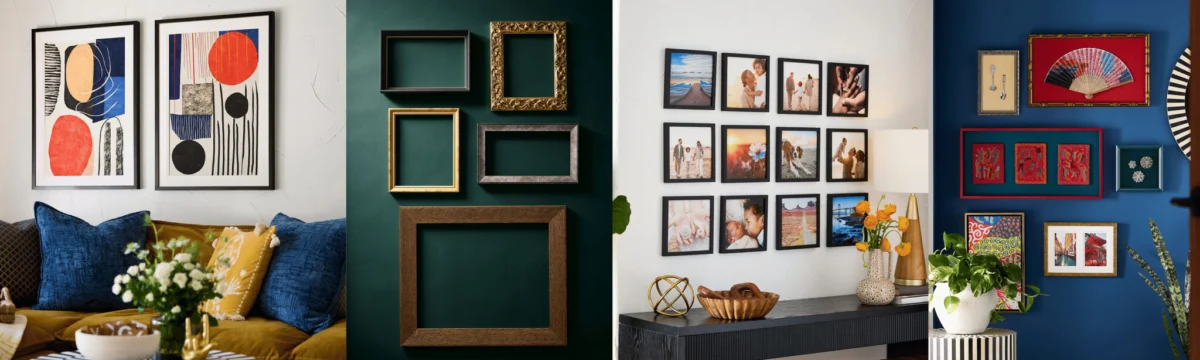
The Michaels Companies, a titan in the arts and crafts retail sector, has dramatically advanced its omnichannel strategy with the introduction of a groundbreaking custom framing experience designed to seamlessly blend online convenience with in-store craftsmanship. This digital-first initiative, now available to customers across the United States and Canada, features an innovative 3D and augmented reality (AR) frame builder. This powerful tool allows consumers to visualize, customize, and purchase custom frames online, offering a level of detail and interaction previously unattainable, before the final product is meticulously crafted in physical stores.
This significant enhancement to Michaels’ offerings extends beyond the digital realm. The launch concurrently introduces over 200 new styles of ready-made frames, alongside a sophisticated, curated moulding collection developed in partnership with Architectural Digest, a prestigious brand under the Condé Nast media umbrella. This strategic collaboration underscores Michaels’ commitment to elevating its custom framing services, a category traditionally rooted in in-person consultation and selection, by infusing it with cutting-edge digital capabilities.
Michaels Companies holds a prominent position in the retail landscape, ranking No. 93 in the Digital Commerce 360 Top 1000 Database, which meticulously ranks North America’s largest online retailers. Furthermore, the company is recognized at No. 575 in Digital Commerce 360’s inaugural AI Rankings, highlighting its early adoption and integration of artificial intelligence technologies within its business operations.
The Seamless Journey: How Michaels’ Omnichannel Custom Framing Works
Nicholas Bertram, President and Chief Operating Officer at Michaels, articulated the vision behind these transformative changes, emphasizing a smooth and intuitive customer journey. "Framing is an art form that transforms memories and artwork into home décor," Bertram stated. "We are making it easier and more inspiring than ever for our customers to bring their visions to life. Whether shoppers are looking for a quick, trend-forward, ready-made frame or a bespoke custom piece visualized right in their living room, we are elevating every touchpoint of the framing journey."
The core of this new experience lies in an advanced online frame builder. Customers can now upload their personal photographs or select from an extensive gallery of curated art. The platform offers unparalleled customization options, allowing users to fine-tune every aspect of their frame, from dimensions and materials to matting and glazing choices. The immersive 3D and AR capabilities are central to this process. Shoppers can utilize the platform to visualize their custom-framed pieces in real-time within their own environments. By simply scanning a QR code with their mobile device, they can project a realistic rendering of their framed artwork directly onto their walls, gaining a true sense of scale and aesthetic integration before committing to a purchase.
This digital integration is not intended to replace the in-store experience but to enhance it. The omnichannel design ensures that customers can initiate their framing projects online, benefiting from the detailed visualization and customization tools, and then seamlessly transition to a physical store to finalize their selections, receive expert advice, or pick up their completed custom pieces. This approach caters to a diverse range of customer preferences, from those who prefer a fully digital interaction to those who value the tactile and personal service offered in brick-and-mortar locations.
The Strategic Imperative: Why Omnichannel Options Resonate with Michaels
The strategic pivot towards enhanced omnichannel offerings in custom framing is a calculated move by Michaels, aimed at capitalizing on evolving consumer behaviors and technological advancements. Kriszta Grenyo, Chief Operating Officer at Suff Digital, a marketing agency specializing in web design, development, and growth marketing, commented on the significance of such tools. She explained that advanced online configurators like Michaels’ frame builder effectively transform the company’s website into a pre-sales platform.
"The store experience can effectively begin online and do the majority of the decision-making before having to ever enter the store," Grenyo noted. "By the time the customer arrives at the physical location, they have already narrowed down their choices by exploring their product visually in their home." This pre-qualification of customer needs and preferences streamlines the in-store process, allowing associates to focus on providing expert guidance and facilitating the final transaction rather than initiating the entire discovery phase.
Grenyo further elaborated on how such digital tools act as powerful lead magnets while simultaneously qualifying potential customers. "For businesses that sell highly customizable products, they are able to use the website and store work as one conversion funnel rather than competing channels," she stated. This unified approach ensures that the online and offline channels work in synergy, rather than in isolation, to drive customer engagement and ultimately, sales.

The Transformative Power of AR in Custom Framing
The integration of Augmented Reality (AR) technology plays a crucial role in bridging the gap between a customer’s imagination and the tangible final product, especially for made-to-order items. Eric Turney, owner and Sales and Marketing Director at The Monterey Company, a firm overseeing e-commerce and marketing operations, highlighted the importance of AR in addressing a common customer hesitation.
"That is the hard part with made-to-order products," Turney assessed. "A customer may like the idea of a custom frame, patch, hat, medal or other personalized item, but they hesitate because they cannot fully picture the finished product." AR visualization provides a solution by offering a realistic preview, thereby reducing uncertainty and building customer confidence. The ability for Michaels customers to see how a frame will look on their own wall, with their own artwork, significantly demystifies the custom framing process and lowers the perceived risk associated with personalized purchases.
Turney emphasized that the true innovation for Michaels lies not solely in the advanced 3D or AR frame builder itself, but in the strategic integration of these digital tools with their physical retail presence. "For Michaels, the smart move is not just the 3D or AR frame builder," he stated. "It is the online-to-store blend." This holistic approach acknowledges that while digital tools can enhance visualization and customization, the personal touch and expert advice available in-store remain invaluable for many customers.
A Continuum of Digital Innovation at Michaels
This AR-infused framing refresh represents the latest chapter in Michaels’ ongoing commitment to leveraging digital technologies to enhance the customer experience and drive business growth. The company has a documented history of embracing innovative digital solutions. Earlier this year, Michaels introduced "Ask Mike," an artificial intelligence assistant developed in collaboration with Google. This AI-powered tool is designed to provide customers with assistance and inspiration, further integrating digital support into their crafting and shopping journeys.
Moreover, in 2025, Michaels launched Michaels Digital Downloads, a subscription-based platform that offers creators access to a vast library of hundreds of thousands of digital assets. This initiative caters to the growing demand for digital content and resources among crafters and artists, positioning Michaels as a comprehensive provider for both physical and digital creative needs. These initiatives collectively demonstrate Michaels’ strategic intent to evolve beyond a traditional brick-and-mortar retailer into a digitally-enabled hub for the creative community.
Broader Implications for Retail and Consumer Behavior
The advancements made by Michaels in its custom framing experience offer a compelling case study for the broader retail industry, particularly for businesses that deal in customizable or highly personal products. The successful integration of advanced visualization tools like 3D modeling and AR into the customer journey can significantly impact sales conversion rates, customer satisfaction, and brand loyalty.
For retailers, the ability to allow customers to "try before they buy" in a virtual environment, especially for items that are difficult to conceptualize or visualize in situ, is a powerful differentiator. This approach not only educates and engages the customer but also proactively addresses potential post-purchase dissatisfaction by ensuring that the product aligns with the customer’s expectations.
The trend towards "phygital" retail, a seamless fusion of physical and digital experiences, is no longer a nascent concept but a critical component of modern retail strategy. Companies like Michaels are demonstrating that by investing in technologies that enhance convenience, personalization, and visualization, they can create a more robust and responsive customer experience. This is particularly relevant in categories where emotional connection to the product is high, such as custom framing, where personal memories and artistic expression are at the forefront.
The financial implications of such initiatives can be substantial. Improved online visualization tools can lead to reduced return rates, as customers make more informed purchasing decisions. Furthermore, by qualifying customers online, in-store associates can operate more efficiently, potentially reducing labor costs or reallocating resources to higher-value customer interactions. The partnership with a brand like Architectural Digest also signals an intent to elevate the perceived value and aspirational quality of Michaels’ offerings, attracting a demographic that values both curated design and accessible customization.
The success of Michaels’ new custom framing experience will likely encourage other retailers to explore similar technological integrations. As AR and 3D rendering technologies become more accessible and sophisticated, their adoption across various retail sectors is expected to accelerate. This evolution points towards a future where the line between online browsing and in-store purchasing becomes increasingly blurred, with digital tools serving as an indispensable bridge for informed and confident consumer decision-making. The journey from a simple online search to a tangible, personalized product is being fundamentally reshaped, and Michaels is at the forefront of this exciting transformation.