rifanmuazin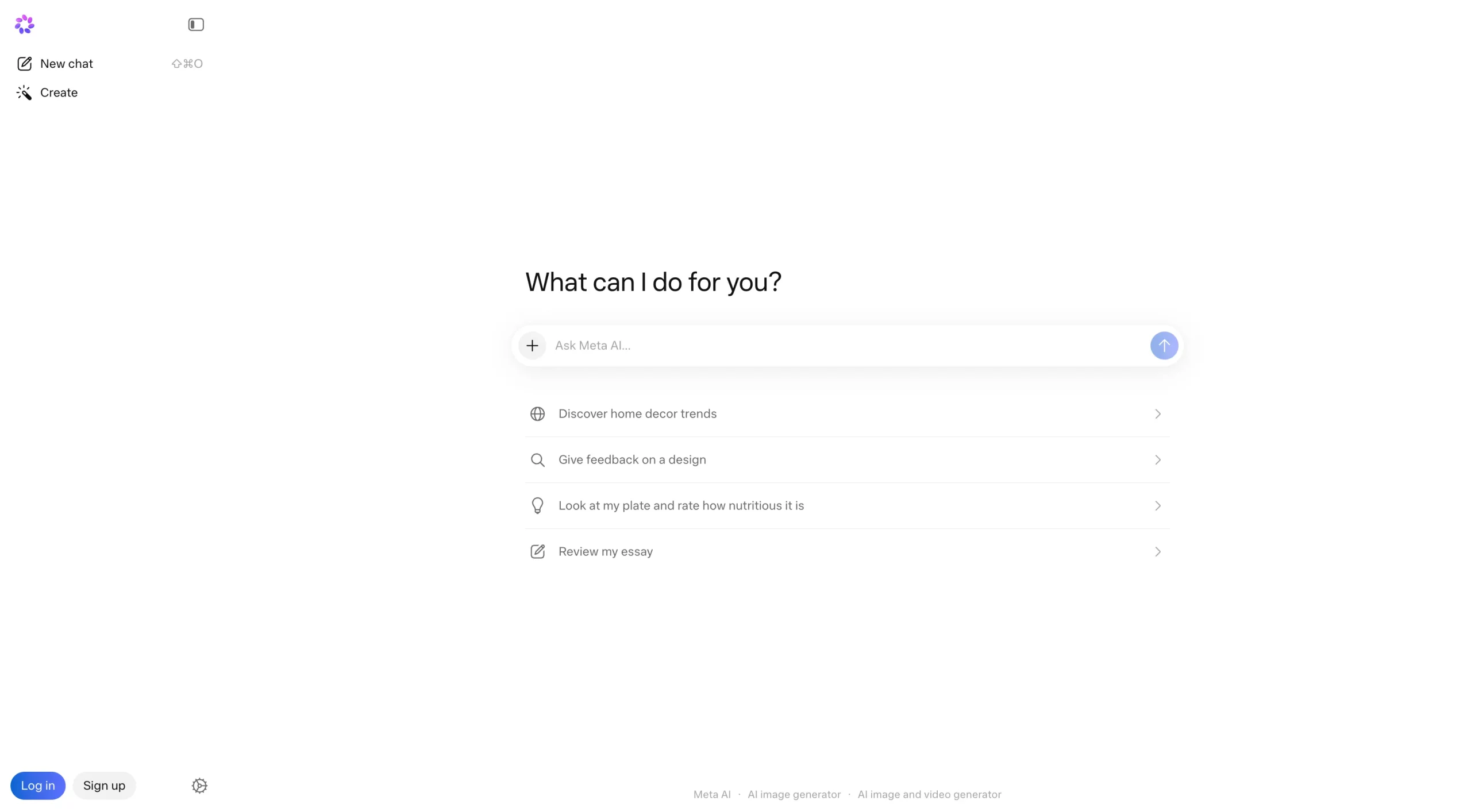
Meta Superintelligence Labs (MSL) has officially announced the launch of Muse Spark, the inaugural model in its highly anticipated Muse family, signaling a fundamental shift in the company’s artificial intelligence strategy. Moving beyond the foundational research focus of the Llama series, Muse Spark is being positioned as a "personal superintelligence" designed specifically for integration within the apps that define modern digital communication. The model is already powering the Meta AI application and web portal, with an immediate rollout schedule encompassing WhatsApp, Instagram, Facebook, and Messenger. This deployment strategy places advanced reasoning and multimodal capabilities directly into the hands of billions of users, effectively bypassing the friction of standalone AI platforms.
The introduction of Muse Spark follows a transformative period for Meta’s AI division. Over the past two years, the company has aggressively pivoted from being an open-source contributor to a product-centric innovator. This journey was marked by the massive success of the Llama family, which democratized access to high-quality large language models (LLMs), and a series of high-profile talent acquisitions that disrupted the traditional power balance between Silicon Valley’s AI laboratories. With Muse Spark, Meta aims to bridge the gap between "fast" conversational AI and "deep" reasoning AI, offering a system that is efficient enough for mobile devices yet powerful enough to tackle complex scientific and medical queries.
A Chronology of Meta’s AI Evolution
To understand the significance of Muse Spark, one must look at the timeline of Meta’s rapid acceleration in the AI sector. The journey began in early 2023 with the release of Llama 1, which was initially intended for academic use but quickly became the backbone of the open-source AI movement. This was followed by Llama 2 in July 2023, which introduced commercially friendly licensing, and Llama 3 in April 2024, which significantly closed the performance gap with proprietary models like GPT-4.
By late 2024 and early 2025, Meta introduced Llama 4 Maverick, a model that optimized compute efficiency. However, the formation of Meta Superintelligence Labs (MSL) represented a new chapter. MSL was tasked with creating "Muse," a lineage of models optimized not just for general intelligence, but for "product-first" utility. Muse Spark is the first realization of this vision, representing nine months of architectural rebuilding aimed at achieving high-reasoning capabilities with significantly lower computational overhead than its predecessors.
The Architecture of Muse Spark: Efficiency Meets Reasoning
The technical foundation of Muse Spark is built upon three primary scaling axes: pretraining, reinforcement learning (RL), and test-time reasoning. Meta’s engineering team has claimed that the model architecture was rebuilt from the ground up to ensure that Muse Spark could achieve the same capability levels as Llama 4 Maverick while utilizing a fraction of the compute resources. This efficiency is critical for Meta’s goal of ubiquitous deployment across its social media ecosystem.
In the reinforcement learning phase, Meta utilized a proprietary process to stabilize large-scale RL, which is traditionally prone to volatility. The company reports that these gains are not merely "memorized" from training data but generalize to "held-out" tasks—problems the model has never encountered during its development. This suggests a higher level of "zero-shot" reasoning than previously seen in models of this size.
Perhaps the most innovative aspect of the architecture is the "test-time reasoning" mechanism. Muse Spark utilizes "thinking time penalties," a system that incentivizes the model to be concise and efficient in its internal logic rather than generating excessively long chains of thought. Furthermore, the model employs multi-agent orchestration, where several specialized agents within the model work in parallel to solve complex problems. This approach allows Muse Spark to maintain low latency—essential for a chat app like WhatsApp—while still delivering the depth of a high-reasoning system.
Core Features: Contemplation, Multimodality, and Health
Meta has categorized the strengths of Muse Spark into three distinct pillars, each aimed at solving specific user needs within the social ecosystem.
1. Contemplating Mode
Designed to compete with frontier models such as Gemini Deep Think and GPT Pro, Contemplating Mode allows Muse Spark to engage in deep reasoning. By orchestrating multiple internal agents, the model can navigate multi-step logic problems. Internal benchmarks suggest that in this mode, Muse Spark reaches 58% on "Humanity’s Last Exam," a benchmark designed to be difficult for even human experts, and 38% on FrontierScience Research. These figures position it as a serious contender for academic and professional assistance.
2. Multimodal Integration
Unlike many models that treat vision as an "add-on" feature, Muse Spark was built to be multimodal from the ground up. This allows it to process visual STEM questions, perform entity recognition, and handle localization tasks. Meta envisions this being used for real-time troubleshooting; for example, a user could point their camera at a broken appliance, and Muse Spark would provide dynamic, annotated instructions on how to fix it.
3. Specialized Health Reasoning
In a notable move toward specialized utility, Meta collaborated with over 1,000 physicians to curate high-quality medical and nutritional training data. The goal was to reduce the "hallucinations" often associated with AI health advice. Muse Spark is capable of generating interactive displays, such as nutritional breakdowns of meals or anatomical diagrams showing muscle activation during specific exercises. On the HealthBench Hard evaluation, the model scored 42.8, while achieving a 78.4 on MedXpertQA (MM), showcasing its reliability in the medical domain.
Performance Benchmarks and Competitive Analysis
While Meta’s internal testing is rigorous, the industry looks to standardized benchmarks to gauge a model’s true standing. Muse Spark has shown exceptional strength in visual understanding and specialized reasoning. It scored 86.4 on CharXiv Reasoning, indicating a superior ability to interpret complex figures and charts.
However, Meta’s reporting remains transparent about the model’s limitations. In broader "agentic" evaluations and coding benchmarks—specifically ARC AGI 2—stronger rivals like OpenAI’s latest iterations still hold a lead. This suggests that while Muse Spark is a leader in practical, everyday multimodal tasks and health reasoning, it is not yet a "clean sweep" across all frontier AI metrics. Industry analysts suggest that Meta has prioritized "useful intelligence" over "abstract intelligence," focusing on the tasks most likely to be performed by a user on Instagram or Facebook.
Real-World Testing: Strengths and Limitations
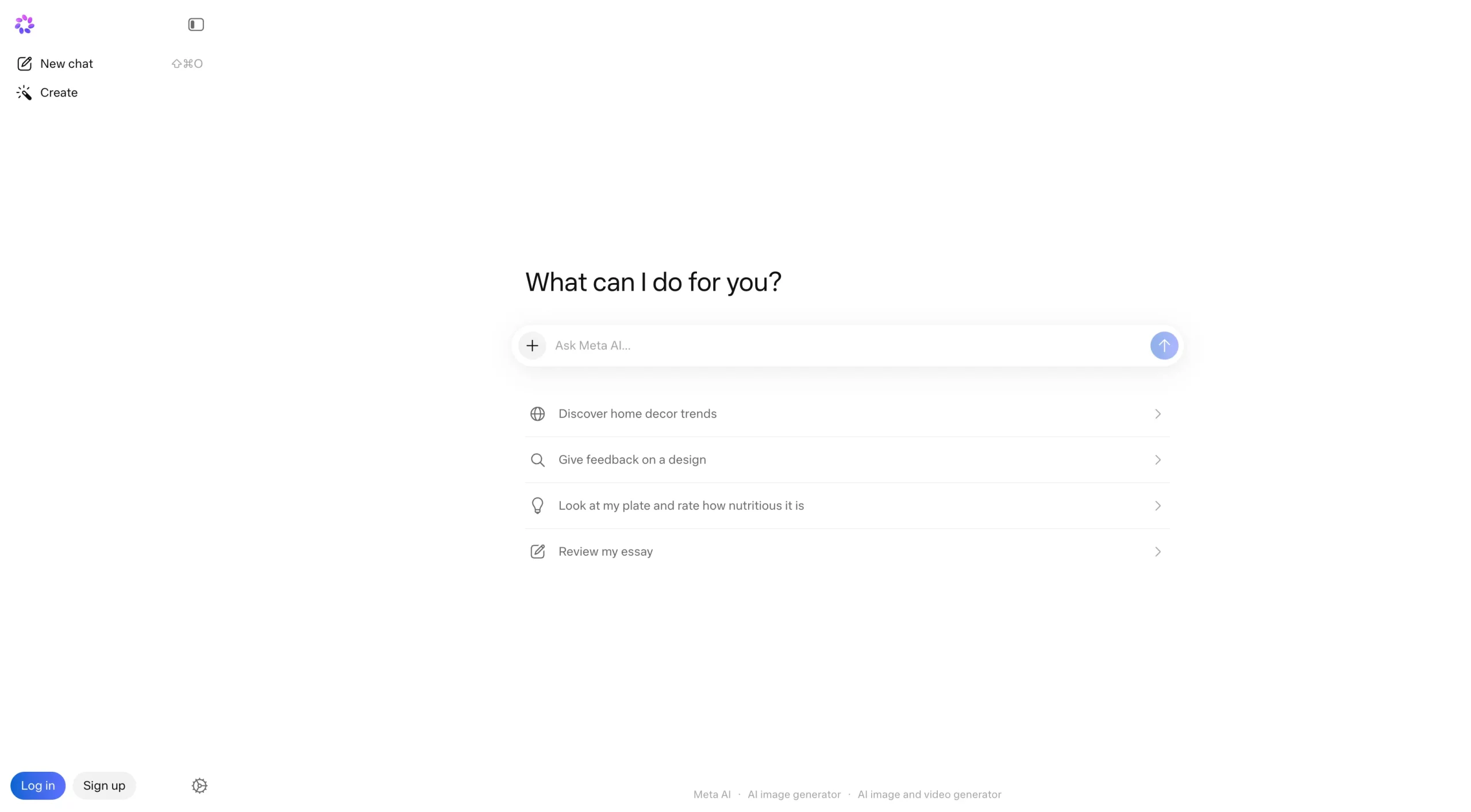
Independent testing of Muse Spark reveals a highly polished user experience characterized by a minimalistic interface. The model offers two primary modes: "Create" and "Add Media/Files."
In text extraction and reformating tasks, the model has proven highly competent. When prompted to extract text from a complex image and frame it for a WhatsApp message, Muse Spark not only transcribed the text accurately but also adapted the tone to be "forward-friendly," incorporating appropriate formatting and conversational cues.
In the realm of multimodal content generation, the model demonstrated a unique "animation" feature. When asked to create an annotated diagram of a lithium-ion battery, it produced a clear, professional-grade visual with accurate labeling of anodes, cathodes, and electrolytes. The standout feature was the ability to animate the flow of ions with a single click, a tool that has significant implications for digital education and technical support.
However, the "Health" pillar showed some inconsistency. While the model provided excellent, protein-rich meal suggestions for body recomposition, it failed to convert that information into a requested infographic during testing. This indicates that while the model’s "brain" understands health data, its "hand"—the visual generation engine—is still being refined for complex, data-heavy graphics.

Broader Impact and Industry Implications
The launch of Muse Spark is a clear signal to the market that Meta intends to dominate the "AI as a Utility" space. By embedding a high-reasoning model into the world’s most popular messaging platforms, Meta is effectively commoditizing superintelligence.
For competitors like Google and OpenAI, the challenge is now one of distribution. While they may hold a slight edge in raw coding or abstract logic benchmarks, Meta’s ability to put Muse Spark in front of 3 billion people overnight is a formidable advantage. Furthermore, the focus on health and visual troubleshooting suggests that Meta is looking to make AI an indispensable tool for physical, real-world tasks, rather than just a digital assistant for writing emails or code.
From a financial perspective, investors have reacted positively to the "product-first" approach. The efficiency of the Muse Spark architecture suggests that Meta can offer these advanced features without the astronomical inference costs that plague larger, less optimized models.
Conclusion
Meta’s Muse Spark represents a pivotal moment in the democratization of artificial intelligence. By combining the deep reasoning of a "superintelligence" with the speed and efficiency required for social media integration, Meta has created a tool that is both powerful and accessible. While it may not yet be the undisputed champion of every AI benchmark, its specialized strengths in health, multimodality, and practical reasoning make it a potent force in the industry. As Meta continues to develop larger models within the Muse family, the line between social networking and personal superintelligence is set to blur even further, fundamentally changing how billions of people interact with the digital and physical worlds.