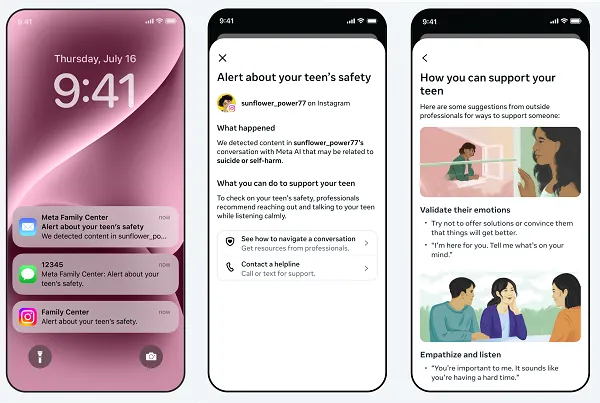
Meta has introduced a significant update to its parental supervision tools, designed to enhance the safety of younger users interacting with Meta AI. This new feature will proactively alert supervising parents when their children engage in discussions with the AI chatbot that suggest potential distress, particularly concerning topics such as suicide and self-harm. This move underscores a growing recognition within the tech industry of the complex and sometimes sensitive interactions users, especially teenagers, can have with artificial intelligence. The update aims to provide an additional layer of vigilance for parents, ensuring they are informed of critical conversations their children might be having in the digital space.
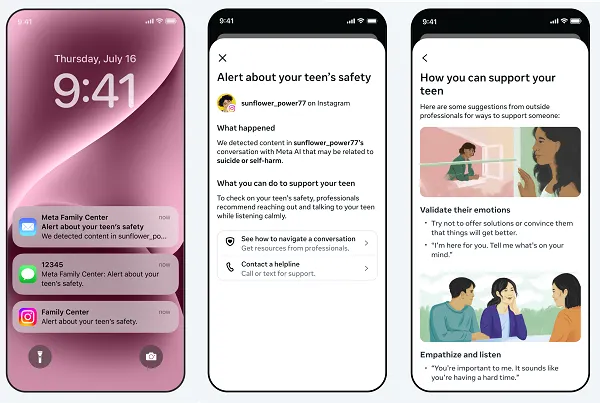
The core of this new initiative centers on detecting and reporting sensitive exchanges. When a teen communicates with Meta AI about suicide or self-harm, the system is now configured to trigger an alert to their supervising parent. These alerts are not merely notifications; they are designed to be actionable, including direct links to relevant support resources. This multi-faceted approach ensures that parents receive timely information and are immediately equipped with avenues for assistance, fostering a more robust safety net for young users navigating challenging emotional states.
Meta elaborated on its operational strategy, stating, "When a teen suggests they may be thinking about suicide or self-harm, Meta AI already directs them to crisis helplines and encourages them to reach out to a parent or another trusted adult like a counselor. Now, we’ll also proactively alert supervising parents if their teen’s Meta AI chat suggests they may be at risk, based on signals developed with experts." This statement highlights a two-pronged approach: immediate in-chat guidance for the teen and a concurrent notification system for parents. The development of these "signals" in collaboration with mental health experts is crucial, suggesting a nuanced understanding of language patterns that indicate risk, rather than simply keyword detection. Meta has indicated an initial cautious stance, reporting a broader range of signals to err on the side of safety, with ongoing efforts to refine the messaging to maximize protective benefits without causing undue alarm or distress to parents.
The rollout of these alerts began in key regions, including the United States, the United Kingdom, Australia, and Canada, for parents utilizing Instagram’s parental supervision features. Meta has committed to making these alerts globally available to supervising parents by the end of the year, indicating a worldwide implementation of this safety protocol. Furthermore, transparency remains a priority, as teen users themselves will be notified about this update, ensuring they are aware of the new supervision capabilities. This transparency aims to build trust while maintaining a safe environment.
The Rising Trend of AI for Mental Health Support Among Youth
This development comes at a time when an increasing number of individuals, particularly younger demographics, are turning to AI-powered chatbots for advice, companionship, and even mental health support. The accessibility, perceived anonymity, and non-judgmental nature of AI systems can make them attractive alternatives to human interaction for some users, especially when discussing sensitive or stigmatized topics. Data consistently supports this emerging trend, underscoring the necessity for robust safety mechanisms.
A joint study published in November by researchers from Brown University, Harvard Medical School, and RAND revealed compelling statistics: approximately one in eight teenagers and young adults in the U.S. now engage with AI chatbots for mental health advice. This finding is not an isolated anomaly; it mirrors earlier research conducted by Common Sense Media, which indicated that a substantial 72% of teens have experimented with AI companions. More specifically, 12% of these teens reported using AI bots specifically for emotional and mental health support. These figures illustrate a significant shift in how young people seek and receive support, making Meta’s proactive alerts a timely and critical intervention. The reliance on AI for such sensitive issues raises questions about the quality of advice, the potential for misinformation, and the emotional dependency that could develop, all of which necessitate careful oversight and safeguards.
Meta’s Comprehensive Approach to AI Safety
Beyond the specific parental alerts for self-harm and suicide discussions, Meta is also advancing a broader safety framework for its AI interactions. A critical enhancement in development involves a system designed to contact emergency services directly when any conversation with Meta AI, irrespective of the user’s age, suggests an imminent risk of suicide. This initiative builds upon Meta’s existing safety protocols across its flagship platforms, Facebook and Instagram. On these social networks, when credible risks of suicide are identified in user posts, Meta already alerts emergency services. Last year alone, Meta reported making over 19,000 such referrals globally, facilitating wellness checks by first responders for individuals at risk. Extending this proven protocol to AI interactions demonstrates a consistent commitment to user safety across all its digital products.
Furthermore, Meta has reiterated its commitment to age-appropriate interactions for teen users. All teens engaging with Meta AI are automatically opted into a 13+ content setting. This setting is engineered to ensure that AI responses are suitable for their age group and to prevent the AI from complying with sensitive or inappropriate prompts. As an example, Meta explicitly states that its AI is trained not to engage in sexual or romantic conversations with teenagers, nor to provide recipes for alcoholic beverages. Instead, the AI is designed to redirect teens toward safer and more appropriate topics, thereby curating a protective digital environment.
A Chronology of Evolving AI Safety Measures
Meta’s current enhancements are not isolated incidents but rather part of an ongoing evolution in its approach to AI safety, particularly concerning minors. The journey has seen its share of challenges and subsequent revisions. Earlier reports indicated instances where Meta’s AI chatbots were found to engage in inappropriate conversations with minors, raising significant concerns among parents, regulators, and child safety advocates. These incidents prompted a critical re-evaluation of the AI’s guardrails and conversational parameters.
In response to these concerns and as part of its iterative safety improvements, Meta implemented a significant update in April. This update specifically integrated a new element within its teen supervision tools that granted parents greater oversight. Through this feature, parents gained the ability to view what their children were asking Meta AI, providing a crucial window into their digital interactions and enabling more informed parental guidance. The current introduction of proactive parental alerts for self-harm and suicide discussions represents the latest and most critical step in this evolving timeline of safety enhancements, demonstrating Meta’s commitment to continuously fortify its AI platforms against potential harms.
Broader Implications and Ethical Considerations
The combination of these recent updates – parental oversight into AI queries and proactive alerts for sensitive discussions – is expected to significantly improve teen safety within Meta’s AI ecosystem. However, the broader implications of AI engagement, particularly concerning sensitive topics and mental well-being, remain a subject of ongoing debate and research. The long-term psychological and social impacts of extensive interaction with AI companions on both teenagers and adults are still largely unknown. While AI can offer immediate, accessible support, questions persist about its capacity to foster genuine emotional resilience, critical thinking, or human connection in the same way human interaction can.
The ethical landscape surrounding AI and vulnerable populations is complex. Balancing user privacy with safety concerns, especially when dealing with sensitive mental health data, is a delicate act. AI developers face the challenge of designing systems that are helpful and empathetic without overstepping boundaries or inadvertently creating new forms of dependency or harm. These concerns are not unique to Meta; they are global. This week, for instance, lawmakers in China moved to ban romantic relationships with AI chatbots, citing concerns about potential harmful impacts on human psychology and societal norms. This regulatory action from one of the world’s largest digital markets underscores a growing international recognition of the profound societal shifts and ethical dilemmas presented by advanced AI.
The true measure of damage or benefit from widespread AI engagement, particularly in emotionally charged contexts, may only become fully apparent in retrospect, after any harm or positive impact has already materialized. This necessitates a continuous cycle of research, ethical deliberation, and adaptive policy-making to ensure that AI technologies evolve responsibly and serve to enhance human well-being rather than compromise it. Meta’s latest safety features represent a proactive step in this complex journey, but the broader conversation about AI’s role in our lives, especially for the next generation, is far from over.