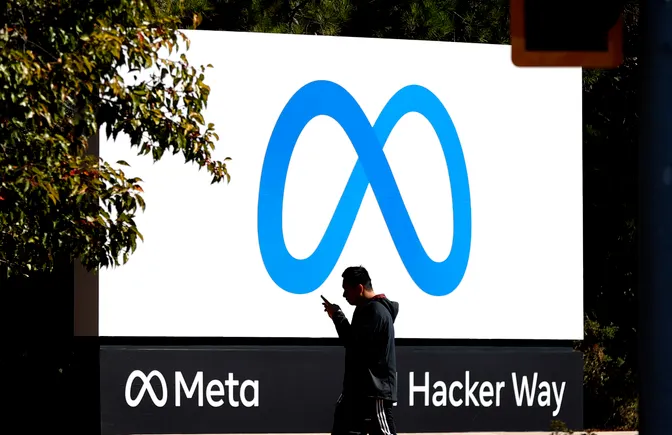
Meta Platforms Inc. is currently embroiled in arguably the most significant legal challenge in its corporate history, confronting a formidable coalition of 29 state attorneys general across the United States. This unprecedented lawsuit, which commenced trial in California last week, alleges that the technology behemoth intentionally engineered its social media platforms with addictive features, fully aware of the inherent risks these systems posed to users, particularly minors. The stakes are astronomically high, with projections indicating that an adverse ruling could saddle Meta with over $1 trillion in damage claims, a sum that could deliver a crippling blow to the company, whose current market capitalization hovers around $1.5 trillion, even before factoring in its massive multi-billion dollar investments in artificial intelligence development.
The Unprecedented Legal Challenge and its Origins
The federal lawsuit, initially filed in October 2023, consolidates various state-level actions against Meta, reflecting a growing bipartisan concern over the impact of social media on mental health, especially among younger demographics. This coalition represents states ranging from California and New York to Florida and Utah, signaling a widespread governmental pushback against practices perceived as predatory in the digital realm. The core of the complaint centers on Meta’s alleged violation of state consumer protection laws by deploying manipulative design tactics that exploit adolescent psychology, fostering compulsive use and contributing to a range of mental health issues.
This legal offensive is not an isolated incident but rather the culmination of years of escalating scrutiny, public health warnings, and whistleblower revelations concerning the darker side of social media. Governments globally have begun to question the unbridled growth and design philosophies of tech giants, particularly as evidence mounts regarding their platforms’ effects on user well-being. The current trial in California represents a pivotal moment, potentially setting a new precedent for corporate accountability in the digital age.
Two Critical Claims at the Heart of the Trial
The lawsuit primarily hinges on two interconnected allegations: first, that social media can be medically classified as addictive, and second, that Meta knowingly designed its systems to foster this addiction.
I. The "Social Media Addiction" Debate: A Medical and Legal Quandary
At its fundamental level, the lawsuit challenges Meta’s assertion that social media addiction is not a recognized psychological condition. Meta’s defense rests on the argument that "social media addiction" is not formally listed in the Diagnostic and Statistical Manual of Mental Disorders (DSM), the authoritative guide used by mental health professionals to diagnose mental health conditions. Therefore, the company contends, it cannot be held legally liable for a condition that lacks official medical verification.
However, the scientific and medical community’s understanding of "addiction" is evolving, particularly concerning behavioral addictions. While "social media addiction" might not have a specific DSM entry, parallels are often drawn to recognized conditions like Gambling Disorder, which has been acknowledged since 1980. Critically, even recognized behavioral addictions are often diagnosed in conjunction with co-occurring conditions such as depression and anxiety, which frequently become the primary focus of treatment. This nuance forms a key part of Meta’s likely defense: that any negative impacts users experience are attributable to pre-existing or co-occurring mental health conditions, rather than being solely caused by social media use itself.
Despite Meta’s technical defense, a growing body of academic research and expert opinion suggests that social media use can indeed lead to behaviors akin to traditional addictions. A 2017 paper published in Nature, for instance, and approved by the U.S. Surgeon General, found that the neurological impact of using social media exhibits similarities to other addictions, such as substance abuse and gambling, particularly concerning alterations in brain anatomy. These findings bolster the plaintiffs’ argument that the neurological pathways involved in social media engagement mirror those implicated in other addictive behaviors.
Further reinforcing this perspective, Stanford psychiatrist Dr. Anna Lembke, in her influential 2021 book Dopamine Nation, argues that the constant influx of dopamine triggered by social media networks can have significant negative impacts, leading to what she terms "dopamine addiction." Lembke posits that social connection, a fundamental human need, has been "druggified" by social media apps, rendering users vulnerable to compulsive overconsumption. In an interview with Stanford Medicine, she stated, "These apps can cause the release of large amounts of dopamine into our brains’ reward pathway all at once, just like heroin, or meth, or alcohol. They do that by amplifying the feel-good properties that attract humans to each other in the first place."
Meta’s counterargument here could acknowledge the concept of "dopamine addiction" more broadly but still deny that "social media addiction" specifically constitutes a legally actionable condition. They might argue that while their apps may be a contributing factor to broader problematic digital use, this does not elevate to the level of direct legal liability for a distinct "addiction."
However, a more recent 2024 paper published in the National Library of Medicine directly addressed the issue, characterizing social media addiction as a "real condition" marked by "excessive screen time, compulsive checking, and detrimental effects on real-life relationships and responsibilities." Crucially, this paper also highlighted compounding factors such as "low self-esteem and mental health issues, technological mechanisms like infinite scrolling and personalized notifications, and social influences, including peer pressure and exposure to idealized content." This comprehensive view, while validating the existence of social media addiction, simultaneously provides Meta with fodder for its defense: that these external and internal psychological factors, rather than the platform itself, are the true drivers of problematic use.
Ultimately, the court’s interpretation of what constitutes a "psychologically dependent condition" and whether Meta’s platforms directly cause it will be paramount. While a full finding of liability for directly causing a medically diagnosable addiction might be challenging given the existing parameters of medical classification, the judge could still find Meta responsible for contributing to problematic usage patterns. This could lead to mandated changes in platform design, such as introducing usage time limits or opt-outs for highly addictive features, rather than a direct culpability for "addiction" itself.
II. "Knowingly Built Addictive Systems": The Whistleblower Revelations
The second, and arguably more damning, claim against Meta is that the company was fully aware of the addictive nature and potential harms of its platforms but deliberately chose to prioritize engagement and growth over user well-being. This allegation stems primarily from the explosive revelations of former Meta employee Frances Haugen. In 2021, Haugen leaked tens of thousands of pages of internal company research documents to the Wall Street Journal, which subsequently published "The Facebook Files," a series of investigative reports.
"The Facebook Files" presented a stark picture, alleging that Meta’s own internal research indicated that Instagram, in particular, exacerbated mental health issues, body image concerns, and suicidal ideation in teenage girls. The reports suggested that Meta was aware of these detrimental effects but either downplayed them publicly or failed to adequately address them internally, continuing to optimize for engagement metrics that drove addictive behaviors.
Meta has consistently refuted Haugen’s claims, asserting that the leaked documents represented partial research elements or initiatives taken out of context, and did not provide a full or accurate scope of its extensive internal research and safety efforts. The company maintains that it invests heavily in user safety, particularly for young people, and that its platforms offer tools and resources to promote well-being.
However, Haugen’s testimony has been corroborated by other former Meta executives. Arturo Bejar, a former Facebook engineering director, testified last week as the first witness in the trial. Bejar claimed that Meta’s management repeatedly ignored recommendations to implement systems designed to better protect young users, instead prioritizing aggressive growth targets. Similarly, Sarah Wynn-Williams, a former director of public policy at Facebook, detailed in her memoir, Careless People, how Meta’s leadership allegedly downplayed significant ethical and safety risks in its relentless pursuit of global expansion. Wynn-Williams has reportedly faced legal action from Meta, preventing her from speaking publicly about her claims, as reported by the BBC. These testimonies from former insiders present a powerful narrative for the plaintiffs, suggesting a pattern of willful neglect.
Meta’s strategy has been to discredit these former employees, framing them as individuals with ulterior motives or incomplete information. The company points to numerous protection measures and controls it has implemented over the years, aiming to demonstrate its commitment to user safety.
Yet, Meta’s position took a significant hit earlier this year. In March 2024, Meta, alongside Google-owned YouTube, lost a high-profile binding jury trial in California. In that case, a plaintiff successfully argued that the companies’ platforms created systems that caused her harm, specifically impacting her mental health due to their addictive elements. The jury awarded the defendant $3 million in compensatory damages and an additional $3 million in punitive damages, with Meta ordered to pay $4.2 million of the total.
A crucial distinction in the current state attorneys general trial is the nature of the jury. Unlike the binding jury in the March case, the current trial features an advisory jury. This means the final decision will rest solely with the presiding judge, rather than being determined by a jury of citizens. This shift could be significant. Juries, composed of ordinary individuals, might be more swayed by the emotional impact of social media’s harms and less by the intricate legal and technical arguments. A judge, while still considering the evidence, may adhere more strictly to legal precedents and technicalities regarding liability.
Regardless, it seems highly probable that Meta will be compelled to review and potentially alter some of its most criticized "addictive elements," such as infinite scroll features, autoplay videos, and algorithmic recommendation engines that keep users perpetually engaged. While a full finding of liability on this specific element might be complex, the evidence from internal documents and whistleblower testimonies could make it difficult for Meta to completely escape responsibility for knowingly designing engaging, even if not medically "addictive," systems.
Broader Context and Regulatory Landscape
This landmark trial unfolds against a backdrop of increasing global regulatory scrutiny aimed at reining in the power and influence of tech giants. Governments worldwide are grappling with the complex challenges posed by social media platforms, from privacy concerns and misinformation to their documented impact on mental health.
In the United States, legislative efforts like the Kids Online Safety Act (KOSA) have been proposed, aiming to impose stricter safety requirements on online platforms used by minors and hold companies accountable for harmful content and design features. While KOSA’s passage remains uncertain, the momentum behind such legislation reflects a broad political consensus that the current self-regulatory model for tech companies is insufficient.
Internationally, the European Union has been at the forefront of digital regulation with landmark legislation such as the Digital Services Act (DSA) and the Digital Markets Act (DMA). The DSA, in particular, imposes significant obligations on very large online platforms (VLOPs) like Meta, requiring them to conduct risk assessments for systemic risks (including those related to mental well-being) and implement mitigation measures. While the current U.S. trial is under state and federal law, the outcomes could certainly influence the global dialogue and reinforce the need for similar regulatory frameworks elsewhere.
Public health advisories have also added pressure. In May 2023, the U.S. Surgeon General issued an advisory warning about the profound risk of social media to youth mental health, calling for urgent action from policymakers, tech companies, and parents. Such official warnings underscore the gravity of the concerns being raised in the current lawsuit and lend significant weight to the plaintiffs’ arguments.
The Potential Stakes and Financial Implications
The projected $1 trillion in potential damages, as reported by Reuters, represents an existential threat to Meta. While its market capitalization is substantial, such a payout would necessitate a significant restructuring or even liquidation of assets. It’s crucial to understand that this figure likely represents a maximum aggregate claim across all plaintiffs, and the actual awarded amount, if any, could be significantly lower. However, even a fraction of this sum would constitute an unprecedented financial penalty for a tech company.
Beyond the monetary damages, the trial’s outcome could force Meta to implement fundamental changes to its core business model and product design. Mandates could include:
- Usage Time Limits: Automatic time limits or nudges for users, particularly minors, to reduce screen time.
- Algorithmic Opt-Outs: Giving users more control over algorithmic feeds, allowing them to opt for chronological feeds or reduced recommendations.
- Default Privacy Settings: Stronger, privacy-by-design defaults for young users.
- Age Verification: More robust systems to verify user ages and restrict access to certain features for minors.
- Increased Transparency: Greater disclosure about how algorithms work and how data is used.
These changes, while potentially beneficial for user well-being, could significantly impact Meta’s engagement metrics, advertising revenue, and overall profitability. The company thrives on maximizing user attention, and any restrictions on "addictive" features could reduce the time users spend on its platforms, directly affecting its bottom line.
Looking Ahead: Implications for Meta and the Tech Industry
The Meta trial is more than just a legal battle; it is a cultural and technological reckoning. Its outcome will have far-reaching implications, not only for Meta but for the entire social media industry and the broader digital economy.
For Meta, a negative ruling, even without the full $1 trillion penalty, would undoubtedly force a reevaluation of its product development philosophy. The balance between innovation, engagement, and user well-being would shift dramatically, potentially ushering in an era where ethical design and safety are prioritized over relentless growth. This could mean a slowdown in new feature rollouts or a complete redesign of existing ones.
For the tech industry as a whole, this trial could establish a powerful legal precedent regarding corporate responsibility for the psychological impacts of digital products. It could embolden other states and even other countries to pursue similar lawsuits, leading to a wave of litigation against companies whose platforms are perceived to cause harm. This could accelerate the trend towards stricter regulation, pushing companies to proactively implement safeguards rather than react to legal and public pressure.
The trial also highlights the ongoing tension between freedom of expression, corporate innovation, and public health. As digital platforms become increasingly integrated into daily life, the question of who bears responsibility for their societal impacts—the companies that build them, the users who engage with them, or the governments that regulate them—becomes ever more critical.
In conclusion, the legal battle against Meta represents a defining moment in the history of social media. While the full extent of the damages and the precise nature of the mandated changes remain uncertain, it is clear that the status quo is no longer sustainable. The findings of this case are poised to instigate significant transformations in how Meta and, by extension, other tech giants design, operate, and account for the well-being of their vast global user base. This trial is not merely about penalties; it is about reshaping the future of digital interaction and holding powerful corporations accountable for the societal consequences of their technological innovations.

 rifanmuazin
 Pevita Pearce