Meta Platforms, Inc. has announced a significant firmware update for its AI-powered smart glasses, introducing a robust mechanism to automatically deactivate the device’s recording capabilities if it detects any attempt to conceal or tamper with its mandatory recording indicator light. This proactive measure comes in response to a growing trend where users have reportedly sought to disable the prominent LED lights on the front of the glasses, which are designed to illuminate whenever recording is in progress, thereby signaling to others that they are being captured. The company’s move aims to reinforce transparency and address escalating privacy concerns, yet it unfolds against a backdrop of revelations that Meta is simultaneously prototyping a new generation of smart glasses designed for continuous, covert audio and video capture, raising profound questions about the company’s long-term vision for wearable technology and individual privacy.
The issue of surreptitious recording gained widespread attention last month following an investigative report by prominent tech journalist Joanna Stern. In a segment on her YouTube channel, "New Things," Stern detailed a nascent but troubling cottage industry emerging around the modification of Meta’s AI glasses. She revealed that owners of these devices have been actively seeking and paying for services to remove or disable the crucial LED indicator lights. These lights are explicitly incorporated into the design of Meta’s smart glasses to serve as a clear, unmistakable visual cue to anyone in the vicinity that the device is actively recording photos or videos, thereby upholding a fundamental principle of informed consent in public and semi-public spaces.
Stern’s investigation brought to light numerous advertisements circulating on platforms like Facebook Marketplace, Meta’s own e-commerce service, offering "LED removal" services. These clandestine modifications, priced at up to $100, typically involve physical alterations such as drilling out the light mechanism. Disturbingly, many of these advertisements explicitly market the modified glasses as operating in "stealth mode," enabling users to record their surroundings without the knowledge or consent of others. The implications of such capabilities are inherently negative, fostering environments ripe for privacy infringements and potential misuse, ranging from casual covert surveillance to more malicious applications. The existence of such a demand highlights a significant ethical challenge for wearable technology developers: how to balance innovative functionality with the imperative of protecting individual privacy and public trust.
A History of Wearable Tech and Privacy Conflicts
The debate surrounding Meta’s AI glasses is not an isolated incident but rather the latest chapter in a long-running saga concerning wearable recording devices and their impact on privacy. The concept of smart glasses first captured public imagination with the unveiling of Google Glass in 2013. Heralded as a revolutionary step in augmented reality, Google Glass quickly became a lightning rod for privacy advocates. Its integrated camera, while offering hands-free photography and video, lacked clear external indicators of recording, leading to widespread public apprehension and the coining of the pejorative term "Glassholes" for early adopters. Concerns ranged from casual invasion of privacy in everyday settings like restaurants and bathrooms to potential misuse in corporate espionage or harassment. Ultimately, public backlash, combined with technological limitations and a high price point (initially $1,500 for the Explorer Edition), led to Google largely withdrawing the consumer version of Glass by 2015, although an enterprise version continued.
Following Google’s experience, subsequent entrants into the smart glasses market, including Snap Inc.’s Spectacles, made concerted efforts to incorporate visible recording indicators. Snap Spectacles, first released in 2016, featured a ring of white lights that illuminated when recording, a design choice intended to differentiate them from the privacy missteps of Google Glass. Meta, in launching its first iteration of smart glasses, Ray-Ban Stories, in 2021, and subsequently its more advanced AI glasses, also committed to this principle, integrating a prominent LED light to signal active recording. This industry-wide adoption of recording indicators underscored a tacit acknowledgment among tech companies of the critical need for transparency and user awareness when deploying cameras on wearable devices. The emergence of services designed to bypass these safeguards, therefore, represents a direct challenge to these established, albeit fragile, privacy norms.
Meta’s Enhanced Safeguards and Enforcement Timeline
October 2021: Meta (then Facebook) launches Ray-Ban Stories, its first generation of smart glasses, featuring a small LED light to indicate recording. The company faces immediate privacy scrutiny.
Early 2024: Reports begin to surface from tech journalists and social media users about services offering to modify Meta’s AI glasses by removing or covering the LED indicator lights. Joanna Stern’s report specifically highlights Facebook Marketplace listings for "stealth mode" conversions.
July 2026 (projected date from original article): Meta announces a significant update to its AI glasses.
In response to the escalating issue of LED tampering, Meta has rolled out a decisive update designed to neutralize "stealth mode" modifications. The company’s official statement outlined a dual-pronged approach. Firstly, a new firmware update will automatically disable the camera functionality of its AI glasses if the device detects that the capture LED has been blocked or obscured. "Beginning with our second generation of glasses, the camera is automatically disabled if we detect that the capture LED has been blocked. No photos or videos can be taken until we detect that the light is unblocked," Meta stated, emphasizing the immediate and unequivocal nature of this safeguard. This technical intervention aims to render any attempt at covert recording using a physically modified device ineffective.
Secondly, Meta confirmed that the cameras would also be permanently disabled if the system identifies any physical tampering or destruction of the LED light itself. This goes a step further than mere blocking, addressing the more severe modifications reported by journalists like Joanna Stern. The company expressed pride in this measure, asserting, "No other kind of camera has done this and we’re proud to lead the industry forward." This claim positions Meta at the forefront of implementing hardware and software safeguards against privacy abuses in the wearable tech space, a crucial step given the increasing adoption of such devices.
Beyond technical solutions, Meta is also undertaking aggressive enforcement actions against those facilitating these modifications. The company announced a comprehensive crackdown on illicit services, stating, "In addition to disabling the camera on devices when tampering is detected, we work across Meta to remove ads, posts, and Marketplace listings that advertise these kinds of tampering services and we will take action, up to banning accounts that do this." Furthermore, Meta signaled its intent to pursue legal recourse against individuals or businesses involved in selling or promoting services designed to tamper with the capture LED, both on and off its proprietary platforms. This commitment to legal action underscores the gravity with which Meta views the issue, indicating a zero-tolerance policy towards activities that undermine the integrity of its privacy safeguards and potentially expose users to non-consensual recording.
The Rising Stakes: Sales and Public Trust
Meta’s intensified focus on preventing covert recording comes at a critical juncture for its wearable technology division. While specific sales figures for Meta’s AI glasses are not publicly disclosed, industry analysts suggest a growing interest in the smart glasses market. According to a report by Statista, the global smart glasses market revenue is projected to reach approximately $1.6 billion by 2027, indicating a significant growth trajectory from previous years. This expansion means a larger number of individuals are now equipped with hands-free recording capabilities, amplifying the potential societal impact of both legitimate and illicit usage. As more people integrate these devices into their daily lives, the importance of robust privacy safeguards and public trust becomes paramount.
The company’s efforts to curb tampering are an acknowledgment that the widespread adoption of AI glasses hinges not just on their utility and innovation, but equally on the public’s confidence that these devices will be used responsibly and ethically. A failure to effectively address concerns about covert recording could severely erode public trust, potentially stifling the growth of the entire smart glasses category, much as privacy fears hampered the early trajectory of Google Glass. For Meta, which is heavily invested in its "metaverse" vision as a future computing platform, the success of its smart glasses is a foundational component, making the integrity of these devices a strategic imperative. The company cannot afford a widespread privacy scandal that could derail its ambitions in the burgeoning XR (extended reality) space.
A Contradictory Future: Always-On Recording Unveiled
Paradoxically, even as Meta fortifies its current AI glasses against surreptitious recording, reports have surfaced indicating the company is simultaneously exploring a future where continuous, always-on capture is a core feature of its next-generation wearable devices. The Financial Times recently reported that Meta is testing a new prototype of its AI glasses designed to record every moment a user is wearing them, capturing all audio and video experienced throughout the day.
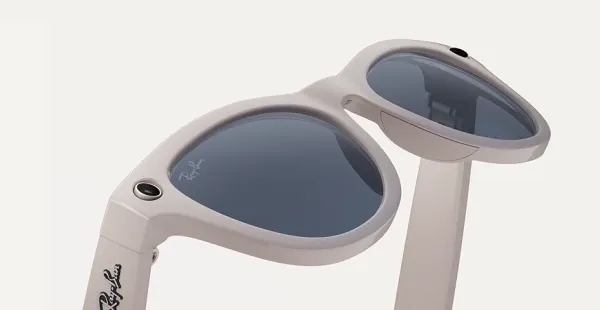
According to the Financial Times, "The $1.5tn social media platform has been advancing a new hardware line of smart glasses that would continuously collect audio while taking photos every few seconds, according to multiple people familiar with the matter. A user could then use AI to help query what they saw or heard, or recall their day." This ambitious concept envisions a device that acts as a perpetual personal memory recorder, leveraging advanced AI to allow users to search and relive their daily experiences. This "life-logging" capability, often termed a "digital twin" of a user’s sensory experience, represents a significant leap in personal data collection.
Crucially, the Financial Times report also noted that during this continuous capture phase, the LED lights on these prototype devices would not be activated. This stark contrast immediately highlights a fundamental tension: on one hand, Meta is vigorously implementing measures to prevent users from creating "stealth mode" recording devices with current models; on the other, it appears to be actively developing future models that inherently operate in a functionally "stealth" manner from the perspective of external observers.
This apparent dichotomy raises profound questions about Meta’s long-term strategy and its approach to privacy. Critics might argue that Meta is not inherently opposed to covert recording but is rather annoyed that external actors are monetizing a "stealth" capability that Meta itself intends to offer as a core feature in future products. This perspective aligns with Meta’s historically aggressive "move fast and break things" ethos, a philosophy famously espoused by CEO Mark Zuckerberg, which has often seen the company push ahead with potentially disruptive products and features, only to grapple with the ethical, legal, and societal consequences later. The pattern suggests a willingness to innovate at speed, often testing the boundaries of privacy and societal norms, and then addressing fallout reactively rather than proactively designing for maximum ethical consideration from the outset.
Broader Impact and Ethical Implications
The unfolding situation with Meta’s AI glasses has significant implications across several domains, drawing reactions from privacy advocates, legal experts, and ethicists.
Privacy and Consent: A Fundamental Conflict
The core of the issue revolves around privacy and consent. The right to not be recorded without knowledge or permission is a cornerstone of privacy in many societies. While laws vary significantly by jurisdiction (e.g., "one-party consent" vs. "two-party consent" for audio recording in the US, strict data protection laws like GDPR in Europe), the ethical expectation of transparency remains high. Continuous, unannounced recording, even if intended for personal memory recall, fundamentally alters public spaces and social interactions, creating a pervasive sense of surveillance.
Privacy advocacy groups, such as the Electronic Frontier Foundation (EFF) and the American Civil Liberties Union (ACLU), have consistently voiced concerns about the proliferation of surveillance technologies and the erosion of individual autonomy in public spaces. They would likely argue that even if Meta frames continuous capture as a personal utility, the external impact on those being recorded without an indicator light is a critical ethical breach. "The absence of a clear recording indicator fundamentally undermines the principle of informed consent," stated a representative from a prominent digital rights organization, speaking on background. "It turns every interaction into a potential data-gathering exercise, shifting the burden of privacy protection from the recorder to the recorded."
Legal Challenges and Regulatory Scrutiny
The potential for continuous recording without notification could lead to a torrent of legal challenges. Existing laws on surreptitious recording, harassment, and data privacy could be invoked. Regulators globally, who are already grappling with how to govern AI and emerging technologies, would likely scrutinize such a product intensely. The European Union, with its stringent General Data Protection Regulation (GDPR), which imposes strict rules on data collection and processing, could pose a significant barrier to the deployment of always-on recording glasses without explicit, verifiable consent mechanisms for all individuals captured, a logistical impossibility in many public settings. In the United States, the patchwork of state laws regarding recording, particularly audio recording, could create a compliance nightmare for Meta and potential legal liabilities for users, depending on where and what is recorded. Legal scholars have noted the complexity of applying decades-old privacy statutes to novel, pervasive recording technologies.
Social Norms and Public Acceptance: The "Chilling Effect"
The introduction of always-on recording devices could profoundly shift social norms. People may become more guarded in public, affecting spontaneity and open interaction. The omnipresence of potential recording could foster a "chilling effect," where individuals self-censor or avoid certain behaviors for fear of being captured and potentially having that data used against them or shared without their explicit permission. The initial backlash against Google Glass demonstrated how quickly public opinion can turn against technologies perceived as invasive. Meta’s ability to navigate this delicate social landscape will be crucial for the widespread adoption of its future smart glasses. The societal contract around public spaces may need to be renegotiated, and the outcome is far from certain.
Data Security and AI Ethics: Unprecedented Personal Data
A device continuously collecting vast amounts of personal audio and video data raises immense data security concerns. Where will this data be stored? How will it be protected from breaches? Who will have access to it? Furthermore, the application of AI to query and process this highly personal "life-log" data introduces complex ethical considerations regarding algorithmic bias, potential for misuse (e.g., targeted advertising based on private conversations, emotional states), and the overall implications for individual autonomy and digital rights. The potential for such a system to reconstruct and analyze an individual’s entire daily life, creating a searchable, inferential database of their experiences, presents an unprecedented level of data aggregation and inference, raising concerns about surveillance capitalism and the erosion of cognitive privacy.
Competitive Landscape and Industry Standards
Meta’s actions will undoubtedly influence the broader smart glasses and wearable technology market. If Meta successfully implements effective anti-tampering measures for its current models, it could set a new industry standard for transparency in recording. However, if its future "always-on" models are perceived as circumventing these very standards, it could create a confusing and potentially hypocritical precedent. Competitors, including Apple, Samsung, and other tech giants reportedly exploring their own smart eyewear, will be watching closely to gauge public reaction and regulatory responses, which will in turn shape their own product development strategies and privacy features. The industry faces a collective responsibility to establish clear, ethically sound guidelines for wearable recording devices.
Conclusion: Navigating the Ethical Frontier of Wearable AI
Meta’s latest update to its AI glasses represents a necessary and commendable step towards reinforcing privacy safeguards against illicit modifications. By disabling recording functions when tampering is detected and actively pursuing those who facilitate "stealth mode" services, Meta is attempting to uphold a standard of transparency that is vital for public trust in wearable recording devices. However, this positive development is overshadowed by the revelations of Meta’s internal explorations into continuously recording smart glasses that lack external recording indicators.
This juxtaposition encapsulates the inherent tension at the heart of technological innovation: the pursuit of groundbreaking utility versus the fundamental right to privacy. Meta’s historical "move fast and break things" philosophy has frequently placed it at the center of privacy controversies, from early data sharing practices on Facebook to challenges with WhatsApp and Instagram. The company’s current dual approach – patching privacy vulnerabilities in one product while potentially creating new ones in the next – suggests a continuing struggle to proactively embed ethical considerations at the core of its product development cycle, rather than as an afterthought or reactive measure.
As AI glasses become more sophisticated and ubiquitous, the industry, led by major players like Meta, faces an urgent imperative. It must navigate the ethical frontier with greater foresight, prioritizing user autonomy, informed consent, and robust privacy protections, not merely as reactive measures but as foundational design principles. The future of wearable AI hinges not just on technological prowess, but on the ability of companies to build devices that enhance human experience without inadvertently transforming our daily lives into a constant, unconsented surveillance stream. The public, regulators, and privacy advocates will be keenly observing whether Meta truly learns its lessons from past missteps or if it continues to push the boundaries of what is socially and ethically acceptable in the relentless pursuit of the next technological frontier.