The landscape of paid social media advertising has undergone a seismic shift with the recent introduction of Meta Ads AI Connectors. This groundbreaking development fundamentally alters how advertisers create, manage, and analyze campaigns by seamlessly embedding artificial intelligence tools directly into their existing workflows. Previously, managing paid social campaigns necessitated logging into Meta’s Ads Manager for performance checks and adjustments, with AI tools serving primarily as analytical aids operating in a disconnected capacity. Meta’s new offering obliterates this separation, ushering in an era where AI is not merely an interpreter but an active participant in the campaign lifecycle.
The core innovation lies in Meta’s commitment to breaking down the traditional barriers between advertising platforms and advanced AI capabilities. For years, the operational reality for paid social specialists involved a distinct division: performance data resided within Ads Manager, and any actions taken to optimize campaigns were executed within the platform’s confines. AI tools, while offering valuable insights, were relegated to an advisory role, unable to directly influence live campaigns. This created a inherent lag between identifying an opportunity or a problem and implementing a solution. Advertisers would often export data, analyze it in external AI platforms, and then manually re-enter changes back into Ads Manager – a process that was not only time-consuming but also prone to errors.
Meta Ads AI Connectors eliminate this cumbersome intermediary process. By leveraging Meta’s proprietary MCP server, these connectors establish a secure, direct link to live campaign data. This integration allows for a fluid transition from analysis to action, all within the AI tools that advertisers already utilize. The implications are profound, promising to accelerate the pace of optimization and democratize access to sophisticated campaign management.
Execution Moves Beyond the Platform’s Perimeter
The most immediate and palpable change brought about by Meta Ads AI Connectors is the relocation of campaign execution away from the confines of Ads Manager. Historically, the platform itself was the de facto command center for all paid social activities. Performance reviews, budget adjustments, creative updates, and targeting refinements all occurred within the structured environment of Ads Manager. AI’s role was largely confined to interpreting the data presented to it, offering recommendations that then required manual implementation by the user. This created a bottleneck, where the speed of campaign iteration was directly tied to the efficiency of manual input and the platform’s user interface.
Meta Ads AI Connectors dismantle this wall. Now, the same AI environment that an advertiser uses to dissect campaign performance can also be empowered to act upon that performance. This means that the time lag between identifying a suboptimal ad set, a declining conversion rate, or an underperforming creative and making the necessary adjustments is drastically reduced. Instead of a multi-step process involving data extraction, external analysis, and manual re-entry, advertisers can now move from insight to action within a single, unified environment. This seamless transition is expected to foster a more agile and responsive approach to campaign management, enabling advertisers to capitalize on fleeting opportunities and swiftly mitigate emerging issues.
For instance, an advertiser might notice a sudden drop in click-through rates for a specific ad creative through their AI tool. Traditionally, they would have to navigate to Ads Manager, locate the ad, pause it, and upload a new creative. With AI Connectors, the AI tool, having direct access to the Meta campaign data, could flag the underperformance and, based on predefined parameters or natural language prompts, automatically pause the underperforming ad and suggest or even implement a replacement creative, all without the user ever needing to log into Ads Manager. This represents a significant leap forward in operational efficiency.
Strategic Decisions Centered Where Data Resides
Beyond the immediate impact on execution, Meta Ads AI Connectors are facilitating a more profound strategic shift: decisions are now being made at the nexus of data convergence. The industry has long recognized that Meta’s performance does not exist in a vacuum. Effective paid social strategies are intrinsically linked to performance across other digital channels, such as search engine marketing, retail media networks, and broader business objectives like overall revenue and customer lifetime value. However, achieving this holistic view has historically been a significant challenge, often requiring complex data integrations and manual cross-referencing.
By enabling AI tools to directly access and act upon Meta campaign data alongside data from other sources, Meta is implicitly acknowledging this industry reality. When an AI tool can pull and analyze Meta data in conjunction with search ad performance, e-commerce sales figures, and CRM data, it becomes the central intelligence layer where strategic decisions are truly made. This capability is instrumental in building the cross-channel view that marketing teams have strived for years to construct. Instead of optimizing Meta campaigns in isolation, advertisers can now weigh their performance within the context of the entire marketing ecosystem. This allows for more informed resource allocation, more cohesive campaign messaging across channels, and a more accurate understanding of the true return on investment for Meta advertising.
Consider a scenario where an advertiser is running campaigns on both Meta and Google Search. With AI Connectors, their AI platform could analyze the correlation between Meta ad spend and subsequent search queries, identifying if Meta ads are effectively driving top-of-funnel interest that then translates into search volume. If the AI detects a strong positive correlation, it could recommend increasing Meta spend, or conversely, if Meta ads appear to be cannibalizing search volume, it might suggest a reallocation of budget. This integrated decision-making process, powered by AI that can bridge the gap between platforms, offers a level of strategic insight previously unattainable.

Reduced Friction Democratizes Campaign Management
A third significant consequence of Meta Ads AI Connectors is the reduction in operational friction, which in turn has a democratizing effect on who can effectively manage paid social campaigns. Many tasks that previously required intricate knowledge of the Ads Manager interface, cross-team coordination, or even specialized technical setup can now be accomplished through natural language commands. This simplification not only accelerates the execution of tasks but also lowers the barrier to entry for individuals and teams to participate in campaign management.
The traditional requirement for deep platform fluency is diminishing. Instead, success will increasingly depend on a team’s ability to articulate their objectives clearly, interpret the outputs from AI systems, and provide the right strategic guidance to steer the AI towards desired outcomes. This shift has profound implications for team structures and skill development within marketing departments. It suggests a move away from highly specialized roles focused solely on platform operations towards roles that emphasize strategic thinking, prompt engineering, and data interpretation.
For example, a junior marketing associate with strong communication skills could potentially launch and manage a basic Meta campaign by simply providing a detailed prompt to an AI tool, outlining the target audience, budget, and campaign goals. Previously, such a task might have required extensive training on Ads Manager or delegation to a more experienced specialist. This democratization can empower smaller businesses or teams with limited resources to leverage the power of Meta advertising more effectively. It also means that the competitive edge will come not from knowing how to click buttons within Ads Manager, but from understanding how to effectively communicate with AI and leverage its capabilities for strategic advantage.
The Enduring Importance of Human Judgment
While the advancements brought by Meta Ads AI Connectors undoubtedly point towards a future of increased efficiency and streamlined workflows, it is crucial to recognize that these gains, while real, are not the sole determinant of success. The true differentiator for high-performing teams will lie in their ability to move beyond viewing these connectors as mere reporting shortcuts. The inherent value of this technology is not simply in automating the extraction of Meta reports. Instead, it resides in the capacity to integrate Meta data into a broader, more sophisticated decision-making framework.
This framework must encompass an understanding of performance across other marketing channels, alignment with overarching business metrics, and a robust testing methodology. Teams that effectively leverage AI Connectors will be those that redesign their entire workflow to embrace this integrated approach, rather than simply bolting AI onto their existing, siloed routines. This requires a fundamental rethinking of how paid social campaigns are conceptualized, planned, and executed.
Furthermore, these advancements significantly elevate the importance of human judgment and strategic oversight. When campaigns can be built, modified, and optimized with a single instruction or a few natural language prompts, the precision with which those instructions are formulated becomes paramount. Defining the right inputs, identifying meaningful signals for the AI to act upon, and establishing appropriate guardrails to prevent unintended consequences are critical responsibilities. The AI system will act with unprecedented speed, but it still requires intelligent direction. The ultimate compass, the "why" behind the "what," remains a distinctly human prerogative.
For instance, an AI might be instructed to optimize a campaign for conversions. However, without human oversight, it might achieve this by aggressively targeting users with a high propensity to convert but a low lifetime value, potentially sacrificing long-term customer relationships for short-term gains. A discerning human strategist would recognize this potential pitfall and set parameters that balance immediate conversion goals with long-term customer value, perhaps by incorporating LTV data into the AI’s optimization objectives or by limiting the aggressive pursuit of conversions from certain user segments.
The Evolving Center of Gravity for Paid Social
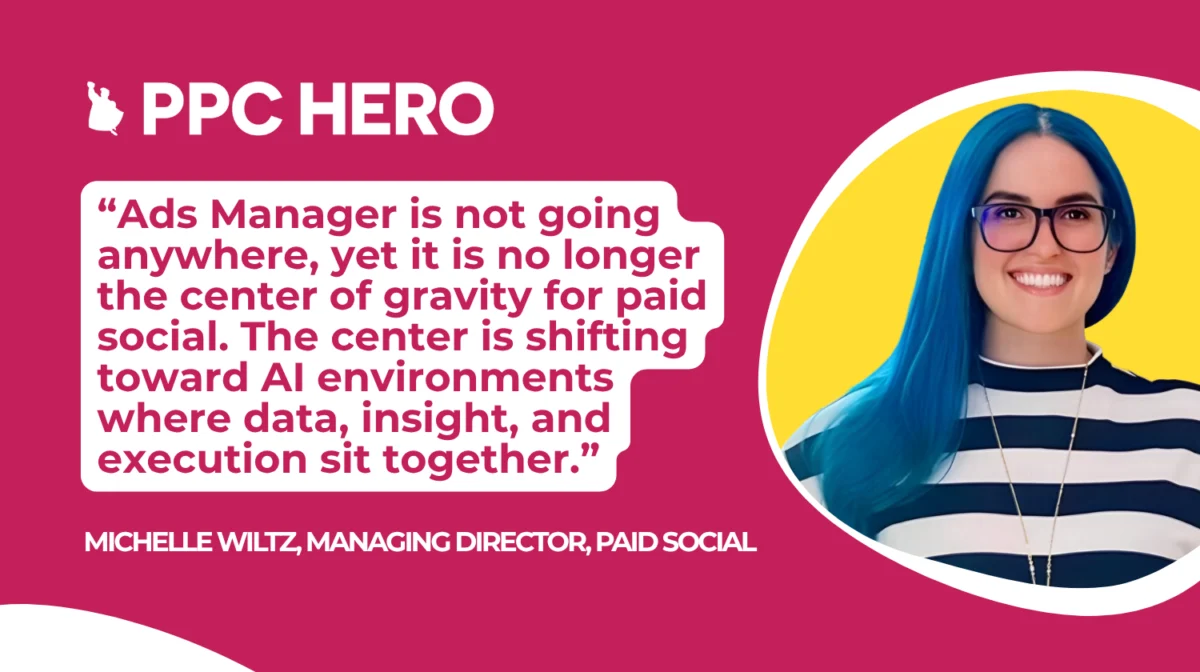
In conclusion, Meta Ads AI Connectors represent more than just another incremental AI feature. They signify a fundamental repositioning of where paid social campaign management actually resides. While Ads Manager will undoubtedly persist as a vital tool, its role as the sole "center of gravity" for paid social activities is diminishing. The true locus of control and intelligence is shifting towards AI-driven environments where data, insight, and execution converge.
This transition is not merely about making campaign management easier; it is about redefining the operational paradigms within which it occurs. The teams that proactively adapt to this evolving landscape, embracing the integrated, AI-powered workflows, will be positioned to move with greater speed and make more astute decisions. Conversely, those who remain tethered to traditional, platform-centric methods may find themselves perpetually a step behind, still logging into Ads Manager, pulling disparate reports, and struggling to reconcile their efforts with the dynamic pace of the modern digital advertising ecosystem. The future of paid social is being written in the language of AI, and the ability to speak it fluently will be the hallmark of success.