
 rifanmuazin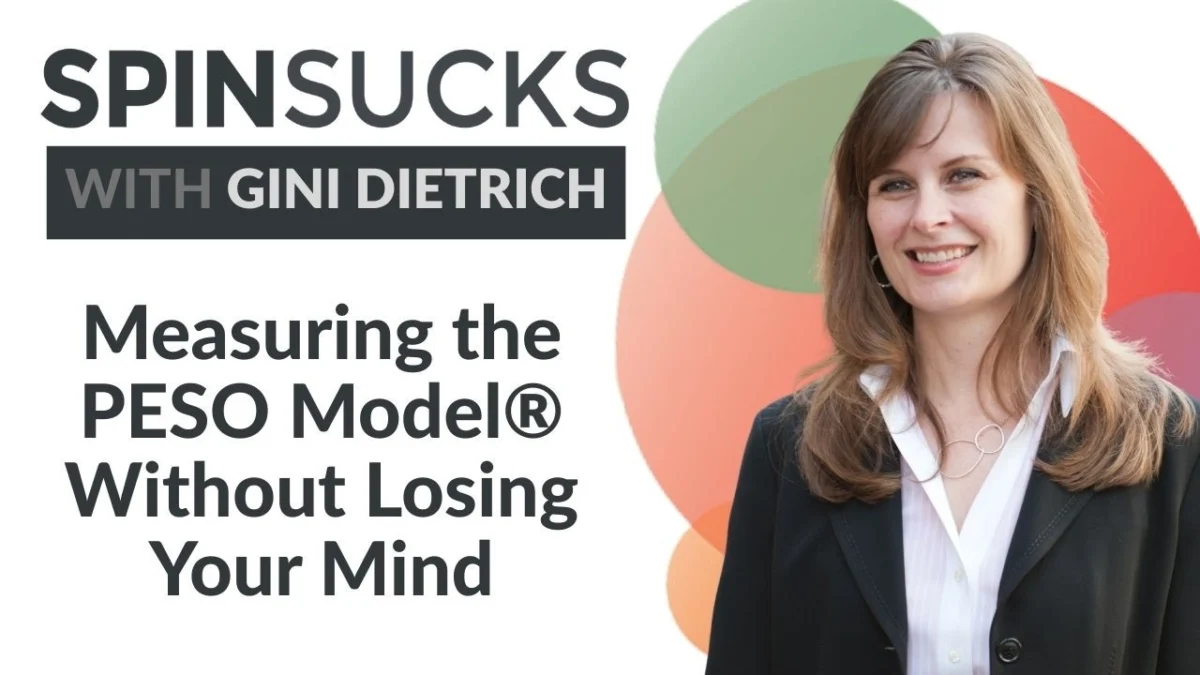
The discipline of strategic communications is currently undergoing a fundamental transformation as traditional metrics of success—such as impressions, click-through rates, and total output—lose their relevance in a landscape dominated by zero-click searches and artificial intelligence-driven discovery. The PESO Model, an industry-standard framework encompassing Paid, Earned, Shared, and Owned media, is being redefined not as a collection of separate silos, but as an integrated operating system. Central to this evolution is a shift in measurement philosophy: moving away from "math homework" toward storytelling with numbers. In this new paradigm, the primary objective of measurement is to answer a single, critical business question: "What changed?"
As organizations face increasing pressure to prove the return on investment (ROI) for marketing and public relations expenditures, the transition from measuring activities to measuring outcomes has become a strategic imperative. Experts argue that the traditional method of reporting—often characterized by "stapling together" four disparate channel reports—fails to provide a cohesive narrative of how communications efforts drive business results. Instead, a functioning PESO program operates as a visibility engine where proof is created in owned media, validated through earned media, distributed via shared channels, and accelerated through paid efforts.
The Shift from Outputs to Outcomes
In the context of modern communications, the distinction between activities, outputs, and outcomes is the difference between operational noise and strategic value. Activities are the internal actions taken by a team, such as writing a blog post or attending a strategy meeting. Outputs are the direct results of those activities, such as the number of articles published or the volume of social media posts. While these metrics are necessary for internal project management, they do not reflect business impact.
Outcomes, conversely, represent the tangible shifts in behavior or business performance that occur as a result of those outputs. For example, while publishing six articles is an output, an 18% increase in qualified demo requests—driven by those articles answering specific prospect questions—is an outcome. This distinction is critical for leadership teams who require evidence of how communications strategies are moving the needle on revenue, market share, or customer retention.
Industry data suggests that the "visibility" once sought through simple media placements is no longer guaranteed. With the rise of AI-driven search engines like Perplexity and Google’s Search Generative Experience (SGE), users often find the information they need without ever clicking through to a website. This "zero-click" environment means that traditional traffic charts are no longer the sole indicator of brand health. Measurement must now account for how consistently and credibly a brand’s signals appear across the ecosystems where both humans and AI aggregate information.
The 90-Day Outcome Framework
To manage the complexity of integrated measurement, strategic communicators are increasingly adopting a 90-day framework. This duration is long enough to allow a PESO system to generate momentum but short enough to remain agile. A quarterly cycle provides a clear narrative arc: establishing a baseline, implementing a strategy, measuring the shift, and adjusting for the following period.
The implementation of this framework begins with the selection of a single primary outcome. Organizations often fail in their measurement efforts by attempting to track too many competing Key Performance Indicators (KPIs) simultaneously, such as brand awareness, thought leadership, and lead generation. By focusing on one primary outcome—such as reducing the sales cycle by 10% or increasing trial-to-active conversion rates—the PESO operating system can be precisely tuned to achieve that specific goal.
The process follows a logical chronology:
- Define the Baseline: Identify the current state using data that is accessible and verifiable.
- Set a Realistic Target: Establish what success looks like at the end of the 90-day window.
- Execute Integrated Tactics: Align Paid, Earned, Shared, and Owned efforts toward the singular goal.
- Apply Decision Rules: At the end of the cycle, determine whether to "double down" on successful tactics, adjust the approach, or stop activities that failed to move the outcome.
Measuring the Integrated System
The true power of the PESO Model lies in its integration. When measured as a system rather than as isolated channels, the narrative of success becomes much clearer. Instead of reporting that social media engagement is up or that a specific press release performed well, a system-wide report explains how these elements interacted to produce a result.
A typical integrated narrative might look like the following: "We changed trial-to-active conversion by increasing week-one completion because our owned content addressed onboarding friction, and earned media validation from third-party reviews reduced user skepticism." In this scenario, the numbers—conversion percentages and completion rates—serve as the supporting evidence for a broader business story.
This systemic approach also addresses the "attribution problem" that plagues many marketing departments. Rather than various teams competing for credit for a single lead, the integrated model acknowledges that a prospect may see a shared post (Shared), read a technical guide (Owned), see a mention in a trade publication (Earned), and finally click on a retargeting ad (Paid) before converting. The goal is to measure whether the system as a whole moved the outcome, rather than which individual "cog" in the machine was most important.
Navigating the AI-First Discovery Landscape
The emergence of AI has fundamentally altered the "visibility" component of the PESO Model. AI models train on vast amounts of data, and their outputs are influenced by the consistency and authority of information found across the web. Consequently, measurement must now include an analysis of "signal strength."
If a brand’s messaging is consistent across its owned channels, validated by reputable earned media outlets, and frequently discussed in shared spaces, it creates a robust signal that AI discovery engines are more likely to prioritize. Measurement in this era involves tracking how often a brand is cited as a primary source or recommended in AI-generated summaries. This is a significant departure from traditional SEO measurement, which focused primarily on keyword rankings and backlink counts.
Strategic Implications for Organizational Leadership
For C-suite executives and organizational leaders, the shift toward outcome-based PESO measurement provides a clearer view of how communications budgets are being utilized. It moves the conversation from "What did we do last month?" to "How did our efforts change the business trajectory?"
One of the most significant benefits of the 90-day outcome model is the "permission to stop." In many corporate environments, marketing activities are added incrementally but rarely removed. By anchoring work to specific outcomes, leaders can make data-driven decisions to cease activities that are not contributing to the primary goal. This operational efficiency ensures that resources are always directed toward the highest-impact strategies.
Furthermore, the "Outcome Quality Check" provides a rigorous filter for any proposed communication strategy. Before a campaign is launched, it must pass four criteria:
- Is there a clear "What changed?" story to tell?
- Is there a baseline that can actually be found?
- Is the outcome something the organization actually cares about?
- Can the outcome be influenced within a 90-day window?
If a proposed project cannot satisfy these requirements, it is likely an output-focused activity rather than an outcome-driven strategy.
Conclusion and Future Outlook
As the digital landscape becomes increasingly fragmented and automated, the ability to tell a cohesive story with data will separate successful brands from those that merely generate noise. The PESO Model remains the most effective framework for navigating this complexity, provided it is measured as a unified system focused on business outcomes.
The transition from math-heavy reporting to strategic storytelling requires a cultural shift within communications teams. It demands a deeper understanding of business goals and a willingness to move beyond vanity metrics. However, the rewards are substantial: greater credibility with leadership, more efficient use of budgets, and a communications strategy that is resilient in the face of technological disruption.
In the coming years, the integration of AI into measurement tools will likely automate much of the data collection process, but the human element of "storytelling with numbers" will remain paramount. The role of the modern communicator is not just to report the numbers, but to interpret what they mean for the future of the organization. By focusing on "what changed," the PESO Model evolves from a marketing framework into a powerful driver of organizational growth.










