The increasing reliance on automated bidding strategies within Google’s advertising ecosystem, particularly on the expansive YouTube platform, necessitates a thorough understanding of their intricacies. Beyond merely identifying available options, the critical element for advertisers lies in strategically configuring campaigns to harness the full potential of these powerful tools. This comprehensive guide delves into the nuances of YouTube Smart Bidding, offering practical insights and strategic recommendations for advertisers aiming to drive tangible business outcomes, from sales and leads to crucial brand awareness.
Smart Bidding on YouTube primarily serves campaigns designed for direct action, such as Video Action Campaigns, which utilize targets like Target CPA (tCPA) and Maximize Conversions to generate sales, leads, or sign-ups. However, Google also offers a dedicated option for Reach formats, exemplified by bumper ads, specifically engineered to cultivate brand awareness and broaden audience reach. This bifurcated approach allows advertisers to tailor their automated bidding strategies to distinct campaign objectives, ensuring optimal resource allocation and performance.
Understanding YouTube’s Smart Bidding Landscape
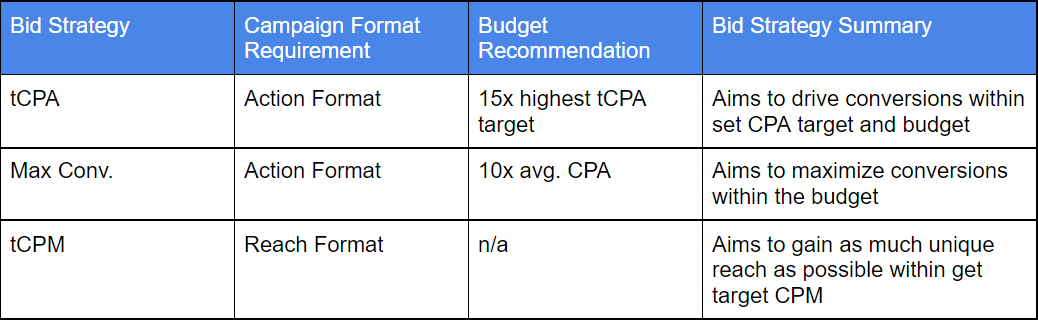
At its core, Smart Bidding leverages machine learning to optimize bids in real-time, aiming to achieve specific campaign goals within a defined budget. For performance-driven campaigns focused on conversions, the primary tools are tCPA and Maximize Conversions.
- Maximize Conversions: This strategy automatically sets bids to help get as many conversions as possible at the lowest possible cost, within your specified budget. It’s an excellent starting point for campaigns where establishing a baseline Cost Per Acquisition (CPA) is paramount, providing valuable data for future optimization.
- Target CPA (tCPA): Once a campaign has accumulated sufficient conversion data and a stable CPA has been established, advertisers can transition to tCPA. This strategy sets bids to help achieve an average cost per conversion that you define. It offers greater control over spending efficiency but requires a foundational understanding of your target acquisition cost.
For campaigns prioritizing reach and brand visibility, such as those utilizing bumper ads, the objective shifts from direct conversions to maximizing the number of unique users exposed to the advertisement. While the underlying machine learning principles are similar, the optimization targets are fundamentally different, focusing on impressions and reach rather than conversion events.
The Crucial Role of Bid-to-Budget Ratios
Google’s recommendations for budget allocation when employing Smart Bidding strategies are often a point of discussion among advertisers. The prevailing guidance suggests setting daily budgets that are a significant multiplier of the target CPA. Specifically, Google recommends budgets ranging from 10x to 15x the average CPA for tCPA campaigns. For Maximize Conversions, a similar ratio is advised, albeit relative to the expected CPA.

This recommendation might initially appear substantial, even daunting, for some advertisers. However, extensive empirical evidence and practical experience consistently demonstrate its necessity for setting up campaigns for sustained success. A sufficiently large budget allows the Smart Bidding algorithms ample opportunity to gather data, test various bidding scenarios, and identify the most efficient pathways to achieve campaign objectives. Without adequate budget, the system may be constrained, leading to suboptimal performance and a longer learning period.
Consider a scenario where an advertiser aims for a tCPA of $85. To align with Google’s recommendation, the daily budget would need to be at least $1,275 (15 x $85). If the objective is to maximize conversions without a strict CPA target, and the estimated CPA is $85, a budget of at least $850 would be suggested. While these figures can seem high, they are not arbitrary. They are designed to provide the machine learning models with the necessary volume of data to accurately predict conversion probabilities and adjust bids accordingly, thereby preventing the campaign from becoming "Limited By Budget" (LBB) and hindering its growth potential.
Strategic Implementation: From Maximize Conversions to tCPA
A highly effective and widely adopted strategy is to initiate performance-focused campaigns on the Maximize Conversions bidding strategy. This approach allows the algorithm to learn and identify the most cost-effective opportunities to drive conversions, establishing a reliable baseline CPA. Once the campaign has stabilized and demonstrated consistent performance over a reasonable period (typically two to four weeks, allowing for the completion of the learning phase), advertisers can then strategically transition to the tCPA bidding strategy.
This phased approach offers several key advantages:
- Data Foundation: Maximize Conversions provides the necessary data volume for the algorithm to become proficient. It explores a wider range of bid opportunities to find conversions, thus building a robust dataset.
- Baseline Establishment: The CPA achieved during the Maximize Conversions phase serves as a realistic benchmark for setting the target CPA. This avoids setting an overly ambitious tCPA that the campaign may struggle to meet initially.
- Controlled Optimization: Transitioning to tCPA allows for more precise control over spending efficiency. With a well-defined baseline, advertisers can set a target CPA that is both profitable and achievable.
Mini Case Study: The Impact of Budget Adjustments
To illustrate the tangible benefits of adhering to bid-to-budget recommendations, consider the following hypothetical, yet representative, scenario:
Situation: A YouTube campaign, initially configured with the tCPA bidding strategy, was flagged by Google Ads as "Limited By Budget" (LBB). This status indicated that the campaign’s daily budget was insufficient to allow the bidding system to operate at its full potential and achieve the desired CPA.

Initial Bid-to-Budget Ratio: The campaign’s budget was set at approximately 10x its current CPA. While this ratio meets the lower end of Google’s recommendation, it proved insufficient in this specific instance to overcome the LBB status.
Update and Intervention: Recognizing the constraint, the advertising team made a strategic decision to increase the daily budget. The new budget was set to 15x the campaign’s current CPA, aligning with the upper end of Google’s recommended ratio.
Results: Following this budget adjustment, and importantly, after accounting for the initial two-week learning period of the campaign, significant improvements were observed. Both campaign growth and efficiency metrics saw positive trajectories. The graph below visually depicts this impact:
- Before Budget Increase (Post-Learning): The campaign experienced limitations, likely resulting in missed conversion opportunities and potentially a plateau in performance.
- After Budget Increase (Post-Learning): The increased budget empowered the Smart Bidding algorithm to explore a broader spectrum of ad placements and audience segments. This led to a demonstrable increase in conversions and, crucially, an improvement in the efficiency of acquiring those conversions (indicated by a potentially lower or more stable CPA despite increased spend).
This mini case study underscores a critical takeaway: while Smart Bidding automates the bidding process, it is not a "set it and forget it" solution. It requires strategic setup, adequate resource allocation, and ongoing monitoring to truly unlock its potential. The initial investment in budget is often a prerequisite for achieving the desired efficiency and scale.
Beyond Bids and Budgets: Other Key Considerations
While budget and bidding strategy are foundational, several other factors play a significant role in optimizing YouTube Smart Bidding campaigns:
- Conversion Tracking Accuracy: The effectiveness of any conversion-focused bidding strategy hinges on accurate and robust conversion tracking. Ensure that your Google Ads conversion tags are correctly implemented across your website and that you are tracking the right conversion actions that align with your business objectives. Inaccurate tracking can lead the algorithm astray, optimizing for the wrong events or misinterpreting campaign performance.
- Audience Signals: While Smart Bidding algorithms are powerful, they benefit immensely from well-defined audience signals. Providing the system with insights into your ideal customer segments through custom segments, in-market audiences, and affinity audiences can significantly enhance targeting precision and improve conversion rates.
- Creative Assets: The quality and relevance of your video creative assets are paramount. Even the most sophisticated bidding strategy cannot compensate for unengaging or irrelevant ads. Your creatives must resonate with your target audience and clearly communicate your value proposition, driving them towards the desired conversion action.
- Landing Page Experience: The journey doesn’t end with a click. A seamless and relevant landing page experience is crucial for converting interested viewers into customers. Ensure your landing pages are optimized for mobile, load quickly, and provide a clear path to conversion.
- Campaign Structure and Goal Alignment: It’s essential to ensure your campaign structure logically aligns with your overarching business goals. For instance, if your primary objective is direct sales, your campaign should be built around conversion-focused bidding strategies and objectives. Avoid trying to achieve disparate goals within a single campaign.
The Evolving Landscape of Digital Advertising
The continuous evolution of AI and machine learning is reshaping the digital advertising landscape. Google’s Smart Bidding solutions are at the forefront of this transformation, offering advertisers powerful tools to navigate complex advertising ecosystems and achieve measurable results. The ability of these algorithms to process vast amounts of data in real-time and make instantaneous bidding decisions is a testament to the advancements in artificial intelligence.
For advertisers, this shift necessitates a move from granular manual bidding to a more strategic, data-informed approach. The focus shifts from micromanaging individual bids to optimizing campaign parameters, ensuring accurate data flow, and providing the algorithms with the best possible environment to learn and perform.
As platforms like YouTube continue to grow in popularity and influence, mastering their advertising capabilities, particularly Smart Bidding, will become increasingly critical for businesses seeking to connect with their target audiences and drive sustainable growth. The insights provided herein aim to equip advertisers with the knowledge and strategic framework necessary to navigate this dynamic environment and unlock the full potential of their YouTube advertising investments.
For those seeking further guidance or personalized strategies to optimize their YouTube Smart Bidding campaigns, engaging with advertising experts or dedicated teams can provide invaluable support. A deep understanding of platform nuances, coupled with a proactive and data-driven approach, is the key to transforming advertising spend into tangible business success in the digital age.