Siti Muinah
Instapage, a pioneer in the landing page and conversion rate optimization (CRO) industry since 2012, has officially transitioned into an end-to-end, AI-powered marketing platform. This evolution marks a significant shift from the company’s origins as a specialized landing page builder to a comprehensive suite designed to automate and optimize the entire marketing lifecycle. By integrating generative artificial intelligence across its core features—including page construction, email automation, and asset management—the company aims to eliminate the friction inherent in modern digital marketing workflows.
The latest suite of releases includes AI-driven page generation, automated email sequences, and "AI Collections," a system designed to help marketing teams scale their operations without the traditional overhead of increased headcount or fragmented toolsets. This move comes at a critical juncture for the industry, as businesses face increasing pressure to deliver personalized customer experiences while operating within tighter budgetary constraints.
The Strategic Shift Toward AI-Centric Architecture
The digital marketing landscape has undergone a radical transformation over the last decade. In 2012, the primary challenge for businesses was the technical barrier to entry; creating a high-converting landing page required significant coding knowledge or a dedicated web development team. Instapage addressed this by launching what became a top-rated visual builder, democratizing the ability to create aesthetically pleasing and functional web environments.
However, as the market matured, the challenge shifted from creation to optimization and scale. Marketing teams began "stitching together" disparate tools for email, analytics, personalization, and A/B testing. This fragmentation led to data silos and operational inefficiencies. Instapage’s new AI-centric architecture is a direct response to this "platform fatigue," centralizing the workflow into a single environment where AI assists in every phase of the campaign, from the initial prompt to the final lead follow-up.
A Chronology of Innovation: From Builder to Ecosystem
To understand the impact of these new AI features, it is necessary to examine the trajectory of Instapage’s development over the past 14 years.
- 2012–2016: The Foundation of Accessibility. Instapage established itself by focusing on the "pixel-perfect" drag-and-drop experience. During this period, the company focused on design flexibility, ensuring that marketers could build pages that looked and felt like custom-coded sites.
- 2017–2021: The CRO Expansion. Recognizing that design alone does not drive revenue, the platform expanded into a complete CRO suite. This era saw the introduction of heatmaps, native A/B testing, and dynamic text replacement for personalization.
- 2022–2025: The Integration of Intelligence. As generative AI began to permeate the tech sector, Instapage began embedding machine learning models into its editor. This started with AI-driven copy suggestions and evolved into experimentation tools that could predict high-performing layouts.
- 2026: The End-to-End AI Platform. The current release represents the culmination of this timeline. The platform no longer just "supports" AI; it is built "around" AI, enabling full-page generation and automated lead nurturing from a single descriptive prompt.
Bridging the Gap Between Generative AI and Visual Precision
One of the primary criticisms of standalone AI page generators has been the lack of granular control. Many contemporary tools allow users to generate a layout using a text prompt, but subsequent edits often require the user to regenerate the entire page, consuming "tokens" and time. This iterative cycle often becomes more cumbersome than building a page from scratch.
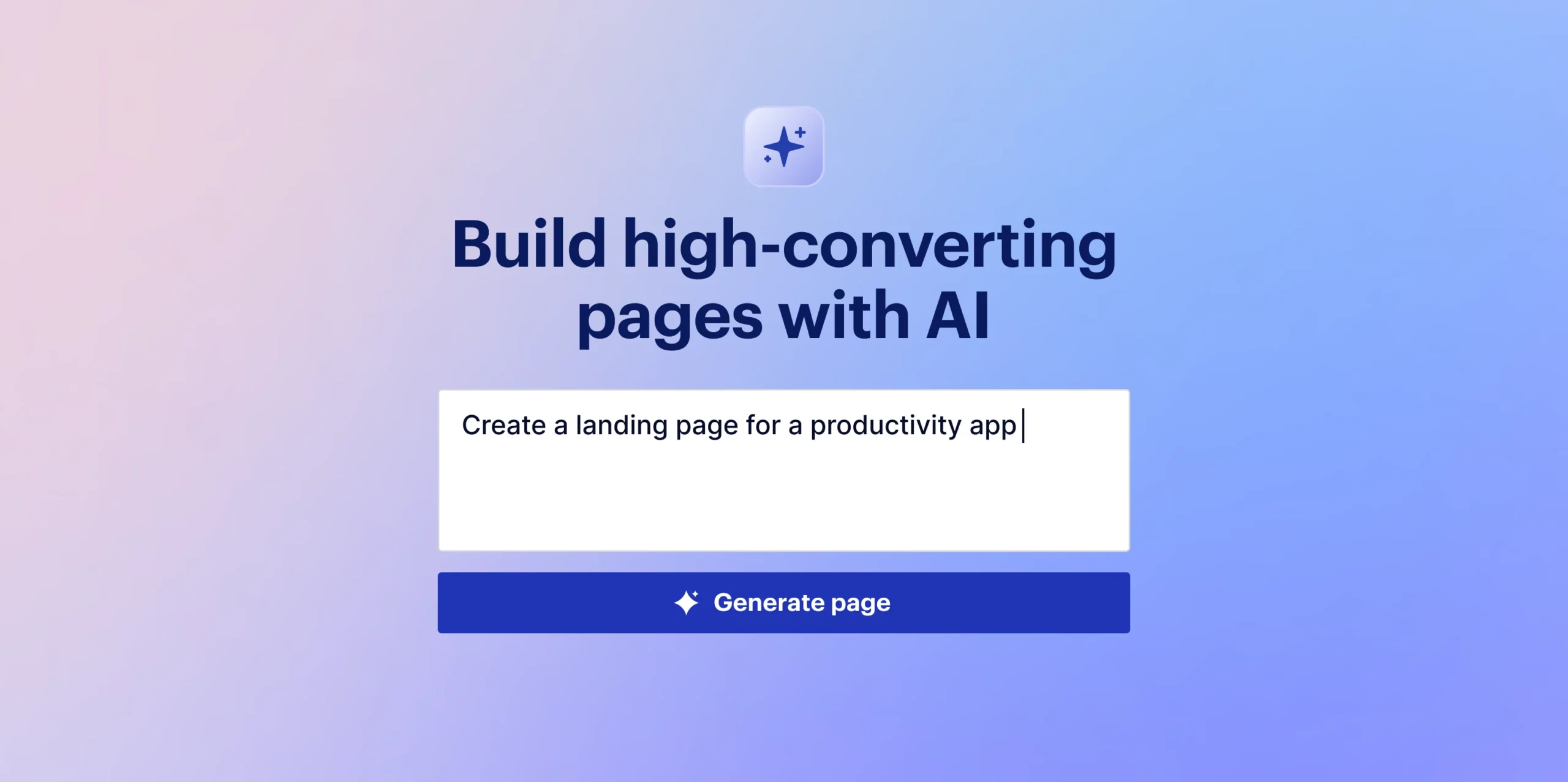
Instapage’s AI page generation addresses this by merging generative power with its legacy visual builder. When a user describes a campaign goal, the AI generates a complete, conversion-ready page with tailored messaging and optimized layouts. Unlike its competitors, however, the platform allows for immediate, manual refinement through its drag-and-drop interface. This "hybrid" approach ensures that while the AI handles the heavy lifting of layout and copy drafting, the human marketer retains final creative control without needing to "re-prompt" the system for minor design adjustments.
Streamlining Lead Management with AI-Powered Email
The secondary pillar of the new release is the AI email generator. Traditionally, the handoff between a landing page and an email marketing tool is where many leads are lost. Manual exports, API failures, and delayed follow-ups contribute to a cooling of lead interest.

By housing lead capture and email automation within the same platform, Instapage enables instantaneous follow-up. The AI email generator allows users to define their target audience, tone, and specific campaign goals. The system then drafts tailored messaging designed to move the lead further down the sales funnel. This integration ensures that the messaging on the landing page is perfectly mirrored in the subsequent email communication, providing a cohesive brand experience that is often missing when using fragmented tools.
Supporting Data: The Economic Imperative for AI Adoption
Industry data underscores the necessity of the shift toward AI-integrated platforms. According to recent marketing technology surveys, the average enterprise now uses over 90 different marketing cloud services. This "MarTech bloat" has led to a 25% decrease in team productivity due to the time spent switching between applications and reconciling data.
Furthermore, economic shifts in 2026 have led to a "leaner team" reality. Marketing budgets across the SaaS and e-commerce sectors have seen a tightening of approximately 15% year-over-year, while conversion targets have remained stagnant or increased. Data suggests that teams utilizing integrated AI platforms can reduce the "time-to-market" for new campaigns by up to 60%, allowing smaller teams to maintain the output of much larger departments.
Broader Impact and Market Implications
The transition of Instapage into a holistic AI platform has several implications for the broader marketing technology ecosystem:
- Democratization of CRO: High-level conversion rate optimization, which previously required data scientists and senior designers, is now accessible to generalist marketers. The AI’s ability to analyze what "works" based on historical data and apply it to new page designs levels the playing field for small to medium-sized businesses.
- The Decline of "Point Solutions": As platforms like Instapage expand their feature sets to include email and advanced analytics, the market for "point solutions"—tools that do only one thing—may face increased pressure. Marketers are increasingly prioritizing "all-in-one" ecosystems that offer a unified source of truth for their data.
- The Shift in Creative Roles: The role of the digital marketer is shifting from "creator" to "editor." With AI handling the initial drafting of pages and emails, the value of a human marketer now lies in strategic oversight, brand alignment, and the ability to refine AI-generated outputs into high-performance assets.
Official Responses and Strategic Vision
While official statements from the executive team emphasize the technical milestones, the underlying message is one of operational empowerment. The company posits that the intimidation of the "blank page" is a major barrier to business growth. By removing the friction of design and technical execution, Instapage intends to allow businesses to focus on their core product and value proposition rather than the mechanics of digital delivery.
Technical support teams at Instapage have noted that while many of these features are currently in beta, the rollout is being managed to ensure that the AI learns from diverse industry use cases, further refining the accuracy of the generated layouts and copy.
Future Outlook: The Role of AI Collections
Looking forward, the introduction of "AI Collections" suggests a move toward intelligent asset management. This feature is expected to help teams organize their high-performing elements—such as specific headlines, imagery, or testimonials—and allow the AI to automatically inject these "proven" assets into new campaigns. This creates a self-optimizing feedback loop where the platform becomes smarter with every lead captured.
As the marketing industry enters the second half of the decade, the focus remains on efficiency and the "end-to-end" experience. Instapage’s pivot toward a unified, AI-powered workflow reflects a broader trend in software: the move away from complexity and toward integrated intelligence. For businesses looking to scale in a competitive digital environment, the ability to generate, test, and follow up within a single, AI-enhanced ecosystem may no longer be a luxury, but a fundamental requirement for survival.
The platform currently offers a 14-day trial for new users to experience the integrated workflow. While select AI features remain in a gradual beta rollout, the company has opened channels for immediate access requests, signaling a rapid transition toward making these tools the standard for all subscribers.

 Suro Senen

 Pevita Pearce