rifanmuazin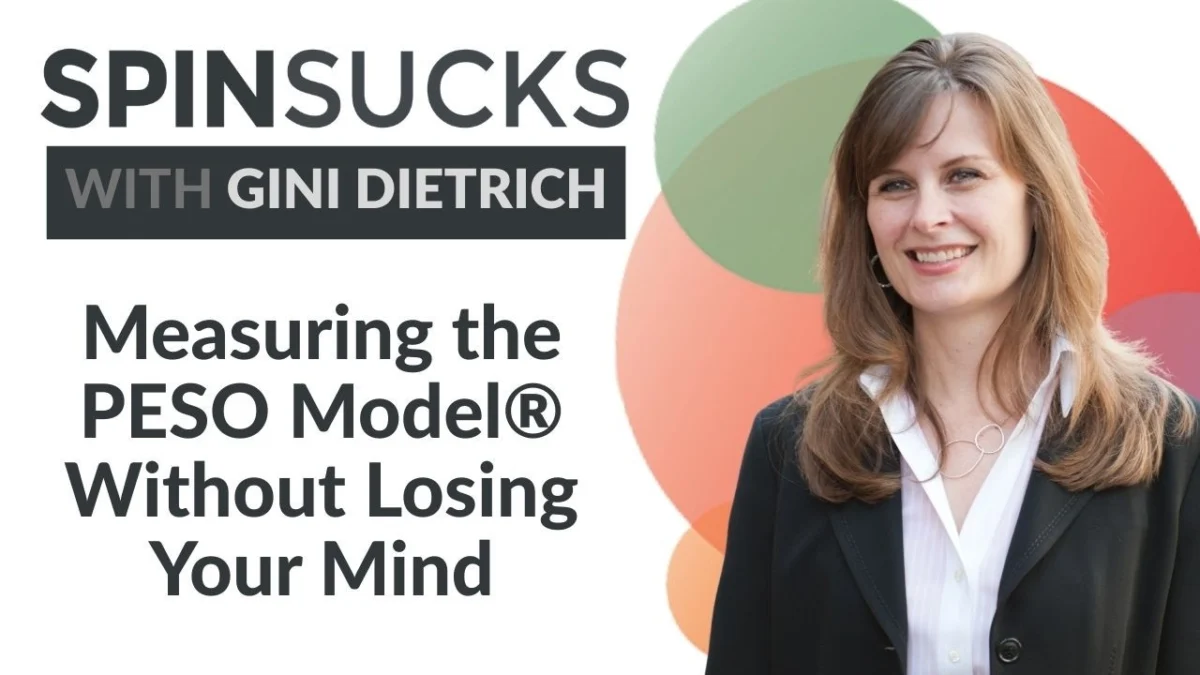
The evolution of digital communication has reached a critical juncture where traditional marketing metrics no longer suffice to justify corporate spend or demonstrate tangible business impact. As artificial intelligence fundamentally alters how information is discovered and consumed, the PESO Model—an integrated framework encompassing Paid, Earned, Shared, and Owned media—has shifted from a tactical checklist to a sophisticated operating system. In this new landscape, the focus of measurement has moved away from the "math homework" of counting activities toward a narrative-driven approach that prioritizes behavioral and business outcomes.
The Paradigm Shift: From Vanity Metrics to Business Outcomes
For over a decade, marketing and public relations professionals have relied on a fragmented approach to reporting, often presenting separate data sets for social media engagement, media placements, and website traffic. However, industry data suggests that this siloed reporting fails to resonate with executive leadership. According to recent surveys of Chief Marketing Officers (CMOs), approximately 60% of marketing leaders feel under pressure to prove the value of their efforts in financial terms, yet many continue to rely on "vanity metrics" such as impressions and likes.
The modern application of the PESO Model, as advocated by Spin Sucks and its founder Gini Dietrich, posits that measurement is not merely a collection of numbers but a storytelling exercise supported by data. The fundamental question guiding this new era of measurement is: "What changed?" If a communications team cannot answer this in a single sentence, they are likely reporting outputs rather than outcomes.
Defining the Hierarchy: Activities, Outputs, and Outcomes
To implement an effective measurement strategy, organizations must distinguish between three distinct levels of reporting.
Activities represent the baseline of marketing work—the tactical efforts required to launch a campaign. This includes the hours spent writing articles, filming videos, or managing social media accounts. While essential for internal resource management, activities hold little interest for stakeholders concerned with the bottom line.
Outputs are the tangible results of those activities. Examples include publishing six blog posts, securing three earned media placements, or achieving a specific number of impressions. While outputs indicate that the "engine" is running, they do not confirm that the engine is moving the organization toward its destination.
Outcomes, by contrast, are the shifts in business performance or audience behavior that occur as a result of the integrated PESO strategy. An outcome is not "we published content," but rather "we increased qualified demo requests by 18% because our content addressed specific buyer objections." Outcomes are the only metrics that demonstrate the PESO Model’s role as a business driver.
The PESO Model as a Unified Operating System
The primary failure in traditional measurement is treating Paid, Earned, Shared, and Owned media as competing departments. In a functional PESO operating system, these four channels work in tandem to create a "visibility engine."
- Owned Media serves as the foundation, providing the proof and expertise that lives on the organization’s platforms.
- Earned Media provides third-party validation, reducing skepticism and building trust.
- Shared Media acts as a signal, distributing content and engaging with the community to build momentum.
- Paid Media serves as an accelerator, amplifying high-performing content to reach specific, high-intent audiences.
When measured as a system, the narrative changes. Instead of reporting a decrease in Cost Per Click (CPC) as a standalone win, a team might report that "sales friction was reduced because consistent proof was distributed across owned pages, earned mentions, and executive social profiles."
The 90-Day Measurement Framework
To avoid the "quarterly panic spiral" often associated with reporting, experts recommend a 90-day measurement cycle. This timeframe is long enough to allow the PESO system to generate momentum but short enough to allow for agile adjustments.
Chronology of a 90-Day Cycle:
- Phase 1: Establishing the Baseline (Days 1–7): Identify the current state of a single primary outcome. This could be current lead volume, the length of the sales cycle, or the percentage of "zero-click" discovery in AI search engines.
- Phase 2: Execution and Signal Monitoring (Days 8–60): Run the integrated PESO program. Use weekly check-ins to monitor signals—such as shared media engagement—to determine which pieces of owned content should be amplified through paid channels.
- Phase 3: Analysis and Adjustment (Days 61–80): Evaluate which parts of the system are moving the needle. If a specific earned media strategy is not impacting the primary outcome, the system allows for the redistribution of resources.
- Phase 4: The Outcome Story (Days 81–90): Synthesize the data into a narrative that answers the "What changed?" question for executive review.
Adapting to the AI-First Discovery Landscape
The necessity for a systemic approach to measurement has been accelerated by the rise of AI-driven discovery and "zero-click" visibility. In the current digital environment, users often find the information they need directly on search engine results pages or through AI chatbots like ChatGPT and Perplexity, without ever clicking through to a website.
This shift renders traditional traffic charts less relevant. Measurement must now account for whether an organization’s "signals"—the proof points created through the PESO Model—are consistent and credible enough for AI models to aggregate. This requires measuring "share of search" and brand mentions within AI-generated responses, ensuring that the organization’s owned expertise is being validated by earned and shared media across the web.
Practical Application: The Outcome Quality Check
Before finalizing a measurement plan, communication leaders are encouraged to run their chosen 90-day outcome through a four-point "quality check" filter:
- Alignment: Does this outcome directly support a core organizational goal (e.g., revenue, talent acquisition, or market share)?
- Findability: Is there a clear, accessible baseline for this metric?
- Realism: Is it possible to move this metric within 90 days?
- Decisiveness: If the metric does not move, does the team have a clear rule for when to stop or adjust the activity?
Broader Impact and Industry Implications
The move toward outcome-based measurement in the PESO Model has significant implications for how marketing budgets are allocated. When teams can prove that an integrated approach reduces the cost of customer acquisition or shortens the sales cycle, they transition from being viewed as a "cost center" to a "profit center."
Furthermore, this systematic approach fosters a culture of leadership rather than a culture of activity. It gives marketers the "permission to fail" on a small scale—acknowledging when a specific tactic did not move the outcome and pivotally shifting resources toward what works.
In conclusion, the PESO Model is no longer a peripheral framework for PR departments; it is a central operating system for modern business growth. By shifting the focus of measurement from math to storytelling, and from outputs to outcomes, organizations can ensure their communication efforts are not just loud, but effective. As AI continues to reshape the information landscape, the ability to prove "what changed" through a rigorous, 90-day systemic approach will be the hallmark of successful brands in the coming years.
The PESO Model Certification, developed by Spin Sucks, continues to serve as the industry standard for professionals seeking to operationalize these measurement strategies, providing the tools necessary to hold up under the scrutiny of both budget meetings and the evolving digital marketplace.