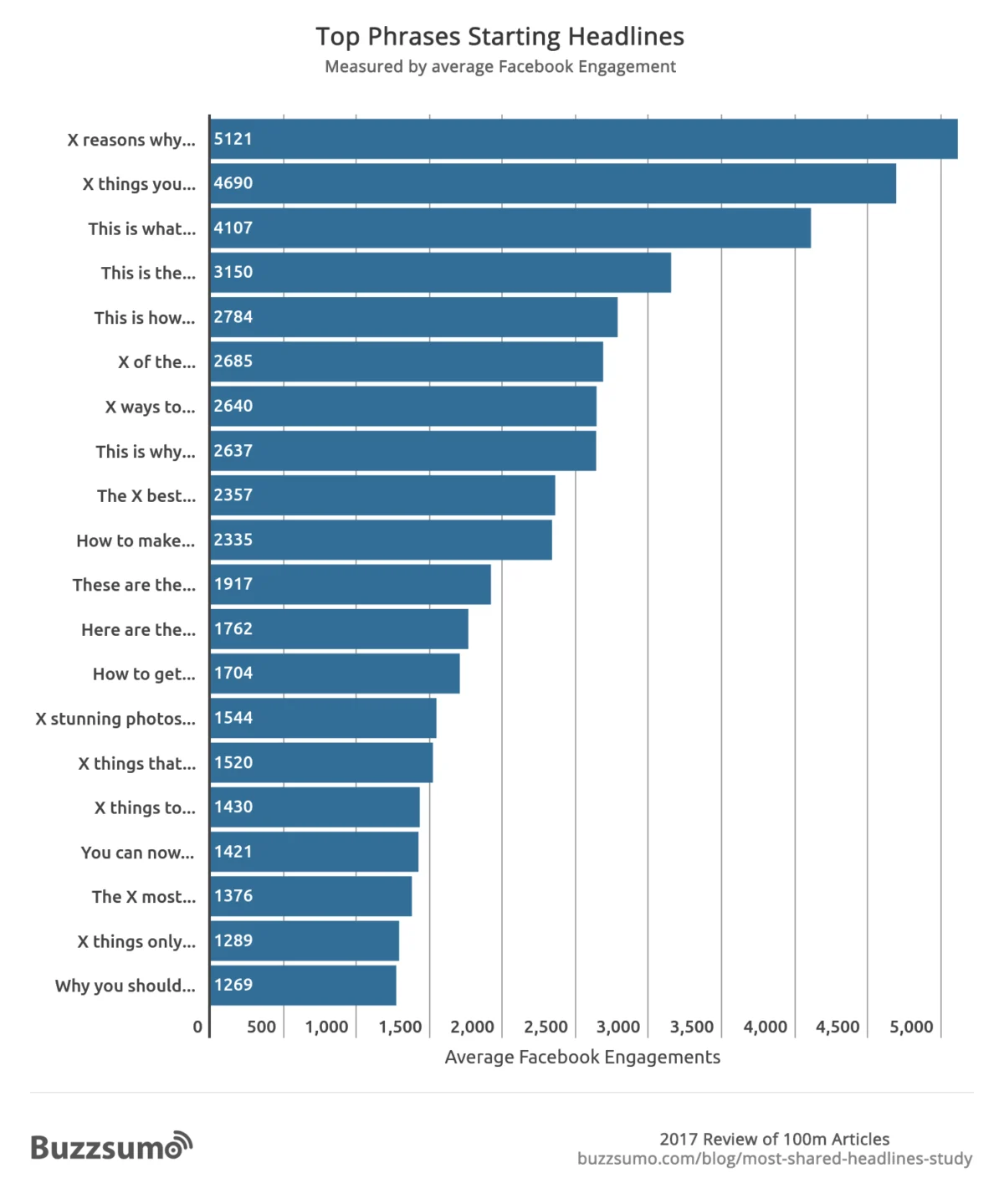
A comprehensive analysis of 100 million headlines by BuzzSumo reveals a profound shift in what captures audience attention on major social media platforms, Facebook and Twitter. The study, updating similar research from 2017, indicates that successful headline strategies have moved away from sensationalism and tribal appeals towards informative, instructional, and authoritative content, driven by evolving platform algorithms and increasingly discerning user preferences. Content creators and publishers are urged to adapt to these new dynamics, prioritizing clarity, utility, and factual accuracy to maximize engagement in a saturated digital landscape.
Background: A Data-Driven Look at Headline Evolution
Headlines are far more than mere titles; they are critical gateways, serving as subject lines, tweets, and video titles designed to connect with audiences and prompt action. However, the art of crafting an effective headline has become increasingly complex, influenced by algorithmic gatekeepers, heightened competition, and sophisticated audience expectations. Inspired by BuzzSumo co-founder Steve Rayson’s influential 2017 study, the latest research delved into BuzzSumo’s extensive index, scrutinizing 100 million headlines published between 2019 and 2020 across Facebook and Twitter. This massive dataset, combined with insights from leading marketing experts, offers a crucial roadmap for understanding contemporary content engagement. The findings are particularly relevant for publishers and content creators aiming to optimize their strategies for clicks and shares.
Key Shifts in Headline Dynamics: 2017 vs. 2019-2020
The comparison between the 2017 and 2019-2020 analyses highlights a dramatic transformation in headline effectiveness, underscoring the rapid evolution of digital content consumption and platform mechanics.
1. The Ideal Headline Length: A Call for Conciseness
Contrary to some outdated advice favoring brevity, the 2017 study suggested an optimal headline length of 15 words and 95 characters for maximum engagement. However, the latest research indicates a significant move towards snappier titles. The new ideal length for top-performing headlines on Facebook and Twitter is 11 words and 65 characters. This reduction of approximately four words and 30 characters reflects a broader trend of content overload, with online content increasing by 64% since 2016. In an era of information saturation, audiences demand faster access to information, favoring headlines that are specific, detailed, and get straight to the point without unnecessary fluff.
2. The End of Emotional Clickbait and Tribal Appeals
Perhaps the most striking change is the pronounced decline of explicitly emotional, sensational, quiz-based, and tribal headlines. In 2017, phrases like “will make you” (e.g., “This Video Will Make You Cry Tears of Joy”) dominated Facebook engagement, often serving as precursors to highly emotional content. Similarly, quiz headlines (e.g., “Can We Guess Your Real Age?”) and tribal phrases (e.g., “25 Things Only Teachers Will Understand”) were highly effective in fostering a sense of inclusivity and identity.
However, the 2019-2020 analysis found these types of headlines to be rare and significantly less effective. For instance, the top headline using the phrase “will make you” garnered 1.7 million shares in 2017, but only 143,000 shares for its top headline in the updated study. This dramatic shift is largely attributed to Facebook’s algorithmic updates, which began demoting “clickbait-style content” in May 2017. While overtly emotional or sensational language has fallen out of favor, a subtle form of hyperbole, such as “one of the most beautiful,” can still resonate if it genuinely references exceptional content.
3. Algorithmic Maturity and Audience Sophistication
The wholesale change in headline effectiveness is a testament to the maturation of social media algorithms and a more sophisticated audience. The study found a 100% difference between the top 20 headline phrases on Facebook in 2017 versus 2020, and only two phrases remained consistent on Twitter. This indicates a dynamic interplay where platforms continually refine their content distribution based on user feedback and engagement patterns, and users, in turn, adapt their consumption habits.
Furthermore, Facebook’s commitment to prioritizing “trustworthy news sources” (announced January 2018) and boosting “original and authoritative news reporting” (June 2020) has had a profound impact. This is evident in the drastic shift in top publishers, with established news outlets like cnn.com, dailymail.co.uk, nbcnews.com, washingtonpost.com, cbsnews.com, and time.com dominating the most shared Facebook headlines in the later period. This algorithmic preference ensures that the insights gleaned from the updated study are based on more reliable and credible content sources.
4. Shifting Engagement Across Platforms: Facebook Gains, Twitter Dips
While headline phrases have become more homogenous across platforms, with eight of the top 20 phrases now overlapping on Facebook and Twitter (up from just one in 2017), the volume of engagement has diverged significantly. The most engaging Facebook trigram in the updated study, “of the year,” garnered an average of 26,702 shares – a threefold increase compared to Facebook’s top phrase in 2017. Conversely, Twitter saw a nearly fourfold decrease in shares for its most popular phrases during the same period.
Further investigation revealed that overall Twitter shares dropped by 14% between 2017 and 2020, even as its monthly active users remained largely stable. This suggests a potential dilution of average shares due to a wider variety of content or a fundamental shift in how users interact with headlines on the platform. Despite this, the increased overlap in successful phrases suggests that a well-crafted headline, adapted for specific nuances, can now perform effectively across both networks.
Platform-Specific Strategies for Maximum Impact
Understanding the distinct characteristics of each platform is crucial for optimizing headline performance.
Facebook: The Realm of Instruction, Hyperbole, and Ranking
On Facebook, three-word phrases (trigrams) that drive the highest average shares lean heavily into themes of instruction, hyperbole, and ranking.
- Top Trigrams: “of the year” emerged as the number one phrase, often associated with awards and public recognition (e.g., “Joe Biden and Kamala Harris: TIME’s Person of the Year 2020” from cnn.com, 418K shares). This phrase leverages debate and discussion among “fans” and “haters,” driving shares. Close behind are phrases centered on “newness” and rarity, such as “in X years,” “for the first,” and “the first time,” which build intrigue by hinting at unique or rare circumstances (e.g., “For the first time in history, U.S. billionaires paid a lower tax rate than the working class” from washingtonpost.com, 1.2M shares).
- Instructional Content Reigns Supreme: A significant finding is the dominance of instructional headlines. Thirteen of the top 60 most engaging Facebook headlines were instructional or part of instructional phrases like “you need to,” “you should know,” and “need to know.” These phrases create a sense of urgency and FOMO (Fear Of Missing Out), compelling readers to click to gain essential information (e.g., “Everything you need to know about washing your hands to protect against coronavirus (COVID-19)” from unicef.org, 2.2M shares). They promise concise, critical insights, positioning the content as indispensable.
- Hyperbole Still Works (with Substance): Exaggerated statements and superlatives, such as “one of the most” (e.g., “Why Your Older Sister Is One of the Most Important People in Your Life” from brightside.me, 2.1M shares) and “of the best,” continue to drive engagement. However, unlike the clickbait of the past, these headlines now tend to reference genuinely exceptional content, appealing to readers’ desire for outstanding information.
- Starting and Ending Phrases: Listicles (headlines beginning with a number) remain popular on Facebook, offering readers clear, actionable takeaways. “How to” phrases also demonstrate a strong preference for guidance. At the end of headlines, time-centric phrases, particularly those referencing “2020” or “2021,” performed exceptionally well, often reflecting the pervasive influence of the pandemic. Numbers are also used at the end for surprise or to signify “speed to insight” (e.g., “In just 5 minutes”).
Twitter: An Appetite for Foresight and Facts
Twitter audiences exhibit a distinct preference for analytical, research-driven, and current affairs-focused content.
- The “Future of” Dominance: The phrase “the future of” was the most engaging trigram on Twitter, suggesting a strong interest in forward-looking analysis and predictions (e.g., “The future of cars is electric, autonomous and shared,” average 45 shares). This phrase also frequently appeared at the beginning of Twitter headlines.
- Research and Immediacy: Starting words like “study” and “report” indicate that Twitter is a prime platform for sharing research and data-backed insights. Furthermore, a strong emphasis on immediacy and reactivity defines successful ending phrases, with “2020” and other time-sensitive markers dominating. This highlights Twitter users’ appetite for breaking news and real-time developments.
- Curiosity and Storytelling: While instructional headlines perform well across both platforms, curiosity-driven phrases (those that hint, tease, or question) fare significantly better on Twitter. Additionally, “story” themes, such as “the story of” or “the history of,” resonate more strongly with Twitter audiences, indicating a preference for narratives around people and topics.
Crossover Strategies: What Works Universally?
Despite platform-specific nuances, certain headline phrases demonstrate broad appeal. The study identified eight common trigrams and ten starting phrases that performed well across both Facebook and Twitter. These crossover phrases often leverage fundamental human curiosities and the desire for valuable information, making them versatile for multi-platform content distribution. However, given the massive difference in average engagement volume (Facebook’s top phrase had 590x more shares than Twitter’s), it’s advisable for content creators to tailor and test headlines for each specific channel.
Expert Perspectives on the Shifting Landscape
Industry leaders echo the study’s findings, offering further context and strategic advice:
- Heidi Cohen (Actionable Marketing Guide) highlights three key customer behavior changes due to the pandemic: an increased need for timely, relevant, and useful information; a demand for content that helps them cope with rapid change; and a preference for engaging, educational formats. She advises marketers to focus on core marketing basics and continuously engage with customers to understand their evolving needs.
- Rand Fishkin (SparkToro) emphasizes the study’s value beyond just headline writing, noting its ability to contrast past and present effectiveness. He points out that while clickbait and emotional triggers once dominated, the research “mythbusts others, and illuminates the nuance of what’s really working.”
- Ross Simmonds (Foundation) finds the adoption of instructional copy (“you need to,” “you should”) by mainstream publishers fascinating, viewing it as a testament to understanding human psychology and the innate desire to avoid missing out on important information.
- Brian Dean (Backlinko) notes the “huge shift” on Facebook from BuzzFeed-style clickbait to instructional headlines, indicating that contemporary Facebook users seek content that teaches them something new.
- Amanda Milligan (Fractl) observes that instructional language inherently demonstrates authority, satisfying readers’ growing desire to learn from experts. She encourages brands to leverage their expertise to benefit readers through such content.
These expert opinions converge on a central theme: successful headlines in today’s digital environment are those that offer clear value, leverage authority, and appeal to a more informed, utility-driven audience.
Implications for Content Creators: A New Playbook
The BuzzSumo study offers a critical updated playbook for anyone crafting headlines:
- Prioritize Value and Utility: Focus on what your audience will gain from the content. Instructional phrases like “you need to know” or “how to” clearly communicate the practical benefits.
- Embrace Nuanced Hyperbole: While outright sensationalism is out, well-placed superlatives that genuinely reflect exceptional content can still capture attention.
- Be Specific and Concise: Aim for the new sweet spot of 11 words and 65 characters. Provide enough detail to intrigue without being verbose.
- Leverage Numbers Strategically: Listicles, especially those featuring the number 10 or single digits (3-10), continue to perform well. Use numbers to promise clear structure or to evoke surprise.
- **Understand