Google has announced the integration of two significant artificial intelligence-powered creation tools into its AI Pro subscription package: Pics, an advanced image generation platform, and an agentic video understanding feature, designed for in-depth analysis of video content. These additions mark a substantial expansion of Google’s generative AI capabilities, aiming to empower users with more sophisticated creative control and analytical insights across its ecosystem.
Elevating Creative Content Production
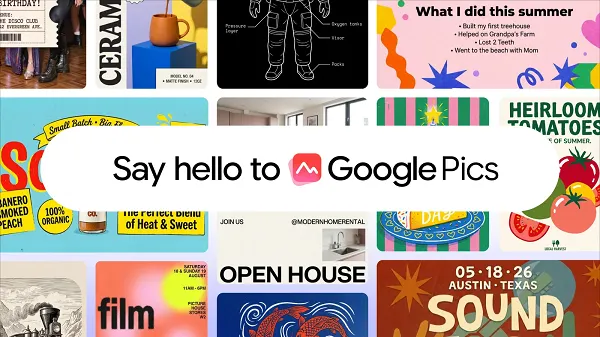
Pics represents the latest evolution in Google’s image generation suite. Powered by what the company refers to as its "Nano Banana" image generation model, Pics promises a next-level capacity for creating and manipulating visual content. Key functionalities include advanced editing features, extensive customization options, and the ability to add or modify elements within a generated image. The platform is also equipped with language translation capabilities, suggesting a broader appeal for international content creators and marketing professionals.
The introduction of Pics is poised to streamline the creation of promotional materials for a diverse range of purposes, from digital marketing campaigns to internal communications. By offering a higher degree of customization and granular control, the tool aims to mitigate the often-cited challenge of generic or "tacky" aesthetics associated with earlier generations of AI-generated imagery. This focus on refinement and user-driven modification suggests Google’s commitment to delivering AI tools that enhance, rather than merely automate, the creative process, allowing for outputs that are more aligned with specific brand identities or artistic visions.
Revolutionizing Video Content Analysis
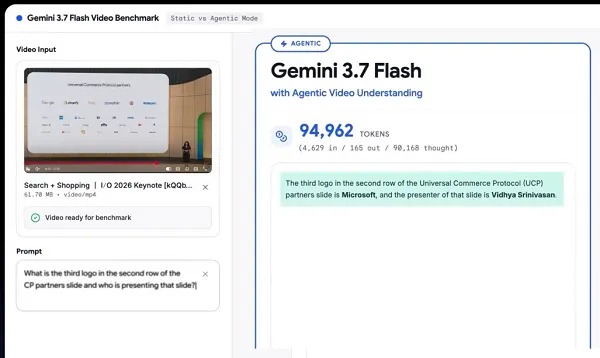
Complementing Pics is Google’s new agentic video understanding tool, a feature designed to process video inputs and extract comprehensive information. This advanced capability allows users to gain insights into what is presented in a video, identify key presenters, and even pinpoint specific details about elements shown within the clip. The "agentic" nature of the tool implies an autonomous, goal-oriented AI system capable of complex reasoning and planning when analyzing video data.
Google highlights that this video processing tool delivers improved response accuracy and speed, coupled with lower token usage. The reduction in token usage is a critical technical advantage, as it translates to more efficient processing, reduced computational costs, and the ability to analyze longer and more complex video segments without incurring prohibitive resource expenditure. This efficiency is expected to make it significantly easier to analyze vast amounts of video content, fostering contextual understanding and enabling deeper learning from video presentations across various applications.
Google’s AI Trajectory: A Foundation for Innovation
The launch of Pics and the agentic video understanding feature is not an isolated event but rather a continuation of Google’s long-standing and intensive commitment to artificial intelligence research and development. Google’s journey in AI dates back decades, with foundational contributions through projects like Google Brain, the development of the TensorFlow open-source machine learning library, and strategic acquisitions such as DeepMind in 2014, which brought pioneering research in areas like deep reinforcement learning. These efforts laid the groundwork for the current wave of generative AI innovations.
In recent years, the competitive landscape of AI has intensified dramatically, particularly with the widespread public adoption of generative models following the release of OpenAI’s ChatGPT in late 2022. Google responded to this new era by consolidating its AI efforts under the Gemini umbrella. Gemini, Google’s most capable and multimodal AI model, was unveiled in December 2023, positioned as a direct competitor to OpenAI’s GPT series. It was designed from the ground up to be multimodal, meaning it can natively understand and operate across various types of information, including text, code, audio, image, and video. This inherent multimodal capability is crucial for the functionality of both Pics and the agentic video understanding tool, particularly the latter’s ability to interpret complex visual and auditory data within video.
The AI Pro subscription package, into which these new tools are integrated, represents Google’s strategy to monetize its advanced AI offerings while providing premium access to cutting-edge features. This tiered approach allows Google to cater to professional users and businesses seeking more robust and specialized AI functionalities, distinguishing it from the free or basic versions of its AI products.
Deep Dive into Pics: Beyond Basic Image Generation
The "Nano Banana" model, while an intriguing internal moniker, signifies Google’s continued pursuit of high-fidelity and contextually aware image generation. Unlike earlier models that sometimes struggled with prompt adherence, anatomical accuracy, or consistent styling, Pics aims to overcome these limitations. The advancements likely include improved understanding of complex natural language prompts, better handling of multiple objects within a scene, and enhanced control over lighting, textures, and artistic styles.
The "advanced editing and customization tools" within Pics go beyond simple prompt-based generation. Users are likely to gain capabilities such as inpainting (filling in missing parts of an image), outpainting (extending an image beyond its original borders), selective object manipulation (adding, removing, or altering specific elements), and style transfer. The integration of language translation options directly into the image generation process is particularly noteworthy, allowing creators to generate localized visual content more efficiently, potentially embedding text in various languages directly into the imagery. For example, a global marketing team could generate a single visual concept and then instantly localize text overlays for different regional campaigns, maintaining visual consistency while adapting messaging.
The strategic integration of Pics with YouTube’s ‘Ask YouTube’ feature on video watch pages is a significant development. Google stated that Pics will leverage Gemini to "deliver higher-quality answers grounded in the visuals" of a video. This means that when a user asks a question about a video, the AI will not only process the audio and text transcript but also visually analyze the content using Pics’ underlying technology to provide more accurate and contextually rich responses. For instance, if a user asks "What tool is the presenter using?", the AI could identify the specific tool from the video frame and potentially generate an image-based response or highlight the relevant visual segment. This integration signifies a move towards a truly multimodal understanding of content, where text, audio, and visual information are seamlessly processed together.
Agentic Video Understanding: Unlocking Deeper Insights
The "agentic" aspect of Google’s video understanding tool is central to its advanced capabilities. In AI, an agentic system is designed to perform tasks autonomously, often involving complex decision-making, planning, and goal-setting based on its understanding of the environment. For video analysis, this means the AI can go beyond simple object recognition or transcription. It can infer intent, understand narrative flow, identify relationships between elements, and provide summaries or answers that require a deeper contextual comprehension of the video content.
The tool’s ability to "process video inputs and provide information on what was presented and who presented it" combined with "specific details on elements shown within the clip" has broad implications. Consider its potential in media and journalism: analyzing hours of news footage to identify recurring themes, specific speakers, or visual cues related to a developing story. In education, it could summarize lengthy lectures, identify key concepts demonstrated visually, or even flag moments where a specific object or process is explained. For businesses, this could mean analyzing competitor product videos for feature comparisons, tracking brand mentions in user-generated content, or extracting insights from market research videos. Furthermore, in fields like accessibility, it could generate detailed descriptions for visually impaired users, enhancing their engagement with video content.

The technical advantage of "lower token usage" is crucial for scalability and cost-effectiveness. Tokens are the basic units of text or data that AI models process. Reducing token usage means the model can process more information with fewer computational resources, leading to faster inference times and lower operational costs. This efficiency makes the agentic video understanding tool more practical for analyzing large datasets of video, which is a common requirement in many professional and research contexts.
Google has indicated that its agentic video understanding model is being rolled out to all users in the Gemini app across Flash and Flash-Lite models soon. This broad availability within the Gemini ecosystem underscores Google’s commitment to making advanced AI capabilities accessible to a wider user base, fostering innovation and application development. The Flash and Flash-Lite models are optimized for speed and efficiency, further indicating Google’s focus on practical, real-time applications of its video analysis technology.
Market Implications and Competitive Landscape
The introduction of Pics and agentic video understanding intensifies the competition in the rapidly evolving generative AI market. Google is directly challenging the capabilities offered by rivals such as OpenAI (with DALL-E 3 for image generation and its advancements in video understanding like Sora), Microsoft (through its integration of OpenAI models into Copilot), and Meta (with its open-source Llama models and AI research). By embedding these advanced tools within its AI Pro subscription and integrating them into core services like YouTube and Gemini, Google aims to leverage its vast user base and existing ecosystem to gain a competitive edge.
Industry analysts are likely to view these announcements as Google solidifying its position in the multimodal AI space. The focus on both creation (Pics) and analysis (agentic video understanding) demonstrates a comprehensive strategy to address diverse user needs across the content lifecycle. This holistic approach, combined with the underlying power of Gemini, positions Google as a formidable player capable of offering integrated AI solutions that span text, image, and video.
Ethical Considerations and Responsible AI Deployment
As with all powerful generative AI tools, the ethical implications of Pics and agentic video understanding are paramount. Google has consistently emphasized its commitment to responsible AI development, and these tools are likely to be accompanied by safeguards. For image generation, concerns typically revolve around the potential for creating misleading content, deepfakes, or infringing on copyrights. Google is expected to implement measures such as digital watermarking, content provenance tools, and strict guidelines to prevent misuse.
For video understanding, ethical considerations include privacy concerns related to analyzing personal or sensitive video content, the potential for algorithmic bias in interpretation, and the risk of misuse for surveillance or content moderation that lacks human oversight. Google’s rollout strategy and stated commitment to responsible AI suggest that these tools will come with guidelines and potentially technical limitations designed to mitigate such risks, emphasizing human control and ethical application.
Conclusion: A New Era of AI-Powered Productivity
The launch of Pics and the agentic video understanding tool marks a significant stride in Google’s journey to democratize and advance artificial intelligence. By offering sophisticated image generation capabilities and powerful video analysis, Google is not only pushing the boundaries of what AI can achieve but also making these advanced functionalities accessible to a broader professional audience through its AI Pro subscription. These tools are poised to transform various industries, from marketing and content creation to education and research, by offering unprecedented levels of creative control and analytical insight. As AI continues to evolve, Google’s integrated approach, leveraging the multimodal prowess of Gemini, positions it at the forefront of a new era of AI-powered productivity and innovation, reshaping how users interact with and create digital content across its extensive ecosystem.